
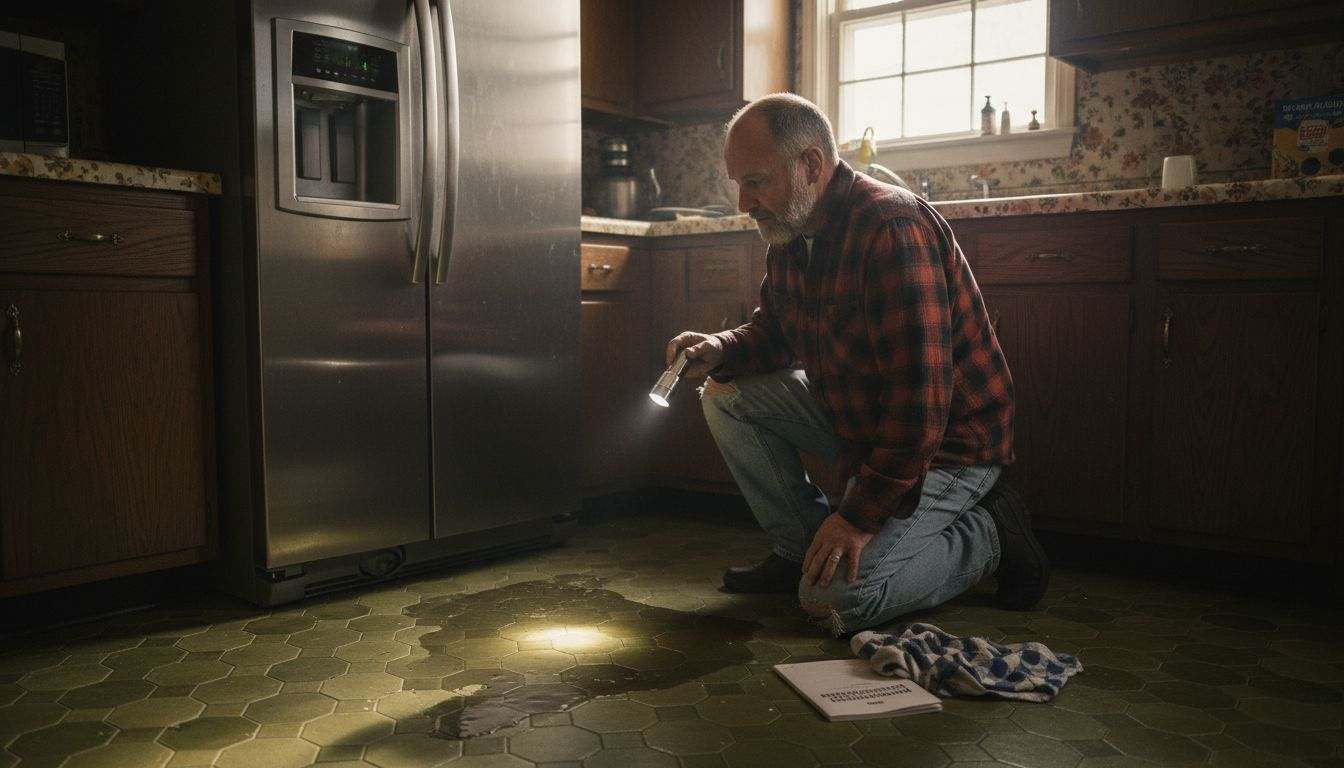
A puddle on your Marlboro kitchen floor often signals more than just a spilled drink. When your refrigerator starts leaking, it usually points to problems like damaged water inlet valves or clogged drain tubes that allow moisture to escape where it should not. Addressing leaks quickly protects your home from water damage and costly repairs while keeping your appliance running efficiently. Know what causes these leaks and how prompt, professional service helps keep your Marlboro home safe and dry.
Table of Contents
- What Causes a Refrigerator to Leak Water
- Types and Locations of Refrigerator Leaks
- Common Malfunctions Leading to Leaks
- Impact of Refrigerator Leaks on Homes
- DIY Fixes Versus Professional Repairs
Key Takeaways
| Point | Details |
|---|---|
| Common Causes of Leaks | Moisture issues in refrigerators often stem from faulty water inlet valves, clogged drain tubes, or improper leveling. Regular inspections can help identify and mitigate these issues early. |
| Potential Impacts | Unaddressed leaks can lead to significant structural damage, health risks from mold growth, and increased repair costs. Homeowners should act promptly to prevent costly consequences. |
| DIY vs. Professional Repairs | Minor repairs like tightening connections can often be handled DIY, while complex issues require professional expertise. Assess your skills realistically before attempting repairs. |
| Preventative Measures | Routine maintenance checks, such as inspecting water connections and maintaining a level appliance, can help prevent leaks from occurring. Implementing these practices is essential for long-term appliance health. |
What Causes a Refrigerator to Leak Water
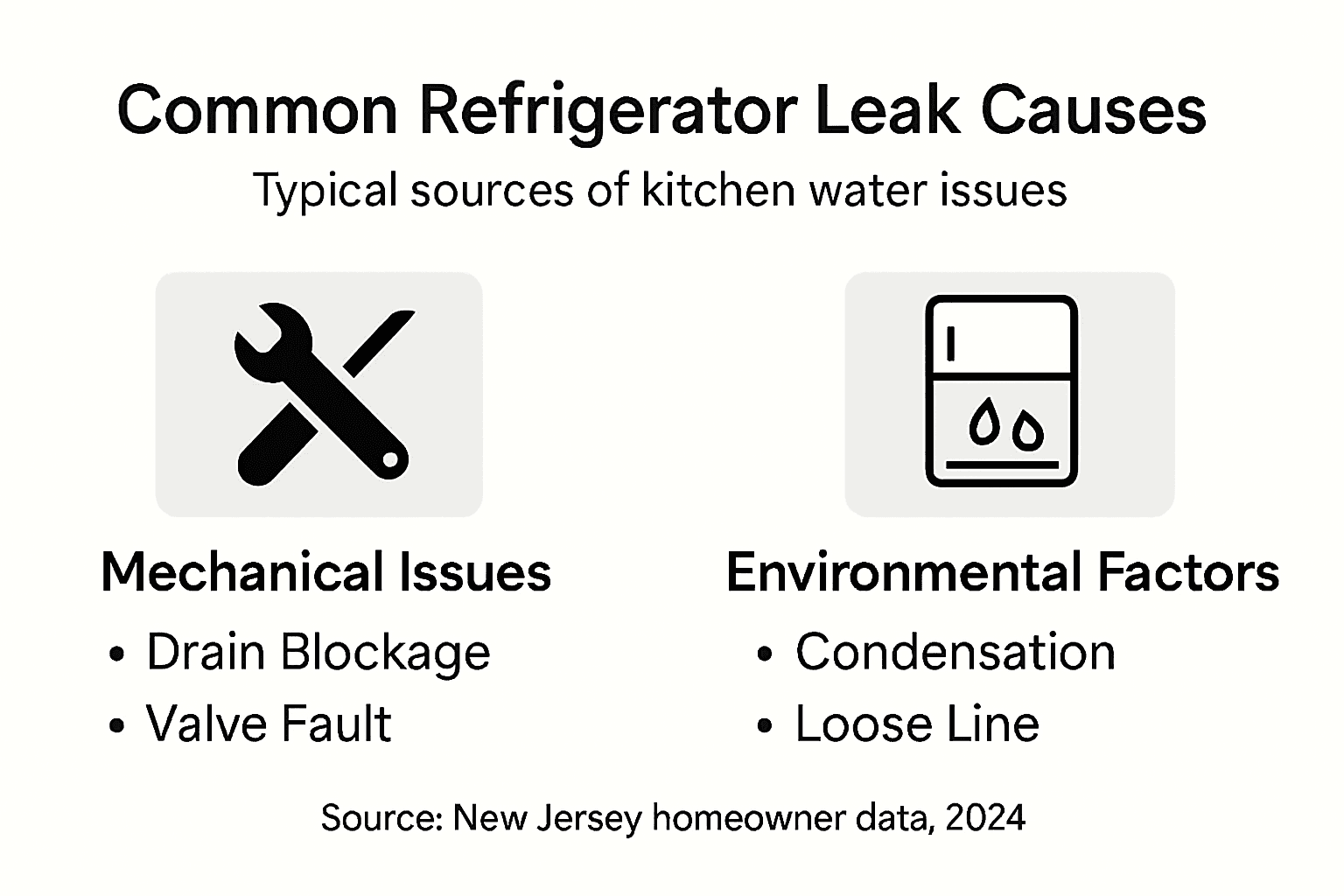
Refrigerator leaks can quickly transform from a minor annoyance into a significant home maintenance problem for New Jersey homeowners. These water issues typically emerge from several critical system components that, when compromised, allow moisture to escape where it shouldn’t.
Most refrigerator leaks originate from specific mechanical failures. Water inlet valves and drainage systems are frequently the primary culprits behind unexpected water accumulation. Refrigerator water valve malfunctions can cause substantial liquid discharge, potentially leading to floor damage and electrical risks.
Key causes of refrigerator leaks include:
- Damaged or clogged drain tubes
- Cracked water supply lines
- Malfunctioning water inlet valves
- Blocked defrost drain
- Cracked drip pan
- Improper refrigerator leveling
Condensation issues represent another significant leak source. When your refrigerator’s cooling cycles malfunction, excessive moisture can accumulate, forcing water to collect in unintended areas. Refrigerant leaks and condenser coil damage can further compromise the appliance’s ability to maintain proper internal temperatures and humidity levels.
Pro Tip: Always keep your refrigerator level and check water line connections every six months to prevent unexpected leaks and potential water damage.
Types and Locations of Refrigerator Leaks
Refrigerator leaks in New Jersey homes manifest in various critical locations, each presenting unique challenges for homeowners. Understanding these potential leak points can help prevent extensive water damage and costly repairs to your kitchen flooring and appliance infrastructure.
Water inlet valve areas represent one of the most common leak zones in refrigeration systems. These sensitive components can develop microscopic cracks or connection failures that allow water to escape, creating puddles beneath or around the appliance.
Key leak locations include:
- Door seal perimeters
- Ice maker assembly connections
- Water supply line junctions
- Drain tube openings
- Drip pan edges
- Internal condensation collection points
Most refrigerator leaks concentrate in specific mechanical zones. Water line connections and drainage systems are particularly susceptible to moisture escape. Common leak zones around water dispensers often indicate underlying mechanical stress or component degradation that requires professional inspection.
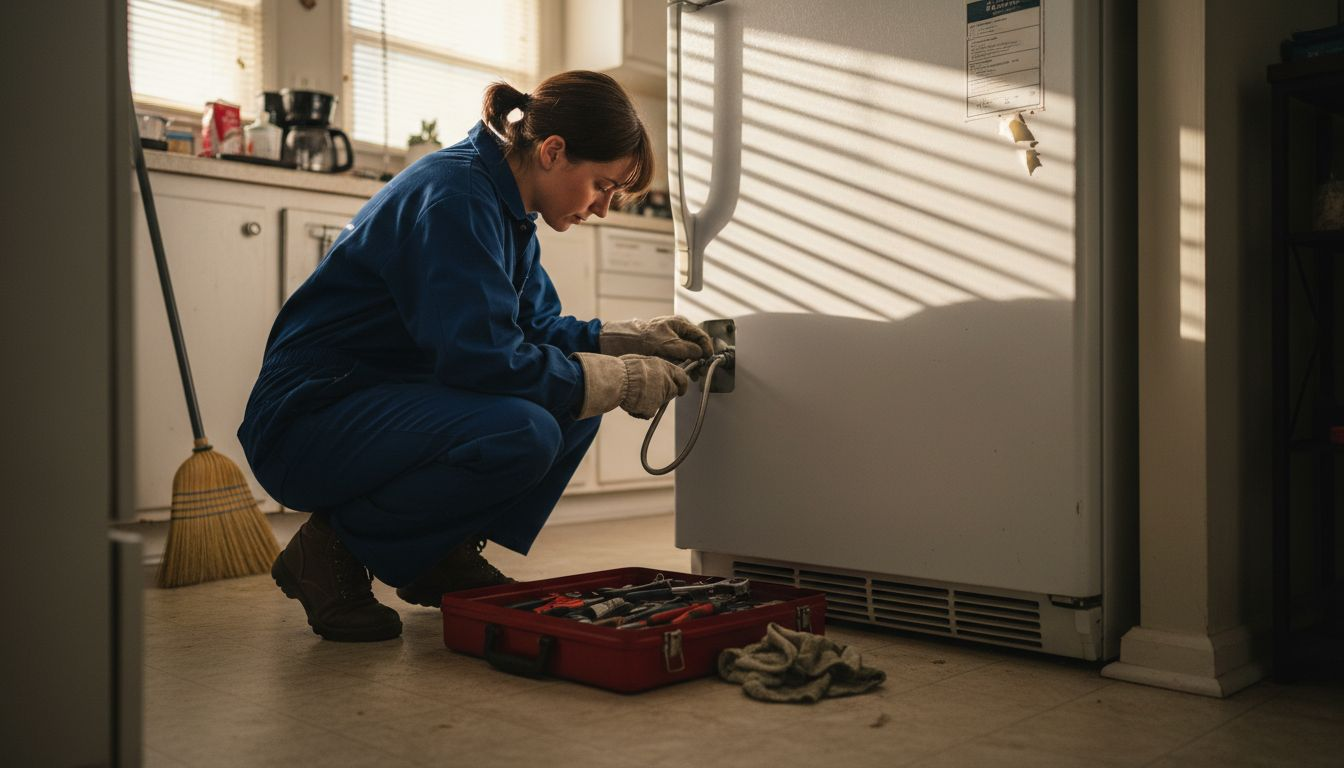
Condensation and temperature fluctuations can also trigger unexpected water accumulation. When internal cooling mechanisms malfunction, moisture can pool in unintended areas, potentially causing electrical risks and structural damage to your kitchen environment.
Pro Tip: Conduct monthly visual inspections of your refrigerator’s water connections and seal conditions to catch potential leak sources before they escalate into major problems.
Common Malfunctions Leading to Leaks
Refrigerator malfunctions can transform a reliable kitchen appliance into a potential water damage nightmare for New Jersey homeowners. Understanding the intricate mechanical failures that trigger leaks is crucial for preventing costly repairs and protecting your home’s infrastructure.
Defrost system failures represent one of the most problematic mechanical issues leading to unexpected water accumulation. When the defrost drain becomes clogged or frozen, water cannot properly evacuate, causing substantial internal moisture buildup and potential leakage.
Common refrigerator malfunctions causing leaks include:
- Faulty water inlet valve mechanisms
- Deteriorating door gasket seals
- Cracked water supply line connections
- Blocked or frozen defrost drain tubes
- Damaged ice maker assembly components
- Compromised condensation collection systems
Water inlet valve problems are particularly critical. Mechanical valve failures can cause continuous water flow, creating persistent leak risks. Water supply line deterioration frequently emerges as a significant source of unexpected moisture, potentially causing extensive kitchen floor damage.
Electrical and mechanical system interactions further complicate leak potential. Temperature regulation failures can trigger condensation issues, while worn mechanical components create vulnerabilities in the refrigerator’s water management infrastructure.
Pro Tip: Perform quarterly comprehensive refrigerator inspections to identify potential mechanical weaknesses before they escalate into significant water damage scenarios.
Impact of Refrigerator Leaks on Homes
Refrigerator leaks represent far more than a simple maintenance inconvenience for New Jersey homeowners. These seemingly minor water issues can rapidly escalate into significant structural and health challenges that compromise both home integrity and resident well-being.
Water damage from refrigerator leaks can devastate home infrastructure, causing extensive and expensive repairs. Moisture penetration can destroy wooden flooring, warp cabinetry, and create perfect conditions for destructive mold growth that spreads rapidly through walls and living spaces.
Potential impacts of prolonged refrigerator leaks include:
- Structural wood deterioration
- Compromised floor and wall integrity
- Increased risk of electrical short circuits
- Significant home value reduction
- Potential foundation damage
- Extensive repair and replacement costs
Health risks emerge as another critical concern. Mold spore proliferation creates serious respiratory challenges for residents. Dangerous mold growth risks can develop within 24-48 hours of consistent moisture exposure, potentially triggering allergic reactions and long-term respiratory complications.
Insurance complications further compound the problem. Many homeowner policies have specific clauses regarding water damage, potentially limiting coverage for damages resulting from gradual leaks that could have been prevented through routine maintenance.
The following table summarizes how refrigerator leaks can impact home infrastructure and health:
| Impact Category | Example Consequences | Long-Term Effects |
|---|---|---|
| Structural | Wood rot, warped flooring | Decreased property value |
| Health | Mold growth, respiratory problems | Allergic reactions, chronic illness |
| Financial | Expensive repairs, insurance claims | Potential coverage denials |
Pro Tip: Invest in a water leak detection device for your refrigerator to catch potential issues before they cause extensive damage to your home’s infrastructure.
DIY Fixes Versus Professional Repairs
New Jersey homeowners often find themselves navigating the complex decision between attempting refrigerator repairs independently or seeking professional intervention. Understanding the nuanced boundaries between manageable home repairs and scenarios requiring expert assistance can save both time and money.
Minor refrigerator leaks can frequently be addressed through careful DIY approaches. Homeowners can successfully tackle simple issues like tightening water line connections, clearing drain tubes, and replacing basic components with moderate mechanical skills and proper research.
DIY repair capabilities typically include:
- Unclogging drain tubes
- Tightening loose water line connections
- Replacing simple water inlet valves
- Cleaning minor mold accumulations
- Adjusting refrigerator leveling
- Inspecting and cleaning door seals
However, complex mechanical problems demand professional expertise. Extensive refrigerator system repairs require specialized diagnostic tools and technical knowledge that exceed typical homeowner capabilities. Refrigerant line issues, comprehensive condenser coil damage, and intricate ice maker malfunctions represent scenarios where professional intervention becomes critical.
Here’s a comparison of DIY refrigerator leak fixes versus professional repairs to help homeowners choose the right approach:
| Repair Approach | Typical Examples | Advantages | Limitations |
|---|---|---|---|
| DIY Fixes | Unclogging drains, tightening lines | Immediate, cost-effective | Limited to minor mechanical issues |
| Professional Repairs | Refrigerant, electrical problems | Diagnostic precision, safety | Higher cost, scheduling required |
Professional technicians bring diagnostic precision, safety protocols, and manufacturer-specific expertise that protect both the appliance and the homeowner’s investment. Their comprehensive approach ensures thorough repair and prevents potential future complications that might arise from incomplete DIY attempts.
Pro Tip: Always assess your mechanical skills honestly and prioritize safety when deciding between DIY repairs and professional service.
Protect Your New Jersey Home from Refrigerator Leaks with Expert Appliance Repair
Dealing with sudden water leaks from your refrigerator can be stressful and costly. From damaged water inlet valves to clogged drain tubes and condensation problems, these common causes put your home at risk of structural damage and mold growth. If you want to avoid expensive repairs and health hazards in Marlboro or Monmouth County, addressing leaks quickly and professionally is critical. Our team understands the pain points faced by homeowners including persistent puddles, electrical risks, and deteriorating appliance components.

Take control of your refrigerator problems today and prevent further damage. At Expert Appliance Repair, we offer same-day and 24/7 emergency service to quickly diagnose and repair leaks. Whether you need help tightening water line connections or resolving more complex mechanical failures, our experienced technicians deliver trustworthy and fast solutions. Explore our Appliance Archives – Expert Appliance to learn more or visit Expert Appliance Inc now to schedule your service. Don’t wait for leaks to cause serious home damage. Contact us immediately for expert care and peace of mind.
Frequently Asked Questions
What are the main causes of refrigerator leaks?
Refrigerator leaks typically arise from mechanical failures such as damaged drain tubes, cracked water supply lines, malfunctioning water inlet valves, blocked defrost drains, and improper leveling of the appliance.
How can I identify where my refrigerator is leaking from?
Common leak locations in refrigerators include the water inlet valve areas, door seal perimeters, ice maker assembly connections, drain tubes, and drip pan edges. Conducting visual inspections can help identify these critical points.
What should I do if my refrigerator is leaking water?
If your refrigerator is leaking water, you should first identify the source of the leak. Tighten any loose connections and unclog any blocked drain tubes. For more complex issues, such as malfunctioning water valves or severe mechanical failures, consider contacting a professional technician.
Can refrigerator leaks cause mold in my home?
Yes, prolonged exposure to moisture from refrigerator leaks can lead to mold growth within 24-48 hours. Mold can pose serious health risks, including respiratory issues, so addressing leaks promptly is crucial.