
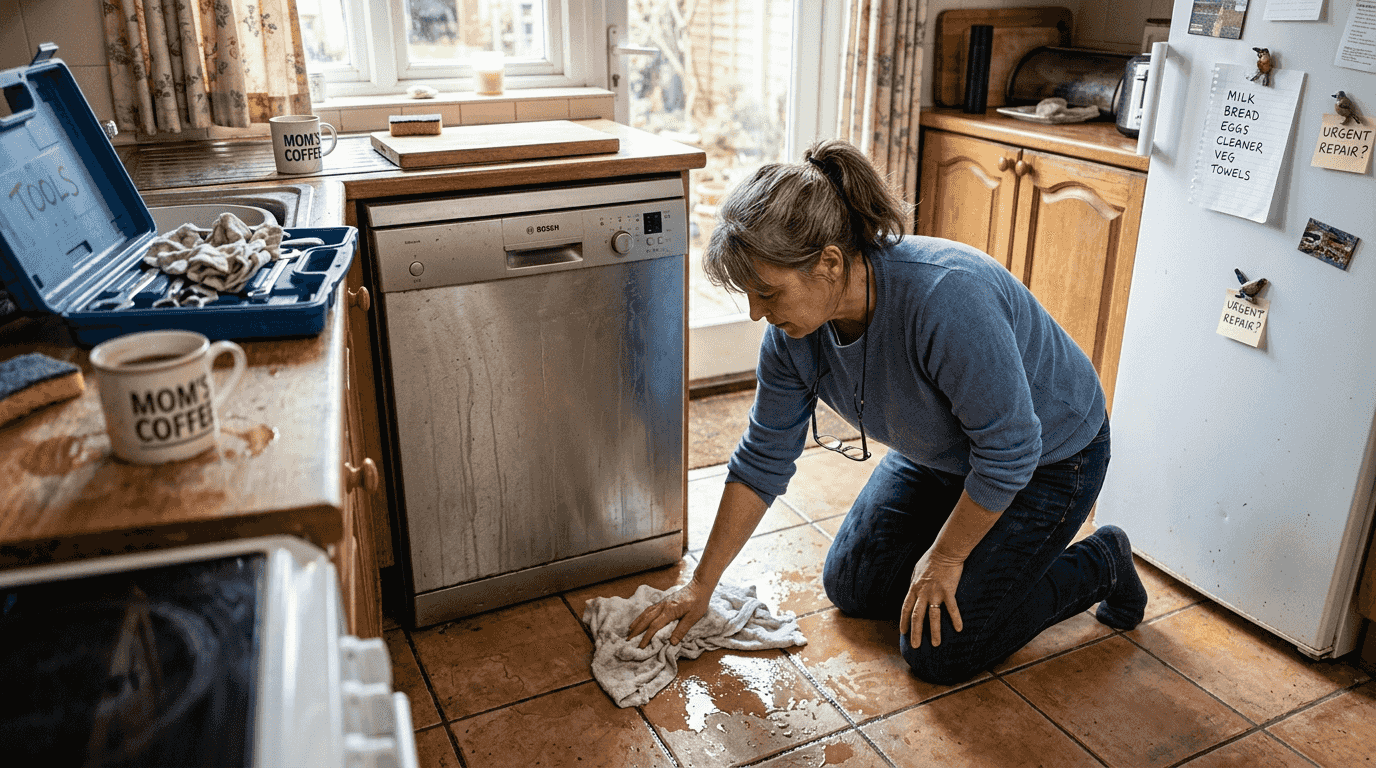
Appliance leaks silently damage thousands of homes every year, yet most homeowners don’t realize their dishwasher or washing machine is at risk until water pools on the floor. Understanding why these leaks happen and how to stop them can save you from costly repairs and stress. This guide reveals the hidden causes behind common appliance failures and gives you practical prevention strategies tailored for Monmouth County, NJ residents.
Table of Contents
- Common Causes Of Appliance Leaks In NJ Homes
- Why Early Detection Of Appliance Leaks Matters
- Maintenance And Prevention Strategies To Avoid Leaks
- Comparing Common Leaking Appliances: Lifespan, Risks, And Costs
- Get Expert Appliance Repair And Maintenance In Monmouth County
- Frequently Asked Questions
Key takeaways
| Point | Details |
|---|---|
| Most household leaks originate from four appliances | Dishwashers, washing machines, refrigerators, and water heaters cause the majority of home water damage incidents. |
| Early leak detection prevents major expenses | Catching leaks quickly through routine checks and water alarms can save thousands in repair bills. |
| Proactive maintenance stops leaks before they start | Regular hose replacements, seal inspections, and scheduled service visits dramatically reduce leak risks. |
| Water heaters pose the highest failure risk | 75% of units fail before reaching 12 years old, with most failures linked to leaks. |
| Smart monitoring tools provide 24/7 protection | Installing water alarms behind appliances alerts you to problems immediately, even when you’re away. |
Common causes of appliance leaks in NJ homes
Your home’s most essential appliances harbor weak points that can turn into expensive leaks without warning. Each machine has specific failure modes that Monmouth County homeowners should understand.
Dishwashers leak from worn door gaskets or clogged drains that can’t handle food debris buildup. The rubber seal around the door deteriorates over time from heat and detergent exposure, creating gaps that let water escape during wash cycles. Clogged drain lines force water to back up and overflow, especially if you skip regular filter cleaning.
Washing machine failures mostly stem from supply line problems or internal valve issues. Rubber hoses crack and bulge after years of water pressure stress, particularly if you live in an older home with high mineral content in your water. The inlet valves that control water flow can stick open or develop seal failures, causing continuous dripping or sudden floods.
Refrigerator leaks typically trace back to two culprits: blocked defrost drains and failing door seals. When the defrost drain clogs with ice or food particles, meltwater has nowhere to go except onto your kitchen floor. Worn door gaskets let warm air enter the freezer compartment, creating excess condensation that eventually leaks out.
Water heaters present the most serious leak risk in your home. Corrosion eats through tank walls as mineral deposits accumulate over years of use. The temperature and pressure relief valve can fail from sediment buildup or age, leading to slow drips or catastrophic ruptures.
Here’s what makes these appliances particularly vulnerable:
- Constant water pressure stresses hose connections and internal seals
- Temperature fluctuations cause rubber components to expand and contract
- Mineral deposits from hard water corrode metal parts and clog drain lines
- Age naturally degrades gaskets, valves, and protective coatings
Pro Tip: Check the manufacture date on your appliances. Most major brands stamp a date code on the serial number label that reveals the unit’s age, helping you anticipate when components might fail.
Why early detection of appliance leaks matters
The difference between a minor repair and a major disaster often comes down to how quickly you notice a problem. Detecting issues early can save thousands in restoration costs and prevent structural damage to your home.
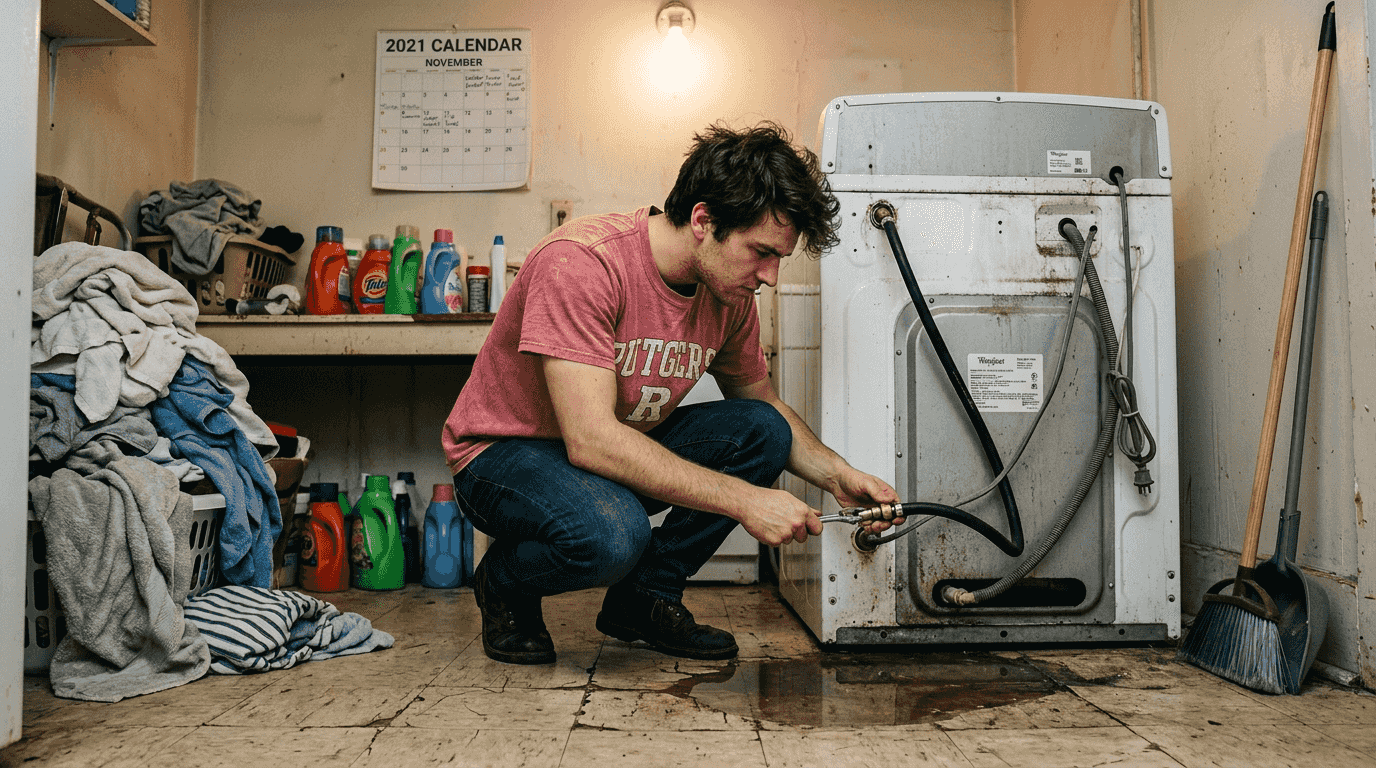
Small leaks announce themselves through subtle signals if you know what to listen for. You might hear hissing sounds behind the washing machine or dripping noises from under the dishwasher when no cycle is running. These audio clues often emerge weeks before visible water damage appears.
Your water bill provides another early warning system. A sudden spike in usage without explanation suggests a hidden leak somewhere in your appliance network. Compare your monthly statements and investigate any unusual increases, even small ones.
Visual inspections catch problems that your ears and utility bills might miss. Follow this detection routine:
- Pull appliances away from walls monthly to check for moisture, rust, or mold
- Run your hand along hose connections to feel for dampness or corrosion
- Look for water stains on flooring, walls, or nearby cabinets
- Inspect the area under sinks and behind toilets for pooling water
- Check appliance drip pans for excessive water accumulation
Water alarms transform detection from a manual task into an automatic safeguard. These inexpensive devices sit on the floor behind appliances and sound an alert the moment moisture touches their sensors. You’ll know about a leak within minutes instead of days or weeks.
Urgent repair situations demand immediate professional attention. Active pooling water, continuous dripping, or visible spraying requires shutting off the water supply and calling a technician right away. Delaying even a few hours allows water to seep into subflooring, drywall, and insulation, multiplying your repair costs exponentially.
Pro Tip: Take photos of the area behind your appliances when they’re first installed. These baseline images make it easy to spot new water stains, rust spots, or position changes during future inspections.
Maintenance and prevention strategies to avoid leaks
Preventing leaks requires less effort and money than repairing water damage. A structured maintenance approach keeps your appliances running safely for years.
Replace washing machine hoses every 5 years, even if they look fine. Standard rubber hoses develop invisible internal weaknesses that can burst without warning. Upgrade to braided stainless steel hoses for superior durability and burst resistance. These reinforced lines handle pressure surges better and last significantly longer than rubber alternatives.
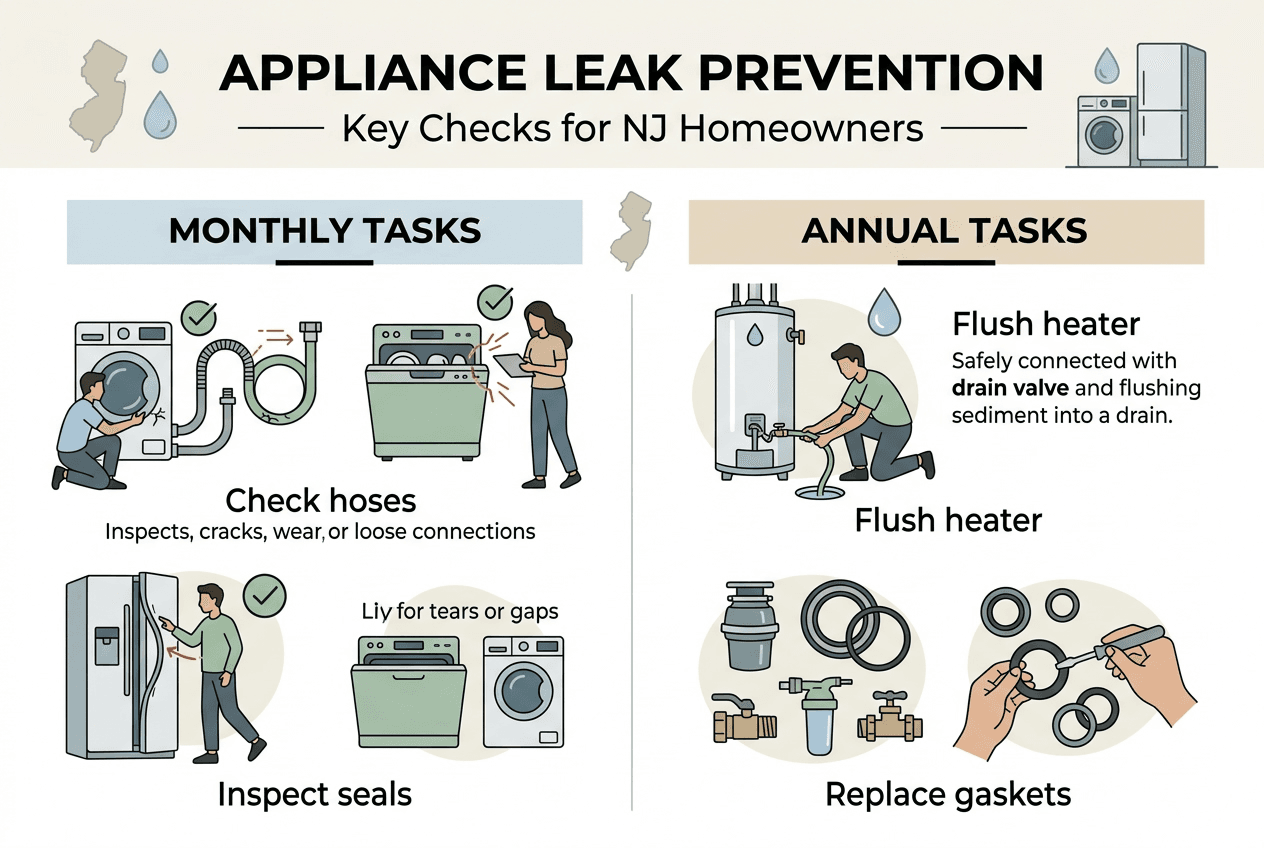
Dishwasher door gaskets need regular attention to maintain their seal integrity. Clean the rubber gasket monthly with warm soapy water to remove food particles and grease that degrade the material. Inspect for cracks, tears, or areas where the seal no longer sits flush against the door frame. Replace gaskets showing any wear rather than waiting for a leak to develop.
Water detection technology provides 24/7 monitoring without your involvement. Installing water alarms behind refrigerators and other appliances creates an early warning system that catches problems immediately. Position sensors in drip pan areas and beneath hose connections where leaks typically originate.
Water heater maintenance prevents the most catastrophic appliance failures. Test the pressure relief valve annually by lifting the lever and confirming water flows freely through the discharge pipe. Inspect the tank exterior for rust spots, corrosion, or moisture accumulation. Drain several gallons from the tank yearly to flush sediment that accelerates corrosion and reduces efficiency.
A comprehensive maintenance schedule keeps all your appliances operating safely:
- Monthly: Clean dishwasher and refrigerator door seals, check visible hoses for bulges or cracks
- Quarterly: Inspect water heater for leaks, test pressure relief valve operation
- Annually: Replace washing machine supply lines, schedule professional appliance inspections
- Every 5 years: Replace all rubber supply hoses with braided stainless steel versions
This maintenance timeline by appliance type clarifies your prevention tasks:
| Appliance | Monthly Tasks | Annual Tasks | Replacement Schedule |
|---|---|---|---|
| Dishwasher | Clean door gasket, check for pooling water | Inspect spray arms and drain filter | Replace door seal every 8 years |
| Washing Machine | Check hose connections, clean lint filter | Inspect inlet valves, test drain pump | Replace hoses every 5 years |
| Refrigerator | Clean door seals, check drip pan | Clear defrost drain, vacuum coils | Replace water filter every 6 months |
| Water Heater | Visual inspection for leaks | Test relief valve, drain sediment | Replace tank every 10 years |
Pro Tip: Create a digital maintenance log using your smartphone. Photograph completed tasks and set calendar reminders for upcoming inspections. This documentation proves valuable when selling your home or filing insurance claims.
Comparing common leaking appliances: lifespan, risks, and costs
Understanding how different appliances compare helps you prioritize maintenance efforts and budget for replacements. Each machine type carries distinct risk profiles and financial implications.
Water heaters top the failure risk list. 75% of units fail before 12 years old, with the majority of those failures involving leaks or catastrophic bursts. A failing water heater can release 40+ gallons of water in minutes, causing devastating damage to multiple rooms.
Washing machine failures rank among the top ten sources of residential water damage claims. The average claim exceeds $5,000 in repair costs once you factor in flooring replacement, drywall repair, and mold remediation. These machines combine high water volume with vulnerable hose connections, creating significant leak potential.
Dishwashers and refrigerators present moderate but frequent leak risks. While individual incidents cause less damage than washing machine or water heater failures, these appliances leak more often due to their complex plumbing systems and regular use cycles.
Here’s how the major appliances stack up:
| Appliance Type | Average Lifespan | Leak Risk Level | Average Repair Cost | Primary Failure Points |
|---|---|---|---|---|
| Water Heater | 8 to 12 years | Very High | $1,200 to $3,000 | Tank corrosion, pressure valve failure |
| Washing Machine | 10 to 14 years | High | $300 to $600 | Supply hoses, inlet valves, door seal |
| Dishwasher | 9 to 12 years | Moderate | $200 to $400 | Door gasket, drain pump, spray arm seal |
| Refrigerator | 12 to 15 years | Moderate | $250 to $500 | Defrost drain, water line, door seal |
These cost figures reflect typical repair expenses, not the secondary damage water leaks cause. Factor in flooring replacement, wall repairs, and potential mold treatment to understand the true financial impact.
Recognizing replacement signals helps you avoid emergency situations. Age alone justifies replacement when appliances approach their expected lifespan limits. Combine age with visible corrosion, recurring repairs, or efficiency declines to make informed replacement decisions.
Proactive maintenance extends these lifespans considerably. Well maintained appliances often exceed average expectations by 20% to 30%, delivering better value and fewer emergency repairs.
Get expert appliance repair and maintenance in Monmouth County
Preventing appliance leaks takes knowledge, but professional service ensures your maintenance actually works. Expert Appliance has served Monmouth County homeowners since 1988, providing trusted repair services for all major appliance brands including Whirlpool, GE, Samsung, and LG.
Schedule regular maintenance visits using our comprehensive appliance maintenance checklist to catch small problems before they become expensive leaks. Our technicians inspect hoses, test seals, and verify proper drainage on every service call. When leaks do happen, our same day emergency service minimizes water damage and gets your appliances working safely again. We offer upfront pricing and guaranteed satisfaction on every repair, so you know exactly what to expect.
Frequently asked questions
What are the most common signs that an appliance is leaking?
Listen for dripping or hissing sounds coming from behind appliances when they’re not running. Look for moisture pools, water stains on floors or walls, and unexplained increases in your water bill. Musty odors near appliances often indicate hidden moisture from slow leaks. These warning signs require immediate investigation to prevent extensive damage.
How often should washing machine hoses be replaced to prevent leaks?
Replace washing machine hoses every 5 years regardless of visible condition, since internal deterioration occurs before external signs appear. Switch to braided stainless steel hoses for enhanced durability and superior burst protection. Mark your calendar with installation dates to track replacement schedules. Following proper washer care practices extends hose life and prevents unexpected failures.
What is the lifespan of a typical water heater before leaks become common?
Most water heaters last 8 to 12 years before leak risks increase significantly. Age remains the primary predictor of failure, with units over 10 years old requiring careful monitoring. Hard water accelerates tank corrosion and shortens lifespan in areas with high mineral content. Annual inspections become critical once your water heater passes the 8 year mark.
Can I prevent refrigerator leaks without professional help?
Yes, homeowners can prevent most refrigerator leaks through simple maintenance tasks. Clean the defrost drain quarterly by flushing it with hot water and vinegar to remove blockages. Inspect door seals monthly for cracks or gaps and wipe them clean of food residue. Check the drip pan every few months and empty it if water accumulates. These DIY steps catch 80% of potential leak sources before they cause damage.
How much does water damage from appliance leaks typically cost?
Washing machine leak claims average over $5,000 when accounting for flooring, drywall, and mold remediation. Water heater failures can exceed $10,000 if multiple rooms sustain damage. Dishwasher and refrigerator leaks typically range from $2,000 to $4,000 depending on how long water flows before detection. These figures exclude appliance replacement costs, making prevention vastly more economical than repair.