

Most homeowners assume a washer or dryer that suddenly stops working has a serious mechanical problem. The reality? A small, inexpensive rubber belt is often the only thing standing between a fully working appliance and a machine that just hums and does nothing. Belts transfer rotational motion from the motor to the drum so spinning, tumbling, and agitation work effectively. If you live in Monmouth County and your laundry is piling up, this guide gives you the fastest path from confusion to a working machine.
Table of Contents
- What does an appliance belt do?
- Common signs of belt failure you should know
- DIY or call a pro? Diagnosing and fixing appliance belt problems
- Why belts fail: preventive care for longer appliance life
- Belt-driven vs. direct drive: what homeowners need to know
- Need urgent belt repairs? Fast help for Monmouth County homeowners
- Frequently asked questions
Key Takeaways
| Point | Details |
|---|---|
| Belt failures are common | Washer and dryer breakdowns are frequently caused by simple belt issues you can spot early. |
| Know when to call a pro | If your appliance hums but the drum won’t spin or if you see obvious belt damage, it’s time to act. |
| Prevention saves money | Avoid heavy overloads and regular maintenance to keep belts and appliances running longer. |
| DIY has limits | While many belt fixes are affordable and quick, persistent problems need professional diagnosis to prevent further damage. |
What does an appliance belt do?
Think of the drive belt as the handshake between your appliance’s motor and its drum. The motor generates power, but without the belt, that power never reaches the part that actually moves your clothes. The belt wraps around the drum and connects to a pulley system driven by the motor, creating the spinning or tumbling action you rely on every wash cycle.
Belts transfer rotational motion from the motor to the drum or tub so spinning, tumbling, and agitation work effectively. Without a functioning belt, your washing machine repair needs go from minor to urgent very quickly.
How belts work in different appliances:
- Dryers: The belt wraps around the entire drum and is driven by a motor pulley, making the drum tumble your clothes through heated air.
- Top-load washers: The belt connects the motor to the transmission, enabling the agitator to move back and forth.
- Front-load washers: The belt drives the drum directly, creating the tumbling motion that cleans clothes.
Most wash and dry cycles depend entirely on the belt completing its rotation without slipping or snapping. One broken belt stops everything.
| Feature | Belt-driven | Direct drive |
|---|---|---|
| Belt present | Yes | No |
| Repair cost | Lower | Higher |
| DIY-friendly | Yes | Less so |
| Noise level | Slightly higher | Quieter |
| Common failure | Belt wear | Motor/coupling |
Common signs of belt failure you should know
Understanding what appliance belts do sets the stage for recognizing the telltale signs when something isn’t right. The tricky part is that belt failure symptoms can look like bigger problems at first glance. Knowing what to listen and look for saves you time and money.
Common failure symptoms include the motor running but the drum not spinning, visible cracks or frays on the belt, and squealing noises during operation. These are your clearest signals that the belt needs attention now.
Top warning signs your appliance belt is failing:
- Motor hums or runs, but the drum stays completely still
- A burning rubber smell coming from the machine during a cycle
- Clothes taking much longer than usual to dry
- Squealing, thumping, or slapping sounds during operation
- The drum spins freely and easily when you turn it by hand
- Visible cracks, fraying, or a snapped belt when you open the panel
Stat to know: Most appliance belts last 10 to 15 years with normal household use. If your machine is older and showing these symptoms, the belt is the first place to check before assuming the worst.
Review your washer and dryer care checklist regularly to catch these warning signs before they become emergencies.
Pro Tip: If you open the back or front panel and see a belt with visible cracks, frayed edges, or one that has snapped completely, do not run the machine again. Replace the belt immediately to avoid damaging the motor or drum bearings.
DIY or call a pro? Diagnosing and fixing appliance belt problems
Spotting the symptoms is only the first step. So how do you figure out if you should tackle the repair yourself or call in an expert fast? The answer depends on your comfort level, the appliance’s age, and whether the belt failure is a one-time issue or part of a bigger pattern.
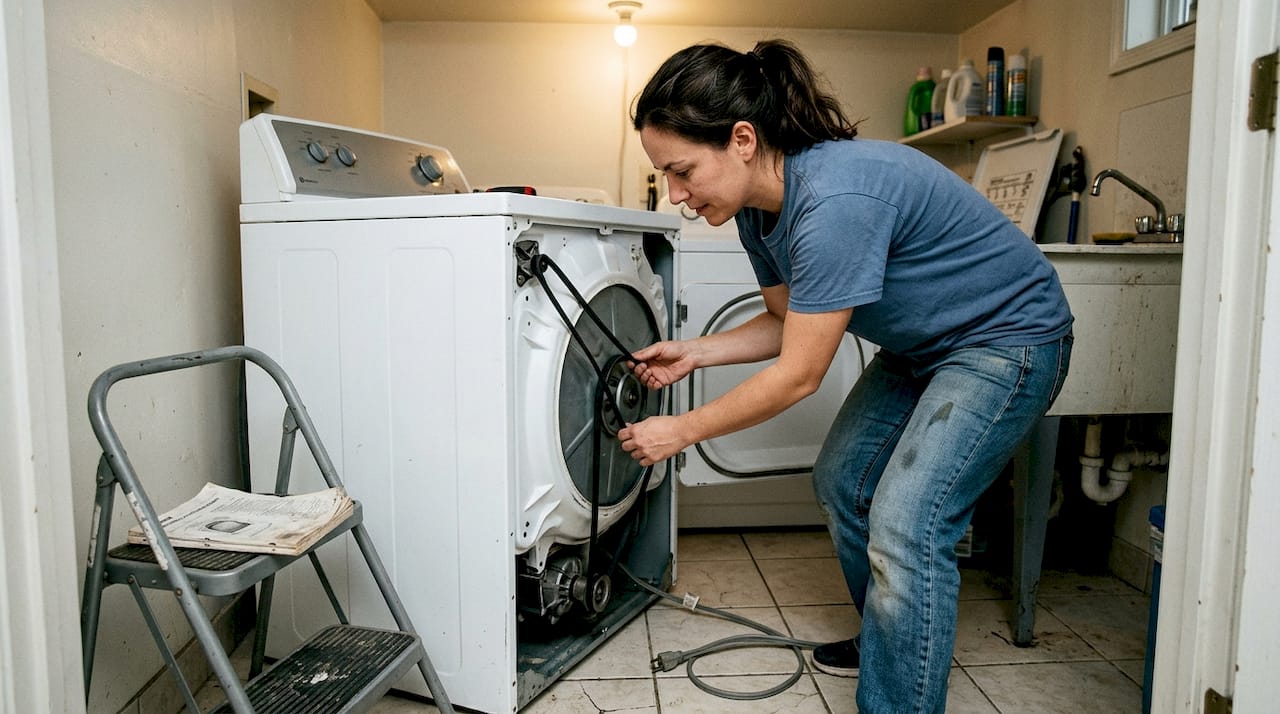
DIY belt replacement costs $15 to $35 for parts, while professional repair runs $140 to $230 including labor. That gap is significant, but so is the risk of a misdiagnosis.
Basic DIY belt replacement steps:
- Unplug the appliance completely before touching anything inside.
- Remove the front or back access panel depending on your model.
- Carefully lift or slide out the drum to expose the belt and pulley system.
- Remove the old belt and note how it was routed around the drum and pulleys.
- Fit the new belt in the same path, making sure it sits flat and centered.
- Reassemble the drum, replace the panel, and run a short test cycle.
For a more detailed walkthrough, the DIY repair guide covers model-specific steps, and the step-by-step washer fix is especially useful for Marlboro homeowners.
| Factor | DIY repair | Professional repair |
|---|---|---|
| Parts cost | $15 to $35 | Included in service |
| Total cost | $15 to $35 | $140 to $230 |
| Time required | 1 to 3 hours | Under 1 hour |
| Risk of error | Moderate | Very low |
| Warranty protection | None | Often included |
| Best for | Single, clear belt snap | Repeat failures, complex diagnosis |
Call a pro if the belt has failed more than once in a short period, if you hear grinding after replacing the belt, or if the appliance is still under warranty. Check the washer & dryer buying guide if you’re weighing repair against replacement.
Pro Tip: Always use OEM (original equipment manufacturer) belts that match your exact model number. Generic belts may fit but often wear out faster, leading to repeat failures within months.
Why belts fail: preventive care for longer appliance life
Whether you opt for DIY or professional repair, prevention is where most Monmouth County homeowners can save the most time and money. Understanding why belts fail in the first place gives you real control over your appliance’s lifespan.
Belt failures result from overload, heat, environmental factors, and normal wear, with most belts lasting 10 to 15 years on average. Push your machine harder than it was designed for, and that timeline shrinks fast.
Main reasons belts wear out early:
- Overloading the drum with clothes that are too heavy or too bulky
- Stopping cycles mid-run repeatedly, which causes the belt to jerk and stress
- Lint-clogged vents that trap heat and accelerate rubber degradation
- Running the machine on uneven floors, which creates vibration and misalignment
Simple habits that extend belt life:
- Never fill the drum more than three-quarters full
- Let cycles complete fully before opening the door or stopping the machine
- Clean the lint trap after every single load, not just occasionally
- Check pockets before washing to prevent hard objects from damaging the drum and belt
- Schedule a yearly inspection of the belt and pulley system
Most common fixable appliance failures start with inexpensive parts like belts. Catching them early costs a fraction of what a full repair or replacement runs.
Pro Tip: Once a year, open the access panel and look at the belt closely. Tiny surface cracks are easy to miss but signal that failure is coming soon. Catching it early means you choose the timing of the repair, not your appliance.
For ongoing care, the appliance maintenance tips page covers a full range of habits that keep machines running longer. And when prevention isn’t enough, professional appliance repair is the fastest way to restore full function.
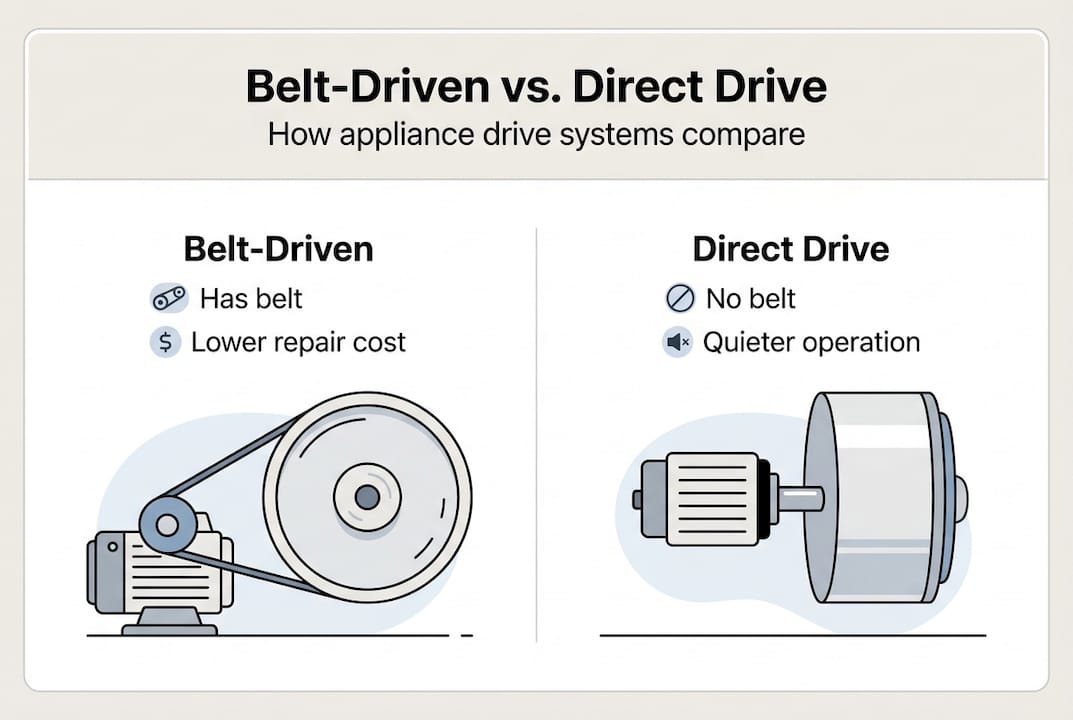
Belt-driven vs. direct drive: what homeowners need to know
Knowing how and why belts fail, the next logical question is how these setups compare, especially if you’re buying new or evaluating an older appliance. Not all washers and dryers use belts, and the difference matters when you’re making repair or purchase decisions.
Direct drive washers lack belts and are quieter, but repairs can be more expensive than common belt-driven models. Watch this
direct drive vs belt-driven washers comparison to see the mechanical differences side by side.
| Feature | Belt-driven | Direct drive |
|---|---|---|
| Noise | Slightly louder | Quieter |
| Repair cost | Lower | Higher |
| DIY repair ease | High | Moderate to low |
| Parts availability | Wide | Brand-specific |
| Longevity | 10 to 15 years | Similar |
Key factors to consider when buying or repairing:
- If you prefer DIY repairs, belt-driven machines give you more flexibility and lower parts costs.
- If noise is a priority in an open-plan home, direct drive models run more smoothly.
- If the appliance is older and belt-driven, a simple belt swap is almost always worth it before replacing the machine.
- If a direct drive motor fails, repair costs can approach the price of a new appliance.
The appliance buying guide breaks down what to look for in both types so you can make a confident decision.
Need urgent belt repairs? Fast help for Monmouth County homeowners
With a clearer understanding of appliance belts and repair choices, here’s how to get help fast if you need it now. A broken belt means no laundry, and in a busy Monmouth County household, that problem compounds quickly.

At Expert Appliance Repair, we’ve been serving Marlboro and the surrounding Monmouth County area since 1988. Our certified technicians carry the most common belt parts on every service call, which means most repairs are completed the same day you call. We work on all major brands, and you can check the full list of brands we repair to confirm we cover your machine. If your appliance stopped working suddenly, our emergency appliance repair service is available around the clock. For non-emergency situations, our same day appliance service gets a technician to your door fast, with upfront pricing and no surprises.
Frequently asked questions
What causes appliance belts to break most often?
Overloading, normal wear, and heat build-up are the top reasons appliance belts break, especially if the appliance is used heavily or not regularly maintained. Belts fail from wear, overload, and heat, and regular maintenance is the most effective way to extend their life.
How do I know if my dryer or washer belt is broken?
If the motor runs but the drum doesn’t spin, you hear squealing or thumping, or the drum turns easily by hand, the belt is likely broken. Motor running but drum not spinning and a drum that free-spins are the clearest signs of belt failure.
Is it worth repairing an old appliance with a belt problem?
If the appliance is otherwise in good condition, a belt repair is simple and inexpensive compared to replacing the entire machine. DIY repairs are low-cost, but a professional can confirm there are no underlying issues driving repeat failures.
Do direct drive washers have belts?
Direct drive washers lack belts and are typically quieter, but repairs can be more costly if the motor or coupling fails compared to a simple belt swap on a belt-driven model.