
TL;DR:
- Appliance efficiency ratings help consumers compare energy use and save money over time.
- ENERGY STAR certification offers additional savings opportunities and rebate eligibility.
- Proper maintenance and using accurate metrics ensure appliances operate at rated efficiency, maximizing savings.
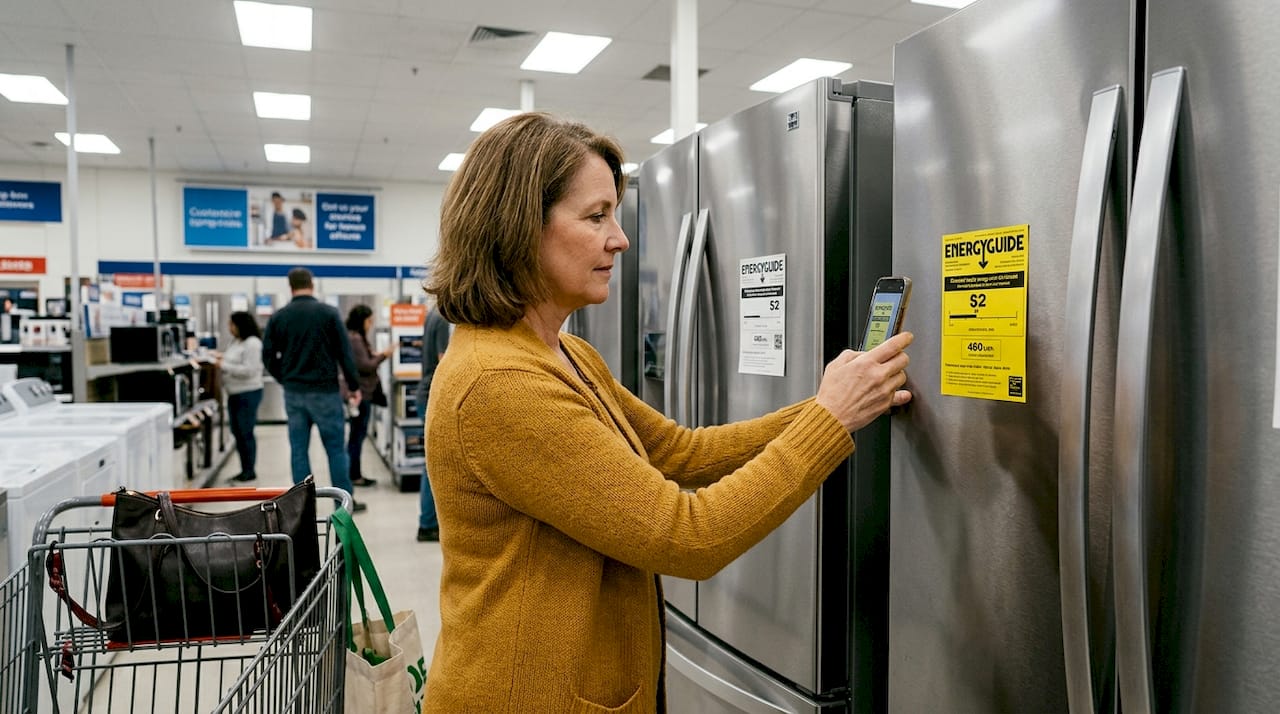
Two refrigerators sit side by side on a showroom floor. Same size, same brand tier, both brand new. But one could cost you over $100 more per year to run than the other. Appliance efficiency ratings are standardized metrics developed by the U.S. Department of Energy to measure and compare energy use across household appliances, and they are the only reliable way to spot that difference before you swipe your card. For homeowners and small business owners in Monmouth County, New Jersey, understanding these ratings means smarter purchases, lower utility bills, and real money back in your pocket.
Table of Contents
- What are appliance efficiency ratings?
- How to read appliance efficiency labels
- Understanding the metrics: EF, UEF, CEF, and kWh
- Benchmark standards and incentives in Monmouth County
- What we wish every appliance buyer knew
- Get expert help with your appliance decisions
- Frequently asked questions
Key Takeaways
| Point | Details |
|---|---|
| Standardized ratings matter | Efficiency ratings make it easy to compare appliances and predict long-term energy costs. |
| Label details guide decisions | Reading EnergyGuide and ENERGY STAR labels reveals both operational costs and potential savings. |
| Local rebates boost ROI | NJ programs offer rebates that combine with federal incentives for quicker payback on efficient models. |
| Lifetime cost beats sticker price | Choosing efficient appliances reduces total ownership costs far more than focusing on upfront price alone. |
What are appliance efficiency ratings?
Appliance efficiency ratings give you a standardized way to compare how much energy different models consume. Without them, you would be comparing apples to oranges every time you shopped for a new washer or refrigerator. The U.S. Department of Energy sets the testing procedures and minimum standards, so every manufacturer plays by the same rules.
The most visible result of this system is the EnergyGuide label, that bright yellow tag you see on appliances in every store. The EnergyGuide label displays annual energy consumption, estimated yearly operating cost, and a bar graph showing how the model compares to similar appliances. It is federally mandated for most major household appliances, so you cannot miss it.
Separate from EnergyGuide is the ENERGY STAR certification. ENERGY STAR marks appliances that exceed federal minimum efficiency standards by a significant margin, typically 10 to 50 percent better than the baseline. Think of EnergyGuide as the report card and ENERGY STAR as the honor roll.
Here is a quick comparison of the two labels:
| Feature | EnergyGuide | ENERGY STAR |
|---|---|---|
| Color | Yellow | Blue |
| Required by law? | Yes, most appliances | No, voluntary |
| Shows energy cost? | Yes | No |
| Indicates top efficiency? | No | Yes |
| Issued by | DOE/FTC | EPA/DOE |
For Monmouth County residents, these ratings do more than satisfy curiosity. They underpin the total cost of ownership calculation, which is the real number that matters. Understanding how appliances impact energy bills in our region helps you see why a $50 price difference at the register can easily flip when you factor in five years of electricity costs.
Key reasons efficiency ratings matter for local buyers:
- Lifetime savings: A more efficient model can save hundreds over its lifespan.
- Rebate eligibility: Many NJ incentives require ENERGY STAR certification.
- Environmental impact: Lower energy use means a smaller carbon footprint.
- Resale value: Efficient appliances are increasingly attractive to buyers.
“The cheapest appliance to buy is rarely the cheapest appliance to own.”
Knowing how appliance filters and efficiency connect also matters, since a clogged filter forces any appliance to work harder, pushing real-world consumption well above its rated figure. Ratings are your starting point, not your finish line. With a basic understanding in place, let’s decode how these ratings appear on labels and what details you should look for.
How to read appliance efficiency labels
Once you know what efficiency ratings mean, the next step is learning to decode the labels on appliances before you buy. The yellow EnergyGuide label packs a lot of information into a small space, and knowing where to look saves you from making a costly mistake.
The EnergyGuide label shows three core data points: estimated annual energy use in kilowatt-hours (kWh) or therms, the estimated yearly operating cost, and a comparison bar graph. That bar graph places the model you are looking at somewhere between the least and most efficient similar models on the market.
Here is what each element tells you:
| Label element | What it means | Why it matters |
|---|---|---|
| Annual kWh | Total energy consumed per year | Directly tied to your electric bill |
| Estimated cost | Based on a national average rate | Adjust for NJ’s higher rates |
| Comparison graph | Range of similar models | Shows where this unit ranks |
| ENERGY STAR logo | Exceeds federal standards | Qualifies for rebates |
How to read an appliance label step by step:
- Find the annual kWh figure first. This is the most reliable number.
- Ignore the printed cost estimate if you pay more than the national average rate.
- Check where the model falls on the comparison bar. Closer to the left means more efficient.
- Look for the ENERGY STAR logo in the corner.
- Cross-reference with how to read an EnergyGuide label for a deeper breakdown.
For NJ residents, there is a bonus step. The NJ Clean Energy Program offers rebates for qualifying ENERGY STAR appliances through utilities like JCP&L. That means an efficient purchase can earn you cash back on top of the energy savings.
Pro Tip: Always use the kWh figure rather than the printed dollar estimate when comparing appliances in New Jersey. NJ electricity rates run higher than the national average used to calculate that cost estimate, so the actual savings from a more efficient model will be even greater than the label suggests.
A quick note on appliance cleaning for energy savings: even the most efficient appliance will underperform if it is dirty or poorly maintained. The label rating assumes a clean, properly functioning unit.
Understanding the metrics: EF, UEF, CEF, and kWh
After understanding the labels, it is crucial to grasp which efficiency metrics are used for different appliance types. Not every appliance uses the same measurement, and knowing which number to focus on prevents confusion at the store.
Energy Factor (EF) and Uniform Energy Factor (UEF) apply primarily to water heaters. A higher UEF means the water heater converts more of the energy it consumes into hot water. The DOE transitioned from EF to UEF in recent years to better reflect real-world use patterns. For a standard electric water heater, a UEF above 0.90 is solid; heat pump water heaters can reach UEF values above 3.0.
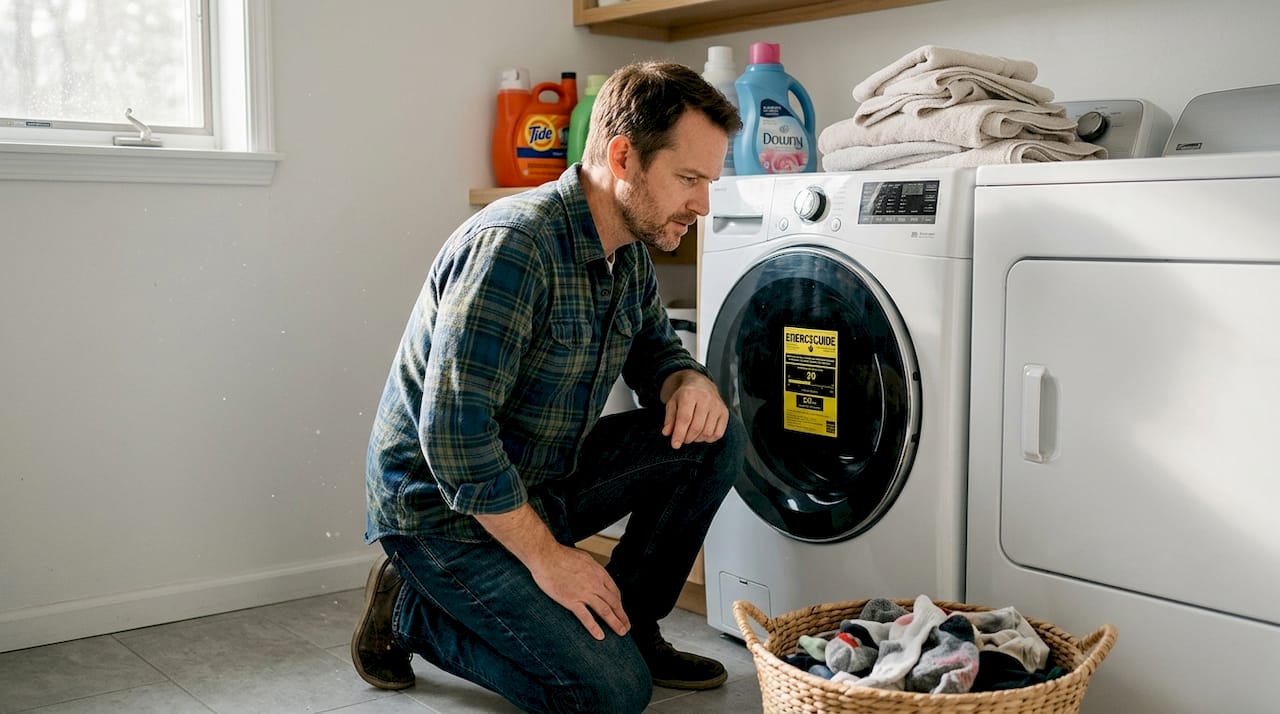
Combined Energy Factor (CEF) is the metric for clothes dryers. CEF measures how many pounds of laundry a dryer can dry per kilowatt-hour of energy used. A higher CEF means more drying per dollar. ENERGY STAR certified dryers must meet a minimum CEF threshold, and the most efficient models far exceed it.
Annual kWh is the go-to metric for refrigerators and many other plug-in appliances. It tells you the total electricity the appliance will consume over a full year under standardized test conditions. DOE test procedures standardize how these measurements are taken, so comparisons across brands are valid.
Here is a quick reference for which metric to check by appliance:
- Refrigerators: Annual kWh (lower is better)
- Water heaters: UEF (higher is better)
- Clothes dryers: CEF (higher is better)
- Dishwashers: Annual kWh and water use (lower is better)
- Washers: Integrated Modified Energy Factor, or IMEF (higher is better)
ENERGY STAR refrigerators use up to 350 kWh less per year than standard models, which translates to meaningful savings over a 10-year appliance lifespan. For local dryer tips that connect these metrics to everyday use, our dryer efficiency tips guide breaks it down for Monmouth County homeowners specifically.
Pro Tip: Ratings are calculated under average use conditions. If your household runs extra-large loads, keeps the fridge in a hot garage, or does laundry daily, your real-world consumption will be higher than the label suggests. Factor in your actual habits when comparing models.
For a broader look at major appliance energy use, understanding these metrics is the foundation. Check the ENERGY STAR dryer benchmarks for the latest certified model requirements.
Benchmark standards and incentives in Monmouth County
With metric benchmarks in mind, let’s look at how these standards translate to practical savings and incentives in Monmouth County. Knowing the numbers is one thing. Knowing what qualifies for rebates and how to claim them is where the real payoff happens.
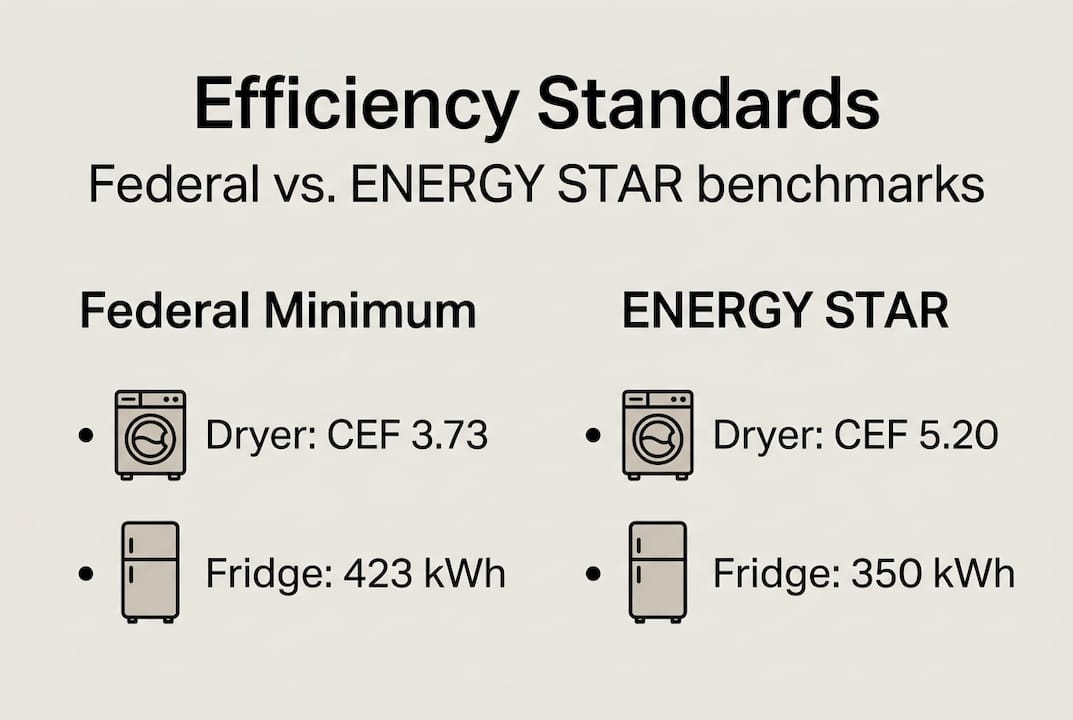
ENERGY STAR clothes dryers require a CEF of 5.20 or higher, while federal minimums are set considerably lower. For refrigerators in the 16 to 20 cubic foot range, the most efficient models consume under 400 kWh annually. These benchmarks give you a clear target when shopping.
Here is a snapshot of benchmark standards by appliance type:
| Appliance | Federal minimum | ENERGY STAR benchmark |
|---|---|---|
| Clothes dryer | CEF 3.73 | CEF 5.20+ |
| Refrigerator (16-20 cu ft) | ~450 kWh/yr | Under 400 kWh/yr |
| Water heater (electric) | UEF 0.90 | UEF 2.0+ (heat pump) |
| Dishwasher | 307 kWh/yr | Under 270 kWh/yr |
The NJ Clean Energy Program provides rebates for ENERGY STAR appliances through local utilities. JCP&L customers in Monmouth County can apply directly for appliance rebates. Federal tax credits also apply to certain high-efficiency upgrades like heat pump water heaters, and these stack with state rebates for greater combined savings. Check NJ rebates and incentives for a current list of available programs.
Steps to claim rebates in Monmouth County:
- Purchase a qualifying ENERGY STAR certified appliance.
- Keep your receipt and the model’s ENERGY STAR documentation.
- Visit the NJ Clean Energy Program or JCP&L website to download the application.
- Submit the completed form with proof of purchase within the deadline.
- Receive your rebate check or bill credit within the stated processing window.
Beyond rebates, maintenance and recycling play a major role in maximizing your return on investment. Appliance recycling in Marlboro, NJ helps you responsibly dispose of old units while sometimes earning additional incentives. Pairing a new efficient appliance with consistent appliance maintenance tips keeps performance close to the rated efficiency year after year. For a deeper look at why cleanliness matters, our guide on appliance cleaning in NJ covers the specifics.
What we wish every appliance buyer knew
Now that you have a practical roadmap, here is some hard-won wisdom to take your efficiency game further. After years of servicing appliances across Monmouth County, we have seen the same mistakes repeat themselves.
The biggest one? Buyers focus on the sticker price and ignore lifetime cost. A refrigerator that costs $150 less upfront but uses 200 more kWh per year will cost you more within three years. Lab tests don’t capture real-world variability, but higher upfront cost on an efficient model is generally repaid quickly through lower energy bills.
Ratings also assume appliances are properly maintained. A dryer with a clogged lint trap or a refrigerator with worn door seals will consume far more energy than its label promises. The benefits of regular appliance service go beyond avoiding breakdowns. They keep your appliances running at or near their rated efficiency, which protects the investment you made when you chose a high-efficiency model.
NJ rebates combined with federal credits mean premium appliances can pay for their price premium faster than most buyers expect. Do not let the upfront number scare you off before you run the full math.
Pro Tip: Before any appliance purchase, calculate the five-year total cost: purchase price plus estimated annual energy cost multiplied by five. That number tells the real story, and it almost always favors the more efficient model.
Get expert help with your appliance decisions
Understanding efficiency ratings is a great first step, but getting the most out of your appliances over time takes consistent care and expert support.
At Expert Appliance Repair, we have been helping Monmouth County homeowners and small businesses since 1988. Whether you need a tune-up on a high-efficiency unit, repairs on a major brand, or guidance on which appliance brands we repair, our team is ready to help. We offer same-day appliance service across Marlboro and surrounding towns, with upfront pricing and no surprises. From refrigerators to dryers to appliance vacuum repair, we keep your efficient appliances running at peak performance so your investment pays off every month.
Frequently asked questions
How do appliance efficiency ratings affect my energy bill?
Higher efficiency ratings mean your appliance draws less power to do the same job, and ENERGY STAR models use 10 to 50 percent less energy than standard models, which can cut that portion of your bill significantly over time.
What’s the difference between EnergyGuide and ENERGY STAR labels?
EnergyGuide shows annual energy use and estimated cost for every covered appliance, while ENERGY STAR marks appliances that go well beyond the federal minimum efficiency threshold.
How do I claim rebates for efficient appliances in Monmouth County?
Purchase a qualifying ENERGY STAR model, then apply through the NJ Clean Energy Program or your utility like JCP&L with your receipt and model documentation.
Do efficiency ratings guarantee lower bills for my business?
Ratings are a reliable benchmark, but actual consumption varies based on your usage habits, the size of the unit, and how well the appliance is maintained.
Can I trust manufacturer claims, or should I rely on DOE and ENERGY STAR ratings?
Always rely on verified DOE and AHRI ratings over manufacturer marketing claims, since those third-party figures are tested under controlled, standardized conditions.