
TL;DR:
- Most oven heating issues are caused by simple problems like tripped breakers or incorrect settings.
- Common component failures include heating elements for electric ovens and igniters for gas ovens.
- Regular early checks and professional repairs help prevent costly oven breakdowns over time.
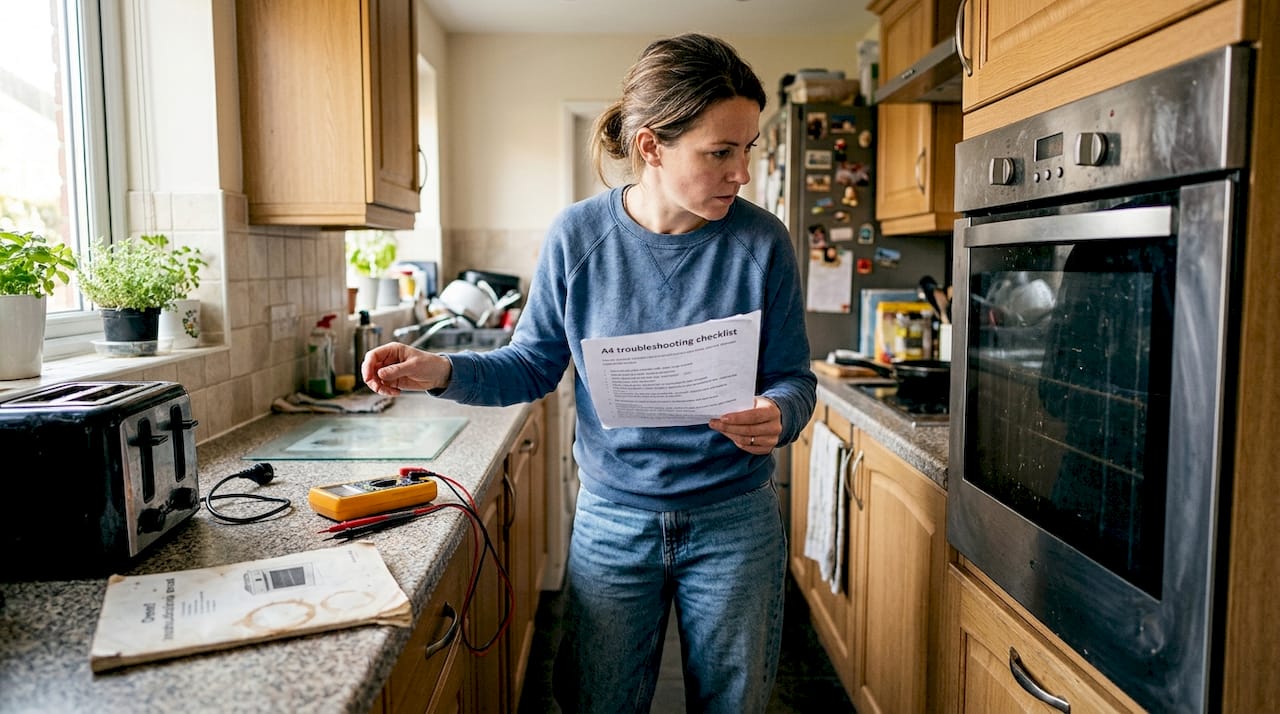
Even brand-new ovens can suddenly stop heating, and when yours goes cold, the first instinct is to panic. Most homeowners assume the worst: a failed appliance, a huge repair bill, or a trip to the appliance store. The reality is far less dramatic. The vast majority of oven heating failures trace back to a small set of overlooked settings, tripped breakers, or worn components that a qualified technician can fix quickly. This guide walks you through what to check yourself, what the most common component failures look like, and exactly when it makes sense to call a professional in Monmouth County.
Table of Contents
- Quick checks: Simple reasons ovens stop heating
- Component failures: What really breaks inside your oven
- Brand quirks and common oven myths
- When to repair, DIY, or call a pro
- What most homeowners miss about oven breakdowns
- Get expert oven repair fast in Monmouth County
- Frequently asked questions
Key Takeaways
| Point | Details |
|---|---|
| Start with simple checks | Power interruptions and settings cause most heating issues and are often easy for you to fix. |
| Know key failure parts | Heating elements and igniters are the most common oven components to fail and usually require professional help. |
| Brand matters less than care | No oven brand is immune—regular use awareness and maintenance prevent breakdowns best. |
| DIY versus professional repairs | Simple troubleshooting is safe for homeowners, but complex or dangerous repairs need an expert. |
| Speed matters for repairs | Calling the right local service promptly can prevent small problems from turning into costly repairs. |
Quick checks: Simple reasons ovens stop heating
Before you start worrying about parts or repair costs, run through these basic checks. You would be surprised how often the fix takes less than five minutes.
Start with your circuit breaker. Electric ovens run on a 240V double-pole breaker, and a partial trip is more common than most people realize. A partial trip means one leg of the breaker flips while the other stays on, so your oven clock and light may still work while the heating elements get zero power. Go to your electrical panel and flip the breaker fully off, then back on. That alone resolves a significant portion of no-heat calls, as basic oven power issues like tripped 240V breakers are among the first things the Maytag troubleshooting guide tells you to check.
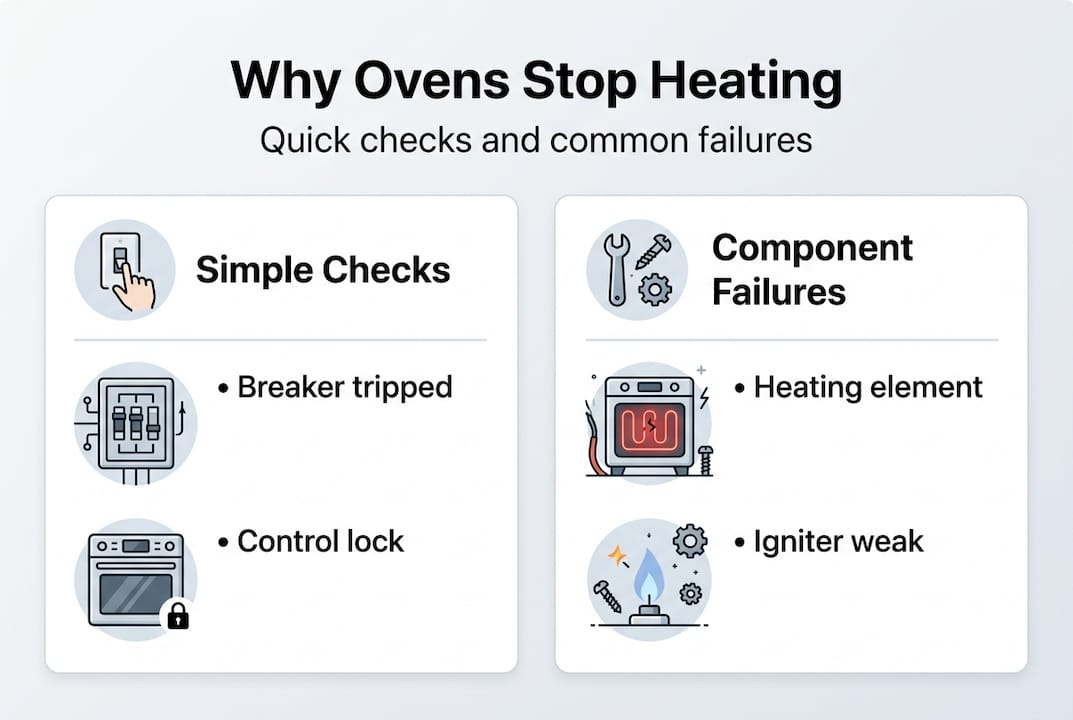
Next, look at your oven’s control panel. Many modern ovens have a control lock or demo mode, and both can be activated accidentally. Control lock disables all inputs. Demo mode keeps the display and lights running but cuts power to the heating elements entirely. Check your owner’s manual for how to exit these modes. It usually involves holding a button combination for three to five seconds.
Also verify that a delayed start has not been set. Some ovens allow you to program a cook start time hours in advance. If someone in your household accidentally set this, the oven simply waits until that time to begin heating.
For gas ovens, confirm the gas supply valve behind or beneath the range is fully open. A valve that is only partially open can prevent the burner from igniting reliably.
Here is a quick checklist to run through first:
- Flip the circuit breaker off and back on fully
- Check for control lock or demo mode on the display
- Look for an active delayed start setting
- Confirm the gas valve is open (gas ovens)
- Make sure the door is closing and latching properly
Pro Tip: Take a photo of your oven’s control panel before you start pressing buttons. If you accidentally change a setting, you will have a reference point to reset everything.
“Checking the basics first is not just good advice, it is the fastest way to avoid an unnecessary service call. Many homeowners skip straight to assuming a part has failed when the issue is a setting or a breaker.”
For more on this, our common oven troubleshooting guide covers these starting points in detail, and our step-by-step oven fixes resource walks you through each check visually.
Component failures: What really breaks inside your oven
If your basic checks do not reveal the issue, the culprit is probably a key oven component. This is where things get a bit more technical, but understanding what each part does helps you describe the problem accurately when you call for service.
Electric ovens use two main heating elements: the bake element at the bottom and the broil element at the top. When a bake element fails, the oven will not heat from below, but the broil function may still work. That is actually a useful diagnostic clue. If broil works but bake does not, you are almost certainly looking at a failed bake element. A healthy element glows a steady, even orange-red. A broken element may show dark spots, visible cracks, or simply not glow at all.
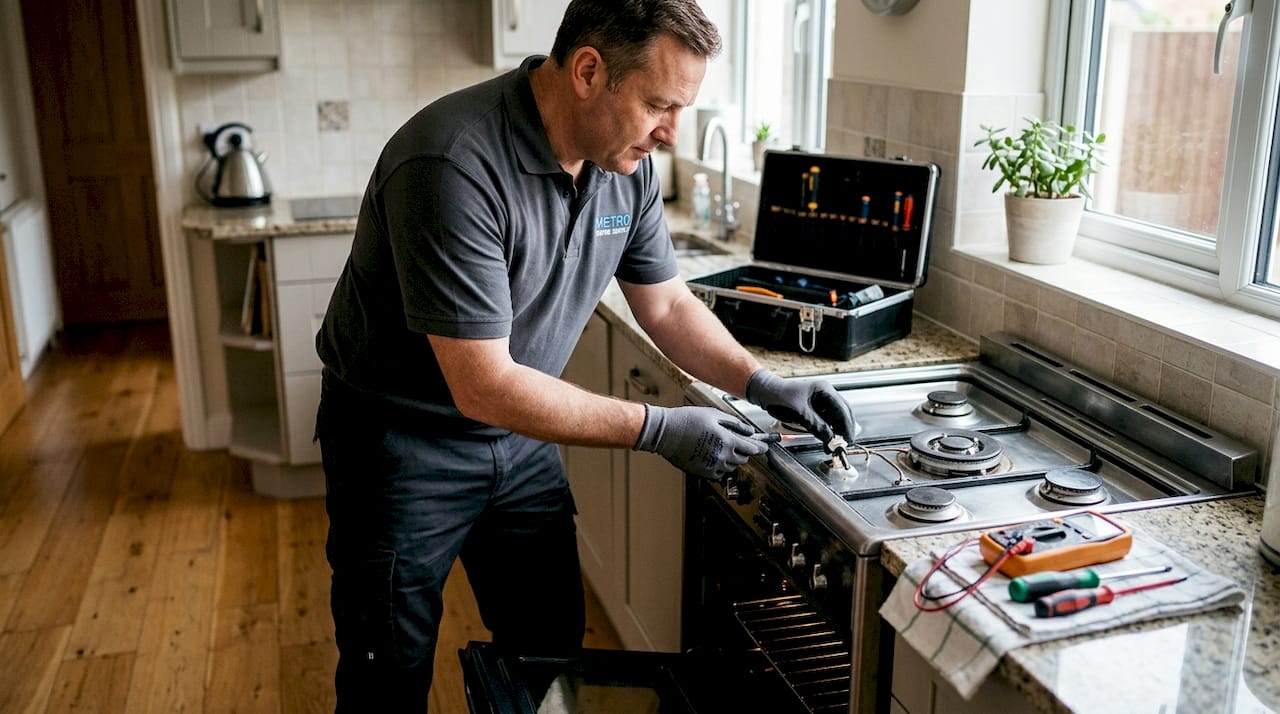
Gas ovens rely on an igniter to open the gas valve and light the burner. Over time, igniters weaken and draw less electrical current, which means the safety valve never fully opens. The result is an oven that clicks, tries to light, but never actually heats. Elements and igniters are among the most cited points of failure by repair professionals across all brands.
Here is a quick comparison of symptoms by component:
| Component | Symptom | Oven type |
|---|---|---|
| Bake element | No heat from below, broil works | Electric |
| Broil element | No browning on top, bake works | Electric |
| Igniter | Clicking but no flame, weak heat | Gas |
| Thermostat | Wrong temperature, uneven cooking | Both |
| Control board | Random errors, no response to input | Both |
| Thermal fuse | Total no-heat, no error codes | Both |
Other components that can mimic element failure include the electronic control board, the thermal fuse, and wiring connections. A burned-out thermal fuse, for example, cuts all power to the heating circuit as a safety measure. You get a dead oven with no error codes, which looks exactly like a failed element from the outside.
For a deeper look at electric oven repairs and what each repair involves, we have a dedicated resource. And before you attempt any internal inspection, read through our oven repair safety tips first.
Pro Tip: If you see any visible burn marks, melted insulation, or smell something acrid when the oven is on, stop using it immediately. These are signs of electrical arcing or a wiring fault, and continuing to run the oven can create a fire hazard.
Brand quirks and common oven myths
Components can fail in any oven, but sometimes brand quirks or popular myths cloud what is really happening. Let us clear a few things up.
The biggest myth is that certain brands simply do not break. Every manufacturer produces ovens with heating elements and igniters, and those parts wear out over time regardless of the badge on the door. Brand data consistently shows that elements and igniters are universal weak points across all manufacturers. Paying more for a premium brand reduces some risks but does not eliminate them.
That said, brands do have tendencies worth knowing:
- Samsung and LG: Electronic control boards and display panels are more frequently cited in service calls than element failures
- Whirlpool and Maytag: Bake elements and thermal fuses are common service items after several years of use
- GE and Frigidaire: Igniter degradation in gas models is a well-known service pattern
- Viking and other luxury brands: Sophisticated electronic controls can be expensive to replace, and parts availability varies
For homeowners in Monmouth County with higher-end appliances, our Viking oven repairs page explains what to expect from luxury brand service.
Statistic to know: Industry service data suggests that roughly 35 to 40 percent of oven service calls involve a simple fix such as a tripped breaker, a setting issue, or a single worn component rather than a major system failure. Most ovens are repairable, not replaceable.
Here is a comparison of common failure patterns by brand category:
| Brand category | Most common failure | Secondary issue |
|---|---|---|
| Budget brands | Bake element, thermal fuse | Igniter (gas) |
| Mid-range brands | Control board, bake element | Thermostat |
| Luxury brands | Electronic controls, igniter | Wiring connections |
The takeaway is simple: no brand is immune, and knowing your oven’s tendencies helps you have a more informed conversation with your repair technician.
When to repair, DIY, or call a pro
Knowing what is wrong is only the start. Deciding how and who should fix it is just as important, especially when safety is involved.
Here is a practical step-by-step approach to diagnosing and resolving an oven that will not heat:
- Start with settings and power. Check the breaker, control lock, demo mode, and delayed start.
- Do a visual inspection with the oven off and cooled. Look at the bake and broil elements for visible damage.
- Turn off power at the breaker before touching any internal components.
- If you find a visibly damaged element and are comfortable with basic appliance repair, a bake element replacement is one of the more manageable DIY tasks.
- If the issue is unclear, involves gas, or requires accessing the control board or wiring, call a qualified technician.
Some warning signs that mean you should call for help immediately:
- Burning smell or smoke from the oven
- Sparks or visible arcing inside the cavity
- Smell of gas near a gas oven
- No power to the oven at all after checking the breaker
- Error codes you cannot clear
“Some simple checks you can do yourself, but complex repairs require a professional. Attempting internal electrical or gas repairs without proper training creates real safety risks.”
For Monmouth County homeowners, local service matters. A technician who knows your area can arrive faster, source parts more efficiently, and give you upfront pricing without the runaround. Our professional oven repair service covers all brands and oven types across the county.
When choosing a repair company, look for these qualities:
- Licensed and insured technicians
- Upfront, written estimates before work begins
- Experience with your specific brand
- Availability for same-day or emergency appointments
- Local reputation and verifiable reviews
If you want to sharpen your own diagnostic skills first, our diagnosing oven problems guide gives you a structured framework before you pick up the phone.
What most homeowners miss about oven breakdowns
After serving Monmouth County households since 1988, we have seen a pattern that almost never makes it into online guides: most oven breakdowns are not dramatic. They do not announce themselves with sparks or loud noises. They start quietly. A slightly longer preheat time. A meal that comes out undercooked. A display that flickers once and resets. Homeowners often dismiss these early signs for weeks before the oven finally stops heating entirely.
The other thing we see constantly is over-reliance on brand reputation. Customers tell us their oven is a top brand, so it should not be having this problem. Brand quality matters, but it does not override physics. Every appliance maintenance professional will tell you that attention to early warning signs and regular upkeep matters far more than the name on the door.
The homeowners who avoid expensive repairs are not the ones with the fanciest ovens. They are the ones who notice something is off early, run the basic checks, and call for help before a worn igniter becomes a complete heating failure. Small problems are cheap. Ignored problems are not.
Get expert oven repair fast in Monmouth County
If you have worked through the checks in this guide and your oven still will not heat, it is time to bring in a professional. Expert Appliance Repair has served Monmouth County, NJ homeowners since 1988, and we work on all major brands and oven types.
We offer same-day service and 24/7 emergency oven repair for situations that cannot wait. Whether your oven needs a new element, an igniter swap, or a control board diagnosis, our technicians arrive with the tools and parts to get the job done right the first time. We also offer discounts for customers who invest in preventive appliance maintenance, which is the best way to avoid repeat breakdowns. Check out the full list of brands we repair and schedule your service today.
Frequently asked questions
What are the most common reasons an oven stops heating?
The most common causes are tripped circuit breakers, control lock or demo mode, gas valve off, or failed heating elements and igniters. A partial breaker trip is especially easy to overlook since the oven display may still appear to work.
How can I tell if my oven’s heating element is broken?
If the oven light and display work but there is no heat, or the element does not glow and shows visible damage, the element is likely broken. Elements and igniters are the most frequently replaced components in both electric and gas ovens.
Is it safe to fix a non-heating oven myself?
You can safely check breakers, settings, and delays yourself, but internal repairs to elements, wiring, or gas components require professional expertise. Attempting complex internal repairs without training creates real safety risks.
Do certain oven brands stop heating more often?
All brands can develop heating failures over time. Brand data shows that elements and igniters are weak points regardless of the manufacturer, though specific brands tend toward control board or igniter issues more than others.
Recommended
- Electric Oven Not Heating? Discover Expert Repair Solutions – Expert Appliance
- Common oven issues explained: troubleshoot and fix confidently – Expert Appliance
- How to Fix Oven: Step-by-Step Guide for Quick Repairs – Expert Appliance
- Expert Tips for Oven and Stove Repair: Ensuring Safe and Efficient Cooking – Expert Appliance