
TL;DR:
- Regularly clean your washing machine monthly to prevent mold and odor buildup.
- Use proper cleaning agents like Affresh tablets or bleach; avoid mixing vinegar and bleach.
- Hard water in Monmouth County can cause mineral buildup; descaler and water softeners help prevent damage.
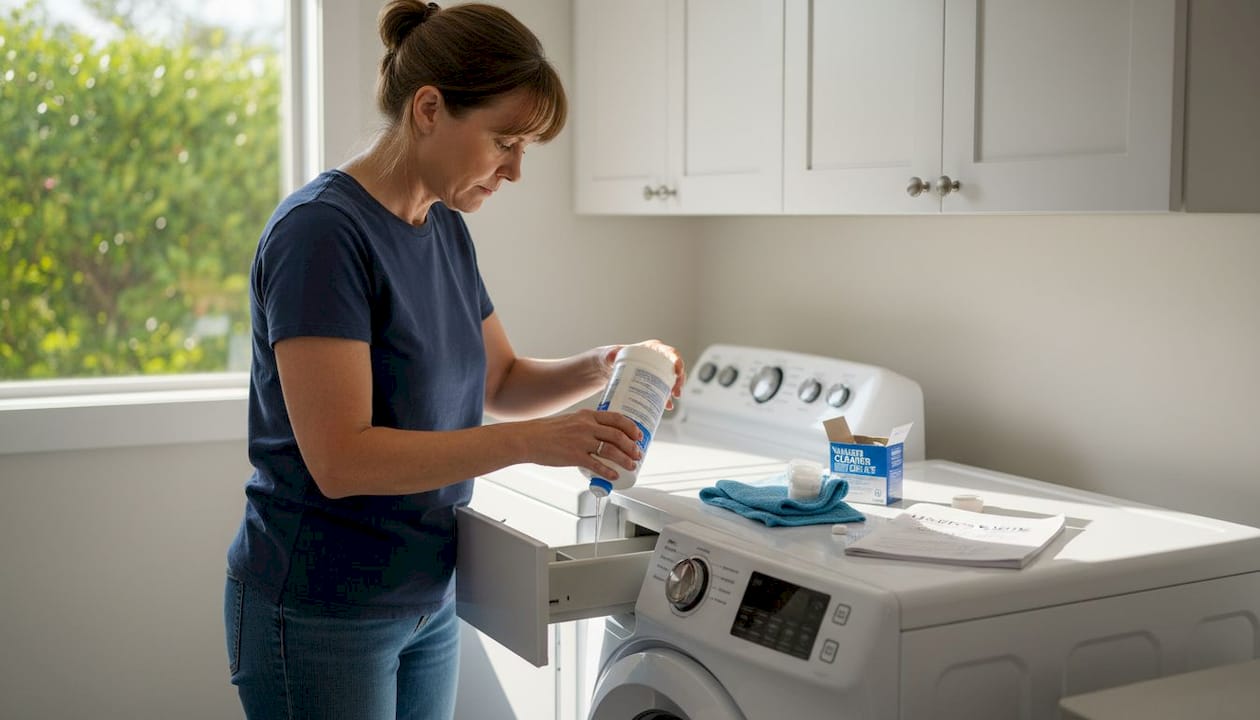
Your laundry smells fresh out of the dryer, but something still seems off. That faint musty odor clinging to towels and shirts? It often comes from the machine doing the washing, not the clothes themselves. Most washing machines silently collect mold, detergent residue, and bacteria inside the drum, gasket, and dispensers. Experts recommend cleaning your washer monthly or every 30 loads to keep it performing at its best. For homeowners across Monmouth County, NJ, where humid summers and hard water add extra stress to appliances, staying on top of this routine makes a real difference. This guide covers everything you need: the right tools, a clear step-by-step process, prevention habits, and hard water tips specific to our area.
Table of Contents
- What you’ll need: Tools and cleaning products
- Step-by-step guide: How to clean your washing machine
- How often to clean and prevention tips
- Dealing with mineral buildup and hard water issues
- The expert take: What appliance techs wish homeowners knew
- Trust your washing machine to Monmouth County’s local experts
- Frequently asked questions
Key Takeaways
| Point | Details |
|---|---|
| Monthly cleaning is best | Cleaning your machine every month prevents odors and buildup for peak performance. |
| Front vs top-load steps differ | Always follow methods tailored to your washer type for the safest, most effective results. |
| Choose safe cleaners | Use manufacturer-recommended products or bleach; avoid mixing vinegar and bleach to protect your appliance. |
| Prevent mold with simple habits | Keep doors cracked, wipe interiors, and remove wet laundry promptly to keep your washer fresh. |
| Address hard water proactively | Monmouth County’s hard water needs special attention—descalers or vinegar plus bleach can help maintain your washer. |
What you’ll need: Tools and cleaning products
Knowing what you’re up against, let’s get your tools and products ready.
You don’t need a cabinet full of specialty products to clean your washer well. A few focused items will handle almost every situation. Here’s what to gather before you start:
- Microfiber cloths for wiping drum interiors and door seals
- Rubber gloves to protect your hands from cleaners and mold
- An old toothbrush for scrubbing dispenser slots and tight corners
- A spray bottle filled with your chosen cleaner
- A bucket for soaking removable parts
For cleaning products, you have two main categories: commercial cleaners and natural options.
| Product | Best for | Effectiveness | Safety notes |
|---|---|---|---|
| Affresh tablets | Monthly drum cleaning | High | Safe for all washers |
| Tide Washing Machine Cleaner | Residue and odor | High | Safe for all washers |
| Household bleach | Killing mold and bacteria | Very high | Ventilate well; never mix with vinegar |
| White vinegar | Light mineral deposits | Moderate | Can degrade rubber with repeated use |
| Descaler (e.g., CLR) | Heavy mineral buildup | High | Follow label instructions carefully |
Specialized cleaners like Affresh consistently outperform natural methods for breaking down residue, according to manufacturer and expert testing. That said, vinegar still has a place for light mineral deposits, especially when you follow it with a proper rinse cycle.
Understanding how washing machines clean your clothes helps you see why the machine itself needs the same attention. Residue from detergent, fabric softener, and hard water minerals coats internal surfaces over time, reducing cleaning efficiency and creating the perfect environment for mold.
If you’re shopping at a local store in Monmouth County, you’ll find Affresh and Tide Washing Machine Cleaner at most hardware and grocery stores. For hard water issues, look for descaling products near the water filtration aisle. Check out Real Simple’s washer cleaning resource for additional product comparisons.
Pro Tip: Always use HE (high efficiency) detergent in your HE washer, and use less than you think you need. Overdosing detergent is one of the top causes of residue buildup inside the drum.
Step-by-step guide: How to clean your washing machine
With your supplies ready, it’s time to get hands-on.
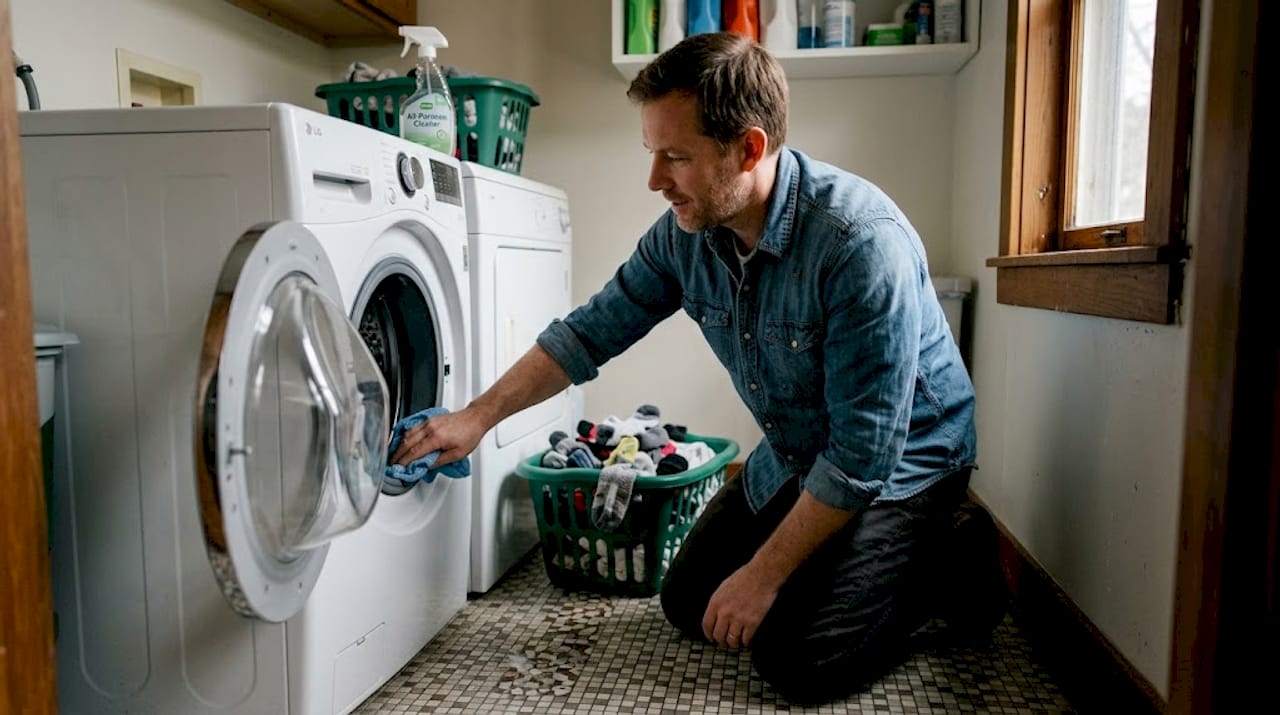
Front-load and top-load washers need slightly different approaches. Follow the steps that match your machine.
Front-load washer cleaning steps:
- Put on rubber gloves and open the door fully.
- Pull back the rubber door gasket and wipe out any visible mold, lint, or debris with a damp microfiber cloth. Use your toothbrush for tight folds.
- Remove the detergent dispenser drawer and soak it in warm, soapy water. Scrub with the toothbrush and rinse clean.
- Add one Affresh tablet or 1/2 cup of bleach directly to the drum (not the dispenser).
- Run the hottest cycle available, or use the dedicated “Clean Washer” cycle if your machine has one.
- Once done, wipe the drum interior dry and leave the door ajar.
Top-load washer cleaning steps:
- Fill the drum with hot water on the largest load setting.
- Add 1 cup of bleach or one Affresh tablet and let it agitate for a few minutes.
- Pause the cycle and let the solution soak for 30 to 60 minutes.
- Scrub the agitator, drum walls, and lid interior with a cloth or toothbrush.
- Resume and complete the full cycle.
- Run a second rinse cycle with plain water to flush residue.
For front-load washers, the rubber gasket is the most critical area to clean because it traps moisture and debris after every cycle. Top-load machines need extra focus on the agitator and dispensers.
| Area | Front-load focus | Top-load focus |
|---|---|---|
| Door/lid seal | Critical: wipe every clean | Wipe occasionally |
| Agitator | Not applicable | Scrub thoroughly |
| Detergent dispenser | Remove and soak | Wipe or remove |
| Drum interior | Hot cycle with cleaner | Hot soak and scrub |
Important: Vinegar is less effective than bleach for killing germs and can damage rubber gaskets over time. Never use vinegar and bleach in the same cycle. The chemical reaction creates toxic fumes.
Always work in a ventilated space when using bleach. For more ongoing care strategies, our washer and dryer care tips cover maintenance habits that extend appliance life. You can also download our washer and dryer checklist to stay organized. The Popular Mechanics cleaning guide is another solid reference for step-by-step visuals.
Pro Tip: Run a quick wipe of the gasket after every single wash load. It takes 10 seconds and prevents 90% of front-loader mold problems.
How often to clean and prevention tips
Now that you know how to clean your machine, let’s keep it that way.
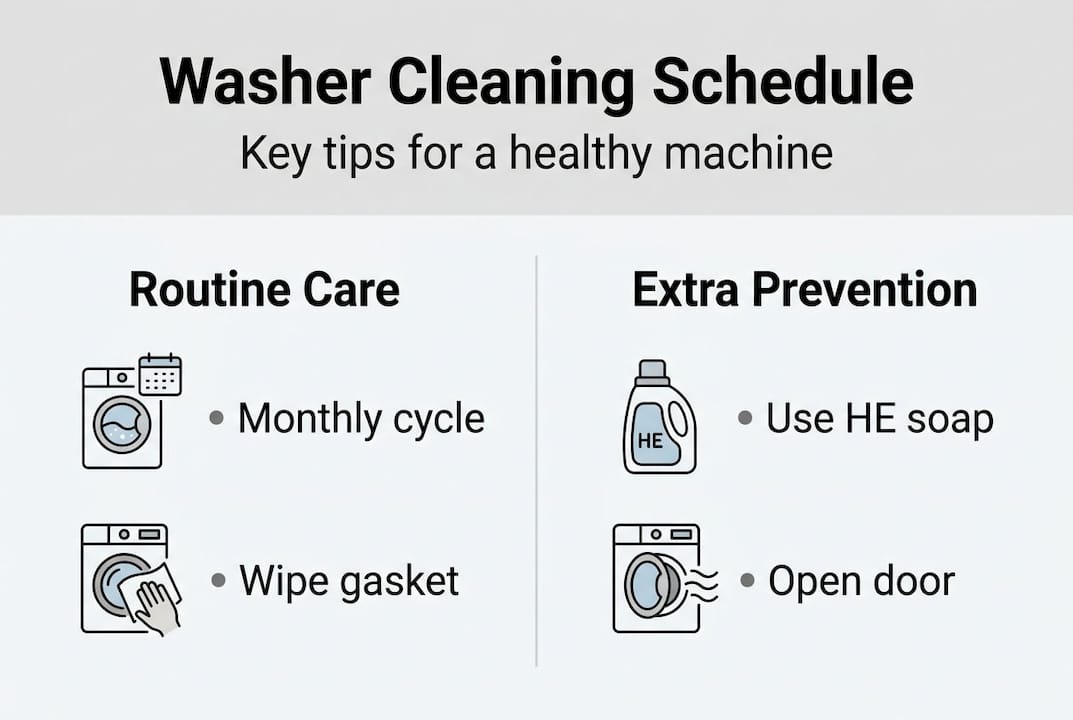
Cleaning frequency matters just as much as the cleaning itself. Clean your washer monthly or after every 30 loads as a minimum standard. If your household runs laundry daily or you have young kids and pets, bump that up to every two to three weeks.
Here are the most reliable signs your washer needs attention right now:
- A musty or sour smell coming from the drum
- Visible dark spots or slime on the gasket or drum walls
- Clothes coming out with a faint odor even after washing
- White or gray residue left on dark fabrics
- Longer than usual cycle times or poor rinsing
For Monmouth County homeowners, summer humidity adds real pressure. Mold thrives in warm, damp environments, and a front-loader with a closed door is exactly that. Leave the door or lid open after every wash, remove wet clothes immediately, use the correct amount of HE detergent, and wipe the interior dry to stop mold before it starts.
Building a prevention routine is simpler than most people think:
- After every wash: Leave door open, wipe the gasket, move clothes to the dryer right away
- Weekly: Wipe down the exterior and check the dispenser for buildup
- Monthly: Run a full cleaning cycle with Affresh or bleach
- Seasonally: Inspect hoses and connections for wear or mineral deposits
To protect your appliances long term, our guide on how to prevent appliance damage gives a broader picture. You can also follow a structured appliance maintenance schedule to stay ahead of problems across your whole home. For general laundry habits, Consumer Reports laundry tips are worth bookmarking.
Pro Tip: Set a phone reminder labeled “Washer Clean Day” on the first of every month. During allergy season or after heavy family laundry weeks, move it up by a week.
Dealing with mineral buildup and hard water issues
Besides routine grime and mold, hard water can cause hidden problems for your washer.
Monmouth County’s water supply runs moderately hard in many towns, including Marlboro, Freehold, and Howell. Hard water carries dissolved calcium and magnesium that deposit inside your washer’s drum, hoses, and heating element over time. This buildup reduces water flow, strains the motor, and leaves a white chalky film on clothes and machine surfaces.
Here’s how to recognize and address mineral buildup:
| Sign of buildup | What it means | Recommended fix |
|---|---|---|
| White or gray film on drum | Calcium deposits | Descaler or vinegar cycle |
| Stiff, scratchy towels | Mineral residue in fabric | Vinegar rinse cycle |
| Reduced water pressure in machine | Clogged inlet filter | Clean or replace inlet screen |
| Chalky residue in dispenser | Hard water evaporation | Soak and scrub dispenser |
In hard water areas like Monmouth County, vinegar or a dedicated descaler helps dissolve mineral deposits, but you should always follow that with a bleach cycle for proper sanitation. Vinegar alone does not kill bacteria or mold effectively.
For a descaler treatment:
- Add 2 cups of white vinegar or the recommended amount of CLR to the drum
- Run a hot cycle without laundry
- Follow immediately with a bleach cycle (never in the same cycle)
- Finish with a plain hot water rinse
Safety reminder: Never pour vinegar and bleach into the machine at the same time or in back-to-back cycles without a plain water rinse in between. The reaction produces chlorine gas, which is dangerous in an enclosed laundry room.
For long-term protection, consider installing a whole-house water softener or using a detergent formulated for hard water. Our DIY maintenance tips cover more ways to protect your appliances from water quality issues. You can also check Good Housekeeping’s hard water advice for additional product recommendations.
The expert take: What appliance techs wish homeowners knew
You’ve learned the facts and steps. Here’s what most guides never tell you.
After decades of servicing washers across Monmouth County, we see the same patterns repeatedly. The machines that break down early almost always have one thing in common: neglect of the basics. Not catastrophic neglect. Just skipping the monthly clean for six months, ignoring a small smell, or assuming the machine cleans itself because it uses water and soap.
Vinegar gets a lot of praise online as a natural miracle cleaner. We understand the appeal. But overusing vinegar degrades rubber seals and gaskets faster than most homeowners realize. Replacing a front-loader gasket is a real repair cost. Use vinegar occasionally for mineral deposits, not as your primary monthly cleaner.
The other thing we see constantly: too much detergent. More soap does not mean cleaner clothes. In HE washers, excess detergent leaves residue that feeds mold and coats the drum interior. Use the minimum recommended amount, and if your clothes still seem dingy, the problem is usually the machine’s cleanliness, not the detergent dose.
Regularly maintained machines genuinely last longer and cost less to repair. We’ve seen 15-year-old washers running like new because the owner followed a simple monthly routine. For a broader perspective on appliance care, our dishwasher maintenance tips show how the same principles apply across your kitchen appliances.
Trust your washing machine to Monmouth County’s local experts
If you want professional support or run into a stubborn issue, here’s how to get rapid, local assistance.
Sometimes a deep clean reveals a bigger problem: a drum that won’t spin right, a gasket that’s already torn, or a persistent odor that won’t quit no matter what you try. That’s when it helps to have a trusted local team just a phone call away.
At Expert Appliance Repair, we’ve been serving Monmouth County homeowners since 1988. We offer same-day service, 24/7 emergency support, and upfront pricing with no surprises. Whether you need hands-on help with regular appliance maintenance, want to explore DIY maintenance tips before calling us, or need fast appliance and vacuum repair for a machine that’s stopped working, we’re here. Local, experienced, and ready to help.
Frequently asked questions
How often should I clean my washing machine?
Clean your washer monthly or after every 30 loads for best results. High-use households should clean more frequently, especially during humid summer months in Monmouth County.
What’s the safest cleaner for my washer: bleach, vinegar, or a washing machine cleaner?
Specialized cleaners like Affresh or bleach are the safest and most effective options. Vinegar is less effective at killing germs and can damage rubber gaskets with repeated use.
Is it safe to use vinegar and bleach together?
No, never mix vinegar and bleach. The chemical reaction produces toxic fumes that are dangerous in an enclosed laundry space.
How can I prevent mold and odors between cleanings?
Leave the door open after every wash, wipe the interior dry, and move wet clothes to the dryer right away. These three habits stop most mold problems before they start.
Does Monmouth County’s hard water affect my washer?
Yes, hard water causes mineral buildup inside the drum and hoses over time. Use a descaler or vinegar cycle for deposits, and always follow it with a bleach rinse cycle for proper sanitation.
Recommended
- How Washing Machines Clean – Science and Practical Impact – Expert Appliance
- Washing Machine Repair Workflow for Fast, Reliable Service – Expert Appliance
- 7 Essential Washer and Dryer Care Tips for Homeowners – Expert Appliance
- 7 Essential Steps for Your Washer and Dryer Care Checklist – Expert Appliance