
TL;DR:
- Monmouth County appliances face unique risks from hard water, humidity, and salt air requiring frequent maintenance.
- Regular tasks like coil cleaning and hose inspections should be more frequent than national standards suggest.
- Professional checkups are recommended annually to catch issues early and extend appliance lifespan.
Living in Monmouth County means your appliances work harder than most. The combination of coastal salt air, high humidity, and notoriously hard water puts extra stress on every machine in your home, from your refrigerator coils to your washer hoses. A broken appliance during a New Jersey summer is more than an inconvenience; it can mean food spoilage, flooded laundry rooms, or a kitchen that grinds to a halt. This checklist gives you a clear, locally adjusted plan to protect your appliances, cut energy bills, and avoid the kind of repair calls that always seem to come at the worst time.
Table of Contents
- Why NJ appliances need extra care
- The essential NJ appliance maintenance checklist
- Small business and special case tips
- DIY vs professional appliance maintenance
- A local pro’s take: What national guides miss about NJ appliances
- Professional appliance maintenance for Monmouth County
- Frequently asked questions
Key Takeaways
| Point | Details |
|---|---|
| NJ climate requires more care | Humidity, hard water, and salt air mean appliances in Monmouth County need 25-50% more frequent upkeep. |
| Follow a local checklist | Standard advice isn’t enough—use a schedule tailored to NJ appliances for optimal results. |
| Combine DIY and expert help | Do routine cleaning yourself but always call professionals for complex, electrical, or vent-related tasks. |
| Logging saves time and money | Keep a simple log of maintenance and issues to speed repairs and support warranties. |
| Batch and document maintenance | Batch quarterly chores and document symptoms to avoid missed steps and faster troubleshooting. |
Why NJ appliances need extra care
If you’ve been following the maintenance schedule that came with your appliance manual, you’re probably already behind. Those timelines are written for average U.S. conditions, and Monmouth County is anything but average when it comes to what your appliances face every day.
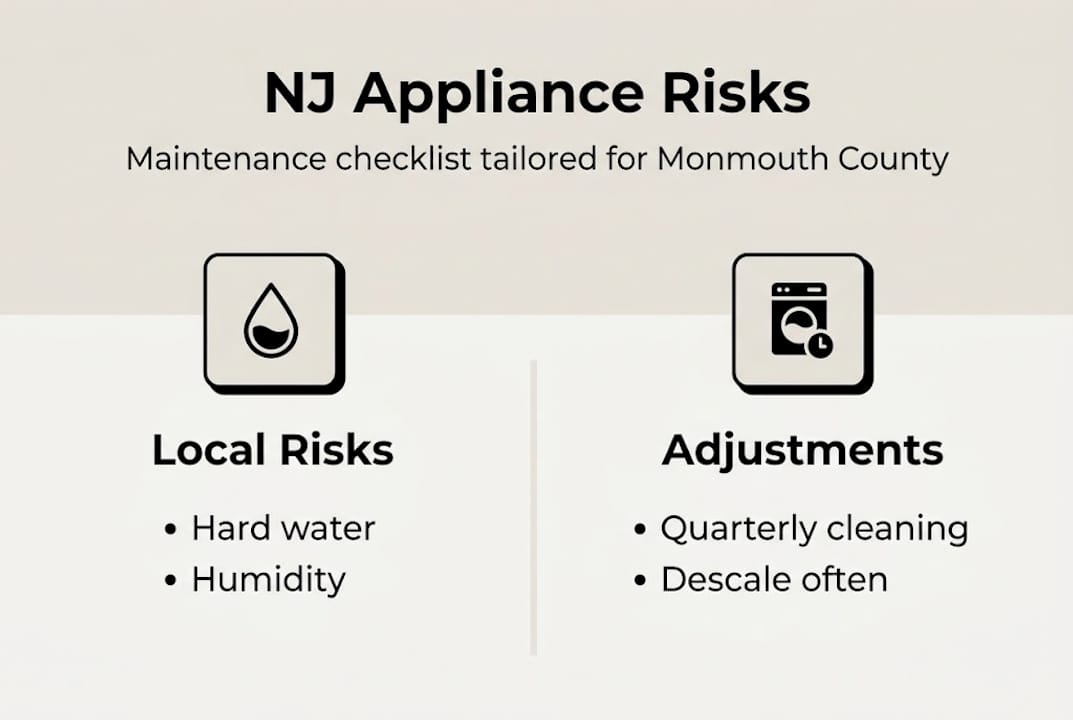
Hard water is one of the biggest culprits. Much of Monmouth County’s water supply carries high mineral content, which leaves scale deposits inside washing machines, dishwashers, and water lines. Over time, that buildup forces motors and heating elements to work harder, driving up your energy bill and shortening the appliance’s life. Add in the region’s humidity levels, which peak in summer and stay elevated near the shore, and you’ve created ideal conditions for mold growth inside washers and dryers.
Salt air is a factor that many inland residents overlook, but even homes several miles from the beach feel its effects. Salt particles in the air accelerate corrosion on metal components, rubber seals, and electrical connections. This is why appliance maintenance in NJ looks different from what a homeowner in Ohio or Arizona needs to do.
According to national maintenance standards, most appliances need biannual checkups. But in Monmouth County, 25-50% more frequent maintenance is the reality due to hard water, humidity, and salt air. Skipping those extra cycles is where most homeowners lose money.
Did you know? Routine maintenance can reduce your appliance repair costs by 50% over five years. That’s not a small number when you factor in the cost of replacing a refrigerator or washing machine.
Here’s what puts Monmouth County homes at higher risk:
- Hard water mineral buildup clogs hoses, strains heating elements, and reduces water flow
- High humidity promotes mold and mildew inside sealed appliance compartments
- Coastal salt air corrodes metal parts, wiring, and rubber gaskets faster than inland climates
- Seasonal temperature swings cause seals to expand and contract, leading to cracks and leaks
The good news is that knowing your local risks makes it much easier to extend appliance lifespan with a few targeted adjustments to your routine.
The essential NJ appliance maintenance checklist
With local risks in mind, here’s the exact checklist tailored for Monmouth County. These aren’t generic suggestions; they’re frequency-adjusted steps based on what actually causes breakdowns in this region.
| Appliance | Task | Frequency | Priority |
|---|---|---|---|
| Refrigerator | Clean condenser coils | Quarterly | High |
| Washer | Hot water vinegar cycle | Monthly | High |
| Washer | Hose inspection | Quarterly | Medium |
| Dryer | Clean lint trap | After every load | Critical |
| Dryer | Professional vent service | Annually | High |
| Dishwasher | Descale interior | Monthly | Medium |
| Oven | Clean burners and seals | Quarterly | Medium |
Here’s how to work through the major appliances:
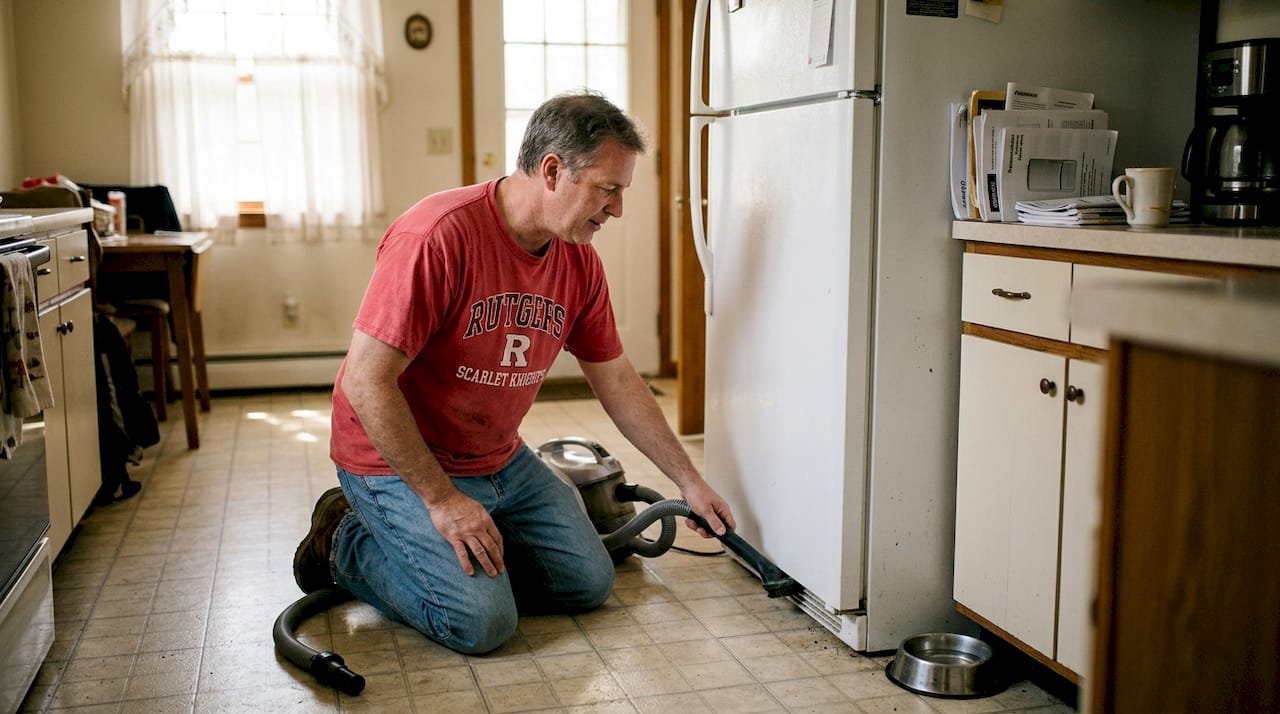
- Refrigerator: Pull the unit away from the wall and vacuum the condenser coils. Quarterly coil cleaning prevents dust, pet hair, and humidity buildup, improving energy efficiency by up to 30%. Also check the door gasket for cracks and wipe it down with a damp cloth.
- Washing machine: Run a monthly hot water vinegar cycle to prevent mold and mineral deposits, and inspect hoses quarterly for bulging or cracking. In Monmouth County’s humid climate, front-loaders especially need the door left open between cycles.
- Dryer: Clean the lint trap after every single load. This is non-negotiable. Dryer vents need annual professional service to remove accumulated lint from the full duct, which is a leading cause of house fires.
- Dishwasher: Remove and rinse the filter monthly. Run a descaling tablet or white vinegar cycle to fight hard water deposits that cloud glassware and reduce spray arm pressure.
- Oven and stove: Wipe down burner grates and check door seals quarterly. A damaged oven seal wastes energy and can affect cooking temperatures by 25 degrees or more.
Pro Tip: Batch your quarterly tasks on the first weekend of each new season. Set a phone reminder and knock out the refrigerator coils, washer hose check, and oven seal inspection in a single morning. You’ll save time and never lose track of what’s been done. Check out this NJ appliance cleaning checklist for a printable version you can post in your utility room.

For deeper guidance on frequency adjustments, smart maintenance tips from local experts can help you build a schedule that fits your household size and appliance age.
Small business and special case tips
Not all appliances and owners are the same. Here’s how to adjust for businesses and special cases.
Small businesses in Monmouth County, whether you run a cafe, a salon, or a small office, put appliances through far more cycles per day than a typical household. A residential washer used commercially will fail years ahead of schedule without adjusted care. For small businesses, increase frequency: quarterly coil cleaning, monthly descaling, and annual safety tests are the baseline, not the ceiling. Documenting symptoms and using a multimeter to test heating elements can help you catch problems before they become shutdowns.
| Task | Household frequency | Small business frequency |
|---|---|---|
| Coil cleaning | Quarterly | Monthly |
| Descaling | Monthly | Bi-weekly |
| Hose inspection | Quarterly | Monthly |
| Safety/electrical test | Annually | Semi-annually |
For coastal properties or homes with extremely hard water, the standard schedule still isn’t enough. Coastal salt air accelerates corrosion, so inspect power cords, hoses, and metal components more frequently and look for early signs of rust or brittleness. Aggressive descaling every two to three weeks is smart if your water hardness tests above 10 grains per gallon.
Watch for these warning signs that mean it’s time to stop troubleshooting and call a pro:
- Appliance runs but doesn’t heat or cool to the right temperature
- Unusual grinding, banging, or squealing sounds
- Water pooling under or around the unit
- Burning smell during operation
- Visible rust on internal components or hose connections
- Circuit breaker trips when the appliance starts
Pro Tip: Keep a simple notebook or phone note for each appliance. Log the date, what you did, and any odd behavior you noticed. When a repair tech arrives, that history speeds diagnosis and can save you a service call fee. Start troubleshooting breakdowns early and you’ll almost always catch problems while they’re still cheap to fix.
For a broader look at what local service covers, NJ appliance care tips walk through the most common issues we see across Monmouth County.
DIY vs professional appliance maintenance
To finish, let’s help you do maintenance right and know when to call in expert support.
Most routine tasks are completely safe for homeowners to handle. Cleaning coils, wiping door seals, running cleaning cycles, checking hoses, and clearing lint traps require no special tools and carry minimal risk. DIY covers cleaning and seals; professionals handle vents, electrical components, and complex internal parts. Knowing where that line is protects both your safety and your warranty.
Safety first: Always unplug an appliance before you start any hands-on maintenance. Even a quick coil cleaning can become dangerous if the compressor cycles on unexpectedly.
Here are the top five maintenance tasks you should never skip:
- Clean dryer lint traps after every load
- Inspect washer hoses every quarter for bulging or cracking
- Clean refrigerator coils every three months
- Run a monthly descaling cycle on your dishwasher and washer
- Schedule annual professional dryer vent cleaning
A maintenance log does more than help you stay organized. It supports warranty claims by proving you followed the manufacturer’s care schedule. It also gives repair technicians a clear picture of the appliance’s history, which often cuts diagnostic time in half. If you ever sell your home, a documented appliance maintenance record is a genuine selling point.
Understanding the benefits of hiring a pro versus doing it yourself comes down to risk and complexity. Electrical faults, refrigerant issues, and vent obstructions deep in the ductwork are not DIY territory. Neither is anything that requires disassembling sealed components. The importance of proper cleaning is real, but knowing your limits keeps you safe and keeps your warranty intact.
A local pro’s take: What national guides miss about NJ appliances
After decades of repairs across Monmouth County, one pattern stands out clearly. Homeowners who follow generic web checklists almost always end up calling us earlier than they should. The reason is simple: those guides were not written with your water, your air, or your climate in mind.
We’ve seen refrigerators fail at six years old because coils were cleaned annually instead of quarterly. We’ve replaced washing machine hoses that burst because no one checked them in two years. In both cases, the homeowner thought they were doing the right thing. They were following national advice. They just weren’t following local advice.
The contrarian truth is that more frequent, simpler maintenance beats occasional deep cleaning every time. Batching quarterly tasks, testing your water hardness, and keeping a maintenance log aren’t complicated steps. They’re just habits most people don’t build until after their first expensive repair.
Trust your complete maintenance guide from a local source, not a national content farm. The details matter here in ways they simply don’t in drier, softer-water states.
Professional appliance maintenance for Monmouth County
You now have a solid checklist, but even the most diligent homeowner benefits from a professional set of eyes once a year. Certified technicians catch early-stage issues that aren’t visible during routine cleaning, from micro-cracks in hoses to early motor wear that shows up only under load.
At Expert Appliance, we’ve been serving Monmouth County families and small businesses since 1988. We work on repair experts for major brands across every major appliance category, and we offer upfront pricing with no surprises. Whether you need a one-time checkup or ongoing maintenance support, you can Book an appliance repair online in minutes. For ongoing guidance between visits, our maintenance tips from experts keep you informed and in control year-round.
Frequently asked questions
How often should I clean refrigerator coils in Monmouth County, NJ?
Clean refrigerator coils every quarter. In Monmouth County, quarterly coil cleaning prevents dust, pet hair, and humidity buildup that can cut energy efficiency by up to 30%.
What’s the number one mistake homeowners make with appliance maintenance?
The top mistake is following national timelines instead of adjusting for local conditions. 25-50% more frequent maintenance is needed in Monmouth County due to hard water, humidity, and salt air, and ignoring that gap leads to costly breakdowns.
When should I call a professional for appliance maintenance?
Call a pro for vent cleaning, electrical issues, leaks, or any problem that persists after routine maintenance. DIY handles cleaning and seals, but vents, electrical faults, and complex internal parts require a certified technician.
Do small businesses need different appliance checklists?
Yes. Small businesses should increase frequency to quarterly coil cleaning, bi-weekly descaling, and semi-annual safety tests, since commercial-level appliance use wears components much faster than residential use.
Recommended
- 6 Smart Appliance Maintenance Tips for NJ Homeowners – Expert Appliance
- Complete Appliance Maintenance Checklist for Homeowners – Expert Appliance
- Preventing appliance breakdowns: 5 tips for NJ homeowners – Expert Appliance
- Why Maintenance Extends Appliance Life for NJ Homes – Expert Appliance
- Seasonal Backflow Maintenance: Why It’s Essential Year-Round –