

TL;DR:
- Regular appliance maintenance enhances efficiency, prevents costly repairs, and extends lifespan in Monmouth County.
- Local rebate programs offer incentives for upgrading to Energy Star appliances and recycling old units.
- Humidity in NJ accelerates mold growth, making seasonal cleaning and seal checks essential for appliance health.
Energy bills in New Jersey have climbed steadily, and appliance repair costs in 2026 are no exception. For homeowners and small business owners in Monroe County, routine appliance maintenance is no longer optional—it’s the fastest way to protect your wallet and avoid emergency service calls. This guide walks you through a practical efficiency checklist covering refrigerators, dryers, washers, and dishwashers, along with local rebate programs that can offset upgrade costs. By the end, you’ll have a clear, room-by-room action plan that works for both residential and commercial kitchens across the county.
Table of Contents
- How to build your appliance efficiency checklist
- refrigerators and freezers: optimize for performance
- dryers: cleaning for safety and efficiency
- dishwashers and washers: water and energy savings
- local rebates and upgrades: monmouth county incentives
- Our take: the hidden payoff of proactive appliance maintenance in monmouth county
- Get local help and expert appliance solutions
- frequently asked questions
Key Takeaways
| Point | Details |
|---|---|
| Routine maintenance pays off | Simple tasks like coil and vent cleaning can improve efficiency by 30% and prevent costly repairs. |
| Local rebates add savings | PSE&G and JCP&L programs offer $100-$150 rebates for recycling old appliances and upgrading to ENERGY STAR models. |
| NJ climate demands extra care | High humidity in Monmouth County means frequent washer and dishwasher cleaning is needed to prevent mold. |
| Checklist guides action | Follow the appliance efficiency checklist to reduce energy bills and extend your devices’ lifespan. |
How to build your appliance efficiency checklist
Now that you know how appliance efficiency impacts your daily costs, let’s get into the essential checklist criteria. Building an effective routine doesn’t require a technician on speed dial—it requires a consistent schedule and a short list of tasks that actually move the needle.
Here are the core criteria every checklist should cover:
- Clean filters, coils, and vents on refrigerators, dryers, and dishwashers
- Control temperatures by verifying thermostat settings monthly
- Match load sizes to appliance capacity to prevent strain and wasted energy
- Check seals and gaskets on fridges and washers for cracks or gaps
- Clear exhaust vents to allow proper airflow and reduce cycle times
For scheduling, think in three tiers. Monthly tasks include cleaning dishwasher filters and running a self-clean cycle on your washer. Every quarter, wipe down dryer drums and check fridge door seals. Once a year, deep clean condenser coils and have dryer vents professionally inspected. In fact, cleaning coils every 6-12 months can increase refrigerator efficiency by up to 30%.
Monmouth County’s climate adds a layer most generic checklists skip. The region’s humid summers create conditions where mold can develop inside washers and behind fridge seals faster than in drier parts of the country. A solid homeowner maintenance checklist tailored to NJ’s humidity will serve you far better than a one-size-fits-all approach. You can also bookmark our seasonal cleaning tips specifically built for local homeowners.
For small business owners, the kitchen energy saver resource from the Department of Energy is a useful starting point when scoping out commercial appliance upgrades.
Pro tip: Set phone calendar reminders for each maintenance tier. A two-minute reminder now can save you a $300 service call later.
refrigerators and freezers: optimize for performance
Once you have your criteria set, the fridge and freezer top the list for impactful efficiency gains. These appliances run every hour of every day, which means even small inefficiencies compound into real monthly costs.
Follow these steps to get the most out of your refrigerator:
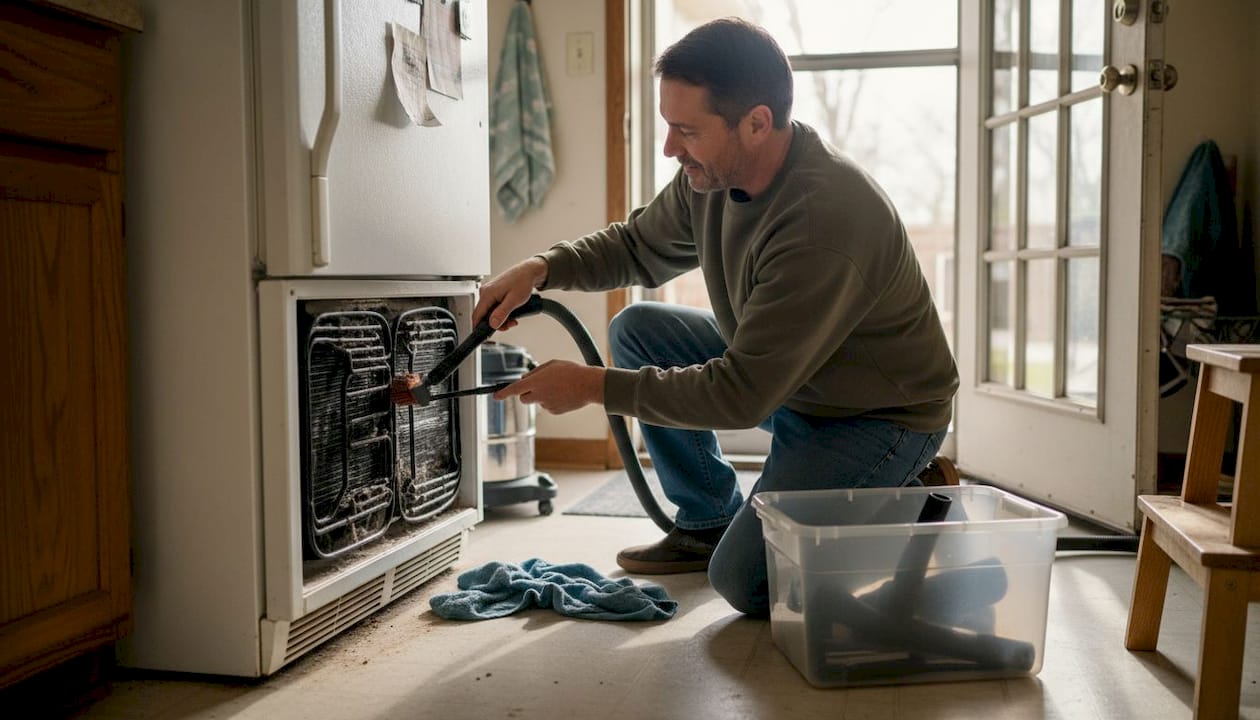
- Pull the fridge away from the wall and vacuum the condenser coils using a brush attachment.
- Set the refrigerator compartment to 37°F and the freezer to 0°F for optimal food safety and energy use per energy saver standards.
- Test door seals by closing the door on a dollar bill. If it slides out easily, it’s time to replace the gasket.
- Clear space around vents inside both compartments to allow air circulation.
- Clean the drip pan located beneath the fridge—this is a common mold trap in humid NJ summers.
Cleaning the coils not only boosts efficiency up to 30% but also prevents roughly 80% of compressor failures, which rank among the most expensive refrigerator repairs.
A failing door seal in humid conditions doesn’t just waste energy. It invites mold growth inside your fresh food compartment, creating a health concern on top of a repair bill.
Here’s a side-by-side comparison to help you decide between maintaining your current model or upgrading:
| Feature | Old fridge (15+ years) | New Energy Star model | Notes for NJ homeowners |
|---|---|---|---|
| Annual energy use | 800+ kWh | 400-500 kWh | 35%+ more energy used by aging units |
| Monthly cost estimate | $12-$16 | $6-$8 | Based on NJ avg. electric rate |
| Door seal lifespan | Often cracked by year 10 | Fresh gaskets | Check quarterly in humid climates |
| Available rebate | None | Up to $150 | See local recycling rebates |
| Long-term ROI | Lower unless well maintained | Higher upfront | Use the energy ratings guide to compare models |
For most homeowners with a fridge under 12 years old in good condition, consistent maintenance will outperform the cost of a brand new unit for at least a few more years.
dryers: cleaning for safety and efficiency
Refrigerators may save the most energy, but dryers have unique efficiency and safety needs you can’t overlook. A neglected dryer doesn’t just cost more to run—it’s one of the leading sources of home fires in the U.S.
Here’s what your dryer maintenance checklist should include:
- Clean the lint filter after every single load. It takes 15 seconds and keeps airflow clear.
- Check the exhaust hose quarterly for kinks, disconnections, or lint buildup.
- Have the dryer exhaust system professionally cleaned once a year for up to 30% efficiency gains and a meaningful reduction in fire risk.
- Clean the drum every 3 months with a damp cloth to remove fabric softener residue.
- Check for moisture in the cabinet area if your dryer is in a basement or utility closet. NJ’s humidity can condense around appliance housing in those enclosed spaces.
Here’s a quick data snapshot on why this matters:
| Task | How often | Result |
|---|---|---|
| Clean lint filter | After every load | Better airflow, faster drying |
| Annual exhaust cleaning | Once per year | Up to 30% efficiency boost |
| Check exhaust hose | Every quarter | Lower fire risk |
| Clean dryer drum | Every 3 months | No residue buildup, consistent drying |
For a broader look at which other appliances benefit from regular cleaning, the regular cleaning guide from Better Home & Gardens covers the full household picture. If you want a tailored local schedule, our maintenance schedule tips page breaks it down by season. And if you prefer doing things yourself, our DIY maintenance tips resource is a great complement to this checklist.
Pro tip: Never overload your dryer. A stuffed drum means clothes tumble less, drying takes longer, and your motor works harder. Split large loads into two smaller ones instead.
dishwashers and washers: water and energy savings
Beyond heat-based appliances, efficient use of water-driven devices adds major savings to your checklist. In a state with rising water utility costs, washers and dishwashers deserve serious attention.
For your washer and dishwasher maintenance, work through these steps monthly:
- Run a hot water and white vinegar cycle through the empty washer drum to clean buildup and prevent mold. In NJ’s humid climate, monthly vinegar cycles are especially important.
- Clean the dishwasher filter by removing and rinsing it under hot water.
- Check washer door seals for mold spots. A quick wipe with diluted bleach keeps gaskets clean.
- Only run full loads in both machines. Half-load cycles waste the same amount of water and energy as full ones.
- Use cold-water wash settings on your washer when possible to reduce water heating costs.
Energy Star certified washers use 25% less energy and 33% less water than standard models, which adds up to real annual savings. For dishwashers, look for units rated under 240 kWh per year and using 3.2 gallons or less per cycle.
Here are some rebate and upgrade opportunities available to residents and business owners in the area:
- JCP&L and PSE&G incentives for Energy Star washers and dishwashers
- Local county recycling events that allow appliance drop-offs with rebate processing
- Federal tax credits available for qualifying Energy Star appliance purchases
- Small business program discounts through NJ Clean Energy for commercial laundry and food service equipment
For more on how to stretch those savings, review the full energy checklist or check our local NJ tips built for homeowners across the county.
local rebates and upgrades: monmouth county incentives
Once you’ve optimized your appliances, explore rebate programs to offset upgrades and maximize your energy savings. Many homeowners in the area leave hundreds of dollars on the table simply because they don’t know these programs exist.
PSE&G and JCP&L offer $100 to $150 in recycling rebates for old fridges and freezers, plus additional incentives for Energy Star replacements. That’s money back in your pocket just for swapping out an old unit.
Here’s a breakdown of what’s available:
- $100 to $150 rebate per recycled refrigerator or freezer
- $35 to $50 rebate for old air conditioners and dehumidifiers
- Energy Star dishwasher and washer incentives for residential customers
- Commercial appliance rebates available through NJ Clean Energy for small businesses
- Free appliance pickup in many cases when you schedule through utility provider programs
To apply, contact your utility provider directly or visit their program page. You’ll typically need your account number, the appliance model and serial number, and a brief application form. Most rebates process within 6 to 8 weeks.
For business owners, the stakes are even higher. A busy restaurant or laundromat running outdated equipment could qualify for several thousand dollars in combined rebates and incentives. Our small business rebates guide walks through exactly how to apply and which equipment qualifies. And for homeowners looking to recycle old units, the appliance recycling info page is a helpful local resource.
Our take: the hidden payoff of proactive appliance maintenance in monmouth county
After decades of service calls across the county, we’ve seen a pattern: most homeowners wait for a breakdown before they take maintenance seriously. That’s completely understandable. Life is busy, and appliances seem fine until they’re not.
But here’s the thing most people get wrong. They assume buying a new appliance is the fastest path to lower energy bills. The data tells a different story. Regular cleaning of coils and seals prevents 80% of the compressor and door failures we see on service calls. That means most expensive repairs were avoidable with a $0 maintenance habit.
In NJ specifically, the humidity factor is huge. We’ve replaced gaskets and cleaned mold from appliances that were only 5 years old, simply because the homeowner wasn’t running monthly maintenance cycles. A new fridge in the same conditions will face the same outcome without that routine.
Maintenance isn’t glamorous, but it’s the single most cost-effective thing you can do before calling anyone or purchasing anything new. Read more on how to prevent appliance damage and extend the life of what you already own.
Get local help and expert appliance solutions
Now that you know what to do, here’s where you can find trusted help and tailored solutions. At Expert appliance Inc., we’ve served homeowners and business owners across monmouth County since 1988, and we know what local conditions demand.
Start with our full maintenance checklist to build your personal schedule from scratch. If you prefer to handle repairs yourself, our DIY tips for lasting appliances guide is packed with step-by-step instructions. Small business owners can get industry-specific guidance through our business maintenance guide. When a repair goes beyond DIY, our team offers same-day service and upfront pricing across all major appliance brands. We’re here when you need us.
frequently asked questions
How often should I clean refrigerator coils for maximum efficiency?
Clean your refrigerator’s condenser coils every 6-12 months. This single habit boosts efficiency up to 30% and prevents overheating that leads to costly compressor repairs.
What temperature settings maximize fridge and freezer efficiency?
Set your fridge to 37°F and your freezer to 0°F. These optimal temperature settings balance food safety with the lowest possible energy draw.
Do local rebates cover replacing old appliances in monmouth County NJ?
Yes. PSE&G and JCP&L rebates offer up to $150 per recycled fridge or freezer, plus additional incentives when you replace them with certified Energy Star models.
How does monmouth County’s humid climate affect appliance maintenance?
Humidity speeds up mold growth inside washers, dishwashers, and behind fridge seals. Run monthly vinegar cycles and inspect seals more frequently than you would in a drier climate.
Why is dryer exhaust cleaning essential for efficiency and safety?
A clogged dryer exhaust forces longer cycle times and creates a serious fire risk. Professional annual exhaust cleaning improves drying efficiency by up to 30% and dramatically reduces hazard risk.
Recommended
- Complete Appliance Maintenance Checklist for Homeowners – Expert Appliance
- Appliance Cleaning Checklist 2026: 30% Energy Savings NJ – Expert Appliance
- Appliance Efficiency Ratings: Save $100+ Per Year – Expert Appliance
- Appliance Maintenance: Expert Tips to Prevent Repairs
- How to set up a mini split heating system efficiently – MiniSplitsforLess