
TL;DR:
- Regular appliance checks extend lifespan, improve safety and reduce repair costs.
- DIY inspections include cleaning, visual checks, and basic tests; complex issues require professionals.
- Consistent scheduling and documentation help maintain warranty coverage and prevent costly emergencies.
Maximize home appliance lifespan with regular checks
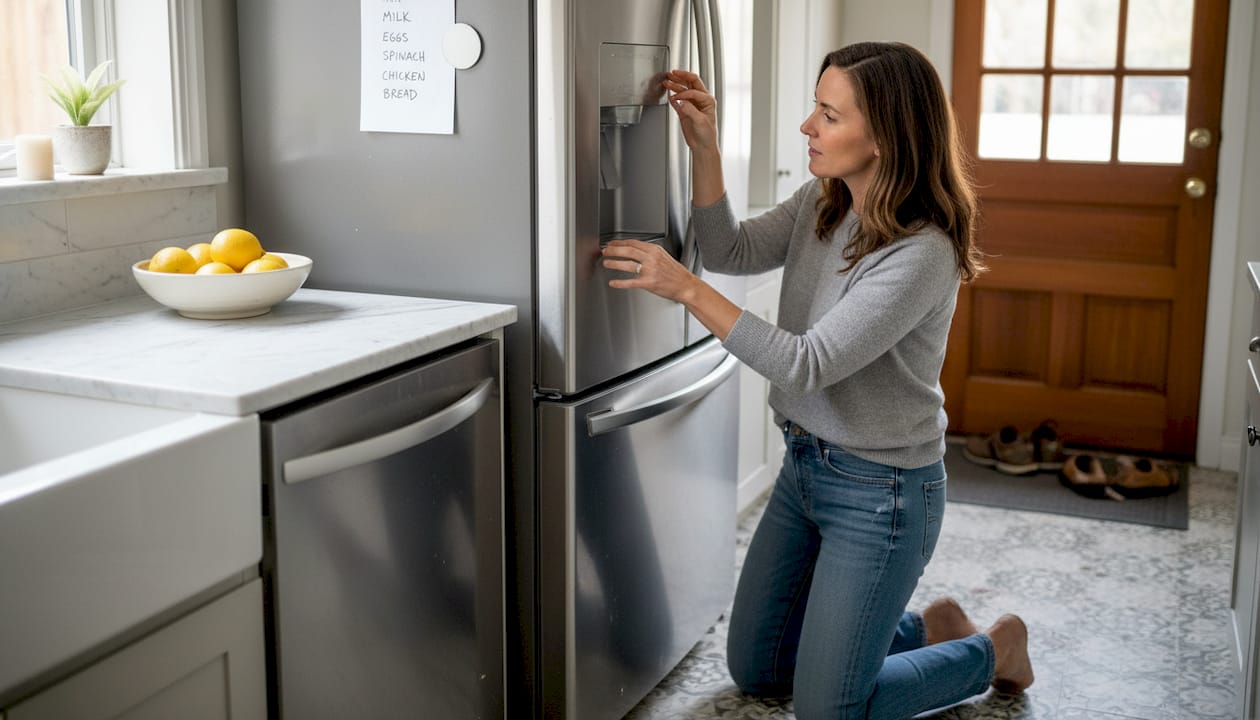
Most Monmouth County homeowners follow a simple rule: if the appliance is running, leave it alone. That mindset feels practical until your refrigerator quietly fails overnight, spoiling hundreds of dollars of groceries, or your dryer overheats and becomes a fire hazard. The truth is that “working” and “working well” are two very different things. Periodic appliance checks are not just for when something goes wrong. They are the smartest, most cost-effective habit any homeowner can build. This guide walks you through exactly why regular inspections matter, what they involve, who should handle each task, and how to build a realistic schedule that protects your home and your wallet.
Table of Contents
- Why periodic appliance checks matter
- What’s involved in periodic appliance inspections
- DIY appliance checks vs. calling in the experts
- Building a periodic appliance check schedule
- A smarter mindset for Monmouth County appliance care
- Get expert help with your appliance checks
- Frequently asked questions
Key Takeaways
| Point | Details |
|---|---|
| Proactive pays off | Checking appliances before problems arise saves money and reduces emergencies. |
| DIY with caution | Routine upkeep can be handled at home, but safety tasks need a professional touch. |
| Track maintenance | Keeping maintenance records helps preserve warranties and makes future repairs easier. |
| Set a schedule | Following a regular inspection routine prolongs appliance life and boosts home efficiency. |
Why periodic appliance checks matter
Let’s get one thing straight: appliances do not fail overnight. Breakdowns almost always start as small, unnoticed problems that grow quietly over weeks or months. A worn door gasket on your refrigerator forces the motor to work harder. A lint-clogged dryer vent raises your fire risk without any obvious warning. These are the kinds of issues that routine appliance checks catch before they become expensive emergencies.
The benefits of regular checks go well beyond avoiding drama. Here is what you gain when you inspect your appliances consistently:
- Longer appliance lifespan: Most major home appliances are designed to last 10 to 15 years. Neglect cuts that lifespan significantly. Simple checks keep components in good shape and extend your return on investment.
- Lower utility bills: A refrigerator with dirty condenser coils uses up to 30% more electricity than a clean one. A poorly maintained HVAC or dishwasher wastes water and energy every single cycle.
- Fewer emergency repair calls: Emergency service calls typically cost two to three times more than scheduled maintenance visits. Catching a small issue early is almost always cheaper.
- Improved home safety: Gas stoves, dryers, and electric ovens all have components that can create hazards if left unchecked. A cracked gas line connection or a worn electrical cord is invisible until it is dangerous.
- Better appliance performance: An oven that heats unevenly, a washer that vibrates too much, or a dishwasher that leaves spots are all signs that something is off. Checks catch these performance drops before they cost you more.
“Proactive appliance care consistently outperforms the wait-and-see approach. Homeowners who invest in regular inspections spend significantly less on repairs over the lifetime of their appliances.”
This perspective is widely supported. Proactive checks over reactive repairs are recommended across all credible appliance care resources, and for good reason. The math always favors prevention.
For Monmouth County homeowners specifically, the seasonal climate adds another layer of urgency. Cold winters put extra strain on heating elements and refrigerator motors. Hot, humid summers push air conditioners, refrigerators, and freezers to their limits. A check before each season change is not excessive. It is genuinely smart.
Preventing costly repairs starts with understanding that your appliances are working hard every day, even when they seem quiet and perfectly fine. Following appliance breakdown prevention tips designed for New Jersey homes gives you a real head start on avoiding the expensive surprises that catch so many homeowners off guard.
What’s involved in periodic appliance inspections
Many homeowners assume an appliance inspection means a technician comes over, pokes around for five minutes, and hands you a bill. The reality is much more structured and genuinely useful. Understanding what is actually involved helps you get the most from every check, whether you are doing it yourself or calling in a pro.
First, it helps to separate inspections from maintenance tasks. An inspection identifies problems or wear. Maintenance is the act of fixing or servicing those issues. Both are necessary, but they are not the same thing. You might inspect your washing machine and discover the hoses are starting to crack. The maintenance task is replacing those hoses before they burst.
Here is a breakdown of the difference:
| Task type | What it involves | Who typically does it |
|---|---|---|
| Inspection | Visual checks, listening for sounds, testing operation | Homeowner or technician |
| Maintenance | Cleaning, replacing parts, calibrating settings | Often a combination |
| Repair | Fixing a broken or failing component | Certified technician |
| Diagnostic | Identifying root cause of malfunction | Certified technician |
A solid routine inspection for most major appliances includes:
- Visual check for wear or damage. Look for cracks, rust, fraying cords, loose connections, or discoloration around heat sources.
- Door seals and gaskets. Test that seals are airtight on refrigerators, ovens, and dishwashers. A weak seal wastes energy immediately.
- Cleaning key components. Refrigerator coils, dryer lint traps, dishwasher filters, and oven burners all need periodic cleaning to function correctly.
- Running an operational test. Cycle through basic functions to listen for unusual sounds, check for leaks, or spot inconsistent performance.
- Checking connections. Water hoses on washers and dishwashers, gas connections on stoves, and power cords on all appliances should be inspected for wear.
According to appliance care best practices, combining homeowner DIY inspections with certified professional checks for electrical and gas components is the most effective strategy. Professionals have diagnostic tools that detect issues invisible to the naked eye.
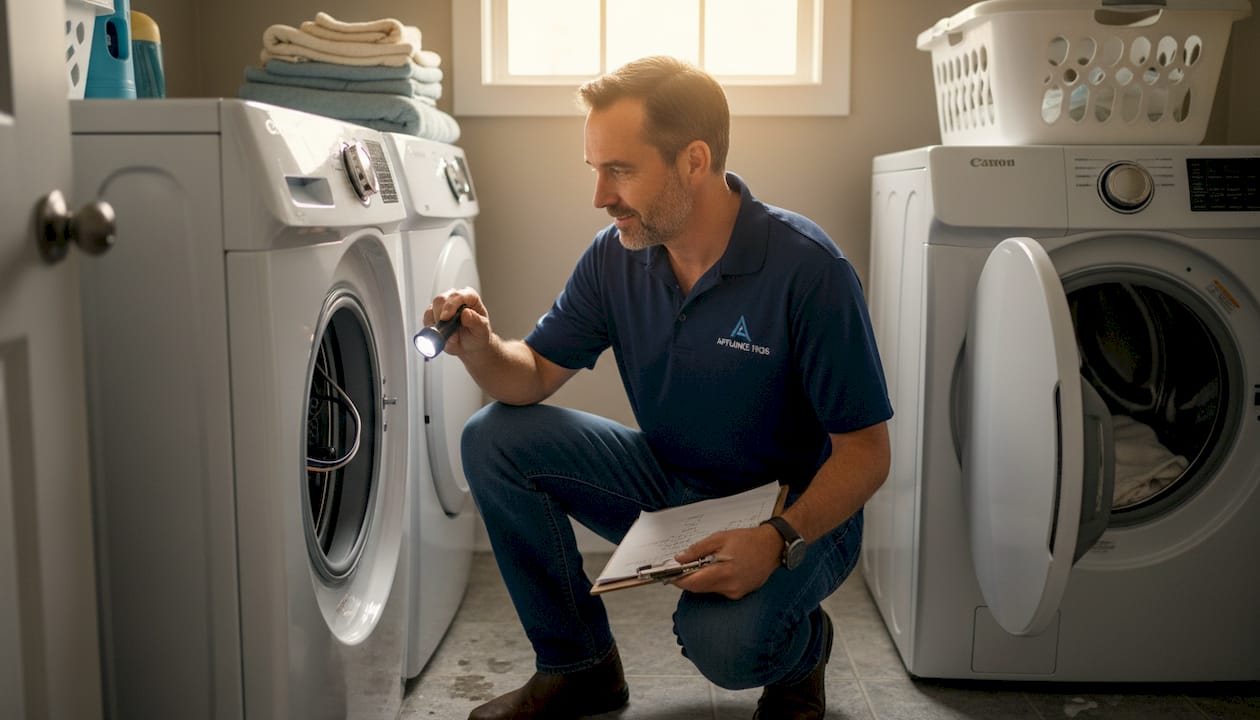
Pro Tip: Keep a simple appliance log in a notebook or a phone app. Record the date of each check, what you found, and what was done. This log is invaluable for warranty claims and helps any technician understand your appliance’s history before they even open it up.
Using a homeowner maintenance checklist makes the process faster and ensures nothing gets skipped. Consistent documentation also builds a history that can flag a pattern of problems before a major failure occurs. For complex checks, professional repair reliability makes a real difference in catching what a DIY check might miss.
DIY appliance checks vs. calling in the experts
Once you know what a check involves, the next natural question is who should handle each piece. Splitting the work correctly saves money, keeps your family safe, and produces the best overall results.
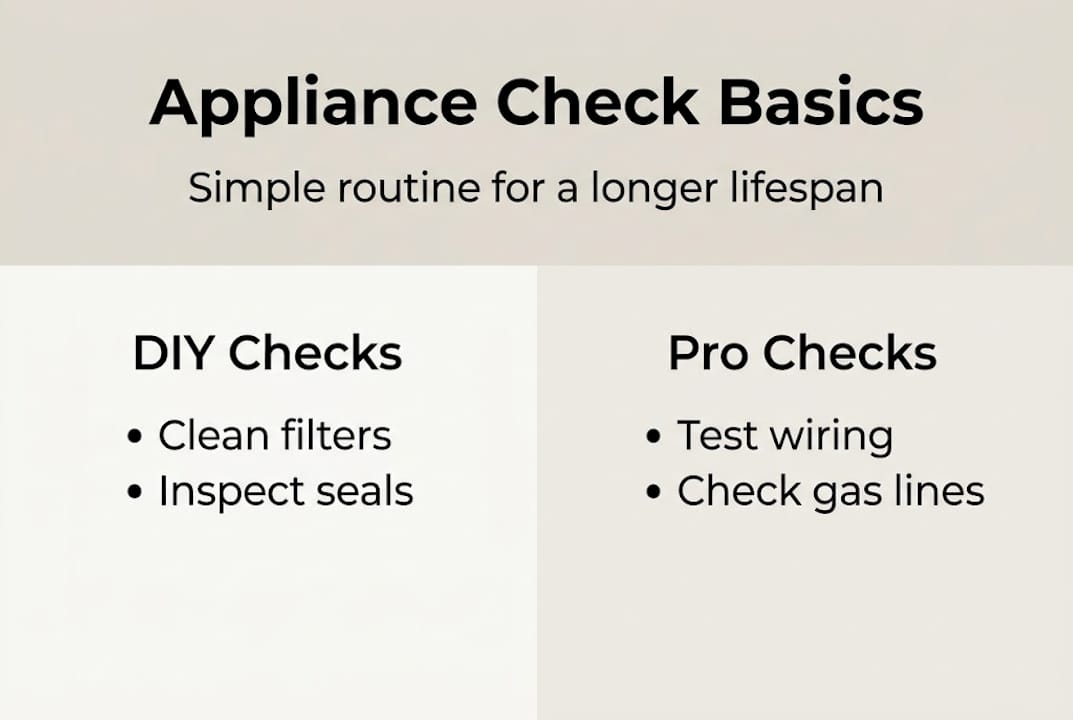
There are a good number of tasks that most Monmouth County homeowners can handle confidently and safely on their own:
- Cleaning refrigerator condenser coils (usually found at the back or bottom of the unit)
- Replacing or cleaning the dryer lint screen after every single load
- Inspecting washer hoses for bulging, cracking, or mineral buildup
- Wiping down oven door gaskets and checking for tears
- Running a cleaning cycle on your dishwasher and checking the filter
- Testing smoke and carbon monoxide detectors located near appliances
- Checking that your refrigerator and freezer are maintaining correct temperatures
These tasks require no special tools, no technical certification, and no risk of injury when done carefully. Making them part of your monthly routine takes less time than you probably expect.
However, some checks should always go to a certified technician. This is not about being overcautious. It is about recognizing real risk:
“Electrical and gas-related appliance checks require professional handling. DIY attempts on these systems can create hazards more serious than the original issue.”
According to expert appliance safety guidance, certified professionals should always handle inspections that involve gas line connections, internal electrical components, refrigerant levels in air conditioners and refrigerators, and any repair involving the appliance’s control board or wiring.
If your stove igniter is clicking constantly, if your dryer smells like burning plastic, or if your refrigerator is running nonstop, those are not DIY situations. They are calls for a technician.
Pro Tip: Before any professional visit, write down exactly what you have noticed. Sounds, smells, error codes, and when the problem started. This cuts diagnostic time significantly and can lower your overall service cost.
For Monmouth County homeowners, working with a professional for reliability means you get peace of mind that safety checks were done correctly, not just quickly. Combine that with maintenance tips for NJ homeowners to make sure your DIY habits are sound between professional visits. The combination of both approaches is genuinely more effective than either one alone.
Building a periodic appliance check schedule
Knowing that checks matter and knowing what to check are only useful if you actually do them consistently. The biggest reason most homeowners skip appliance checks is not laziness. It is that there is no system in place. Life gets busy and appliances get ignored.
The fix is simple: build a schedule and treat it like a regular bill payment or a smoke detector battery change. Here is a practical frequency guide for major home appliances:
| Appliance | Recommended check frequency | Key focus areas |
|---|---|---|
| Refrigerator | Every 6 months | Coils, door seals, temperature |
| Washer | Every 6 months | Hoses, drum, detergent drawer |
| Dryer | Every 3 months | Lint trap, vent duct, exterior |
| Dishwasher | Every 6 months | Filter, spray arms, door gasket |
| Oven/stove | Every 6 months | Burners, igniter, door seal |
| Water heater | Once a year | Anode rod, pressure valve, sediment |
| HVAC/furnace | Twice a year | Filters, ducts, connections |
Once you have the schedule mapped, the key is to make reminders automatic. Set a recurring calendar alert on your phone. Tie appliance checks to something you already do, like changing your clocks for daylight saving time. That happens twice a year and lines up perfectly with seasonal appliance reviews.
Here is a simple process to get started:
- List every major appliance in your home with its make, model, and purchase date.
- Assign a check frequency based on the table above and manufacturer guidelines.
- Set recurring phone or calendar reminders for each appliance.
- Use a simple checklist during each check and log results in your appliance notebook.
- Schedule professional visits for gas and electrical checks at least once a year.
Missing checks carries real consequences beyond just wear and tear. Many appliance manufacturers require documented maintenance history for warranty claims to be honored. If your washer breaks and you cannot show that basic maintenance was performed, a warranty replacement could be denied. That is a costly mistake that is completely avoidable.
All credible appliance resources emphasize that proactive scheduling over reactive repairs is the only approach that consistently saves homeowners money over the full life of their appliances. Use a maintenance schedule built for real homeowner life, and pair it with the NJ appliance maintenance checklist designed for keeping Monmouth County homes running smoothly through every season.
A smarter mindset for Monmouth County appliance care
Here is something that most appliance articles will not tell you. The biggest value of periodic checks is not the money you save on repairs, though that is real and significant. It is the confidence and calm that come from actually knowing the state of your home.
Most homeowners live in a low-grade state of appliance anxiety. There is always a nagging question: is that noise normal? Is the refrigerator supposed to run that long? When you build a real inspection habit, that anxiety goes away. You have checked it. You know. That peace of mind is worth more than most people acknowledge.
There is also a safety argument that deserves more weight. Dryer fires cause thousands of house fires every year in the United States. Carbon monoxide from faulty gas appliances is invisible and odorless. These are not scare tactics. They are documented realities that regular checks directly address.
We believe that shifting from a fix-it-when-broken mindset to a proactive care routine is the single most impactful thing a Monmouth County homeowner can do for their household. Not the most exciting, but genuinely the most impactful. Understanding the key benefits of regular service is the first step. Acting on them consistently is what separates homeowners who rarely face emergencies from those who always seem to be dealing with the next crisis.
Appliances are not just conveniences. They are daily infrastructure. Treat them that way.
Get expert help with your appliance checks
Building solid appliance habits is much easier when you have a trusted local team behind you. At Expert Appliance, we have been serving Monmouth County homeowners since 1988 with same-day service, upfront pricing, and the kind of thorough professional checks that catch problems before they turn into emergencies.

Whether you need a full professional inspection, a specific repair, or guidance on expert maintenance tips to complement your DIY routine, our team is ready to help. We cover Marlboro, NJ and the surrounding Monmouth County area with fast, reliable service seven days a week. Take the next step and schedule your periodic professional appliance check today. Your appliances, your budget, and your peace of mind will all be better for it.
Frequently asked questions
How often should I schedule periodic appliance checks?
Check major appliances at least once a year and refer to manufacturer guidelines for specific timelines. High-use appliances like dryers and refrigerators benefit from checks every six months, as regular inspection schedules for all major appliances are consistently recommended.
What tasks can I safely do myself during a periodic appliance check?
Homeowners can inspect for visible wear, change filters, and clean exterior vents without any special training. Leave electrical or gas-related tasks to professionals, as DIY versus pro boundaries are clear when safety is involved.
Will missed checks void my appliance warranty?
Skipping scheduled checks or failing to maintain service logs can void some appliance warranties, leaving you responsible for costly repairs that would otherwise be covered. Consistent maintenance logging for warranties is a simple habit that protects a significant financial investment.
How do I know when to call a professional for appliance inspections?
If the check involves power connections, gas lines, or complex internal components, contact a certified technician rather than attempting it yourself. Unusual sounds, burning smells, or visible leaks are also clear signals that certified pros for safety should handle the inspection.
Recommended
- DIY Appliance Maintenance Tips for Longer-Lasting Devices – Expert Appliance
- 7 proven ways to prevent appliance damage and extend lifespan – Expert Appliance
- Complete Appliance Maintenance Checklist for Homeowners – Expert Appliance
- 7 Essential Appliance Maintenance Schedule Tips for Homeowners – Expert Appliance