
TL;DR:
- Home appliance fires are more common than homeowners realize, often caused by neglect and aging equipment.
- Appliance safety standards like UL and IEC set testing requirements, but proper maintenance is essential for ongoing safety.
- Regular inspections, verifying certifications, and proactive maintenance reduce fire and shock risks significantly.
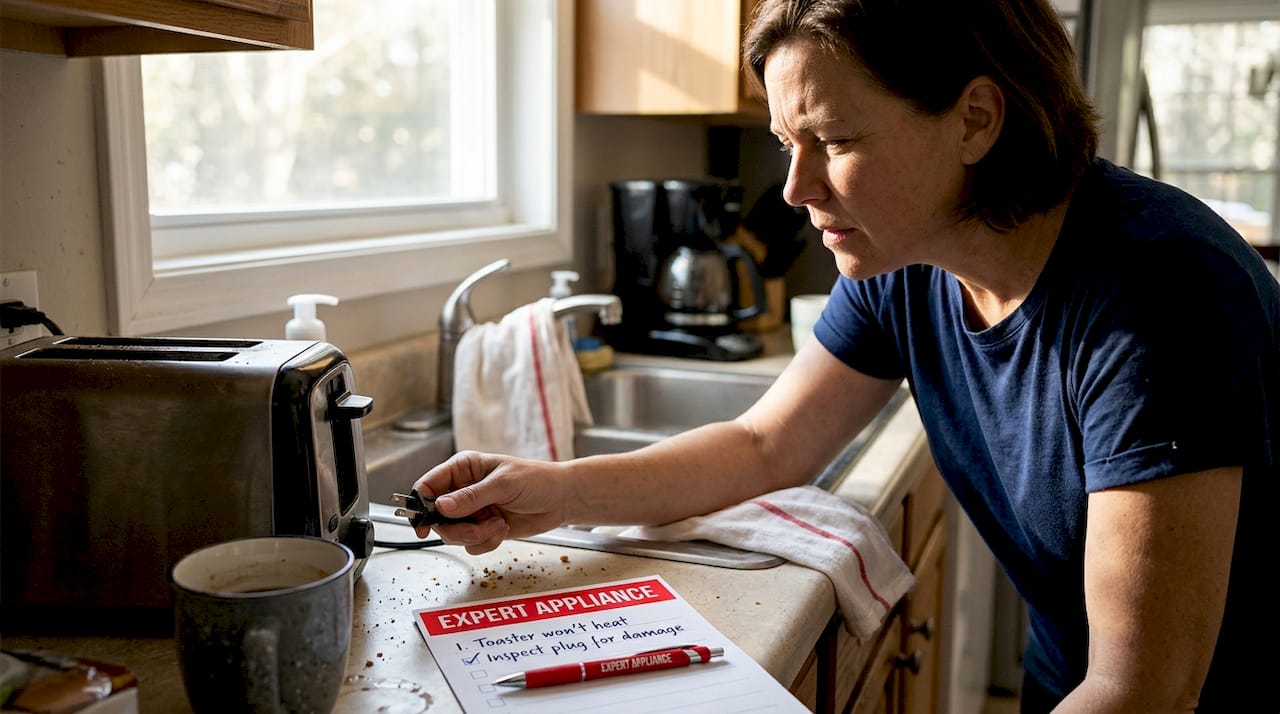
Home appliance fires are far more common than most people realize. NFPA data shows that between 2019 and 2023, home structure fires involving appliance housing or casing ignition averaged 15,834 incidents per year, causing 28 deaths, 346 injuries, and $214 million in property damage annually. What makes this number troubling isn’t just the scale. It’s that many homeowners assume any appliance sitting on a store shelf has already been made completely safe. That assumption is wrong, and understanding why could genuinely protect your family and your home.
Table of Contents
- What are appliance safety standards?
- How standards are enforced in the U.S.
- What makes appliances pass or fail safety standards?
- Homeowner checklist for appliance safety compliance
- The truth most homeowners miss about appliance safety
- Need appliance safety assurance? Expert help in Monmouth County
- Frequently asked questions
Key Takeaways
| Point | Details |
|---|---|
| Certifications reduce risk | UL and IEC standards help prevent electrical fires, shocks, and appliance failure. |
| Verification matters | Check for certification marks and safety features before use to ensure compliance. |
| Local rules affect you | Monmouth County homeowners must follow local codes, sometimes beyond national standards. |
| Maintenance is essential | Regular inspection, safe habits, and timely repairs protect your home as much as certification. |
| Compliance is ongoing | Safety standards evolve and require homeowners to stay informed and proactive. |
What are appliance safety standards?
Appliance safety standards are the technical rules that manufacturers must follow when designing, building, and testing household appliances. They aren’t just a stack of legal paperwork filed by engineers. They’re the blueprint that determines whether your dishwasher shuts off before it overheats or whether your dryer keeps running when it should stop.
The foundation of the entire system is a single global document. IEC 60335-1 is the foundational international safety standard for household electrical appliances, covering general requirements for appliances up to 250V single-phase or 480V in other configurations. It addresses electrical, mechanical, thermal, moisture, abnormal operation, radiation, and chemical hazards. That’s a remarkably wide net, covering everything from how much heat a motor casing can reach to whether the plastic housing can resist ignition.
Here’s what those hazard categories actually mean in practice:
- Electrical hazards cover shock prevention, proper insulation, and safe grounding
- Thermal hazards address overheating scenarios, auto shut-off triggers, and heat-resistant materials
- Mechanical hazards govern sharp edges, moving parts, and structural integrity under stress
- Chemical hazards include refrigerant leaks, off-gassing from insulation materials, and combustion risk
- Moisture hazards set the rules for appliances used in wet environments like kitchens and bathrooms
“Appliance standards don’t just set minimums. They require manufacturers to prove that an appliance fails safely, meaning when something goes wrong, the appliance shuts down rather than creating a new hazard.”
That last point is what engineers call a fail-safe design principle. Non-bypassable thermal cut-outs, automatic shut-off sensors, and redundant protection layers are all required features under IEC 60335-1 and its U.S. adaptations. When you look into appliance certification in NJ, you’ll find that these same principles apply to every certified appliance sold in this market.
How standards are enforced in the U.S.
Knowing that international standards exist is one thing. Understanding how those standards actually get enforced inside American homes is where it gets more relevant to you as a Monmouth County homeowner.
The United States adapts the IEC 60335-1 framework for its own electrical infrastructure and legal system. UL 60335-1, now in its 7th edition as of December 2025, integrates both international requirements and U.S.-specific rules. These include higher voltage limits up to 600V AC/DC, full compliance with the National Electrical Code (NEC/NFPA 70) and the Canadian Electrical Code. The process involves rigorous testing, factory inspections, and ongoing audits. An appliance that earns UL listing isn’t just tested once and forgotten. It’s subject to continued monitoring.
The Consumer Product Safety Commission, commonly called the CPSC, plays an equally important role. CPSC enforcement covers safety for household electrical products including hair dryers with immersion protection, extension cords with proper wire size and strain relief, and seasonal lighting. When a product is found non-compliant, the CPSC can classify it as a substantial hazard and issue a mandatory recall. They reference UL standards directly when making these determinations.
Here’s how the key enforcement players compare:
| Organization | Role | Homeowner Impact |
|---|---|---|
| IEC | Sets international base standard | Ensures global quality floor |
| UL | Tests and certifies for U.S. market | Listing mark on your appliance |
| CPSC | Enforces, recalls, monitors market | Product recalls, safety alerts |
| NEC (NFPA 70) | Electrical installation code | Governs your home wiring |
| Local Monmouth County codes | May add inspection requirements | Affects older home compliance |
For homeowners in Monmouth County, local enforcement matters too. Township ordinances and building codes can require inspections when appliances are installed or when electrical panels are upgraded. This is especially relevant for older homes, where aging wiring and outdated outlet configurations may not support modern high-draw appliances safely.
To stay on top of what applies to your specific situation, review this safety checklist for Monmouth County or explore how appliances affect home safety beyond just the certification label.
Four practical steps to verify enforcement in your home:
- Check every major appliance for a UL listing mark or equivalent certification label
- Confirm that outlets near sinks, countertops, and laundry areas are GFCI-protected
- Cross-reference any recalled products using the CPSC recall database at cpsc.gov
- Schedule a professional inspection if you’ve made recent changes to your home’s electrical system
A single missing GFCI outlet in a kitchen is a code violation in most jurisdictions. It also creates a real electrocution risk that no appliance standard can compensate for on its own.
What makes appliances pass or fail safety standards?
The testing process behind safety certification is far more demanding than most people expect. It isn’t just about whether an appliance works correctly under normal conditions. Certification bodies specifically look for failure modes. They want to know what happens when things go wrong.
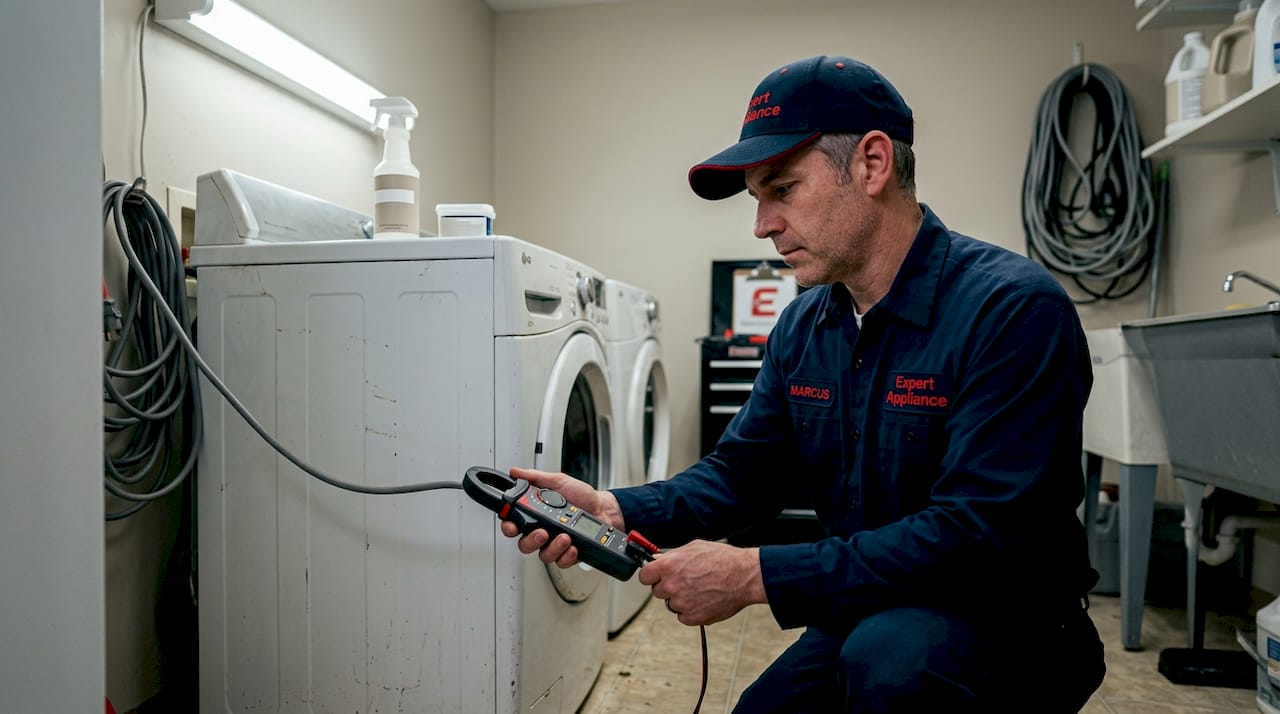
UL testing protocols require that appliances handle abnormal misuse scenarios including blocked vents, locked rotor conditions in motors, flammable refrigerants with required sensors and leak detection, and battery-operated or DC-powered devices up to 600V. That means before your refrigerator ever reaches your kitchen, it was tested with its vents deliberately blocked to simulate years of dust buildup, and its compressor motor was stalled intentionally to see how the safety system responds.
Here are the key performance benchmarks that determine pass or fail:
| Test Category | What Gets Measured | Failure Threshold |
|---|---|---|
| Leakage current | Electrical current escaping to housing | Exceeds 0.5mA in normal use |
| Surface temperature | Heat on touchable parts during operation | Exceeds 60°C on metal surfaces |
| Motor endurance | Performance under stall/locked rotor | Fails to shut off within limit |
| Moisture resistance | Water ingress during rain or splash | Allows conductive path to live parts |
| Mechanical strength | Impact resistance of housing and guards | Cracks expose live components |
Products fail certification when they contain bypassable thermal cut-outs, meaning a safety feature that a user can defeat or that can be circumvented during a specific fault condition. Faulty temperature sensors that allow overheating before triggering shutdown are another common failure cause. Both of these defects look invisible to you when you unbox a new appliance.
Pro Tip: When buying a used appliance, never assume the certification still applies. Modifications, worn insulation, and replaced components can all compromise the original tested configuration. Always have a technician evaluate older units before installing them in your home.
Understanding why appliances short circuit is a direct application of this knowledge. A short circuit is often the result of insulation that has degraded past the tested baseline. Similarly, knowing how to prevent appliance damage and extend equipment lifespan connects directly to keeping your appliances within the safety parameters they were originally certified to meet.
Homeowner checklist for appliance safety compliance
Understanding what standards require is useful. Knowing exactly what to do in your own home is what actually keeps your family safer. Here’s a practical, evidence-based process you can follow today.
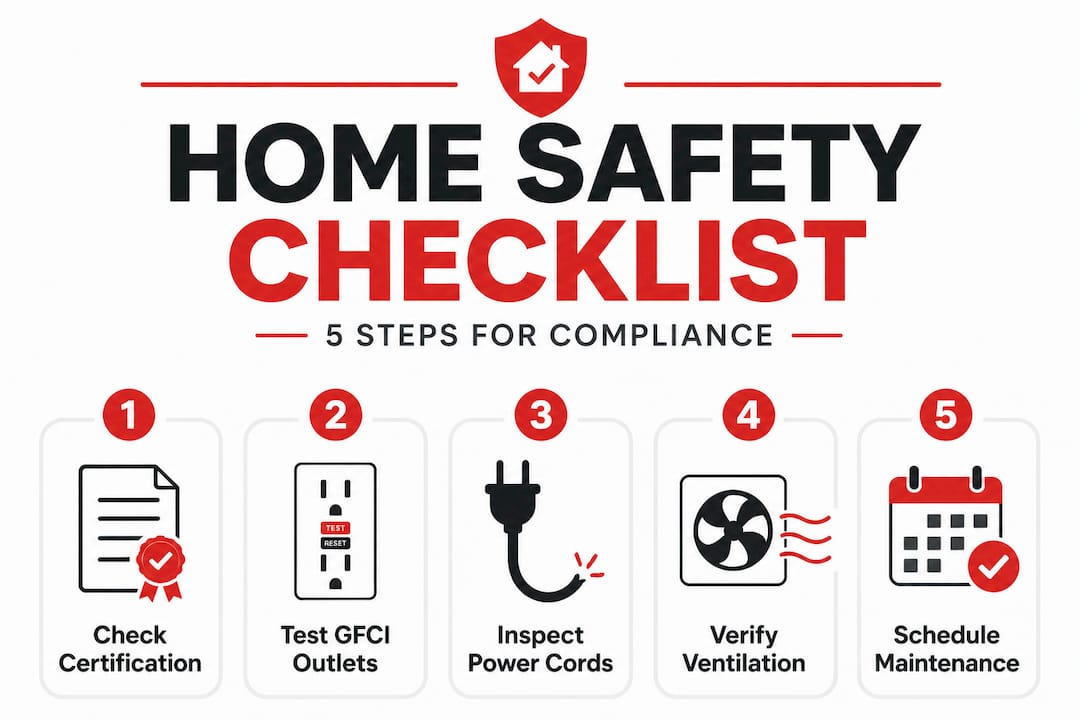
UL and safety experts recommend that homeowners verify UL and IEC certification marks on appliances, ensure GFCI protection in all wet areas, unplug small appliances when not in use to prevent phantom power fire risk as both NFPA and CPSC advise, and schedule professional inspections for older or frequently used appliances. These steps reduce fire and shock risks by working with the certified materials and protections already built into your appliances.
Here’s your step-by-step compliance process:
- Locate the certification mark. Turn your appliance over or check the back panel for a UL Listed mark, ETL mark, or CSA certification. If there’s no mark at all, treat it as uncertified and have it inspected before use.
- Check the CPSC recall list. Visit cpsc.gov and search your appliance’s brand and model number. Recalls happen regularly, even on well-known brands.
- Test your GFCI outlets. Press the test button on GFCI outlets in kitchens, bathrooms, and laundry areas. If the outlet doesn’t cut power, it needs replacement.
- Unplug small appliances after each use. Toasters, coffee makers, and space heaters are frequent fire starters when left plugged in and unattended.
- Clean appliance vents and coils regularly. Dust-clogged dryer vents and refrigerator coils are the most common path from “safe, certified appliance” to “fire hazard.”
- Schedule a professional inspection for appliances over 10 years old. Insulation breaks down, sensors drift, and cut-outs wear out. Certification doesn’t last forever without maintenance.
Pro Tip: Keep a simple log of when you last cleaned your dryer vent, replaced refrigerator coils, and had your range inspected. Monmouth County homeowners who track maintenance intervals rarely face the kind of sudden appliance failures that turn into emergencies.
Here’s what to watch for between inspections:
- Burning smell during or after use is always a warning sign, never ignore it
- Unusual sounds like grinding or high-pitched whining from motors indicate wear
- Tripped breakers when running a specific appliance point to a wiring or motor issue
- Warm or discolored wall outlets near appliances suggest dangerous heat buildup
- Appliance surfaces hotter than expected during normal operation indicate a sensor or thermal protection issue
If any of these show up, review the emergency appliance checklist and take action before the situation escalates.
The truth most homeowners miss about appliance safety
Here’s the uncomfortable reality we see in our work across Monmouth County, having served this community since 1988. Most people think buying a certified appliance is the finish line for safety. It isn’t. Certification gets you maybe 90 percent of the way there. The remaining 10 percent depends entirely on you.
Look at where fire statistics consistently point. The majority of appliance-related fires don’t start in brand-new machines. They start in appliances that are 6, 10, or 15 years old. They start after dust has filled a vent for years. They start after someone noticed a small burning smell and ignored it because the machine “seemed fine.” Certification was never designed to compensate for neglect.
The safety standards we’ve discussed are built around testing appliances in their original, factory condition. They don’t account for three years of lint buildup in a dryer exhaust. They don’t simulate a refrigerator condenser coil running under two inches of pet hair and kitchen grease. The testing environment is clean, controlled, and precise. Your utility room almost certainly is not.
This is why we take a stronger position on maintenance than most guides do. Buying certified is non-negotiable, but using your appliances wisely and maintaining them consistently is just as essential. A UL mark on a dryer full of lint doesn’t make you safe. It makes you overconfident.
What changes behavior for most homeowners is reframing the question. Instead of asking “Is this appliance safe?” ask “Is this appliance in the same condition it was in when it passed testing?” If the answer is no, you need to close that gap. Learning more about preventing appliance breakdowns in NJ is one of the most practical things you can do for both safety and cost savings.
Standards set the floor. What you do as a homeowner determines whether you stay well above it or gradually slide back down toward it.
Need appliance safety assurance? Expert help in Monmouth County
If this guide has raised some questions about your own appliances, that’s a good thing. Awareness is the first step. Acting on it is the part that matters.
At Expert Appliance, we’ve been serving Monmouth County homeowners since 1988. We know that the gap between a certified appliance and a safe one is filled with regular maintenance, timely repairs, and professional inspections. Whether you need a routine check on an aging dryer, an emergency repair on a refrigerator, or a thorough inspection of your kitchen appliances before an insurance renewal, we’re ready to help. Reading about preventive maintenance tips is a great start, but having a licensed technician verify your appliances in person is the only way to know for certain. We offer same-day service, 24/7 emergency support, and transparent upfront pricing for all major appliance brands throughout Marlboro and the surrounding Monmouth County area. Contact us today to schedule a safety inspection.
Frequently asked questions
What appliance safety certifications matter most for U.S. homeowners?
UL-listed and IEC-certified appliances meet strict U.S. and international safety requirements and are referenced by the CPSC and local building codes as the standard for compliance.
How can I verify if my appliances comply with current safety standards?
Check the appliance label for a UL or IEC certification mark, confirm GFCI protection in all wet areas, and have a qualified technician inspect any appliance that is over 10 years old or shows signs of wear.
Are standards enough to guarantee appliance safety?
Standards dramatically reduce risk, but NFPA fire data shows thousands of appliance fires still occur annually, most linked to maintenance neglect and misuse rather than failed certification.
What local rules should Monmouth County homeowners know?
CPSC guidelines recommend prioritizing UL-listed appliances that comply with NEC (NFPA 70), and local Monmouth County codes may also require professional inspections when appliances are installed or electrical systems are modified.
Recommended
- Routine Appliance Inspection: Protect Your Monmouth County Home – Expert Appliance
- Appliance Inspection Guide for Monmouth County Homes – Expert Appliance
- Preventing appliance breakdowns: 5 tips for NJ homeowners – Expert Appliance
- Home appliance safety checklist: secure your Monmouth County – Expert Appliance