

TL;DR:
- Most kitchen noises from refrigerators are normal and related to compressor, fans, or defrost cycles.
- Noise levels above 45-50 dB may indicate a problem needing professional assessment.
- Regular maintenance like coil cleaning and leveling helps ensure quiet, efficient fridge operation.
That low groan from the kitchen at 2 a.m. is enough to send any homeowner straight to Google. Most people assume the worst: a dying compressor, a flood in the making, or a repair bill that rivals a car payment. But after decades of working on refrigerators across Monmouth County, we can tell you that the majority of those alarming sounds turn out to be completely harmless. Knowing how to read your refrigerator’s sounds is one of the most practical skills a homeowner can have, and this guide walks you through exactly what you need to know.
Table of Contents
- Understanding normal refrigerator noises
- Unpacking the most common refrigerator noises (and their causes)
- Quick reference: What’s normal and what requires repair?
- Easy maintenance tips to prevent noisy fridge troubles
- Our expert take: Why not all fridge noises need fixing (and when you should worry)
- Need fast refrigerator noise diagnosis or repair in Monmouth County?
- Frequently asked questions
Key Takeaways
| Point | Details |
|---|---|
| Normal fridge volume | Most refrigerators run at 37-45 dB, similar to a quiet conversation. |
| Common noises explained | Buzzing, clicking, and popping are usually harmless, but grinding or screeching are not. |
| Check noise patterns | Sudden changes or persistent loud noises signal it’s time for investigation. |
| Prevent problems | Regular coil cleaning and balanced placement help keep your fridge quiet and efficient. |
| Know when to call help | If a sound worries you or disrupts your home, it’s wise to contact an appliance expert. |
Understanding normal refrigerator noises
Now that you know why it’s important to pinpoint noises, let’s first define what’s actually normal for any modern refrigerator.
Your fridge is not a silent appliance. It runs cooling cycles, circulates air, and manages temperature constantly, all day and all night. So some noise is simply part of the deal. The question is: how much noise is too much?
Normal noise levels for refrigerators fall between 37 and 45 dB(A), roughly the same volume as a quiet conversation in a library. If your fridge creeps above 45 to 50 dB, that’s a signal worth investigating. Below that range, you’re almost certainly looking at normal operation.
The type of compressor your fridge uses makes a real difference here. Modern inverter compressors run between 37 and 40 dB, noticeably quieter than standard compressors that land between 40 and 47 dB. Dirty condenser coils force the compressor to work harder and run longer, which pushes the overall noise level up over time. This is one reason a fridge that was quiet when you bought it gradually gets louder as the years go by.
Understanding the different refrigerator types also helps set your expectations. A French door model with two evaporator fans is naturally going to sound a little different than a compact top-freezer unit.
Sounds that are almost always normal:
- A gentle, steady hum from the compressor
- Soft whirring from the condenser or evaporator fan
- A quiet click when the compressor starts or stops
- Occasional gurgling as refrigerant moves through the lines
- A soft pop or snap when the interior plastic warms or cools
“If your fridge sounds like it’s having a quiet conversation with itself, that’s a good sign. The moment it starts shouting, pay attention.”
Pro Tip: Download a free decibel meter app on your phone and hold it about two feet from your fridge during a normal cycle. A reading under 45 dB means you’re in good shape.
| Fridge type | Typical noise range | Notes |
|---|---|---|
| Inverter compressor models | 37-40 dB | Quietest option available |
| Standard compressor models | 40-47 dB | Normal for most homes |
| Above 47-50 dB | Potentially problematic | Warrants closer inspection |
Unpacking the most common refrigerator noises (and their causes)
Once you know what level of noise is acceptable, it’s easier to match the specific sounds you hear to likely causes inside your fridge.
Each refrigerator noise has a story behind it. Some stories are boring and end with “yep, totally fine.” Others are early warnings that something needs attention before it becomes a bigger problem. Here’s a breakdown of what you’re most likely hearing.
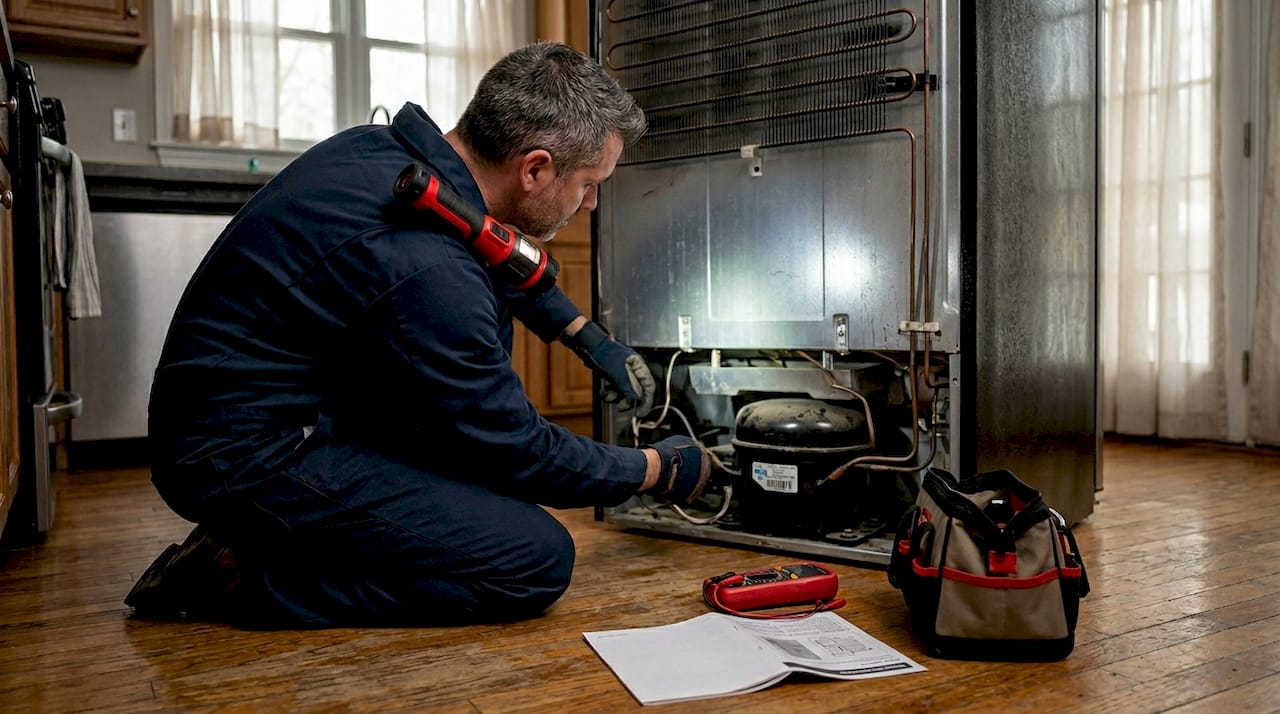
1. Buzzing or humming
This is the most common sound homeowners call us about. It almost always comes from the compressor or a fan motor. A steady, low hum is normal. If the buzzing is loud, erratic, or changes pitch suddenly, the fan motor bearings may be wearing out.
2. Clicking sounds
A short click when your fridge starts or stops a cooling cycle is completely expected. The relay switch that triggers the compressor makes that sound. However, if you hear rapid, repeated clicking that doesn’t stop, the compressor may be struggling to start. That’s worth a closer look.
3. Popping or cracking
Plastic expands when it warms and contracts when it cools. The interior walls of your fridge do this constantly, which causes occasional pops and cracks. These are harmless unless they happen constantly and are paired with temperature problems.
4. Sizzling or hissing
This one surprises a lot of people. During the automatic defrost cycle, the heater melts frost buildup on the evaporator coils. When water drips onto that heater, it sizzles. This is completely normal and typically happens once or twice a day.
5. Rattling
Before you panic about rattling, check two things: the items sitting on top of your fridge and the drip tray underneath it. Loose bottles, magnets, or a slightly off-center drip pan account for the majority of rattling calls we get. Move items, reposition the drip pan, and the noise often disappears in seconds.
6. Gurgling or dripping
This is refrigerant moving through the system. Totally normal. Some homeowners describe it as the sound of water moving through pipes. That’s essentially what it is, just with refrigerant instead of water.
Knowing which sounds line up with common refrigerator problems can save you from unnecessary anxiety. And staying on top of refrigerator maintenance tips is the best way to keep those innocent sounds from turning into something worse.
A noise level above 50 dB is usually the threshold where you shift from “normal operation” to “something may need fixing.” Keep that number in your head as your personal alert point.
Pro Tip: Try to record the noise on your phone. Knowing whether the sound happens continuously, only at startup, or only at certain times of day gives a technician much better information to work with before they even open the door.
Quick reference: What’s normal and what requires repair?
With the noise sources unpacked, let’s map out a decision tool to clarify whether you need a quick fix or expert help.
The table below gives you a fast, clear way to match what you’re hearing to what it likely means and what you should do next.
| Sound | Typical source | Normal or concern? | Action needed |
|---|---|---|---|
| Steady low hum | Compressor running | Normal | None |
| Soft whirring | Fan motor | Normal | None |
| Brief click at startup/shutdown | Relay switch | Normal | None |
| Occasional pop or crack | Plastic expanding | Normal | None |
| Gurgling or bubbling | Refrigerant flow | Normal | None |
| Sizzling during defrost | Defrost heater | Normal | None |
| Loud buzzing that won’t stop | Fan motor or compressor issue | Concern | Call for service |
| Rapid, repeated clicking | Compressor relay failure | Concern | Call for service |
| Grinding or scraping | Worn fan blade or motor | Concern | Call for service |
| Screeching or squealing | Motor bearing failure | Concern | Call for service |
| Loud vibration or shaking | Unlevel placement or loose panel | Check first | Level fridge; call if persists |
Signs you should call a professional right away:
- Grinding sounds that come from inside the freezer compartment
- Screeching or squealing that is loud enough to hear from another room
- Clicking that repeats rapidly and doesn’t result in the compressor starting
- Any noise that has gotten significantly louder over a short period of time
- Noise paired with temperature problems, water leaks, or frost buildup
When you’re unsure whether your fridge needs attention or just a moment to settle, trust your gut. A noise that makes you stop and listen is usually worth investigating. If your own inspection doesn’t turn up anything obvious, DIY refrigerator repair resources can help you rule out simple fixes before calling in a technician.
Keep in mind that noise levels above 45 to 50 dB fall outside the normal range for most modern units. The table above pairs with that benchmark to give you a complete picture.
Easy maintenance tips to prevent noisy fridge troubles
Knowing how to spot trouble is great, but simple care can help you avoid the most annoying and persistent fridge noises in the first place.
Most homeowners are surprised to learn how much of their refrigerator’s noise comes down to basic maintenance. A few simple habits can make a real difference in how quiet and efficient your fridge runs year after year.
1. Clean the condenser coils every six months
Dust, pet hair, and kitchen grease collect on the coils at the back or bottom of your fridge. When coils are dirty, the compressor has to run harder and longer to maintain temperature. That extra effort creates more noise and raises energy bills. Dirty coils are one of the leading causes of unnecessary fridge noise, and cleaning them takes about 15 minutes with a vacuum and a brush attachment.
2. Level your refrigerator on the floor
An uneven fridge vibrates. That vibration travels through the floor and sometimes through nearby cabinets, creating a rattle that sounds much worse than it is. Use a level tool and adjust the front feet until the fridge sits evenly. This one step eliminates a huge portion of rattling complaints we see in the field.
3. Keep interior vents clear
Your refrigerator circulates cold air through vents in the back of the freezer and fridge compartments. When food containers block those vents, the evaporator fan has to work overtime to push air through. That strains the motor and creates more noise. Leave a few inches of space around the vents, and don’t pack the shelves so tightly that air can’t move.
4. Check the drip pan
The drip pan sits underneath your fridge and collects condensation. Over time it can shift out of position and rattle against the frame. Pull it out, clean it, and reposition it firmly. Takes two minutes and often solves an annoying recurring noise.
5. Inspect door seals
Worn or cracked door seals let warm air into the fridge, which forces the compressor to run more often and longer. That leads to more noise and higher energy use. Wipe the seals clean and check for any gaps or cracks every few months.
“A refrigerator that runs efficiently is almost always a refrigerator that runs quietly. Noise and inefficiency tend to arrive together and leave together.”
Pro Tip: If you notice your fridge getting gradually louder over several weeks, check for dust buildup on the coils before anything else. It’s the most common cause and the easiest fix. You can find additional guidance on fridge maintenance tips that cover everything from coil cleaning to water filter replacement schedules.
Our expert take: Why not all fridge noises need fixing (and when you should worry)
Here’s something we’ve seen play out hundreds of times across Monmouth County since we started doing this work in 1988. A homeowner hears a new sound from the kitchen, spends 20 minutes convincing themselves it’s the beginning of the end for their fridge, and calls us expecting to hear the worst. More often than not, the sound is normal or comes from something as simple as a loose item on top of the appliance.
We’re not saying this to dismiss your concerns. We’re saying it because the anxiety around fridge noises is genuinely out of proportion to the actual risk in most cases. The human ear is wired to notice changes, and when a familiar appliance suddenly sounds different, the brain treats it as a threat. That instinct keeps you safe in many situations, but it leads to unnecessary worry when it comes to refrigerators.
That said, we want to be equally clear about the other side of this. Ignoring a real warning sign because you’ve read that most noises are harmless is how a $150 fan motor replacement turns into a $600 compressor job. Grinding, screeching, and persistent loud clicking are not sounds to dismiss. Neither is any noise that arrives alongside a warm fridge, a pooling water problem, or frost buildup where there shouldn’t be any.
The framework we use in the field is simple: a new noise on its own, without any other changes in performance, is usually not urgent. A new noise plus any change in temperature, ice production, or water management is a combination that needs professional eyes on it quickly. Our expert fridge troubleshooting tips walk through that exact diagnostic process in more detail.
The measured approach saves you money and keeps your food safe. Panic costs money. Patience, combined with a basic understanding of what you’re hearing, costs nothing.
Need fast refrigerator noise diagnosis or repair in Monmouth County?
If you’ve worked through the checklists above and you’re still not confident about what your fridge is doing, that’s exactly what we’re here for. Expert Appliance Inc. has been serving homeowners across Marlboro and the wider Monmouth County area since 1988, and we offer same-day service for refrigerator issues that can’t wait.

Our technicians handle professional fridge repair for all major brands and can diagnose unusual noises quickly, giving you a clear answer and an honest price before any work begins. Whether your fridge is buzzing, grinding, or doing something in between, we’ll identify the cause and tell you exactly what it will take to fix it. Check out our appliance brands we repair page to confirm we work on your model, and use our appliance maintenance checklist to stay ahead of future problems. Call us or schedule online today.
Frequently asked questions
How loud should a modern refrigerator be in my home?
A modern refrigerator should run between 37 and 45 dB(A), roughly as loud as a quiet conversation. Anything consistently above 50 dB is worth having checked out.
What refrigerator noises mean I should call a professional?
Frequent loud clicking, grinding, or screeching sounds are clear signals to schedule service, especially when paired with performance issues like a warm fridge or frost buildup. A noise above 50 dB that doesn’t resolve on its own is another reliable indicator.
Will cleaning my refrigerator’s coils help reduce noise?
Yes. Dirty coils force the compressor to run longer and harder, which raises noise levels. Vacuuming the coils every six months is one of the most effective and lowest-effort ways to keep your fridge running quietly.
Are inverter compressors quieter than standard ones?
Yes. Inverter compressors typically run between 37 and 40 dB, while standard compressors operate in the 40 to 47 dB range. If quiet operation is a priority, an inverter model is worth considering when it’s time to replace your current fridge.
Recommended
- Common Refrigerator Problems: Diagnosis and Solutions – Expert Appliance
- Essential Refrigerator & Freezer Repair Advice: Keep Your Appliances Running Smoothly – Expert Appliance
- Urgent Refrigerator Repair: Ensuring Your Food Stays Fresh – Expert Appliance
- 7 Essential Refrigerator Maintenance Tips for Homeowners – Expert Appliance