
TL;DR:
- Prompt, local appliance repair often completes most fixes in a single visit, reducing downtime.
- Safety precautions and proper tools are essential before troubleshooting appliances yourself.
- Repair costs exceeding 50% of new appliance value or repeated failures suggest replacement is wiser.
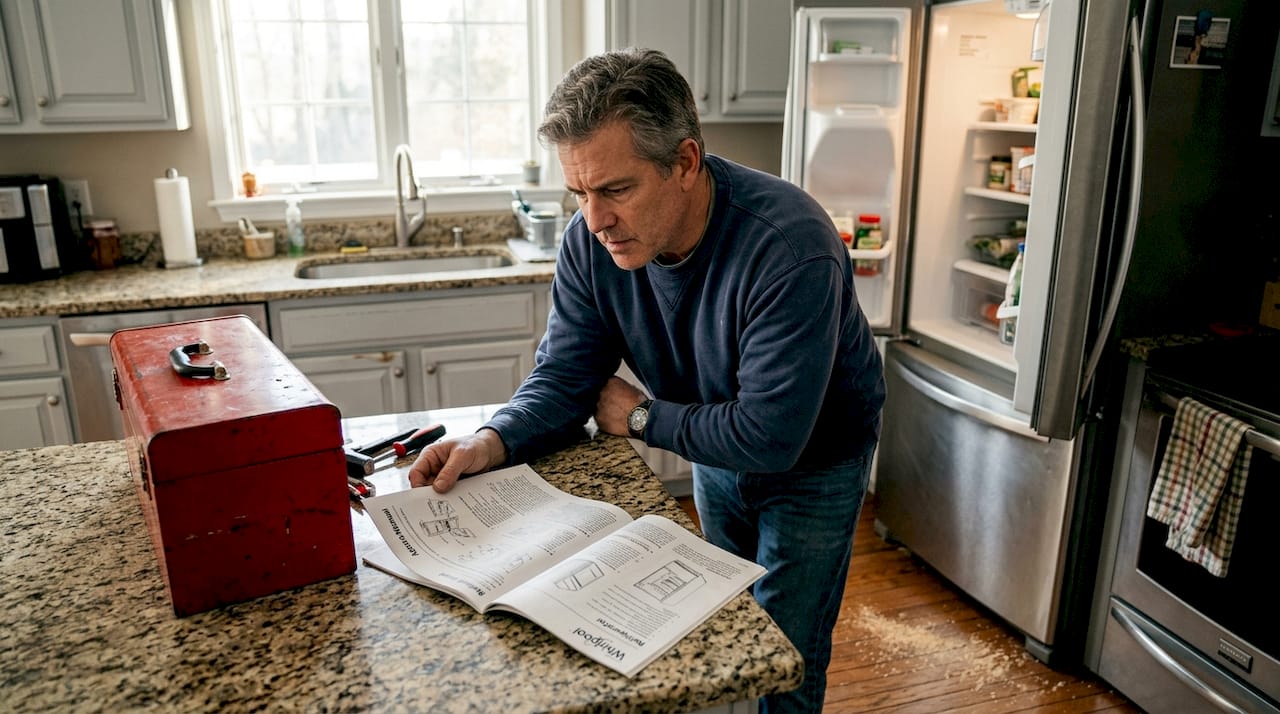
Your refrigerator stops cooling at 7 PM on a Friday. The washer quits mid-cycle with a full load of soaking clothes. Your dryer runs for two hours and everything comes out wet. These moments hit hard, and in a busy Monmouth County household, every hour of downtime matters. The good news: fast, informed action almost always leads to a better outcome, whether that means a five-minute reset or a same-day service call. This guide walks you through exactly what to do, step by step, so you protect your food, your family, and your budget.
Table of Contents
- Assessing the urgency: Is it a quick fix or an emergency?
- Essential tools, information, and safety checks before you start
- Step-by-step: Dealing with the most common appliance breakdowns
- When to repair, replace, or call a pro
- Local repair services: Who to call (and what to expect in Monmouth County)
- The practical truth about fixing appliances: Lessons from Monmouth County
- Need fast, expert appliance help? Monmouth County’s trusted options
- Frequently asked questions
Key Takeaways
| Point | Details |
|---|---|
| Identify urgency fast | Quickly determine if your appliance issue is an easy fix or an emergency that needs a pro. |
| Prepare with safety first | Always cut power or water and have the right tools and info before starting any repair. |
| Follow proven steps | Use evidence-backed tips to troubleshoot the most common appliance failures with confidence. |
| Know when to call | If the fix is risky, the cost is high, or parts are scarce, local pros offer fast, reliable help in Monmouth County. |
| Check brand reliability | Appliance brands like LG and Speed Queen are top-rated for reliability, which can guide repair or replacement decisions. |
Assessing the urgency: Is it a quick fix or an emergency?
The very first thing you need to do when an appliance breaks is figure out how serious the situation actually is. Not every breakdown requires an emergency call. But some do, and misreading those situations can be dangerous and expensive.
Watch for these red flags that signal a true emergency:
- Smoke or burning smell coming from any appliance
- Visible sparks or electrical arcing
- Active water leaks near electrical outlets or control boards
- A refrigerator that has been completely non-cooling for more than four hours with food inside
- A gas smell near a stove or oven (leave the house and call your gas company first)
For anything on that list, shut off the appliance at the breaker and call for help immediately. Monmouth County repair pros are equipped for exactly these urgent situations. According to local service data, local providers average 2-4 hours for emergency response and complete 85% of repairs in a single visit, compared to 1-3 days and only 45% same-visit completion for national chains.
Common situations where you can pause and observe before calling:
- Unusual noise without any error code or visible problem
- Partial power (for example, the display works but the motor does not)
- Smart appliance showing an error code you can look up
- A cycle that stopped but will restart after a cool-down
For these, a soft reset is almost always the right first move. Unplug the appliance for two minutes, plug it back in, and see if the issue clears. This solves a surprising number of problems. You can also explore local appliance repair options if you are unsure whether your situation qualifies as urgent.
Pro Tip: If you smell burning plastic or notice any kind of electrical odor, do not attempt a reset. Cut power at the breaker, open windows, and call a technician. Electrical issues can escalate faster than any other appliance failure.
| Situation | Urgency level | Recommended action |
|---|---|---|
| Smoke or sparks | Critical | Cut power, call emergency repair |
| Water leaking near electrical | Critical | Shut off water and power |
| Fridge not cooling (4+ hrs) | High | Call same-day repair |
| Unusual noise, no error code | Moderate | Observe and soft-reset first |
| Smart appliance error code | Low to moderate | Look up code, try reset |
| Appliance runs but underperforms | Low | Check manual, schedule a visit |
Essential tools, information, and safety checks before you start
Now that you know how urgent your issue is, preparation is the next vital step before any action. Jumping into troubleshooting without the right information or safety steps wastes time and can make things worse.
Safety first, every time:
- Turn off the appliance at its dedicated circuit breaker, not just the power button
- Shut off the water supply valve for washers and dishwashers before inspecting
- Pull the appliance away from the wall before working behind it
- Keep a dry fire extinguisher rated for electrical fires nearby
- Never work on a gas appliance unless you are shutting off an external valve. Leave internal gas components to certified professionals
Tools worth having on hand:
- Phillips and flathead screwdrivers in multiple sizes
- Needle-nose pliers
- A basic multimeter for testing power and continuity
- Work gloves (appliance edges are surprisingly sharp)
- A flashlight or headlamp for dark interior spaces
- A bucket and towels for anything involving water lines
Information to collect before you call or start troubleshooting:
- The appliance brand, model number, and serial number (usually on a label inside the door or on the back)
- The specific symptom in plain language: what happened, when, and how often
- Any error codes displayed
- The age of the appliance and any prior repairs
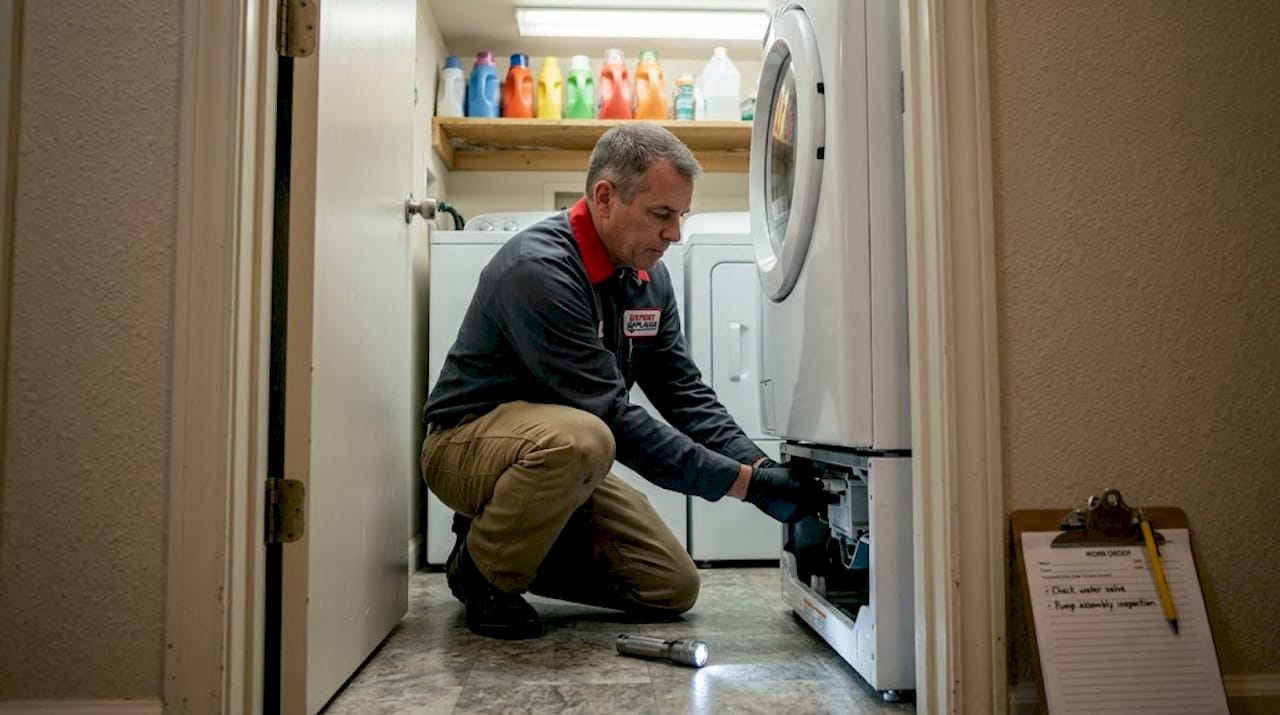
Certain repairs genuinely require professional expertise. Compressors, refrigerant systems, control boards, and washing machine transmissions are not safe or practical for DIY attempts and should always be handled by a trained technician. This is not just about safety; incorrect handling of refrigerant, for example, is also illegal without certification.
Pro Tip: Photograph the error code or unusual symptom with your phone before you reset the appliance. Technicians find this information incredibly helpful for faster diagnosis, and it can speed up your repair visit significantly.
| Problem type | Safe DIY? | Call a pro? |
|---|---|---|
| Clogged drain filter in washer | Yes | Not necessary |
| Dirty condenser coils on fridge | Yes | Not necessary |
| Control board replacement | No | Yes |
| Refrigerant recharge | No | Yes, certified tech |
| Oven igniter replacement | Sometimes | Preferred |
| Dryer vent cleaning | Yes | If vent is long or complex |
| Compressor repair | No | Yes, immediately |
If you want to get ahead of issues before they become expensive, check out these fast local fixes to keep your appliances running well year-round.
Step-by-step: Dealing with the most common appliance breakdowns
With your tools and safety steps ready, follow these instructions for the most common urgent problems homeowners across Monmouth County run into every week.
Refrigerator not cooling properly:
- Check that the temperature settings were not accidentally changed (common if kids are in the house)
- Inspect the condenser coils located at the back or beneath the unit. Dirty coils are the number one failure cause for refrigerators, and local services report that Monmouth County providers see a 12% repeat service rate versus 38% for national companies
- Make sure the door seals are intact. Close the door on a piece of paper and pull. If it slides out easily, the seal is failing
- Clear any items blocking interior vents
- If none of these resolve the issue, check for ice buildup on the back wall of the freezer compartment, which can signal a defrost system failure
Washer not draining or finishing cycles:
- Check that the lid or door is fully latching. Most modern washers will not complete a cycle if the latch sensor is triggered
- Locate and clean the drain pump filter (usually a small cap at the bottom front of the machine). Have a towel and shallow pan ready; water will pour out
- Check the drain hose for kinks or clogs
- Run a diagnostic cycle if your washer has one. Check your model’s manual for instructions
Dryer not heating:
- Clean the lint trap thoroughly, then check the exterior vent for blockages
- Check your breaker panel. Electric dryers use two separate circuits, and a partial trip can leave the drum spinning but the heating element dead
- If you have a gas dryer, confirm the gas supply valve behind the unit is fully open
- Test the door switch by pressing it manually. If you do not hear a click, it may be faulty
Smart appliance glitches:
Many error codes on modern smart appliances are firmware or connectivity issues. Unplug the appliance for three to five minutes, then reconnect it to your home Wi-Fi through the manufacturer app and check for updates. This resolves a significant portion of smart appliance calls before a technician ever arrives.
For ongoing care and prevention, NJ appliance maintenance tips can help you build habits that reduce breakdowns throughout the year.
Pro Tip: If any appliance has needed the same repair twice within 18 months, that is a strong signal that replacement may be more economical than another fix. Parts wear together, and one failing component often means others are close behind.
When to repair, replace, or call a pro
Once you have attempted fixes, use these guidelines to make the smartest next move for your appliance and your budget.
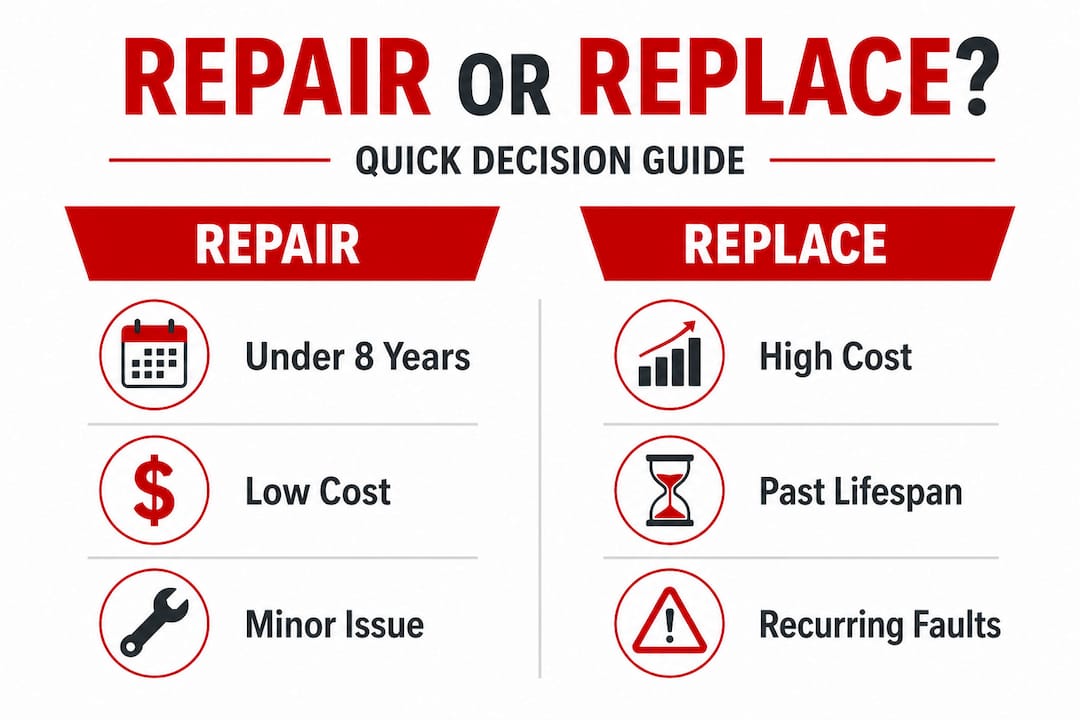
The most widely used rule in the appliance industry is the 50% rule: if the repair cost exceeds 50% of the current replacement price of the appliance, buy new. This is a solid starting point, but it is not the whole picture.
Additional factors that push toward replacement:
- The appliance is past its typical lifespan
- Replacement parts are no longer available (NLA) from the manufacturer
- The unit has already had two or more major repairs
- Energy costs for an older, inefficient unit are adding meaningfully to your utility bill
Typical appliance lifespans to use as benchmarks:
- Refrigerators: 13 to 17 years
- Washers: 10 to 14 years
- Dryers: 10 to 13 years
- Dishwashers: 9 to 12 years
- Gas ranges: 15 to 17 years
Brand choice also plays a real role. LG carries a 5.5% first-year service rate, making it one of the most reliable major appliance brands. Speed Queen leads in laundry with a 4.6% rate, while GE ranges between 8% and 9.2%. Higher service rates in the first year often predict higher lifetime maintenance costs.
Why reliability matters goes beyond the repair bill. A less reliable appliance creates more disruption, more service visits, and more stress over its lifetime.
| Scenario | Best action |
|---|---|
| Minor issue, appliance under 8 years old | Repair it |
| Repair cost over 50% of new price | Replace |
| Second major failure in 18 months | Replace |
| Compressor issue on 12+ year old fridge | Replace |
| Parts unavailable from manufacturer | Replace |
| Safety risk (gas, electrical) | Call a pro immediately |
| Issue is cosmetic only | Repair or live with it |
Local repair services: Who to call (and what to expect in Monmouth County)
Knowing what reputable services offer locally helps you make the call with total confidence when the time comes.
In Monmouth County, trusted local providers include Expert Appliance Inc, Immediate Appliance, Advanced Appliance, Mr. Appliance, and Sears Home Services. Local companies routinely outperform national chains on response speed, carrying parts for common brands on their vehicles and completing 85% of repairs in a single visit.
What to ask when you call to book a repair:
- Are you licensed and insured in New Jersey?
- Do you service my specific brand and model?
- What is your response time for same-day or emergency calls?
- Is there a diagnostic fee, and does it apply toward the repair?
- What warranty do you offer on labor and parts?
| Provider type | Avg. response time | Same-visit repair rate | Typical warranty |
|---|---|---|---|
| Local independent | 2 to 4 hours | 85% | 90 days to 1 year |
| Local franchise | 4 to 8 hours | 70 to 80% | 90 days |
| National chain | 1 to 3 days | 45% | Varies widely |
Homeowners in Marlboro, Aberdeen, Holmdel, and other Monmouth towns consistently report faster, more satisfying outcomes when they work with locally based technicians who know the area and keep regional parts inventories stocked.
Browse the Monmouth County service directory to find options near you, or get targeted help if you need Port Monmouth repair help for your specific neighborhood.
The practical truth about fixing appliances: Lessons from Monmouth County
Here is something the general internet does not tell you clearly enough: most national appliance repair guides are written for an average that does not match your situation as a Monmouth County homeowner.
Response times in rural areas differ from dense suburban markets. Parts availability in the Northeast differs from the Southeast. Warranty enforcement, technician licensing, and even typical appliance brands installed in local homes differ from the national averages that most online guides use as their baseline.
The data is worth paying attention to. Influencers frequently underrate LG despite its industry-leading 5.5% first-year service rate, while they overrate brands like Miele based on reputation rather than actual repair data. Meanwhile, the repair versus replace decision gets oversimplified to a single cost number, when the real calculation includes energy savings from a newer model, installation costs, and the disruption of switching brands if accessories or cabinetry are involved.
From our experience working in Monmouth County since 1988, the most common preventable breakdowns come down to a short list: uncleaned coils, clogged filters, ignored error codes, and overloaded machines. These are not glamorous problems, and they do not make for interesting online content. But fixing them early saves hundreds of dollars and avoids the chaos of a full appliance failure.
The repair or replace decision also carries a sustainability dimension that most homeowners have not thought through. A 12-year-old refrigerator running inefficiently could be adding $10 to $20 per month to your energy bill. Over two or three years, that gap partially offsets the cost of a new unit. That math matters when you are deciding whether to sink $400 into a compressor repair.
Our honest recommendation: skip the influencer rankings. Check the actual service rate data, get a local diagnosis from someone who knows Monmouth County, and make the call based on real numbers, not brand loyalty or YouTube popularity. Thinking about wider appliance strategies for your home or property can also help you build a longer-term plan instead of just reacting to each breakdown as it happens.
Need fast, expert appliance help? Monmouth County’s trusted options
When an appliance breaks down, knowing where to turn next makes all the difference. If your situation is urgent, your first stop should be our emergency appliance repair guide, which walks you through the immediate steps to minimize damage and get help fast.
Expert Appliance Inc has been serving Marlboro and Monmouth County families since 1988, offering same-day service, 24/7 emergency support, and upfront pricing on every job. Whether you need to book repair and maintenance appointments for a range of household appliances or have an urgent issue with your washer and dryer repair, our team carries the parts and experience to get the job done in a single visit. Call us, and a real local technician will pick up.
Frequently asked questions
How fast can I get an appliance repaired in Monmouth County?
Most reputable local services offer 2-4 hour emergency response and can complete 85% of repairs in a single visit, which is far faster than national chain services that typically take 1-3 days.
What appliance problems can I fix myself before calling a pro?
You can safely reset smart appliances, clean condenser coils, check error codes, clear clogged drain filters, and power cycle most units. Dirty coils alone are the number one cause of refrigerator failure, making coil cleaning one of the highest-value DIY tasks.
When is it smarter to replace rather than repair an appliance?
Replace when repair costs exceed 50% of the new price, when the unit is past its typical lifespan of 13-17 years for fridges or 10-14 years for washers, or when the same major failure has happened more than once.
What’s the most reliable appliance brand according to service data?
LG and Speed Queen carry the lowest first-year service rates among major appliance brands, at 5.5% and 4.6% respectively, making them the top reliability performers in 2026 service data.
What should I ask when booking a repair in Monmouth County?
Ask about response time, whether a diagnostic fee applies toward the repair cost, what warranty covers both labor and parts, and whether the technician has hands-on experience with your specific brand and model.
Recommended
- Cut Appliance Repairs 50%: Monmouth County NJ Guide – Expert Appliance
- Monmouth County appliance tips: Save money and extend life – Expert Appliance
- Small business appliance maintenance guide Monmouth County 2026 – Expert Appliance
- Same Day Appliance Repair Tips for Fast Home Fixes – Expert Appliance
- Emergency plumbing guide Windsor: fast solutions for homeowners