
TL;DR:
- Breaker trips occur due to overloads, short circuits, or ground faults caused by appliance faults or wiring issues. Identifying trip patterns and signs like burning smells helps diagnose whether the problem stems from appliances or wiring hazards. Professional diagnosis and targeted repairs prevent safety risks and costly appliance damage, especially in moisture-prone areas.
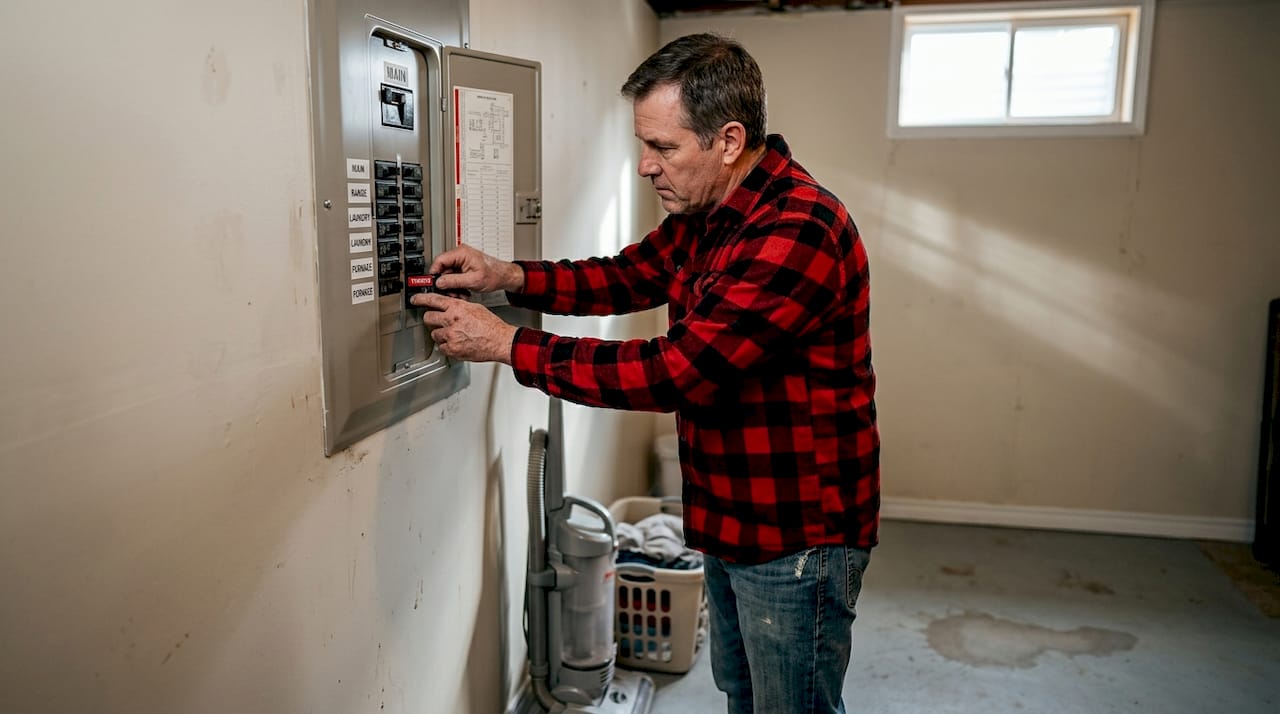
Nothing disrupts your day faster than the microwave or washer suddenly shutting off, leaving you staring at a tripped breaker and wondering what just happened. It’s one of the most common calls we get from homeowners and small business owners across Monmouth County, New Jersey. Whether it’s a dishwasher in Marlboro or a commercial refrigerator in a Freehold shop, a tripped breaker is rarely random. There’s always a cause, and once you understand it, you can either fix it fast or call the right professional before it becomes a bigger, more expensive problem.
Table of Contents
- The main reasons appliances trip breakers
- How to diagnose breaker trips: Signs and patterns
- Breaker types: GFCI, AFCI, and standard—what’s the difference?
- Preventing breaker trips: Practical tips for homeowners and business owners
- Expert perspective: What most guides miss about breaker trips
- Professional appliance repair: Fast help for Monmouth County homes and businesses
- Frequently asked questions
Key Takeaways
| Point | Details |
|---|---|
| Common causes | Most breaker trips are due to overload, short circuit, or ground fault in appliances. |
| Breaker types matter | Standard, GFCI, and AFCI breakers trip for different risks—knowing which helps troubleshooting. |
| Timing reveals issue | Immediate trips signal faults; delayed trips often mean overload or motor failure. |
| Prevention tips | Regular maintenance, careful appliance placement, and load management prevent most trips. |
| When to call experts | Recurring or instant trips indicate a problem best solved by professional repair services. |
The main reasons appliances trip breakers
Your circuit breaker exists for one reason: to stop electrical current from reaching dangerous levels. When something goes wrong with an appliance or the wiring it connects to, the breaker detects the problem and cuts power. Three main faults trigger this response.
Overload is the most common. This happens when appliances connected to a circuit pull more electricity than the wiring is rated to handle. Most household circuits are rated at 15 to 20 amps, which translates to roughly 1,800 to 2,400 watts at 120 volts. Under the National Electrical Code (NEC) 125% rule, continuous loads should not exceed 80% of that rating, meaning your usable window is actually 1,440 to 1,920 watts before the breaker trips. Running a microwave, toaster, and coffee maker on the same kitchen circuit at once? You’re very likely pushing past that limit.
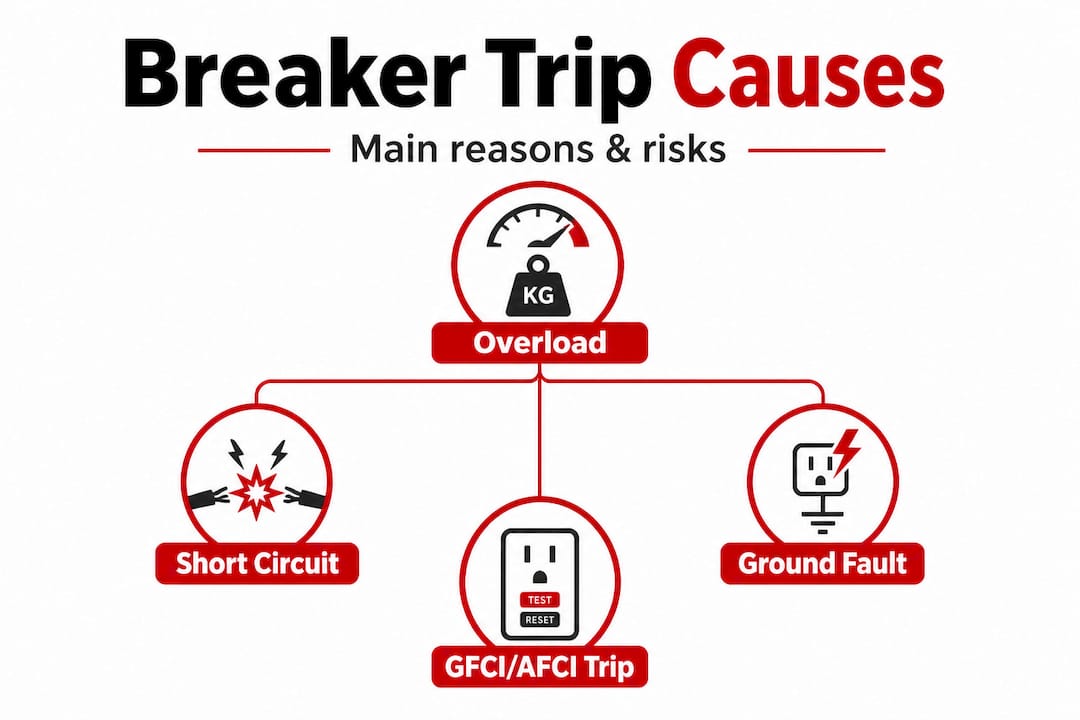
Short circuits are more serious. A short circuit occurs when the hot wire and the neutral wire come into direct contact, creating a low-resistance path that allows a massive surge of current almost instantly. This can happen inside an appliance from damaged insulation, loose internal wires, or even rodent damage to cords. You’ll often smell burning or see scorch marks near an outlet or plug.
Ground faults are common in wet areas. When electrical current leaks out of the normal circuit and finds an unintended path to the ground, often through water or a damp surface, a special breaker called a GFCI (Ground Fault Circuit Interrupter) detects the imbalance. GFCI breakers trip at just 4 to 6 milliamps of imbalance. Dishwashers, washing machines, and refrigerators near water lines are frequent culprits.
Here’s a quick comparison of the three fault types:
| Fault type | Cause | Risk level | Breaker type that responds |
|---|---|---|---|
| Overload | Too many appliances on one circuit | Moderate | Standard breaker |
| Short circuit | Hot/neutral wires touch directly | High | Standard breaker |
| Ground fault | Current leaks toward ground via moisture | High (shock) | GFCI breaker |
| Arc fault | Damaged wiring creates electrical arcs | High (fire) | AFCI breaker |
Key things to know about the main causes:
- A single high-wattage appliance like a dryer or range often has its own dedicated circuit to avoid overloads
- Short circuits can originate inside the appliance, not just in the wall wiring
- Ground faults are especially sneaky because the appliance may appear to work normally right before tripping
- Understanding appliance short circuit causes can help you recognize when professional repair is the only safe option
For broader issues with how your appliances behave, reviewing common appliance troubleshooting tips can give you a clearer picture of what’s going wrong before you make a service call.
With the main causes outlined, let’s dig deeper into how to spot which fault is tripping your breaker.
How to diagnose breaker trips: Signs and patterns
Not all breaker trips look the same. The timing and pattern of a trip tell you a lot about what’s actually causing it. Paying attention to these clues can save you serious time and money.
Here’s a practical step-by-step approach to narrowing down the cause:
- Note when the trip happens. Does the breaker flip the moment you turn on the appliance, or does it take a few minutes?
- Check the location. Is the outlet near a sink, dishwasher, or laundry area? That points toward ground faults.
- Look for physical signs. Burn marks, a burning smell, or a visible crack in a plug or cord all point to a short circuit.
- Test the appliance on a different circuit. If the problem follows the appliance, the fault is in the appliance itself, not the wiring.
- Ask about recent changes. Did someone add a new appliance, change a cord, or notice a spike in the utility bill?
Trip timing reveals a lot about the fault. An immediate trip almost always signals a short circuit or ground fault, both of which require a professional. A trip that happens after several minutes of use typically points to an overload or a motor that’s failing and drawing excess current as it struggles to run.
“The breaker is not the problem. It’s the messenger. When it keeps tripping, something in the circuit or appliance is asking more of the system than it can safely deliver.” This is the mindset our technicians bring to every service call in Monmouth County.
Pro Tip: If your appliance trips the breaker as soon as it enters a spin cycle or heating phase, the motor or heating element is likely drawing more current than normal, a classic sign of a failing component rather than a wiring issue.
GFCI breakers add another layer of complexity. They respond to moisture and current leaks, not just overloads. So a GFCI trip in your laundry room does not mean your washing machine is pulling too much power. It may mean water has gotten somewhere it shouldn’t. That’s a different repair entirely. For a systematic process of diagnosing appliance issues, understanding this distinction prevents homeowners from chasing the wrong fix.
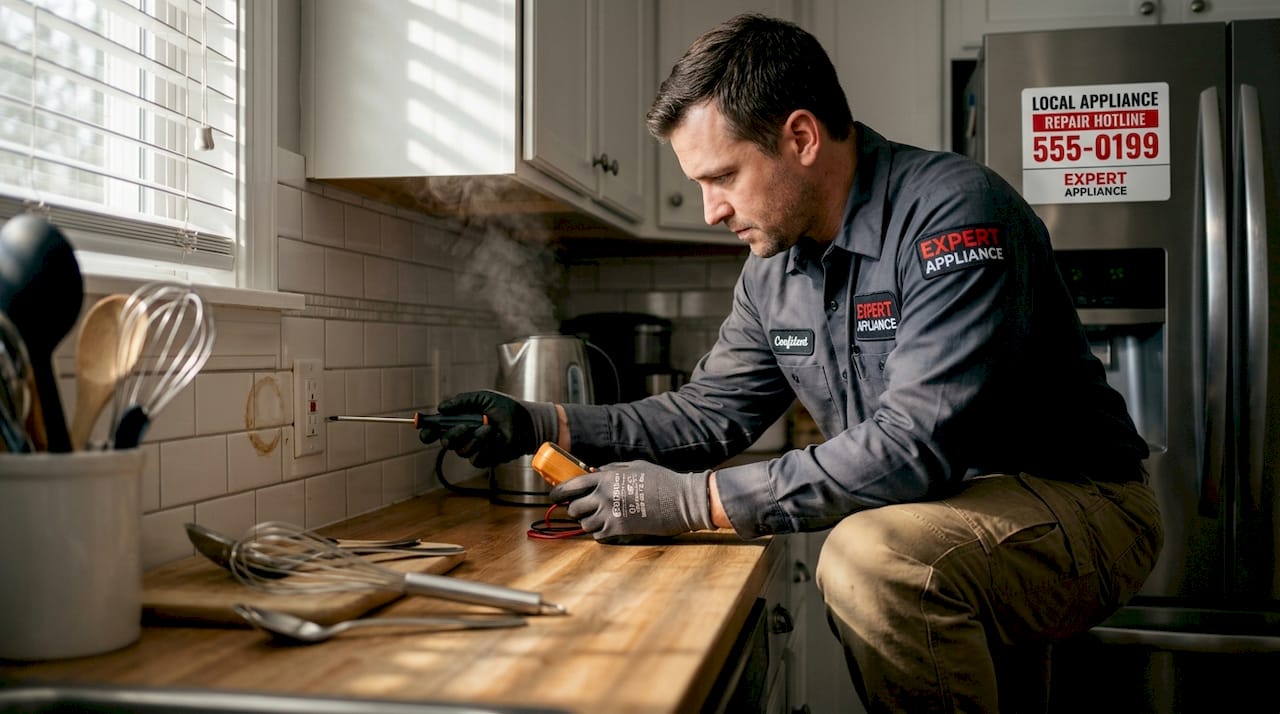
The Monmouth County appliance troubleshooting guide offers region-specific advice because local homes and older construction often come with wiring that predates modern appliance power requirements. And spotting appliance problems early makes all the difference between a simple repair and a major replacement.
Once you identify the likely cause, it’s time to understand what sets apart standard, GFCI, and AFCI breakers and how they protect you.
Breaker types: GFCI, AFCI, and standard—what’s the difference?
Most homeowners only know about one kind of breaker: the switch in the panel box that flips when something goes wrong. But there are actually three distinct types, and each protects against a different hazard.
Standard breakers are the ones most people are familiar with. They protect against overloads and short circuits by tripping when current exceeds the rated limit. You’ll find these protecting general household circuits like living rooms and bedrooms.
GFCI breakers (Ground Fault Circuit Interrupters) are designed specifically to prevent electrical shock. They monitor the difference between the current going out on the hot wire and returning on the neutral wire. When that difference hits just 4 to 6 milliamps, the breaker trips in under a second. AFCI and GFCI breakers differ significantly: GFCI protects people from shock, while AFCI protects structures from fire. GFCI protection is required by code in kitchens, bathrooms, garages, and anywhere appliances operate near water.
AFCI breakers (Arc Fault Circuit Interrupters) are designed to detect dangerous electrical arcs, the kind that happen when wiring is damaged, frayed, or pinched behind walls. These arcs can ignite insulation and cause house fires long before a standard breaker would even notice a problem. AFCI protection is required in bedrooms and living areas under current electrical codes.
| Breaker type | Primary threat | Response trigger | Common locations |
|---|---|---|---|
| Standard | Overload, short circuit | Excess current | General rooms, appliance circuits |
| GFCI | Ground fault (shock) | 4 to 6mA imbalance | Kitchen, bathroom, laundry |
| AFCI | Arc fault (fire) | Electrical arcing | Bedrooms, living areas |
| Dual function | Ground fault and arc fault | Both triggers | Modern NEC-compliant homes |
Why does this matter for appliance repair? Because different breakers trip for different reasons, and resetting the wrong one without fixing the underlying problem means you’re leaving the real hazard in place. A GFCI trip is not the same as a standard overload trip, and treating it like one is a mistake.
Reviewing breakdown prevention tips regularly helps you understand how the health of your appliances connects directly to how your breakers behave.
Understanding breaker types sets the stage for taking practical steps to prevent tripping and keep your appliances running smoothly.
Preventing breaker trips: Practical tips for homeowners and business owners
Most breaker trips are preventable. The key is understanding the load limits in your home and giving high-power appliances the respect they deserve in terms of electrical demand.
Here’s what you can do starting today:
- Spread high-wattage appliances across circuits. Microwaves, toasters, coffee makers, and electric kettles should not share the same circuit. The NEC 80% rule means you have less capacity than you think, and kitchen countertop appliances are notorious for maxing out a single circuit quickly.
- Check for moisture around appliances regularly. If your dishwasher has a slow drip, or your washing machine sits on a slightly damp floor, you’re creating the exact conditions that cause GFCI trips. Fix leaks before they become electrical hazards.
- Inspect cords and plugs seasonally. Cracked insulation, kinked cords, or plugs that feel warm to the touch are early warning signs of a developing short circuit. Replace damaged cords immediately rather than waiting for a trip.
- Schedule annual appliance maintenance. Motors, heating elements, and internal wiring degrade over time. A technician can spot failing components before they start pulling excess current and tripping breakers regularly.
- Know your circuits. Label your panel box clearly so you can identify which breaker controls which area. This speeds up diagnosis when a trip does happen.
Pro Tip: If you run a small business in Monmouth County with commercial refrigerators, coffee machines, or other high-draw equipment, strongly consider having an electrician evaluate whether your circuits are rated for commercial loads. Many older commercial spaces were wired for lighter residential-level use.
Understanding the common appliance issues that lead to breaker trips can help you identify which of your appliances is at the highest risk. Older machines are especially likely to develop motor or wiring problems that show up first as frequent tripping.
Even with prevention, some breaker trips require professional diagnosis and repair. Here’s what sets expert guidance apart.
Expert perspective: What most guides miss about breaker trips
After decades of appliance repair work across Monmouth County, we’ve noticed something consistent: most homeowners treat a tripped breaker like a minor inconvenience rather than a signal. They reset it, go back to their day, and only call us when the breaker trips for the fifth or sixth time, sometimes after the appliance has already caused more damage internally.
The timing pattern of a trip is one of the most diagnostic clues a repair technician has. Immediate tripping almost always means a short circuit or ground fault, and both require professional attention. Delayed tripping after a few minutes often points to a motor that’s overheating or dying. Most online guides skip this distinction entirely, and homeowners end up resetting breakers repeatedly rather than addressing the real fault.
Local conditions in New Jersey add real complexity that you won’t find in generic guides. Monmouth County homes, especially older ones in Marlboro, Holmdel, and Freehold, face moisture intrusion during humid summers and heavy rains that put GFCI breakers under constant stress. Rodents seeking shelter in cooler months chew appliance wiring, causing short circuits that look like random trips. Neither of these factors gets addressed in a national how-to article.
The reset button habit is particularly risky. Every time you reset a breaker without fixing the underlying problem, you’re allowing the fault to persist. In the case of a partial short circuit or a failing motor, repeated resets can accelerate the damage, increase repair costs, or, in the worst cases, create a fire risk. Our position is simple: one reset is a data point, two resets is a warning, and three resets means you call a technician.
Understanding why appliances break down from an engineering and wear standpoint changes how you respond to early warning signs. A breaker trip is your home’s electrical system doing exactly what it was designed to do. The smart move is to listen.
Professional appliance repair: Fast help for Monmouth County homes and businesses
If your appliances are tripping breakers repeatedly, the right next step is getting a professional to diagnose the actual fault before it becomes a safety issue or a total appliance failure.

At Expert Appliance Repair, we’ve been serving Marlboro and the surrounding Monmouth County area since 1988. We offer same-day service for urgent appliance problems, 24/7 emergency support, and upfront pricing with no surprise fees. Whether your dishwasher is tripping a GFCI, your dryer is drawing too much current, or your refrigerator keeps shutting down, our technicians can diagnose and fix it fast. We work on top appliance brands and back every repair with guaranteed satisfaction. For regular upkeep, our appliance maintenance tips help you avoid the problems before they start. And when something breaks down unexpectedly, our emergency repair solutions get you back up and running without the wait.
Frequently asked questions
What should I do if my breaker trips repeatedly when using an appliance?
Stop using the appliance immediately and check for signs of overload, damage, or wet conditions near the outlet. If immediate tripping continues, a short circuit or ground fault is likely and a professional should inspect the appliance before you use it again.
Can I reset a tripped breaker or does it indicate a serious problem?
You can reset it once as a starting point, but repeated tripping is a clear signal that something is wrong. AFCI and GFCI breakers each respond to distinct hazards, so understanding which type tripped helps determine the urgency of repair.
When is the right time to call a professional for a tripped breaker?
If the breaker trips the instant you turn on an appliance, that instant high-current surge from a short circuit is a strong indicator that professional diagnosis is the only safe path forward.
Why are tripped breakers more common in kitchens and bathrooms?
Moisture in these areas creates ideal conditions for ground faults. GFCI breakers in wet areas trip at just 4 to 6 milliamps of imbalance, making appliances like dishwashers and washing machines especially prone to tripping near water.
Do all appliances trip the same breaker or can individual circuits be affected?
Each circuit has its own dedicated breaker in your panel box. High-draw appliances should be on separate dedicated circuits so that a single appliance does not push the total load past the 80% continuous threshold required by the NEC.
Recommended
- Appliance Fuses: Safety, Function & Fast Fixes 2026 – Expert Appliance
- Why do ovens stop heating? Causes, fixes, and when to call a pro – Expert Appliance
- Preventing appliance breakdowns: 5 tips for NJ homeowners – Expert Appliance
- Why do appliances short circuit? 46,700 fires explained – Expert Appliance