
Most American households run over 300 laundry loads each year, yet many homeowners in Marlboro, NJ still struggle to choose the right washing machine cycles for their clothes. The wrong cycle can wear out fabrics and put extra stress on your appliance, leading to unexpected breakdowns and costly repairs. Understanding these settings helps you get cleaner laundry, protect favorite outfits, and keep your washer humming for years to come.
Table of Contents
- What Are Washing Machine Cycles?
- Common Cycle Types and Their Purposes
- Specialized Cycles for Fabric Care
- How Cycle Selection Impacts Repairs
- Avoiding Damage: Mistakes to Watch Out For
Key Takeaways
| Point | Details |
|---|---|
| Understanding Washing Machine Cycles | Each cycle is designed to optimize cleaning based on fabric type and soil level, ensuring proper treatment for various materials. |
| Maximizing Cleaning Effectiveness | Always match the selected cycle with the specific fabric requirements to preserve garment quality and enhance longevity. |
| Preventing Mechanical Wear | Choose cycles appropriately to manage mechanical strain and avoid unnecessary repairs; avoid intense cycles for delicate fabrics. |
| Avoiding Common Mistakes | Overloading and improper temperature settings can damage both clothing and the washing machine, so always follow guidelines for optimal use. |
What Are Washing Machine Cycles?
Washing machine cycles are specialized programmed settings that control how clothes are cleaned, designed to optimize washing performance while protecting different fabric types. Washing machine cycles refer to preset sequences of washing, rinsing, and spinning that adjust critical parameters like water temperature, agitation intensity, and duration to match specific laundry requirements.
These cycles represent more than simple wash routines—they are precision engineered programs that ensure clothing receives appropriate treatment. Different cycles accommodate various fabric types and soil levels, ranging from delicate silk garments to heavily soiled work clothes. Each cycle strategically modifies water temperature, spin speed, and mechanical action to deliver optimal cleaning while minimizing potential fabric damage.
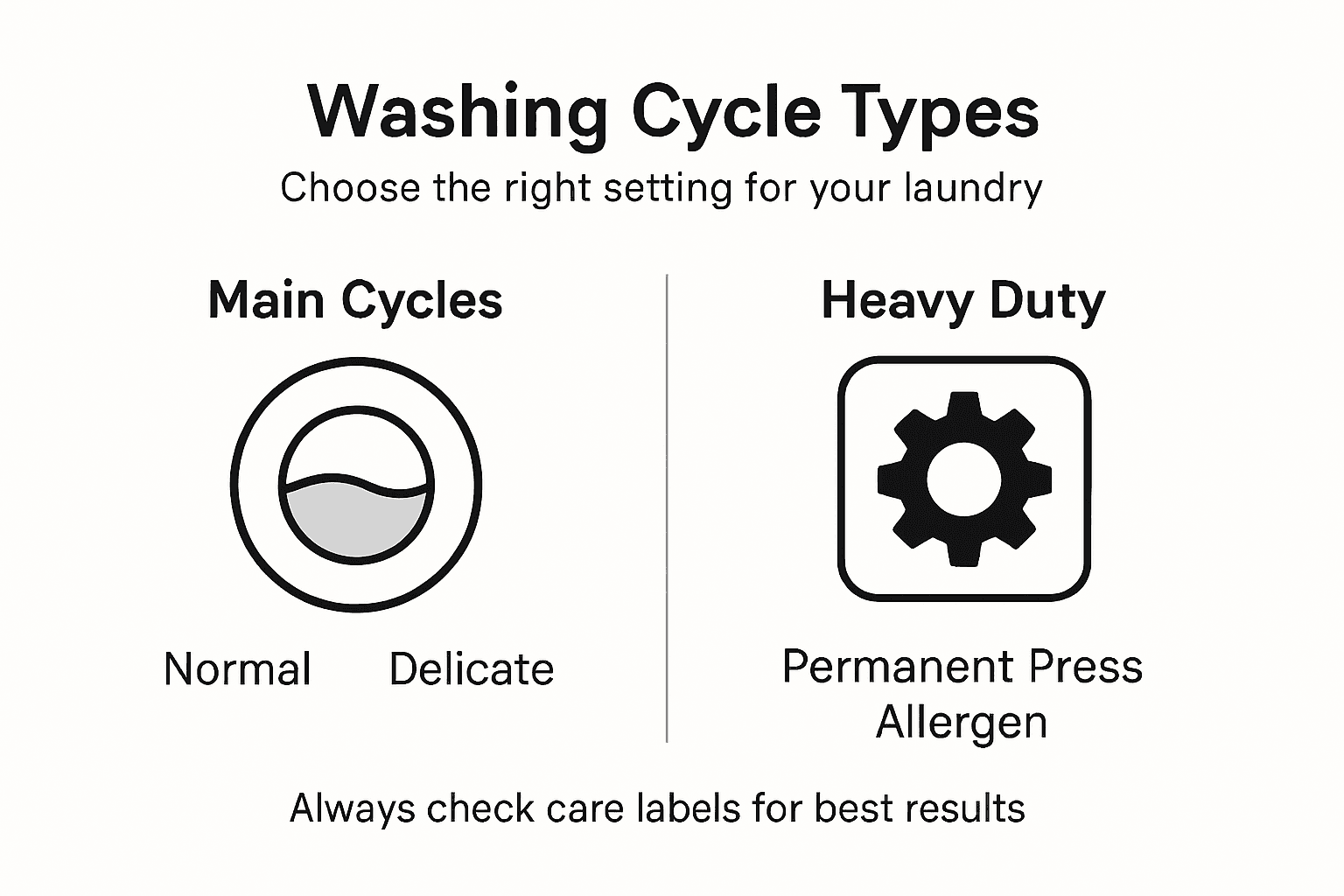
Typical washing machine cycles include standard options like normal, delicate, permanent press, and heavy-duty. The normal cycle works best for everyday cotton clothing and moderately soiled items. Delicate cycles use gentler agitation and cooler temperatures for lightweight fabrics like lingerie or sweaters. Permanent press cycles help reduce wrinkles in synthetic materials, while heavy-duty cycles provide maximum cleaning power for extremely dirty work clothes or towels.
Pro tip: Always check clothing care labels and sort laundry by fabric type and color before selecting your washing machine cycle to maximize cleaning effectiveness and preserve garment quality.
Common Cycle Types and Their Purposes
Washing machines offer multiple specialized cycles designed to address different laundry needs, with each setting carefully engineered to handle specific fabric types and soil levels. Typical washing machine cycles serve distinct purposes, ranging from everyday cleaning to specialized fabric care, ensuring optimal performance for various clothing requirements.
The primary cycle types include normal, delicate, permanent press, and heavy-duty settings. The normal cycle represents the standard washing option, suitable for most everyday cotton clothing and moderately soiled items. This cycle provides balanced water temperature and agitation to effectively clean standard fabrics without causing excessive wear. Delicate cycles are engineered for lightweight or fragile garments, using gentler agitation, cooler water temperatures, and reduced spin speeds to protect sensitive fabrics like silk, lace, and fine knitwear.
For more challenging laundry scenarios, heavy-duty cycles deliver intense cleaning power for extremely soiled work clothes, towels, and durable textiles. These cycles typically feature longer wash times, higher water temperatures, and more aggressive mechanical action to remove tough stains and dirt. Permanent press cycles specifically target synthetic and blended fabrics, utilizing moderate water temperatures and controlled spin speeds to minimize wrinkle formation and maintain garment shape.
Pro tip: Memorize your washing machine’s cycle settings and match them strategically with different fabric types to maximize cleaning effectiveness and extend the lifespan of your clothing.
Here’s how different washing machine cycles compare in terms of fabric protection, cleaning strength, and typical uses:
| Cycle Type | Fabric Protection Level | Cleaning Strength | Common Use Cases |
|---|---|---|---|
| Normal | Moderate | Balanced | Everyday cotton, shirts |
| Delicate | High | Gentle | Silk, lingerie, sweaters |
| Permanent Press | Moderate | Medium | Synthetics, blends, polos |
| Heavy-Duty | Low | Maximum | Towels, work clothes, jeans |
Specialized Cycles for Fabric Care
Modern washing machines have evolved to offer increasingly sophisticated specialized fabric care cycles that go beyond traditional washing methods. These advanced settings are meticulously designed to address unique fabric requirements, protecting delicate garments while ensuring thorough cleaning across different textile types and soil levels.
Delicate fabric cycles represent a critical innovation in clothing care technology. These specialized settings utilize extremely gentle agitation, cooler water temperatures, and minimal spin speeds to protect vulnerable materials like silk, lace, lightweight woolens, and embellished garments. By reducing mechanical stress, these cycles prevent fabric damage, color fading, and potential structural breakdown that can occur with standard washing techniques. Some advanced machines even incorporate additional protective features like reduced tumbling and specialized rinse techniques to further minimize wear and potential fabric distortion.
Beyond delicate care, modern washers offer targeted cycles for specific fabric challenges. Allergen cycles use higher water temperatures and extended wash times to eliminate dust mites, pet dander, and potential irritants from bedding and clothing. Steam cleaning cycles provide deep sanitization, penetrating fabric fibers to remove stubborn stains and bacteria without harsh mechanical action. Quick wash cycles cater to lightly soiled items, offering abbreviated cleaning routines that save time and energy while maintaining fabric integrity.
Pro tip: Always check garment care labels and match their specific fabric requirements with the most appropriate washing machine cycle to maximize clothing longevity and maintain optimal appearance.
How Cycle Selection Impacts Repairs
Washing machine cycles play a critical role in the long-term mechanical health of your appliance, with mechanical component stress directly linked to cycle selection and usage patterns. Each wash cycle places different levels of mechanical strain on key components like the motor, transmission, and drum bearings, potentially accelerating wear and increasing the likelihood of future repairs.
Heavier cycles with intense agitation and prolonged spin times create significantly more mechanical stress compared to gentler washing modes. The motor experiences increased electrical and mechanical load during heavy-duty or extended cycles, which can cause premature wear on internal components. Excessive agitation and unbalanced loads compound this stress, potentially damaging suspension systems, bearings, and drive mechanisms. Repeated use of inappropriate cycles for specific fabric types can lead to unnecessary mechanical strain, reducing the overall operational lifespan of the washing machine.
Understanding the relationship between cycle selection and potential mechanical wear is crucial for proactive appliance maintenance. Different fabric types and soil levels require specific washing approaches that balance cleaning effectiveness with mechanical preservation. Consistently choosing cycles that match the specific laundry load helps distribute mechanical stress more evenly, reducing the risk of unexpected breakdowns and expensive repair requirements. Smart cycle selection involves considering fabric delicacy, soil level, and load size to minimize unnecessary mechanical strain.
Pro tip: Rotate between gentle and standard cycles based on your laundry’s actual needs, and avoid using high-intensity wash modes for light or delicate loads to prevent unnecessary mechanical wear.
Avoiding Damage: Mistakes to Watch Out For
Washing machines are sophisticated appliances that require careful handling, and common laundry mistakes can lead to significant damage to both your clothing and the machine itself. Understanding these potential pitfalls is crucial for maintaining your appliance’s longevity and performance.
Overloading represents one of the most frequent and destructive mistakes homeowners make. When too many clothes are crammed into the drum, it places excessive strain on the machine’s suspension system, motor, and bearings. Mechanical stress increases dramatically, causing uneven weight distribution that can lead to imbalanced spinning, increased vibration, and potential structural damage. This overloading not only risks immediate mechanical failure but can also accelerate long-term wear on critical components, potentially shortening the washing machine’s operational lifespan.
Temperature and detergent usage are equally critical factors in preventing machine damage. Using incorrect water temperatures can harm fabric fibers and stress mechanical components, while excessive detergent creates problematic suds that interfere with proper washing and rinsing mechanisms. Ignoring fabric care labels, using inappropriate cycle settings, and failing to distribute laundry evenly can compound these issues, creating a cascade of potential mechanical problems. Regular maintenance, including cleaning the machine’s interior, checking hoses for wear, and avoiding overloading, helps mitigate these risks and ensures optimal performance.
Pro tip: Weigh your laundry load before washing, aiming to fill the drum no more than 75% full, and always distribute clothing evenly to prevent mechanical stress and potential machine damage.
Key risks and preventive actions to avoid washing machine damage:
| Risk Factor | Potential Damage | Prevention Tip |
|---|---|---|
| Overloading | Motor, drum, suspension wear | Fill drum no more than 75% full |
| Wrong Temperature | Damaged fibers, color loss | Follow garment care label instructions |
| Excess Detergent | Sud build-up, poor rinsing | Use correct amount for load size |
| Uneven Laundry Load | Vibration, imbalance | Distribute clothes evenly in drum |
Choose the Right Washing Machine Cycle and Keep Your Appliance Running Smoothly
Selecting the best washing machine cycle can protect your clothes and extend your appliance’s life. But when cycles are misused or mechanical stress builds up, your washer may need expert care. If you notice unusual noises, longer wash times, or performance issues, it’s time to trust professionals who understand the impact of washing cycles on appliance health.
At Expert Appliance Repair, we specialize in fast, reliable washing machine services across Marlboro and Monmouth County. As a family-owned New Jersey business since 1988, we deliver same-day service and 24/7 emergency support to minimize your downtime. Learn more about our expert solutions in the Appliance Archives – Expert Appliance. Don’t wait until a small problem becomes a costly repair. Visit Expert Appliance Repair now to schedule your service and keep your laundry running smarter.
Frequently Asked Questions
What are the different types of washing machine cycles?
Washing machines typically offer several cycles, including normal, delicate, permanent press, and heavy-duty. Each cycle is designed for different fabric types and levels of soil, optimizing washing performance while protecting garments.
How do I choose the right washing machine cycle for my clothes?
Select a cycle based on the fabric type and soil level of your laundry. Use the normal cycle for everyday cotton, delicate cycles for lightweight fabrics, permanent press for synthetic items, and heavy-duty for extremely soiled clothes.
What happens if I use the wrong washing machine cycle?
Using the wrong cycle can lead to fabric damage, inadequate cleaning, or additional mechanical stress on your washing machine. This may cause premature wear on components, leading to costly repairs or a reduced lifespan of the appliance.
Can I wash delicate fabrics in a normal cycle?
It’s not recommended to wash delicate fabrics in a normal cycle, as they require gentler handling to prevent damage. Use the delicate cycle, which employs softer agitation and cooler temperatures to protect sensitive items like silk and lace.