
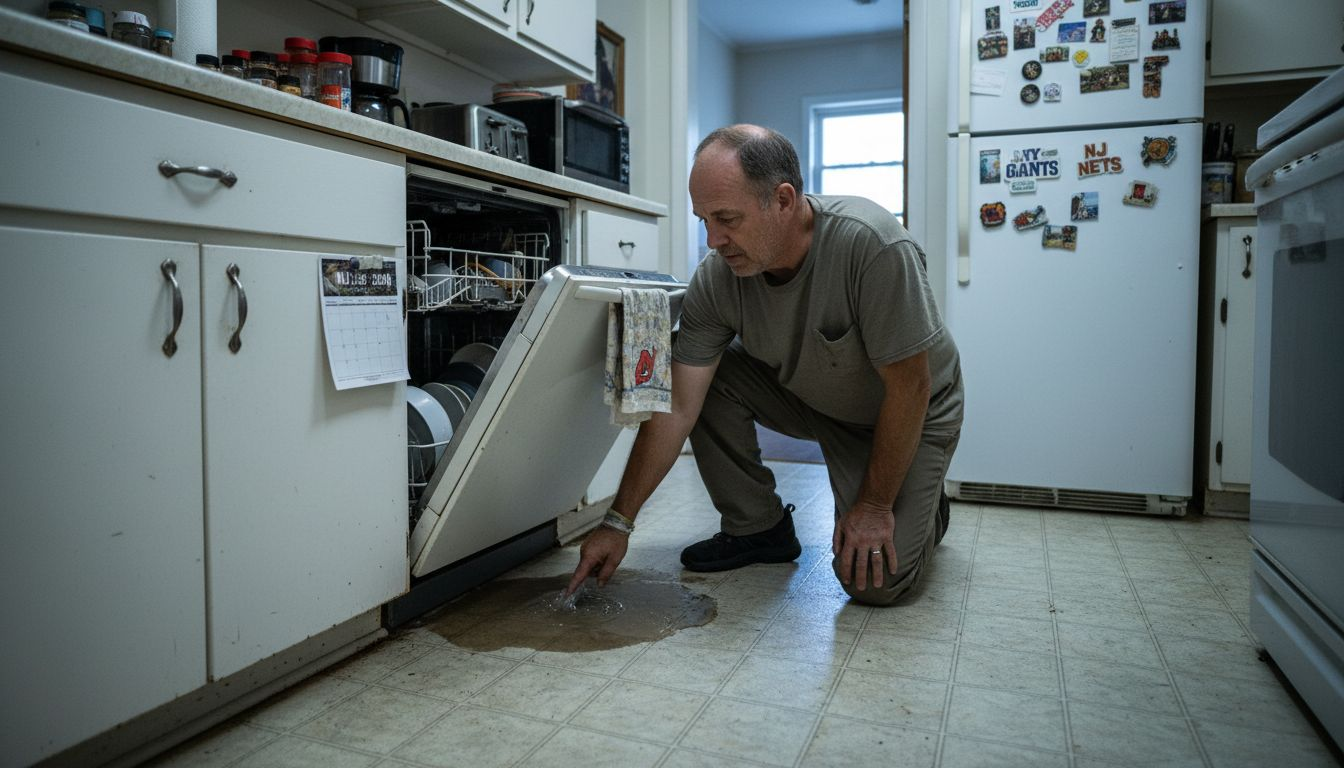
Water leaks from your dishwasher can catch any American homeowner in Marlboro off guard, sometimes leading to costly damage in just one afternoon. With nearly 30 percent of New Jersey households reporting appliance leaks each year, a faulty dishwasher becomes more than a minor inconvenience. This guide highlights the most common causes behind dishwasher leaks and explains how swift action can keep your kitchen safe and your repair bills under control.
Table of Contents
- What Causes Dishwashers to Leak
- Where Dishwasher Leaks Typically Occur
- Major Types of Dishwasher Leaks Explained
- Signs Your Dishwasher Needs Urgent Repair
- DIY Fixes Versus Professional Solutions
- Preventing Dishwasher Leaks in New Jersey Homes
Key Takeaways
| Point | Details |
|---|---|
| Understand Common Leak Sources | Regularly inspect door gaskets, hose connections, and drain filters to prevent leaks and water damage. |
| Address Warning Signs Promptly | Be alert to visible water pooling, unusual noises, and digital error codes indicating urgent repair needs. |
| Consider Maintenance Vs. Professional Help | Perform simple fixes like replacing gaskets yourself, but call a professional for electrical issues or complex malfunctions. |
| Implement Preventative Measures | Schedule annual inspections and consider local water quality to extend the lifespan of your dishwasher and reduce leak risks. |
What Causes Dishwashers to Leak
Dishwashers in New Jersey homes can develop leaks due to several common mechanical and maintenance issues. Understanding these potential problems helps homeowners quickly diagnose and address water damage risks before they escalate. Damaged door seals and hose connections represent two primary sources of unexpected water leakage.
The most frequent leak causes include deteriorated rubber door gaskets, which lose their watertight seal over time. As these protective rubber seals wear down, water can escape during wash cycles, creating puddles around your appliance. Food debris buildup in filters and drain systems also contributes significantly to potential leakage problems. Clogged drain valves prevent proper water drainage, forcing liquid to find alternative escape routes.
Additional leak sources stem from mechanical components and installation errors. Cracked water supply lines, loose hose connections, and improperly aligned drain hoses can all create unexpected water escape routes. Homeowners should regularly inspect these critical connection points for signs of wear, damage, or potential failure. Age and repeated use gradually degrade dishwasher components, making routine maintenance essential for preventing unexpected water damage.
Pro tip: Conduct a monthly visual inspection of your dishwasher’s door seal, hoses, and connections to catch potential leak sources before they become major problems.
Here’s a quick summary of common dishwasher leak sources and recommended inspection routines:
| Leak Source | Frequency to Check | Inspection Focus |
|---|---|---|
| Door gasket | Monthly | Look for wear/cracks |
| Hose connections | Each season | Ensure tight/secure fit |
| Drain filter | Monthly | Remove debris buildup |
| Internal pump/seals | Annually | Check for corrosion |
Where Dishwasher Leaks Typically Occur
Dishwasher leaks in New Jersey homes tend to develop in several predictable locations, each requiring specific attention and maintenance. Critical leak points exist around the door seal where water can escape during wash cycles, creating potential water damage risks for homeowners.
The most vulnerable areas include the door gasket, which forms a critical watertight barrier between the dishwasher door and tub. When this rubber seal deteriorates or becomes damaged, water can easily seep out, leaving puddles on your kitchen floor. Water supply connections and drain valve areas represent additional high-risk zones where leaks commonly develop. These connection points can loosen over time due to repeated use and vibration, creating unexpected water escape routes.
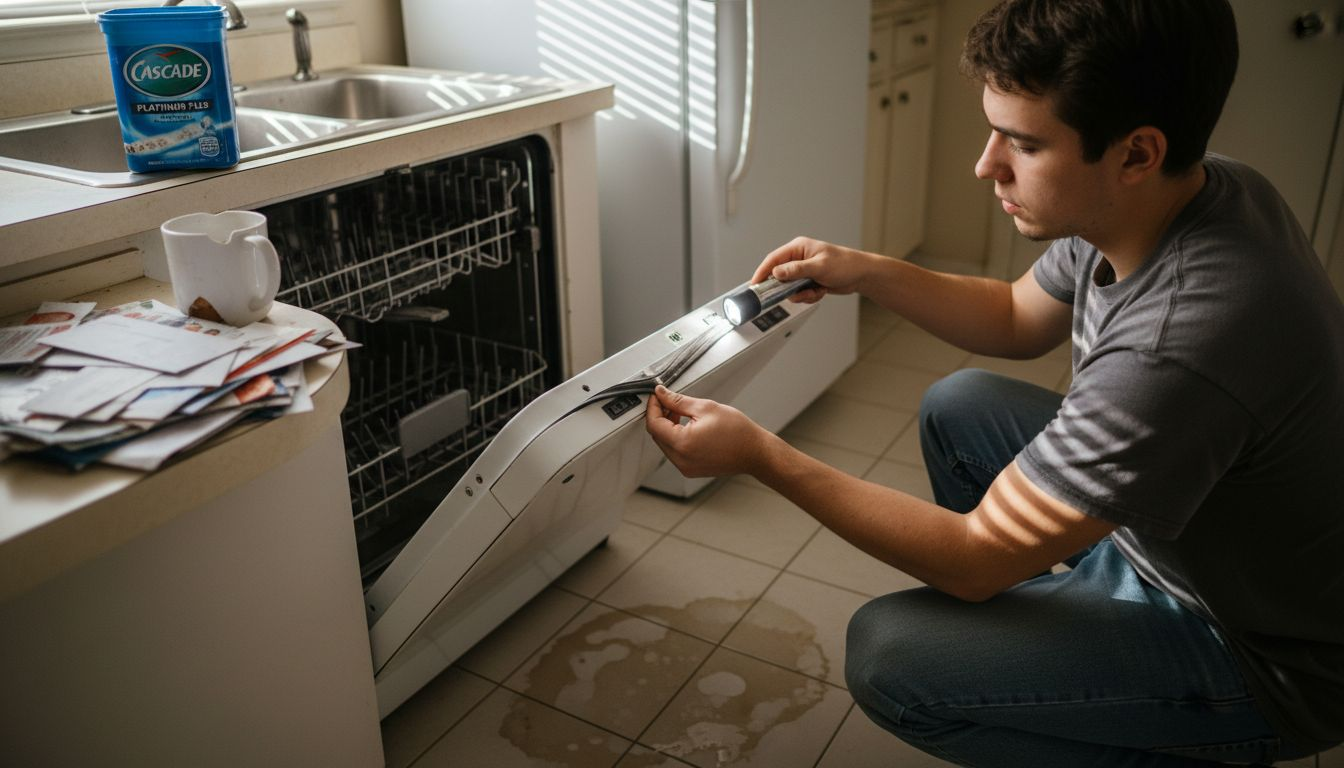
Other potential leak locations involve the dishwasher’s internal components. The water inlet valve, drain hose connections, and pump seals can all become potential sources of water leakage. Homeowners should pay special attention to these areas during routine maintenance, checking for signs of wear, corrosion, or mechanical stress that might compromise the appliance’s watertight integrity. Older dishwashers are particularly susceptible to these issues, as rubber seals and mechanical components naturally degrade with repeated use.
Pro tip: Place a moisture-detecting sensor near your dishwasher’s most common leak points to catch potential water escape early and prevent extensive floor damage.
Major Types of Dishwasher Leaks Explained
New Jersey homeowners should understand the primary categories of dishwasher leaks to effectively diagnose and address potential water damage risks. Door seal leaks represent a critical failure point that can compromise your appliance’s overall performance and integrity.
The three most common types of dishwasher leaks include door gasket leaks, internal hose leaks, and drainage system failures. Door gasket leaks occur when the rubber seal surrounding the dishwasher door becomes worn, cracked, or misaligned, allowing water to escape during wash cycles. Hose and connection leaks develop from damaged water supply lines and can result from loose fittings, material degradation, or improper installation. These leaks often manifest as slow drips or sudden water puddles beneath the appliance.
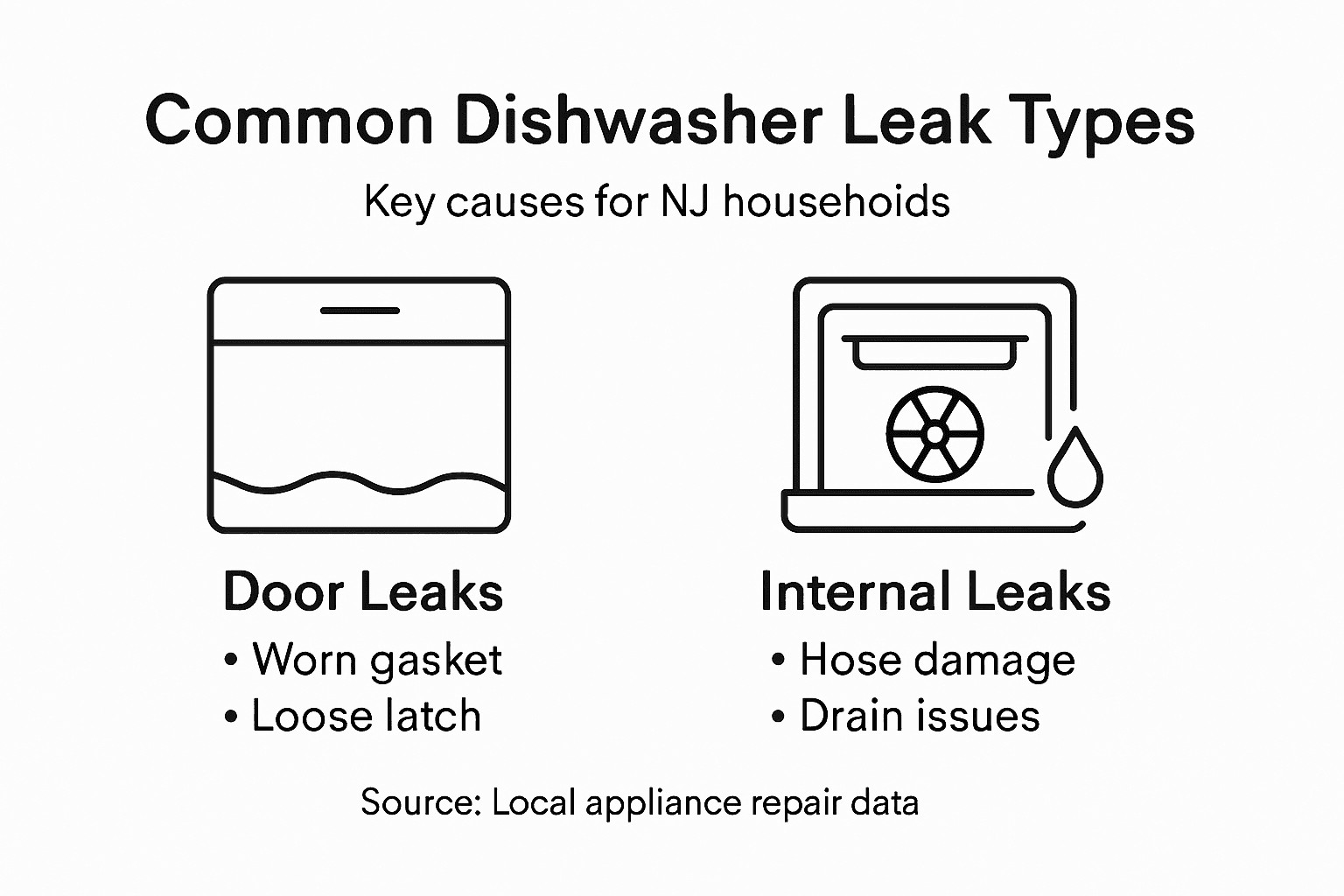
Drainage system leaks pose another significant concern for homeowners. These typically emerge when drain pumps malfunction, drain hoses become clogged, or internal seals break down. Older dishwashers are particularly susceptible to these issues, as repeated use and mechanical stress gradually weaken critical components. Homeowners should remain vigilant about monitoring these potential leak sources, paying close attention to signs of water accumulation, unusual sounds during operation, or unexpected moisture around the appliance base.
Pro tip: Conduct quarterly visual inspections of your dishwasher’s seals, hoses, and connections to catch potential leak sources before they escalate into costly water damage repairs.
Signs Your Dishwasher Needs Urgent Repair
New Jersey homeowners should stay alert to critical warning signs that indicate their dishwasher requires immediate professional attention. Visible water pooling signals potential serious problems and should never be ignored, as they can lead to extensive water damage and costly repairs.
Several key indicators suggest your dishwasher needs urgent repair. Strange operational noises like grinding, squealing, or excessive banging during cycles can indicate failing internal components. Mechanical warning signs often precede complete system failure, so paying attention to unusual sounds is crucial. Water not draining completely, persistent musty odors, visible rust or corrosion inside the unit, and ineffective cleaning performance are additional red flags that warrant immediate professional inspection.
The most critical signs demanding immediate attention include water leaks underneath or around the dishwasher, doors that do not seal properly, and digital error codes on modern appliances. Persistent moisture near the appliance base, unexplained electrical issues during operation, or visible damage to hoses and seals should prompt homeowners to schedule a professional diagnostic assessment. Ignoring these warning signs can transform a minor repair into a major, expensive replacement project.
Pro tip: Keep a moisture-detecting sensor near your dishwasher to catch potential leak issues before they cause significant floor or cabinet damage.
DIY Fixes Versus Professional Solutions
New Jersey homeowners facing dishwasher leaks must carefully evaluate whether a problem requires a do-it-yourself approach or professional intervention. Some minor leaks can be addressed through simple maintenance techniques that homeowners can safely perform without specialized expertise.
DIY solutions typically work well for straightforward issues like replacing door gaskets, tightening loose hose connections, and cleaning drainage filters. Homeowners can often resolve surface-level problems by thoroughly inspecting seals, checking for visible cracks, and ensuring proper hose alignment. Professional solutions become necessary for complex mechanical failures that involve internal components, electrical systems, or hard-to-diagnose leak sources. Attempting advanced repairs without proper training can potentially cause more damage and void manufacturer warranties.
Critical factors determining whether to pursue DIY or professional repair include the specific leak location, complexity of the issue, and the homeowner’s technical skills. Electrical problems, pump malfunctions, and leaks originating from internal valves absolutely require certified technician intervention. Simple tasks like filter cleaning and minor seal replacements can typically be handled independently, but anything involving electrical or water supply systems should prompt an immediate call to a professional appliance repair service.
Pro tip: Always take a photo of the problem area before attempting any repairs to help professionals diagnose the issue more accurately if DIY efforts prove unsuccessful.
Compare when to use DIY fixes versus professional repair for dishwasher leaks:
| Problem Type | DIY Approach | Professional Needed |
|---|---|---|
| Loose door gasket | Replace/realign seal | No |
| Clogged filter | Remove and clean filter | No |
| Electrical issue | Unsafe to address | Yes |
| Pump malfunction | Beyond DIY tools/skills | Yes |
Preventing Dishwasher Leaks in New Jersey Homes
Maintaining a leak-free dishwasher requires proactive care and regular attention from New Jersey homeowners. Strategic maintenance prevents costly water damage by addressing potential issues before they escalate into significant problems.
Routine inspection and maintenance are critical for preventing dishwasher leaks. Homeowners should regularly check door gaskets for signs of wear, ensure proper seal alignment, and clean filters to prevent debris buildup. Proper loading and water pressure management play crucial roles in minimizing potential leak risks. This includes avoiding overloading the dishwasher, which can strain door seals and internal components, and maintaining appropriate water temperature and pressure recommended by manufacturers.
Local water quality in New Jersey can significantly impact dishwasher performance and leak potential. Hard water environments accelerate wear on rubber seals and hoses, making more frequent inspections necessary. Homeowners should consider using water softeners, manufacturer-recommended detergents, and conducting periodic professional maintenance checks. Addressing small issues promptly can prevent extensive water damage and expensive repairs, ultimately extending the appliance’s operational lifespan.
Pro tip: Schedule a professional dishwasher inspection annually to catch potential leak sources before they cause significant home damage.
Protect Your New Jersey Home from Costly Dishwasher Leaks Today
If you are facing leaks caused by worn door gaskets, loose hose connections, or clogged drain filters in your dishwasher, you are not alone in Marlboro and Monmouth County. These common issues can quickly lead to water damage, flooring problems, and expensive repairs. At Expert Appliance, we understand how stressful appliance leaks can be and offer fast, reliable solutions to keep your dishwasher running leak-free.

Take control by trusting our family-owned business with over 30 years of experience in appliance repair. Our skilled technicians provide same-day service and 24/7 emergency support for New Jersey homeowners needing expert help with dishwasher leaks and other appliance troubles. Act now to prevent small problems from turning into major expenses. Visit Expert Appliance to learn more about our comprehensive Appliance Archives – Expert Appliance and related repair services. Protect your home and enjoy peace of mind today.
Frequently Asked Questions
What are the common causes of dishwasher leaks?
The most common causes of dishwasher leaks include worn rubber door gaskets, damaged hose connections, clogged drain systems, and internal component failures such as malfunctioning water inlet valves or drain pumps.
How often should I inspect my dishwasher for leaks?
It’s recommended to conduct a monthly visual inspection of your dishwasher’s door seal, hoses, and filter. Additionally, check hose connections each season and perform an annual inspection of internal components to ensure optimal performance.
What are the signs that my dishwasher needs urgent repair?
Signs indicating urgent repair include visible water pooling around the dishwasher, strange operational noises (like grinding or squealing), ineffective cleaning performance, and doors that do not seal properly. Any of these can signal serious underlying issues.
Can I fix dishwasher leaks myself, or should I hire a professional?
Homeowners can often address minor issues, such as replacing door gaskets or cleaning filters, on their own. However, complex problems involving internal components or electrical issues should be handled by a professional to avoid further damage.