
When your refrigerator stops cooling in the middle of a busy week, frustration spikes fast for Marlboro homeowners. Recognizing the main components inside your fridge is the key to troubleshooting problems and deciding whether you need expert repair. By grasping how the evaporator, compressor, condenser, and expansion valve work together, you can spot common issues early and avoid costly breakdowns that disrupt your home life.
Table of Contents
- Core Refrigerator Parts Every Home Needs
- How Main Refrigerator Components Work Together
- Critical Differences: Types of Refrigerator Parts
- Common Failure Points and Troubleshooting Tips
- When to Call for Professional Refrigerator Repair
Key Takeaways
| Point | Details |
|---|---|
| Understand Core Components | Familiarize yourself with the four main parts of a refrigerator: the compressor, condenser, evaporator, and expansion valve, to effectively address potential issues. |
| Regular Maintenance Saves Money | Keep condenser coils clean and ensure proper airflow to prevent costly repairs and extend the refrigerator’s lifespan. |
| Recognize Warning Signs | Be alert to unusual noises, temperature inconsistencies, or water pooling, as these can indicate significant faults needing professional attention. |
| Know When to Call for Help | If standard troubleshooting fails, such as cleaning coils or checking thermostats, it’s time to contact a professional to avoid escalating repair costs. |
Core Refrigerator Parts Every Home Needs
Your refrigerator works around the clock to keep your food fresh, but most Marlboro homeowners never think about the components making that happen. Understanding the four main parts of your cooling system helps you recognize problems early and know when to call for professional help. The good news: you don’t need an engineering degree to grasp how these pieces work together.
The Four Essential Components
A typical vapor-compression refrigeration system/06%3A_Entropy_and_the_Second_Law_of_Thermodynamics/6.03%3A_Refrigerator_and_heat_pump) consists of the evaporator, compressor, condenser, and expansion valve working as a coordinated team. The evaporator sits inside your fridge cabinet and pulls heat from the space, absorbing warmth from your food and air. The compressor acts like the heart of the system, taking that refrigerant vapor and pressurizing it to increase its temperature. The condenser then releases all that heat to the outside air (you’ve felt warm air coming from the back of your fridge). Finally, the expansion valve controls refrigerant flow, reducing pressure and temperature so the cycle repeats.
Think of it like a continuous loop: absorb cold, compress pressure, release heat, regulate flow, repeat. When any single part fails, the entire cycle stops working, and your food starts warming up.
Why Each Part Matters for Your Home
The compressor is the most expensive component to replace. It requires constant energy to run, so wear and tear happens over time. If you hear loud rattling or grinding noises, the compressor may be struggling. The condenser coils collect dust and debris, especially in Marlboro homes with pets or older carpeting. When these coils get blocked, your refrigerator works harder to cool, driving up your electric bill by 10 to 20 percent. The evaporator fan circulates cold air throughout your fridge, and if it stops spinning, one section stays cold while others warm up. The thermostat controls temperature by turning the compressor on and off, so a faulty thermostat leaves you with either ice buildup or warm spots.
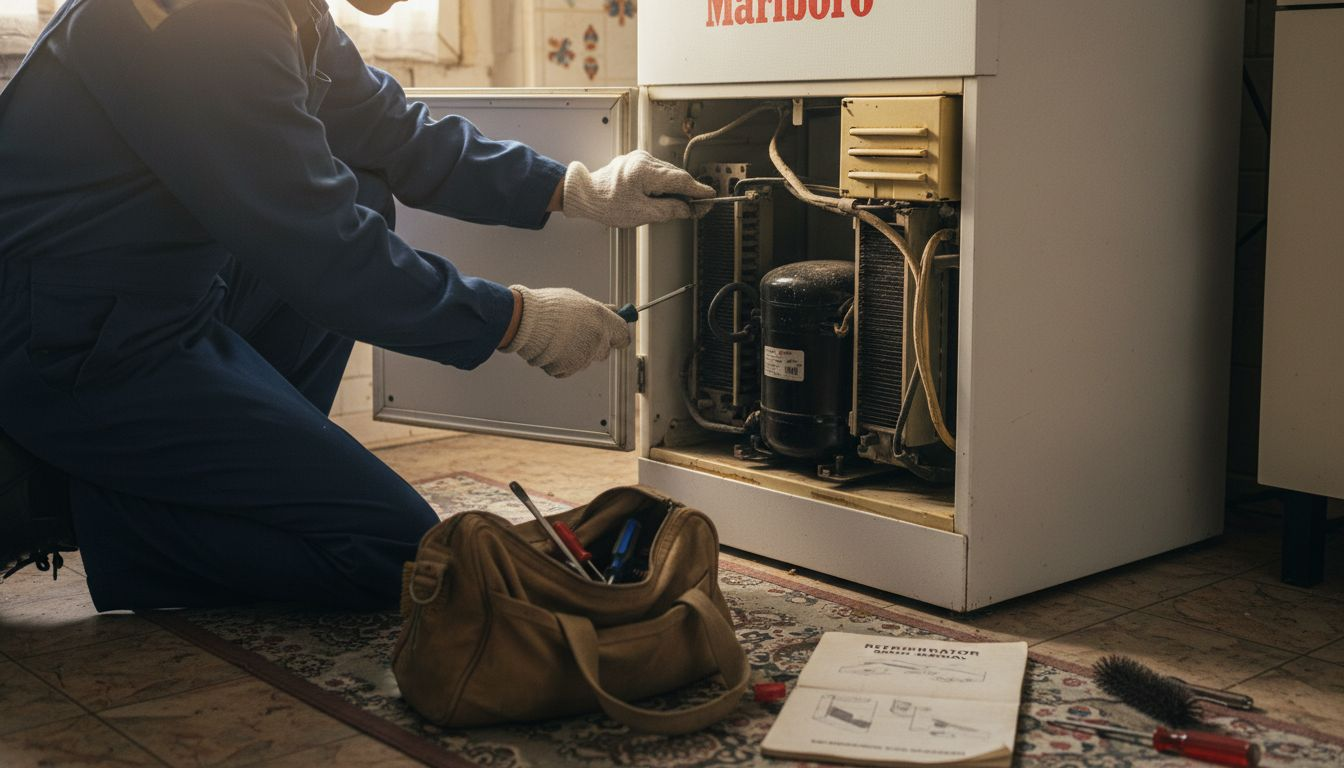
Each of these fundamental components directly affects how efficiently your refrigerator operates and how long it lasts.
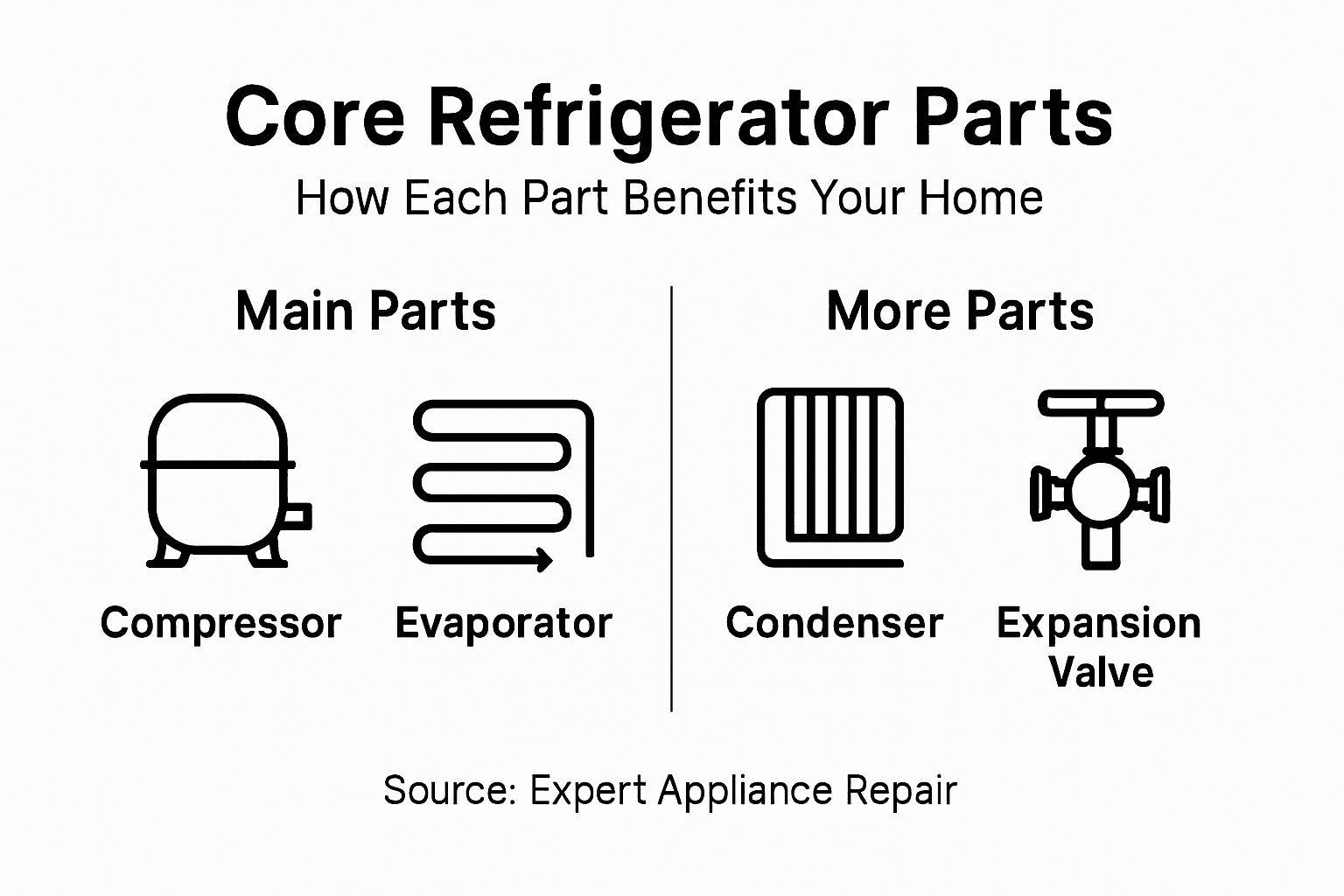
Here’s a quick summary showing how the four main refrigerator components work and the risks if they fail:
| Part | Core Function | Impact If Failing |
|---|---|---|
| Compressor | Pressurizes refrigerant vapor | No cooling; costly repairs |
| Condenser | Releases heat to outside air | Food warms; higher energy use |
| Evaporator | Absorbs heat from inside fridge | Uneven temperature; ice buildup |
| Expansion Valve | Regulates refrigerant flow & cooling | Weak cooling; compressor overload |
Quick Reference: What to Watch For
- Loud humming or grinding: compressor problems
- Ice buildup on evaporator coils: thermostat or defrost cycle issue
- Warm refrigerator with a running compressor: condenser or evaporator failure
- Water pooling inside: blocked defrost drain or faulty drain pan
- Frost-free unit that’s now frosting over: broken evaporator fan motor
Knowing these warning signs gives you time to schedule service before your fridge completely fails. Expert Appliance Repair in Marlboro can diagnose which part is causing trouble and get your refrigerator running smoothly again.
Pro tip: Keep your condenser coils clean by vacuuming or brushing the back and bottom coils every six months, especially if you have pets or live in a dusty area. This one simple task can extend your refrigerator’s life by 3 to 5 years and lower your cooling costs.
How Main Refrigerator Components Work Together
Your refrigerator doesn’t just magically stay cold. Each component plays a specific role in a carefully orchestrated cycle that repeats thousands of times every day. Understanding how these parts work together helps explain why one failing component can shut down your entire cooling system and why regular maintenance matters so much for Marlboro homeowners.
The Continuous Cooling Cycle
Refrigerator components operate in what’s called a closed vapor-compression cycle/06%3A_Entropy_and_the_Second_Law_of_Thermodynamics/6.03%3A_Refrigerator_and_heat_pump) that moves heat out of your fridge and into the surrounding air. Picture this as a four-step relay race where the refrigerant (a special liquid chemical) passes through each component in sequence. The compressor pressurizes the refrigerant vapor, heating it up like squeezing air in a bicycle pump. That hot vapor then flows to the condenser, which acts like a radiator and cools the vapor down until it condenses into liquid. The expansion valve then throttles this liquid, dropping its pressure and temperature dramatically. Finally, the evaporator absorbs heat from inside your fridge cabinet as the refrigerant changes back into a vapor, completing the cycle and starting all over again.
This continuous loop happens without stopping. The compressor runs whenever your thermostat senses the temperature rising above your set point, usually cycling on and off several times per hour. When it works perfectly, you don’t notice a thing. But interrupt any single step in this cycle, and nothing cools down anymore.
How the Parts Depend on Each Other
The compressor and evaporator can’t function without each other. The compressor pumps refrigerant through the system under pressure, and the evaporator absorbs heat as that pressurized liquid passes through. If your evaporator coils freeze over with ice, backpressure builds up and the compressor has to work harder, consuming more electricity and wearing out faster. If the expansion valve clogs or sticks, the evaporator doesn’t receive enough refrigerant, so the compressor runs constantly but never builds sufficient pressure to cool effectively.
This interdependence is why work done by the compressor on the refrigerant must be precisely balanced. Too much pressure and the system overloads. Too little and cooling fails. Your thermostat controls this balance by turning the compressor on and off based on interior temperature. When the thermostat fails, the balance breaks and your fridge either runs constantly or not at all.
What Happens When One Part Fails
Suppose your condenser coils get clogged with dust and pet hair. The hot refrigerant vapor can’t release enough heat, so system pressure builds up. The compressor must work harder to push refrigerant through the blocked condenser. Within days or weeks, that extra strain can burn out the compressor motor completely. A simple cleaning that takes 15 minutes could have prevented a $400 repair bill.
Or imagine your expansion valve gets stuck in the wide-open position. Too much cold liquid rushes into the evaporator at once. The liquid doesn’t completely evaporate before returning to the compressor, which damages the compressor because compressors handle vapor, not liquid. This situation creates major problems that require professional diagnosis and repair.
Why This Matters for Your Marlboro Home
Knowing how your refrigerator components work together helps you understand why regular maintenance prevents expensive breakdowns. When you keep condenser coils clean and ensure proper airflow around your fridge, you’re helping the entire system maintain balance. When you notice unusual sounds or temperature problems, you can call Expert Appliance Repair in Marlboro with specific information about what you’ve observed, which speeds up diagnosis and repair.
Pro tip: If your refrigerator runs constantly but doesn’t cool well, check that the area around the back and bottom has at least 3 inches of clearance on all sides. Blocked airflow forces the condenser to work harder and throws off the balance of your entire cooling cycle.
Critical Differences: Types of Refrigerator Parts
Not all refrigerator parts are created equal. The components inside a French door refrigerator differ from those in a compact apartment unit, and newer models include technologies that older refrigerators never had. For Marlboro homeowners, understanding these differences matters because it affects repair costs, replacement availability, and how long your specific appliance will last.
Standard Parts Across All Refrigerators
Most refrigerators share a common core of essential components. The compressor, evaporator, condenser, and expansion valve appear in nearly every model because they form the backbone of any cooling system. The thermostat controls temperature cycles, and the fan circulates cold air throughout the cabinet. However, variations in refrigerator design and cooling methods mean these parts come in different sizes, materials, and power ratings depending on your unit. A full-size side-by-side refrigerator has a larger, more powerful compressor than a compact unit, which means it consumes more electricity but cools faster. The evaporator coils in a frost-free model work differently than those in a manual defrost unit. Understanding these distinctions helps you recognize why repair costs vary and why some replacements cost more than others.
Where Modern Refrigerators Differ
Newer refrigerators introduce technologies that change how parts function. Variable-speed compressors adjust their power output based on cooling demand, running at lower speeds during light loads and ramping up during heavy cooling periods. This design reduces energy consumption by 10 to 15 percent compared to traditional on-off compressors. Vacuum insulated panels replace standard foam insulation in premium models, allowing thinner walls and more interior space while maintaining the same cooling efficiency. Advanced thermostats with digital sensors monitor multiple temperature zones independently, which is why some refrigerators have separate cooling controls for the fridge and freezer compartments.
These emerging differences among refrigerator parts impact energy efficiency and performance, but they also mean repair technicians need specialized training. An older refrigerator with a simple thermostatic expansion valve may cost $80 to repair, while a newer model with an electronic expansion valve could cost $200 because the part is pricier and requires precision calibration.
Comparing Compact and Full-Size Units
Compact refrigerators contain the same types of parts as full-size units but in miniaturized form. The compressor is smaller, the condenser coils are fewer, and the evaporator operates at lower capacity. These differences make compact units cheaper to repair initially, but replacement parts may be harder to find if the manufacturer discontinues the model. Full-size refrigerators, especially those sold by major brands, have better parts availability because millions of units share compatible components.
Built-in and integrated freezer models feature parts arranged differently than top-freezer or bottom-freezer designs. The airflow patterns differ, which means frost accumulation happens in different spots and defrost systems operate uniquely. This layout difference is why you cannot simply swap a compressor from one style to another without extensive modifications.
Compare how main refrigerator types differ in critical components and maintenance needs:
| Refrigerator Type | Key Component Difference | Parts Availability |
|---|---|---|
| Compact | Smaller compressor & coils | Often harder to find |
| Full-Size | Larger, more powerful parts | Usually easy to source |
| Feature-Rich/Modern | Extra sensors, electronics | May require specialists |
| Basic/Manual Defrost | Fewer parts, simpler design | Readily available |
Additional Components in Feature-Rich Models
Refrigerators with automatic defrost systems include extra parts like defrost timers, heating elements, and drain systems that manual-defrost models lack. Water dispensers require additional tubing, filters, and solenoid valves. Ice makers add motorized components that can break independently from the main cooling system. Each extra feature adds complexity and potential failure points, which is why fully-equipped refrigerators cost more to repair than basic models.
When you call Expert Appliance Repair in Marlboro to schedule a service, knowing your refrigerator model and age helps technicians identify which specific parts are inside your unit. Older models may use parts that are no longer manufactured, requiring creative solutions or suggesting replacement might be more economical than repair.
Pro tip: Keep your refrigerator’s model number and purchase date written down somewhere accessible, like on a sticky note inside your freezer or stored in your phone. This information speeds up diagnosis when you call for repairs and helps technicians order the correct replacement parts on the first try.
Common Failure Points and Troubleshooting Tips
Refrigerator problems rarely happen without warning. Most failures develop gradually, giving you time to catch issues before your food spoils or repair costs skyrocket. Learning to recognize the early signs helps you take action quickly, whether that means a simple fix or calling Expert Appliance Repair in Marlboro for professional diagnosis.
Recognizing the Most Common Problems
The typical problems for refrigerators fall into a few predictable categories. No cooling at all usually points to compressor failure, a frozen evaporator, or a broken thermostat. Excessive noise might mean a struggling compressor, a faulty fan motor, or ice buildup in the evaporator. Water pooling at the bottom indicates a blocked defrost drain or leaking water supply line. Frost accumulation happens when the defrost cycle fails or when warm air enters through a failing door seal. Ice maker problems involve the water inlet valve, the ice maker motor, or the water filter being clogged.
Each symptom narrows down the possible causes. When your refrigerator runs constantly but the interior stays warm, the compressor is likely running but the refrigerant is leaking out or the expansion valve is stuck closed. When your fridge stays cold but the freezer doesn’t freeze, the airflow balance between compartments is off, usually because vents are blocked or the damper control is broken.
Troubleshooting Steps You Can Handle
Before calling for professional help, try these straightforward checks that often solve the problem. First, verify your thermostat is set correctly. A surprising number of “no cooling” calls turn out to be thermostats accidentally turned to the warmest setting. Second, inspect the door seals by closing the door on a dollar bill and trying to pull it out. If the bill slides out easily, the seal is worn and letting warm air leak inside. Third, clean the condenser coils at the back and bottom of your unit. Dust buildup forces the condenser to work harder and can reduce cooling capacity by 30 percent. Fourth, check that air vents inside the fridge and freezer aren’t blocked by food or ice. Fifth, listen closely to the compressor. If it runs but makes grinding or clicking sounds, that suggests internal damage requiring professional repair.
When Professional Diagnosis Becomes Necessary
Common refrigerator failure points like refrigerant leaks, faulty compressors, and valve issues require specialized equipment to diagnose accurately. You cannot see if refrigerant is leaking without a pressure gauge. You cannot determine if a valve is stuck closed without measuring system pressures at multiple points. You cannot know if the compressor is failing or if the evaporator coils are frozen without thermal imaging or pressure readings.
This is why Expert Appliance Repair technicians carry diagnostic tools that homeowners simply don’t have. They check pressures, temperatures, and the physical condition of components to pinpoint exactly which part is failing. Quick diagnosis means faster repairs and lower labor costs because the technician doesn’t waste time guessing.
What to Tell Your Repair Technician
When you call for service, describe what you’ve already noticed. Tell them when the problem started, what sounds you’re hearing, whether cooling is completely gone or just weak, and whether any water is leaking. Mention if you’ve already cleaned the condenser coils or checked the door seal. This information helps the technician come prepared with the right parts and tools, reducing appointment time and getting your refrigerator back to normal faster.
Pro tip: If your refrigerator stops cooling, turn off the compressor immediately and leave the doors open for several hours before calling for repairs. If ice has built up in the evaporator, this melting period gives you time to verify whether the defrost system is truly broken or just temporarily stuck, potentially saving you an expensive service call.
When to Call for Professional Refrigerator Repair
Knowing when to stop troubleshooting and call a professional saves you time, money, and the frustration of a spoiled refrigerator full of expensive groceries. Some problems look simple on the surface but require specialized tools and training to fix correctly. Waiting too long to call Expert Appliance Repair in Marlboro can turn a $150 repair into a $600 replacement, so recognizing the warning signs that demand professional attention matters.
The Clear Red Flags
Professional refrigerator repair is recommended when cleaning coils and adjusting temperature settings do not resolve cooling issues. If your thermostat is set correctly, the coils are clean, the door seal is tight, and the vents are unblocked, but your refrigerator still stays warm, the problem is internal. You are dealing with compressor failure, a refrigerant leak, or a faulty expansion valve. None of these can be fixed with basic tools. Stop here and call for service.
Persistent warm temperatures despite your best troubleshooting efforts signal that something inside the sealed refrigeration system is broken. The compressor might be running but unable to build pressure. Refrigerant could be leaking silently out of tiny cracks in the copper tubing. The thermostat sensor might be malfunctioning and feeding incorrect temperature readings to the control board. Each of these requires specialized diagnostic equipment. A technician will use pressure gauges, thermal imaging, and electrical meters to pinpoint the exact failure. You cannot do this with a flashlight and basic knowledge.
Unusual Noises Mean Damage Is Happening
If your compressor makes grinding, clicking, or squealing sounds, damage is already occurring inside the motor. These noises indicate metal parts grinding against each other or bearings failing. Continuing to run the compressor while it makes these sounds is like driving a car with a grinding transmission. Each minute of operation causes more damage, making eventual repair more expensive. Call immediately when you hear these noises. Do not wait for the problem to get worse.
A rattling sound from the evaporator area usually means ice has built up and is vibrating against the coil walls. A squealing fan indicates a failing motor bearing. A hissing sound suggests refrigerant is leaking from a crack in the system. None of these problems fix themselves. They worsen over time until the compressor fails completely.
When Repair Costs Point Toward Replacement
Regular maintenance can prolong refrigerator life, but professional service becomes necessary if repairs become frequent or costly. If you have repaired your refrigerator twice in the past 18 months, replacement is likely more economical than repair. A new compressor costs $400 to $600 plus labor. A new motherboard costs $200 to $400 plus labor. A replacement refrigerator might cost $600 to $1,200 depending on size and features. When repairs exceed 50 percent of replacement cost, buying new makes financial sense.
Your refrigerator is typically 10 to 15 years old before major repairs are expected. If yours is only 4 or 5 years old and already needs an expensive repair, replacement might be smarter because a new unit comes with a warranty and uses less energy. If your refrigerator is 12 years old and the compressor is failing, the question becomes whether to sink $500 into that repair or invest in a new, energy-efficient model.
Food Safety Cannot Wait
If your refrigerator is not holding temperature correctly and you have perishable food inside, call for emergency service today. Food safety regulations require that perishables be kept at 40 degrees Fahrenheit or colder. Once your refrigerator goes above 40 degrees, bacteria multiply rapidly and food becomes unsafe to eat within 2 hours. If you have a family depending on that food, or if you run a restaurant or food service operation in Monmouth County, a quick professional diagnosis and repair prevents expensive food loss.
Your Next Step
Call Expert Appliance Repair in Marlboro when you experience any of these situations. Same-day service is often available, and upfront pricing means no surprises when the bill arrives. Our technicians carry diagnostic tools and parts to fix most problems in a single visit.
Pro tip: The moment you notice cooling problems, buy a small cooler and fill it with ice from a neighbor or convenience store. Keep essential perishables like milk, eggs, and meat in the cooler until your refrigerator is repaired. This one simple step protects your family’s food safety and prevents losing hundreds of dollars in groceries during a service appointment.
Keep Your Marlboro Refrigerator Running Smoothly with Expert Appliance Repair
Understanding the key parts of your refrigerator like the compressor, condenser, evaporator, and expansion valve can help you spot problems before they become costly. If you notice strange noises or cooling issues in your Marlboro home, do not wait and risk food spoilage or expensive repairs. Our team is here to help you maintain the balance of your refrigerator’s cooling system and extend its life.
Experience fast, reliable refrigerator repair and maintenance from a trusted local expert. Visit our Appliance Archives – Expert Appliance page to learn more about our services and why so many Monmouth County residents count on us. We offer same-day service, upfront pricing, and 24/7 emergency support to resolve your appliance issues quickly. Schedule your service now at https://expertapplianceinc.com and protect your home from unexpected refrigeration failures.
Frequently Asked Questions
What are the main parts of a refrigerator?
A refrigerator typically consists of four main parts: the compressor, evaporator, condenser, and expansion valve. Each plays a crucial role in the refrigeration cycle, working together to keep your food fresh.
Why is the compressor considered the most important part of a refrigerator?
The compressor acts like the heart of the refrigeration system. It pressurizes refrigerant vapor to raise its temperature, allowing it to release heat in the condenser. If the compressor fails, the refrigerator will not cool effectively, making it a costly component to replace.
How can I maintain my refrigerator to extend its lifespan?
Regular maintenance, such as cleaning the condenser coils every six months and ensuring proper airflow around the unit, can significantly extend your refrigerator’s lifespan. Additionally, checking door seals and keeping the interior organized for air circulation also helps.
What should I do if my refrigerator isn’t cooling effectively?
If your refrigerator isn’t cooling well, start by checking the thermostat settings, ensuring the condenser coils are clean, and verifying that vent openings inside are not blocked. If these steps don’t resolve the problem, it’s best to consult a professional for accurate diagnosis and repair.