

Facing a sudden appliance breakdown can throw daily life in Marlboro, NJ, into chaos, especially when repair bills come as a surprise. Understanding the ins and outs of appliance warranties matters more than ever because what is covered can dramatically impact your wallet. This overview explains how warranties protect your major home investments, the limits most contracts have, and what smart homeowners need to look for before trouble strikes.
Table of Contents
- What Appliance Warranties Actually Cover
- Types of Appliance Warranties Available
- Key Exclusions and Limitations in Coverage
- Steps for Filing a Warranty Claim
- Avoiding Common Warranty Mistakes
Key Takeaways
| Point | Details |
|---|---|
| Understand Warranty Coverage | Appliance warranties typically cover mechanical failures of major appliances but exclude user errors and pre-existing conditions. Review the contract carefully to know your protection limits. |
| Types of Warranties | Homeowners can choose between manufacturer warranties, extended warranties, and home appliance service contracts, each with varying coverage durations and flexibility. |
| Avoid Common Mistakes | Ensure you don’t purchase redundant coverage, keep detailed maintenance records, and fully understand the terms and exclusions of your warranty. |
| Claim Process Awareness | When filing a claim, document all issues and communications, and be aware of manufacturers’ obligations to repair, replace, or refund within a reasonable time frame. |
What Appliance Warranties Actually Cover
Appliance warranties provide critical financial protection for New Jersey homeowners facing unexpected repair costs. These service contracts typically cover major kitchen and laundry appliances against mechanical failures caused by normal wear and tear. Home warranty coverage details vary widely, making it essential to understand exactly what protection you’re purchasing.
Most standard warranties include repairs or replacements for core household appliances such as:
- Refrigerators
- Dishwashers
- Washing machines
- Dryers
- Ovens and stoves
However, warranties do not provide blanket protection. Consumer warranty guidelines emphasize that most contracts explicitly exclude damages resulting from user errors, improper maintenance, or pre-existing conditions. Homeowners should carefully review contract language to understand specific exclusions and limitations.
Warranty coverage typically requires appliances to be professionally installed and maintained according to manufacturer specifications. This means routine maintenance like cleaning filters, avoiding overloading machines, and scheduling periodic professional inspections can help preserve your warranty protection. Some contracts may even require documented maintenance records to validate future repair claims.
Pro tip: Always request a detailed written copy of your warranty contract and keep it in an easily accessible file for quick reference during potential repair scenarios.
Types of Appliance Warranties Available
Appliance warranties come in multiple forms, each offering different levels of protection for homeowners in New Jersey. Warranty protection options range from manufacturer-provided coverage to comprehensive service contracts that can significantly reduce unexpected repair expenses.
The primary types of appliance warranties include:
- Manufacturer Warranties
- Standard coverage included with new appliance purchases
- Typically lasts 1-2 years
- Covers manufacturing defects and mechanical failures
- Extended Warranties
- Purchased separately from the original manufacturer warranty
- Extends protection beyond initial coverage period
- Often provides more comprehensive repair services
- Home Appliance Service Contracts
- Third-party protection plans
- Can cover multiple appliances under a single contract
- Flexible terms and pricing options
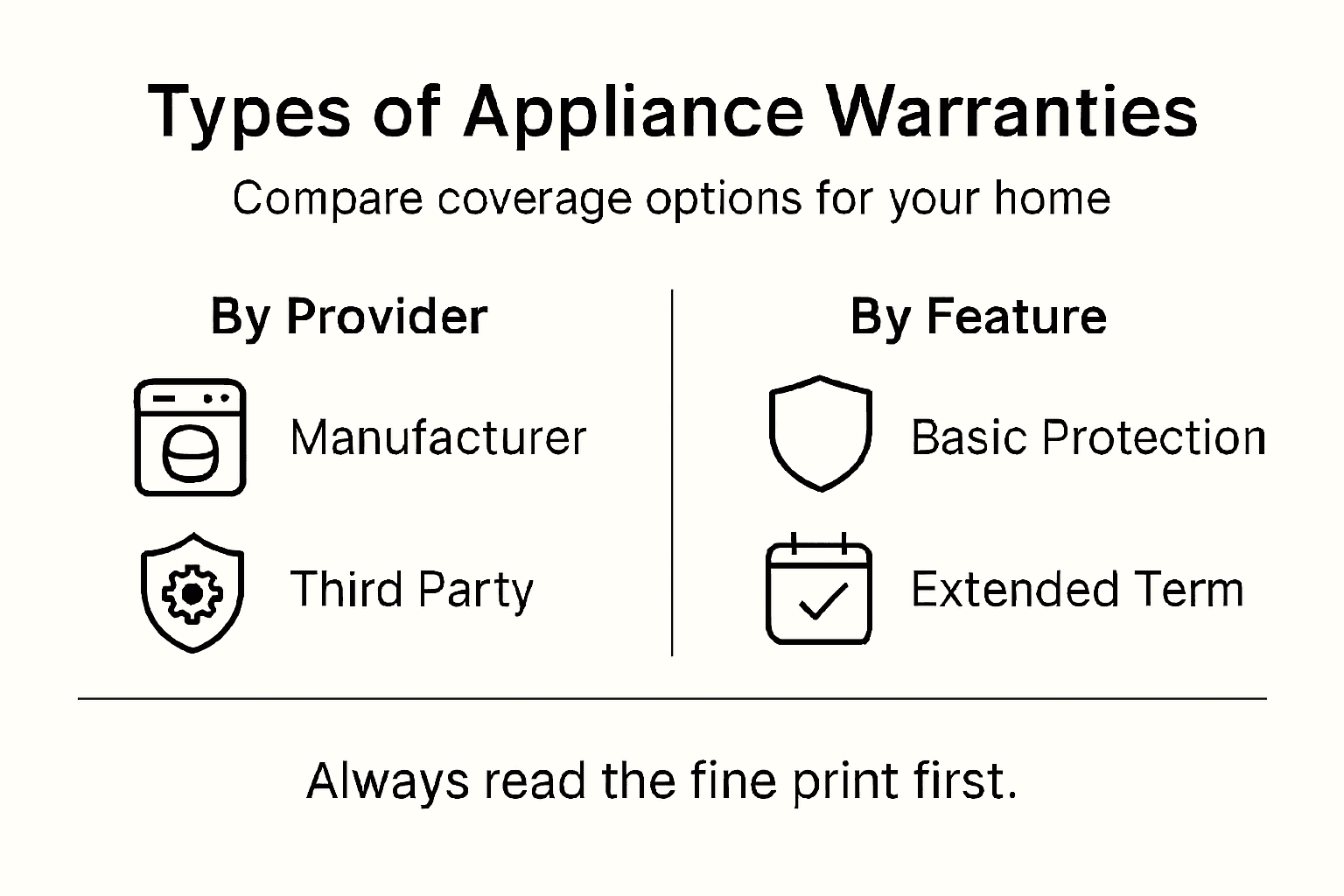
Manufacturer warranties generally provide basic protection against manufacturing defects, while extended warranties offer more comprehensive coverage for a longer duration. Some service contracts even include additional benefits like annual maintenance checks or priority repair services for New Jersey homeowners.
Here’s a comparison of common appliance warranty types in terms of coverage and flexibility:
| Warranty Type | Who Provides | Typical Duration | Covers Multiple Appliances? |
|---|---|---|---|
| Manufacturer Warranty | Appliance brand | 1-2 years | No |
| Extended Warranty | Retailer/Brand | 2-5 years extra | No |
| Home Appliance Service Contract | Third-party company | 1-3 years | Yes |
When selecting a warranty, homeowners should carefully evaluate the specific terms, coverage limitations, and exclusions. Some contracts may require professional installation or regular maintenance to remain valid, and not all damage types are covered under standard agreements.
Pro tip: Compare multiple warranty options and read the fine print carefully to understand exactly what repairs and replacements are included in your specific contract.
Key Exclusions and Limitations in Coverage
Understanding warranty limitations is crucial for New Jersey homeowners to avoid unexpected out-of-pocket expenses. Warranty coverage exclusions can significantly impact the protection homeowners believe they have purchased.
Common exclusions in appliance warranties typically include:
- Accidental Damage
- Drops, spills, or external physical impacts
- Damage from improper use or handling
- Environmental Factors
- Damage from power surges
- Natural disasters or extreme weather conditions
- Electrical or water damage
- Maintenance-Related Exclusions
- Damage from lack of regular maintenance
- Modifications or unauthorized repairs
- Cosmetic damage not affecting functionality
Most warranties require homeowners to demonstrate proper appliance maintenance and usage. This means keeping detailed service records, following manufacturer guidelines for cleaning and operation, and addressing minor issues before they escalate into major problems. Failure to meet these requirements can void warranty coverage entirely.
Some warranties also impose strict time limitations and partial coverage clauses. For instance, certain components might be covered for a shorter period than the overall warranty, and some repairs may only receive partial reimbursement. Carefully reading the fine print becomes essential to understanding the true extent of your warranty protection.
This summary shows how exclusions can affect warranty protection:
| Exclusion Category | Common Impact | Homeowner Action Needed |
|---|---|---|
| Accidental Damage | Denial of claims | Use appliances carefully |
| Environmental | Voided coverage | Use surge protectors, insure home |
| Maintenance | Refusal of repairs | Keep service and cleaning records |
Pro tip: Take photographs and maintain a detailed maintenance log for each appliance to provide documentation if you need to file a warranty claim.
Steps for Filing a Warranty Claim
Navigating a warranty claim can feel overwhelming, but understanding the process helps New Jersey homeowners successfully resolve appliance issues. Warranty claim procedures require careful documentation and timely communication with the manufacturer or service provider.
The standard warranty claim process typically involves these critical steps:
- Document the Problem
- Take clear photographs of the appliance damage
- Record the specific malfunction or issue
- Locate original purchase receipt and warranty documentation
- Contact the Warranty Provider
- Call the manufacturer’s customer service number
- Provide serial number and purchase details
- Describe the problem in clear, precise language
- Schedule Professional Inspection
- Arrange for an authorized repair technician
- Prepare to demonstrate the appliance’s malfunction
- Follow all recommended diagnostic procedures
Federal warranty regulations mandate that manufacturers remedy product defects within a reasonable timeframe. This means the warranty provider must either repair the appliance, replace it, or provide a refund if the issue falls under the warranty’s coverage terms. Homeowners should maintain detailed records of all communications, including dates, names of representatives spoken with, and any reference numbers provided.
If the initial claim is denied, consumers have several options. These include requesting a detailed explanation of the denial, seeking a second professional opinion, or potentially pursuing resolution through consumer protection agencies. Some warranties also offer appeal processes for disputed claims.
Pro tip: Create a dedicated digital and physical file for each appliance’s warranty, including original receipts, maintenance logs, and communication records to streamline potential future claims.
Avoiding Common Warranty Mistakes
New Jersey homeowners can protect their investments by understanding the most frequent pitfalls in appliance warranty management. Warranty coverage mistakes often stem from inadequate research and hasty decision-making.
Common warranty mistakes to avoid include:
- Overlooking Existing Coverage
- Purchasing redundant extended warranties
- Not checking manufacturer’s original warranty terms
- Failing to understand current protection
- Documentation Errors
- Losing original purchase receipts
- Not maintaining maintenance records
- Incomplete problem documentation
- Misunderstanding Coverage Terms
- Assuming comprehensive protection
- Ignoring specific exclusion clauses
- Misinterpreting warranty duration
Consumer warranty insights reveal that many homeowners mistakenly believe all warranties provide identical coverage. In reality, each warranty has unique terms, limitations, and specific conditions that can significantly impact repair or replacement eligibility. Carefully reading the fine print becomes crucial to understanding the true scope of protection.
Maintaining open communication with warranty providers and documenting all interactions can help prevent misunderstandings. Homeowners should ask direct questions about coverage limits, request written explanations of terms, and keep comprehensive records of all communications and maintenance performed on their appliances.
Pro tip: Create a digital folder for each appliance that includes the original warranty, purchase receipt, maintenance logs, and a summary of key coverage terms for quick reference.
Protect Your New Jersey Home with Trusted Appliance Repair Services
Understanding appliance warranties can be challenging, especially with the detailed exclusions and maintenance requirements outlined in this article. If you face sudden appliance breakdowns or worry about warranty gaps for your refrigerator, washer, dryer, oven, or dishwasher, Expert Appliance is here to help. We know how important fast, reliable repairs are when you need to avoid out-of-pocket expenses due to warranty limitations or delays.
Don’t let appliance issues disrupt your daily routine or drain your savings. Our family-owned company offers same-day service and 24/7 emergency support across Marlboro and Monmouth County. With decades of experience, we specialize in efficient repairs and maintenance that can complement your warranty coverage and extend the life of your appliances. Visit our Appliance Archives – Expert Appliance for helpful tips or schedule your service directly at expertapplianceinc.com for trusted local expertise you can count on.
Frequently Asked Questions
What do appliance warranties typically cover?
Appliance warranties usually cover major kitchen and laundry appliances like refrigerators, dishwashers, washing machines, dryers, and ovens for mechanical failures due to normal wear and tear.
Are there any common exclusions in appliance warranties?
Yes, common exclusions include accidental damage, damages caused by environmental factors like power surges, and issues resulting from improper maintenance or unauthorized repairs.
How can I file a warranty claim for my appliance?
To file a warranty claim, document the problem with photographs, contact the warranty provider with appliance details, and schedule a professional inspection to verify the issue.
What are the key differences between manufacturer warranties and extended warranties?
Manufacturer warranties are provided at the time of purchase and cover defects for 1-2 years, while extended warranties are purchased separately and often provide longer coverage with more comprehensive services.