
TL;DR:
- Appliance emergencies pose immediate risks like fire, gas leaks, flooding, and electrical shocks.
- Quick safety steps include cutting power, evacuating, ventilating, and calling emergency services if needed.
- Regular maintenance and prompt local professional repairs help prevent costly appliance disasters.
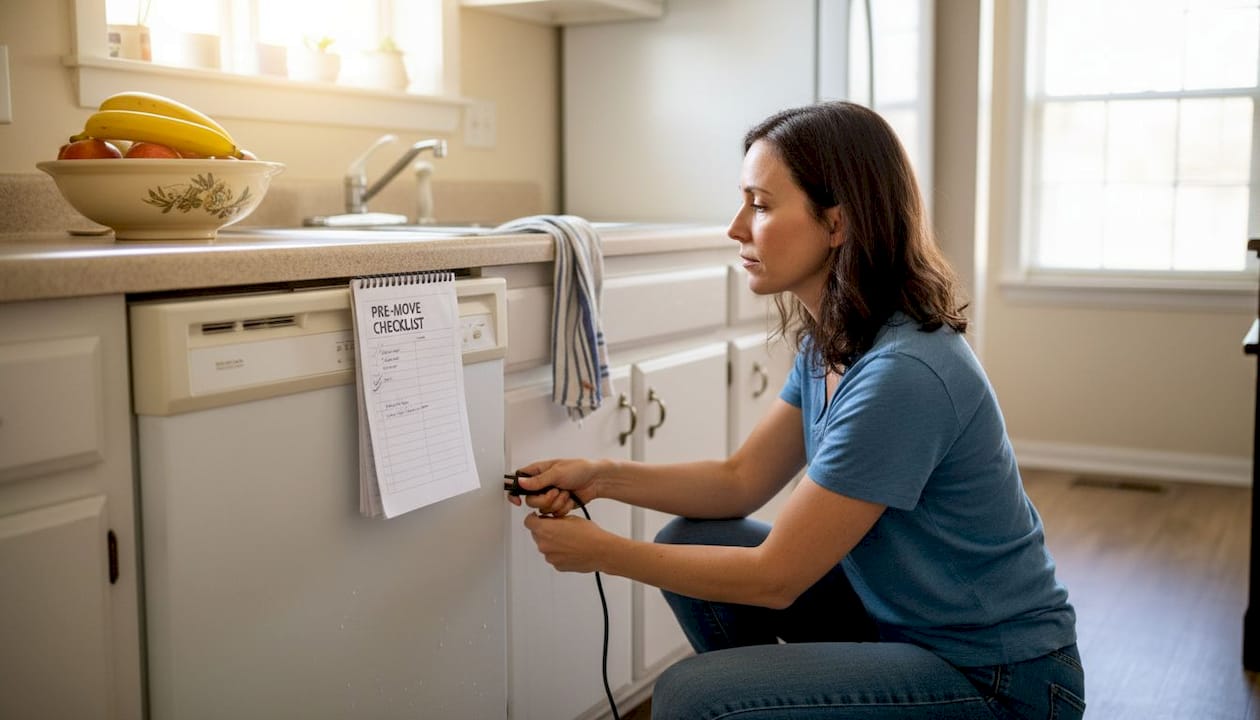
Your refrigerator starts sparking at 11 p.m. Your washing machine floods the laundry room floor. Your oven fills the kitchen with the sharp smell of gas. In Monmouth County, NJ, these situations happen more often than most homeowners expect, and the first five minutes of your response can mean the difference between a minor repair and a major disaster. This guide walks you through exactly what to do when an appliance emergency hits, from the moment you notice something is wrong to the point where a qualified technician takes over. Knowing these steps in advance protects your family, your property, and your wallet.
Table of Contents
- What counts as an appliance emergency?
- Essential safety steps to take immediately
- Tools and readiness: What to keep on hand for emergencies
- After the emergency: Contacting professionals and preventing recurrence
- Perspective: Why appliance emergencies demand local expertise
- Get reliable help for your next appliance emergency
- Frequently asked questions
Key Takeaways
| Point | Details |
|---|---|
| Safety first | Always prioritize personal safety and call 911 for fire, shock, or gas leaks before handling appliances. |
| Immediate actions | Quickly disconnect power or gas, ventilate, and use the right extinguisher to stabilize situations when safe. |
| Proper tools | Keep essential tools like a Class ABC extinguisher and detectors properly placed for emergencies. |
| Call professionals | Contact licensed local experts for repairs, and log maintenance to prevent future breakdowns. |
| Prevention matters | Regular maintenance and readiness greatly reduce both risk and repair costs over time. |
What counts as an appliance emergency?
Not every broken appliance is an emergency. A dishwasher that leaves spots on your glasses is annoying. A dryer that takes two cycles to finish a load is inefficient. But certain appliance problems cross into genuine emergency territory, and recognizing the difference is the first skill every Monmouth County homeowner and small business owner needs.
An appliance emergency is any situation where a malfunctioning appliance creates an immediate risk to people, property, or structural safety. The first step in any response is to assess for smoke, sparks, fire, gas smell, or flooding before anything else. These are the five warning signs that demand instant action.
Common appliance emergencies in Monmouth County homes and businesses include:
- Sparking or arcing from an outlet, cord, or appliance body
- Smoke or burning smell coming from any appliance
- Gas odor near a stove, oven, dryer, or water heater
- Flooding from a washing machine, dishwasher, or refrigerator ice maker line
- Electrical shock from touching an appliance
- A tripped breaker that keeps resetting immediately
- Appliances running but producing no heat, or producing too much heat
Electrical and gas issues sit at the top of the danger list. Electrical fires cause roughly 31,647 US home fires per year based on NFPA data from 2019 to 2023. That number is not abstract. It represents real homes, real families, and real losses that often started with a single faulty appliance.
Delaying your response multiplies the risk. A small electrical arc can ignite insulation inside a wall within seconds. A slow gas leak can reach explosive concentration in minutes. Water flooding into a space with live electrical outlets creates shock and fire hazards simultaneously.
Know the line: Call 911 for fire, active sparking you cannot safely stop, a gas smell that does not clear immediately after shutting off the source, or if anyone has been shocked. Call a licensed appliance professional after the immediate danger is controlled.
For issues that are urgent but not life-threatening, such as a refrigerator that has stopped cooling or a washer that will not drain, you need fast appliance fixes from a local team that can respond the same day. Waiting on reliable repair services prevents small problems from becoming expensive ones.
Essential safety steps to take immediately
Once you identify an emergency, every second counts. Here is a clear sequence to follow that keeps you safe and limits damage before professionals arrive.
- Stop and assess. Before you touch anything, look and listen. Is there visible fire, smoke, or sparking? Do you smell gas or burning plastic? Knowing what you are dealing with determines every step that follows.
- Evacuate if there is any doubt. If you see flames, smell gas, or suspect a structural electrical fire, get everyone out of the building immediately. Do not stop to grab belongings.
- Call 911 for life-threatening situations. Fire, gas leaks that do not clear, and electrical shocks are 911 calls, not repair calls.
- Cut power if it is safe to do so. If there is no standing water between you and the breaker panel, switch off the circuit for the affected appliance. Unplugging the appliance directly is faster if the cord and outlet are dry and away from the hazard.
- Shut off the gas supply. For gas appliances, turn the shutoff valve behind or beside the unit. If you cannot locate it, use the main gas shutoff at the meter.
- Ventilate the space. Open windows and doors if gas or fumes are present. Do not use light switches or any electrical device in the room, as sparks can ignite gas.
- Handle a small electrical fire correctly. Use a Class ABC or C extinguisher for small electrical fires. Never use water. Follow the PASS method: Pull the pin, Aim at the base of the fire, Squeeze the handle, Sweep side to side.
- Contact a professional after stabilizing. Once the immediate danger is controlled, follow the steps for reaching a licensed appliance repair technician.
| Situation | Immediate action | Who to call |
|---|---|---|
| Sparking appliance | Cut power, do not touch | 911 if fire starts; repair pro if controlled |
| Gas smell | Evacuate, ventilate, no switches | 911 and gas utility |
| Flooding | Cut power to area, stop water source | Repair pro and plumber |
| Smoke without flame | Cut power, ventilate | 911 if fire; repair pro if smoke only |
| Electrical shock | Do not touch victim; cut power first | 911 immediately |
Pro Tip: Label your breaker panel now, before an emergency. Tape a handwritten legend inside the panel door so anyone in your household can find the right circuit fast, even in the dark or under stress. Review your appliance care tips to identify which circuits serve which appliances.
Remember: Standing water and electricity are a lethal combination. If water is present near any electrical source, do not enter the area. Cut power from a dry location first.
Tools and readiness: What to keep on hand for emergencies
Being prepared before an emergency is the single most effective thing you can do. Most Monmouth County homeowners do not think about emergency readiness until something goes wrong. By then, it is too late to shop for the right extinguisher.
Essential items every home and small business should have near appliances:
- ABC-rated fire extinguisher mounted in the kitchen and laundry area
- Smoke detectors and carbon monoxide (CO) detectors on every floor
- GFCI (ground fault circuit interrupter) outlets near water sources, and AFCI (arc fault circuit interrupter) breakers in living spaces
- A fire blanket in the kitchen for small stovetop fires
- A clearly labeled breaker panel with a shutoff guide taped inside
- A written list of emergency contacts including your gas utility and a local appliance repair service
- A basic appliance maintenance log
The NFPA recommends keeping an ABC extinguisher near appliances and testing smoke and CO detectors monthly. That is a two-minute habit that saves lives.
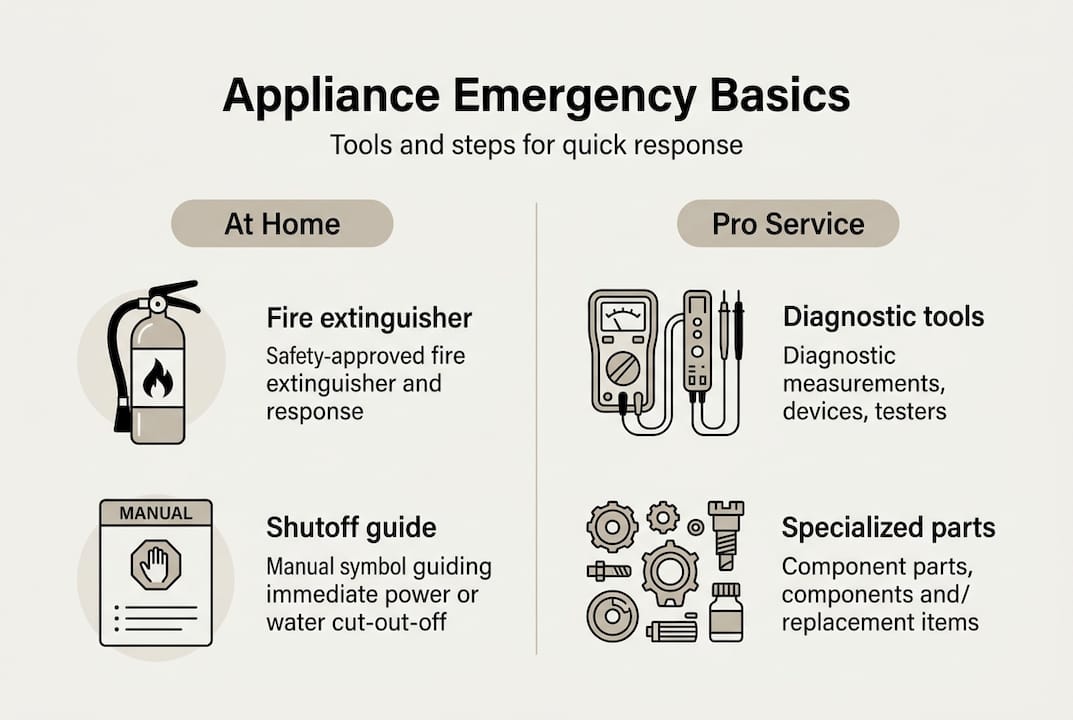
| Tool | What you can do at home | What a pro brings |
|---|---|---|
| ABC fire extinguisher | Suppress small fires | Industrial suppression systems |
| Multimeter | Check for basic power | Full diagnostic equipment |
| Appliance manual | Identify shutoffs | Manufacturer service data |
| GFCI outlet | Prevent shock at outlets | Full electrical panel assessment |
| Maintenance log | Track service history | Recall database access |
For handling electrical emergencies, knowing where your main shutoffs are is as important as having the right tools. Walk through your home or business today and locate every gas shutoff and circuit breaker.
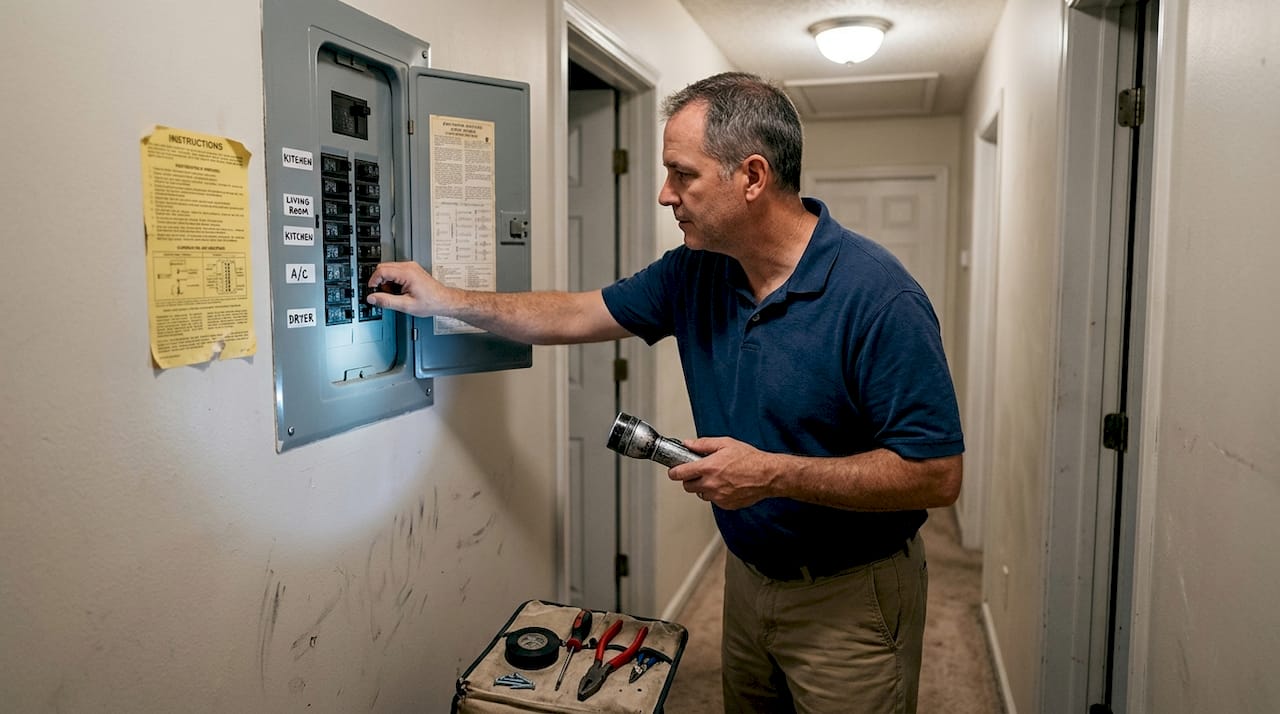
Pro Tip: Schedule a quarterly walk-through every three months. Check extinguisher pressure gauges, test smoke detectors, and review your appliance log. Small business owners in Monmouth County should also look at DIY maintenance tips and use a maintenance log to track service dates, which helps cut repair costs significantly over time.
After the emergency: Contacting professionals and preventing recurrence
Once the immediate danger is under control, your next priority is getting the right professional on the phone. This step matters more than most people realize, because who you call and how quickly you call them shapes both the repair outcome and your long-term appliance health.
Here is the process to follow after stabilizing an appliance emergency:
- Confirm the scene is safe. No active fire, no gas smell, no standing water near live circuits.
- Document the damage. Take photos or video before anything is moved or cleaned up. This helps with insurance claims and gives the technician useful diagnostic information.
- Check for product recalls. Visit the CPSC website or ask your repair technician. Recalled appliances sometimes cause the exact emergencies you just experienced.
- Call a licensed, insured local technician. Verify their NJ license and ask whether they carry liability insurance before they arrive.
- Describe the event clearly. Tell the technician exactly what you saw, heard, and smelled. This speeds up diagnosis.
- Ask about same-day availability. Many local Monmouth County services offer 24/7 emergency response.
DIY resolves about 60% of basic appliance issues like power checks and filter cleans, but sealed refrigeration systems, gas connections, and electronic control boards require a licensed professional every time. Do not guess on those.
Local same-day response typically runs 2 to 4 hours for Monmouth County calls, compared to 3 to 5 days for national chains. Local technicians also carry parts for the most common brands, resolving about 85% of repairs on the first visit.
For small business owners, the Monmouth County home repair program offers additional resources. You can also review our business repair guide for industry-specific advice on managing appliance downtime.
Pro Tip: Keep a maintenance log for every major appliance. Record service dates, parts replaced, and any unusual behavior you noticed. When an emergency happens, this log helps the technician diagnose the problem faster and gives you a paper trail for warranty or recall claims.
Perspective: Why appliance emergencies demand local expertise
Here is something most generic appliance guides will not tell you: where you live changes how your appliances fail and how fast you need help.
Monmouth County sits along the Jersey Shore, which means coastal humidity and hard water are constant stressors on appliances. Coastal humidity and hard water accelerate breakdowns, and quarterly coil cleaning alone can prevent compressor failure in refrigerators. That is not optional maintenance here. It is a necessity.
National repair chains look good on paper. But when your refrigerator fails on a Friday night in Marlboro, a 3 to 5 day response window is not a service. It is a loss. Local technicians who know Monmouth County’s infrastructure, its older housing stock, its hard water mineral buildup patterns, and its seasonal humidity spikes bring something no national call center can match.
There is also the matter of recall awareness. Appliance recalls happen regularly, and many homeowners never find out. A local repair relationship means someone is watching that database for you. For small businesses especially, business maintenance in Monmouth is not just about fixing what breaks. It is about building a relationship with a technician who knows your equipment and can spot warning signs before they become emergencies.
Prevention is not glamorous. But it is the most cost-effective appliance strategy available to any Monmouth County homeowner or business owner.
Get reliable help for your next appliance emergency
When an appliance emergency hits, you need a team that picks up the phone and shows up fast. Expert Appliance Repair has served Monmouth County since 1988, and we offer 24/7 emergency support with same-day availability across Marlboro and surrounding towns.
Routine maintenance is just as important as emergency response. Learning how to prevent costly repairs can dramatically reduce the chance of a breakdown in the first place. We work on all major brands, and you can check the full list of brands we repair on our website. Whether you need urgent help today or want to schedule a proactive checkup, our same day service is ready when you are.
Frequently asked questions
What appliance problems need 911 instead of a repair service?
Call 911 immediately if you see smoke, fire, a sparking appliance, smell a gas leak, or if someone has been shocked or injured. A repair technician handles what comes after the scene is safe.
How do I shut off power to a malfunctioning appliance?
If the area is dry, unplug the appliance or flip its circuit breaker off. Never touch an appliance or its cord if there is standing water nearby.
What fire extinguisher is safest for appliance-related fires?
Always use a Class ABC or C extinguisher for electrical or appliance fires. Water conducts electricity and can make the situation far worse.
How quickly can a local Monmouth County pro respond to emergencies?
Most local services offer 24/7 availability with 2 to 4 hour response times on emergency calls, compared to several days for national providers.
How can I prevent appliance emergencies in the future?
Perform quarterly coil and vent cleaning, check the CPSC recall database regularly, and schedule annual professional maintenance to catch problems before they escalate.
Recommended
- Expert Appliance Repair: When Disaster Strikes in 2025
- 7 Essential Emergency Appliance Checklist Tips for Homeowners – Expert Appliance
- 7 Essential Emergency Appliance Repair Tips for Homeowners – Expert Appliance
- Appliance Emergencies: Fast Action for New Jersey Homes – Expert Appliance
- Emergency heating repair: Thames Valley homeowner’s guide