
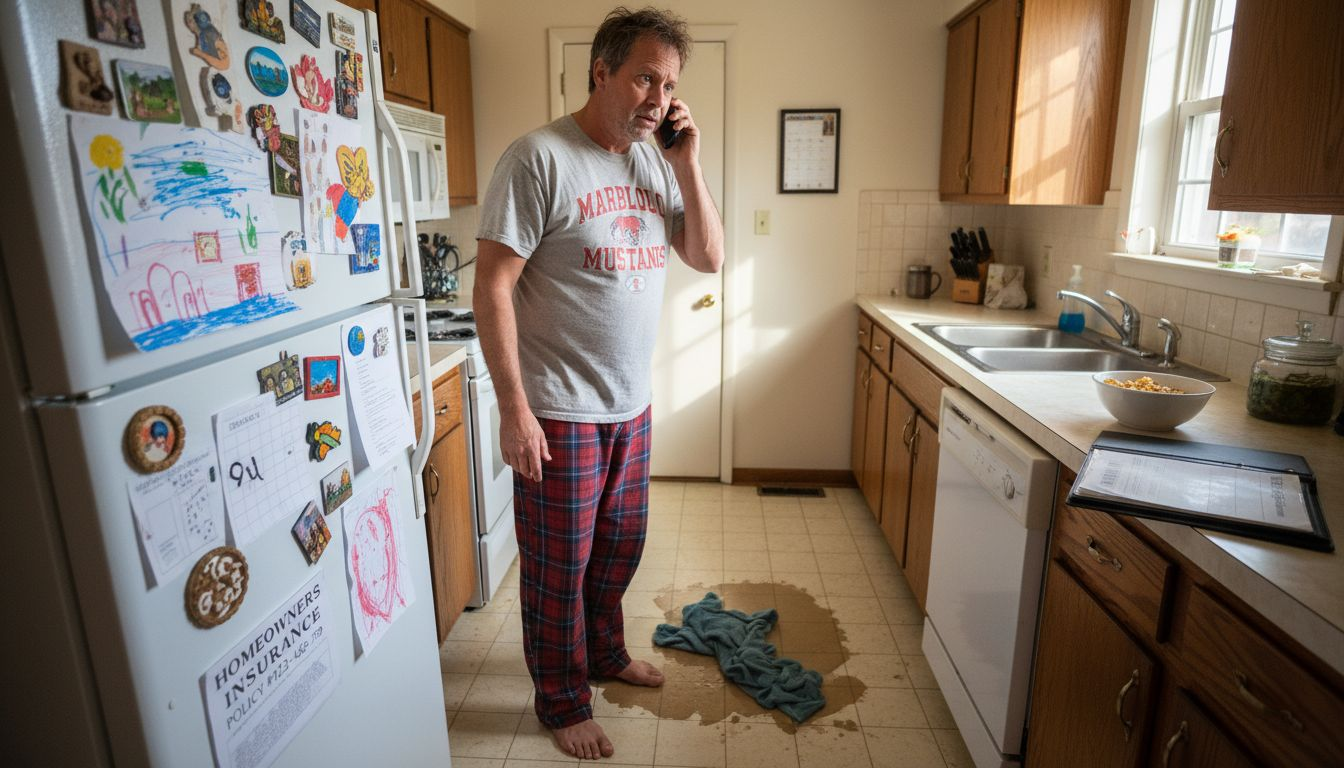
When your refrigerator stops cooling right before a big family gathering or your washing machine suddenly leaks all over the laundry room, the question of who pays for repairs hits fast. For Marlboro homeowners, understanding appliance liability is the difference between a covered claim and paying hundreds or thousands out of pocket. Knowing what protection your New Jersey insurance policy truly offers and when the manufacturer could be responsible helps you make informed decisions about repairs, replacements, and safety.
Table of Contents
- Defining Appliance Liability In Home Settings
- Types Of Appliance Liability And Common Issues
- Legal Standards For Appliance Responsibility In NJ
- Homeowner Rights And Manufacturer Obligations
- Handling Appliance Faults: Steps And Mistakes To Avoid
Key Takeaways
| Point | Details |
|---|---|
| Understand Appliance Liability | Homeowners in Marlboro, NJ are financially responsible for appliance failures and damage. Knowing what your homeowners insurance covers is crucial to avoid unexpected costs. |
| Distinguish Liability Types | Familiarize yourself with manufacturer liability and homeowner liability to determine who can be held accountable. This knowledge may influence your decisions on repairs and claims. |
| Know Your Rights | New Jersey law protects homeowners from defective appliance claims under the Product Liability Act, allowing you to seek compensation without proving negligence. |
| Document Everything | Keep thorough records of any appliance issues, including photographs and manuals, to bolster your case should a liability claim arise. |
Defining Appliance Liability in Home Settings
Appliance liability in your home refers to your financial and legal responsibility when an appliance breaks down, fails, or causes damage. As a homeowner in Marlboro, NJ, understanding this concept is critical because it determines whether you’ll pay out of pocket for repairs or replacements, or whether your homeowners insurance will step in to cover costs. Unlike rental properties where landlords often shoulder these burdens, homeowners own the responsibility and the risk that comes with major appliances like refrigerators, washing machines, dishwashers, dryers, and ovens.
The challenge lies in distinguishing between what your homeowners insurance actually covers and what falls squarely on your shoulders. Homeowners insurance typically covers appliances when they are damaged by sudden and accidental covered perils such as fire or lightning, but it does not cover mechanical failures or wear and tear. If your refrigerator stops cooling because the compressor fails after 12 years of use, that’s your problem. If your washing machine catches fire due to an electrical surge from a lightning strike during a Monmouth County storm, your policy may step in. This distinction matters enormously when budgeting for home repairs and deciding whether additional coverage options make sense for your household.
Appliance liability becomes even more complex when you consider liability coverage, which protects you if someone is injured by your appliance. For example, if a guest is burned by your oven or electrocuted by a faulty dishwasher, liability coverage may help cover their medical expenses and legal costs. However, most standard homeowners policies have limits on appliance-related liability claims, and some exclusions apply if negligence is involved. Understanding these nuances helps you know whether you need supplemental coverage through endorsements or home warranties, which can provide additional protection against unexpected breakdown costs.
Pro tip: Review your homeowners insurance policy document now and identify the specific section on appliance coverage, then contact your agent to clarify which of your major appliances are covered under sudden and accidental damage versus what would require a separate equipment breakdown endorsement or home warranty.
Types of Appliance Liability and Common Issues
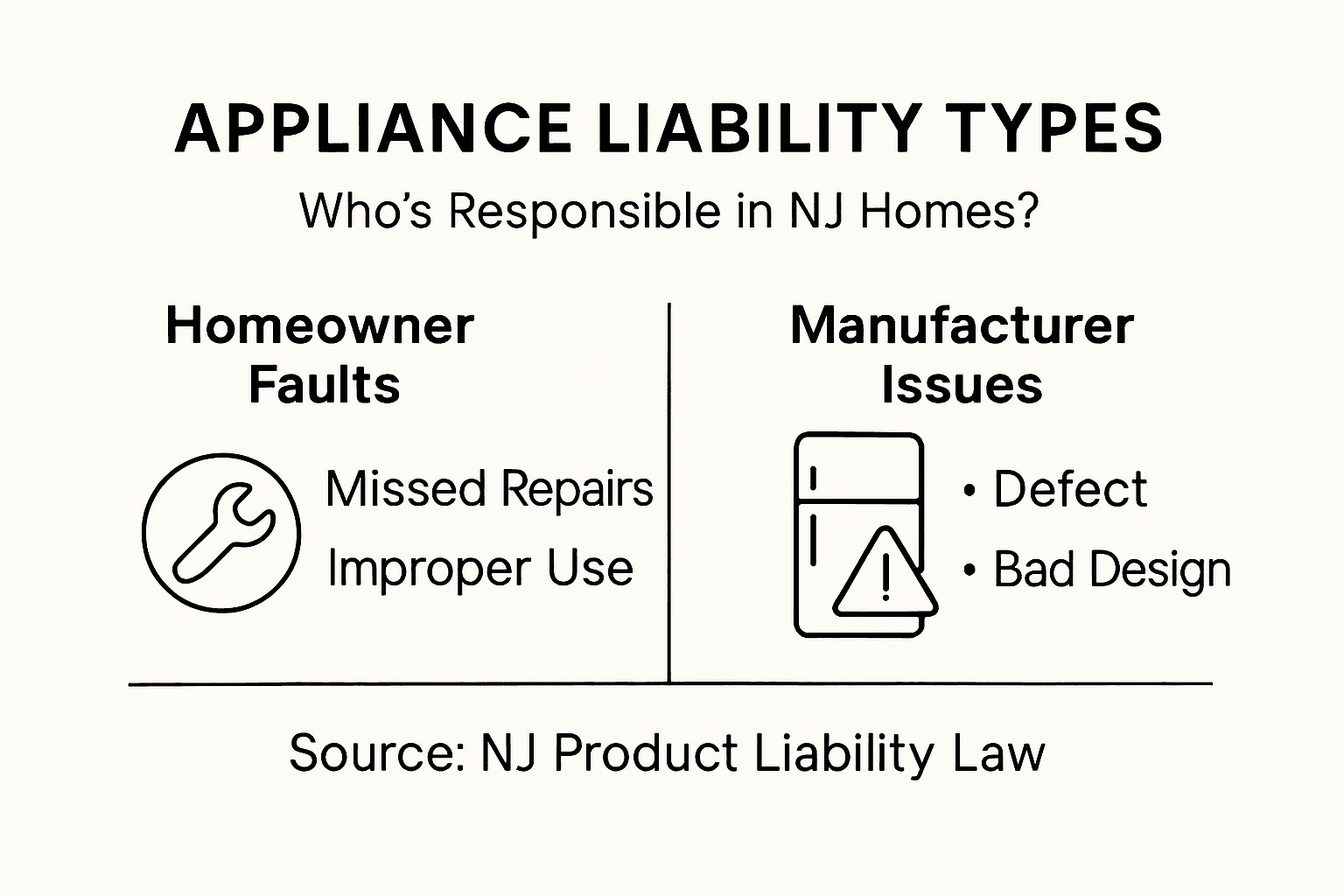
Appliance liability takes different forms depending on who is responsible and how the damage or injury occurs. For homeowners in Marlboro and across Monmouth County, recognizing these distinctions helps you understand whether you have legal recourse when something goes wrong. The main categories include manufacturer liability, which applies when the appliance itself is defective, and homeowner liability, which applies when you fail to maintain or properly use your appliances. Understanding which type applies to your situation determines whether you can pursue compensation or whether you must absorb the cost yourself.
Manufacturer liability covers situations where the appliance has a defect that causes injury or damage. Design defects make appliances inherently dangerous, while manufacturing defects occur when a specific unit deviates from the intended design. For example, a dishwasher with faulty electrical wiring could cause a fire, or a refrigerator with a weak door latch could tip over and injure a child. In these cases, strict liability, negligence, and warranty theories provide grounds for claiming compensation from the manufacturer, distributor, or retailer. Many Marlboro homeowners don’t realize they can hold these parties accountable rather than paying for repairs out of pocket.
Homeowner liability, by contrast, applies when you are negligent in maintaining or operating your appliances. If your oven explodes because you ignored a recall notice, or your washing machine floods your basement because you never cleaned the drain filter, liability falls on you. This is where regular appliance maintenance becomes critical to protecting yourself legally and financially. Additionally, you could face liability if someone is injured because you knew about a hazard and failed to fix it. For instance, if a guest is electrocuted by a faulty outlet connected to your dishwasher and you were aware of the problem, you could be held responsible for their injuries and medical costs.
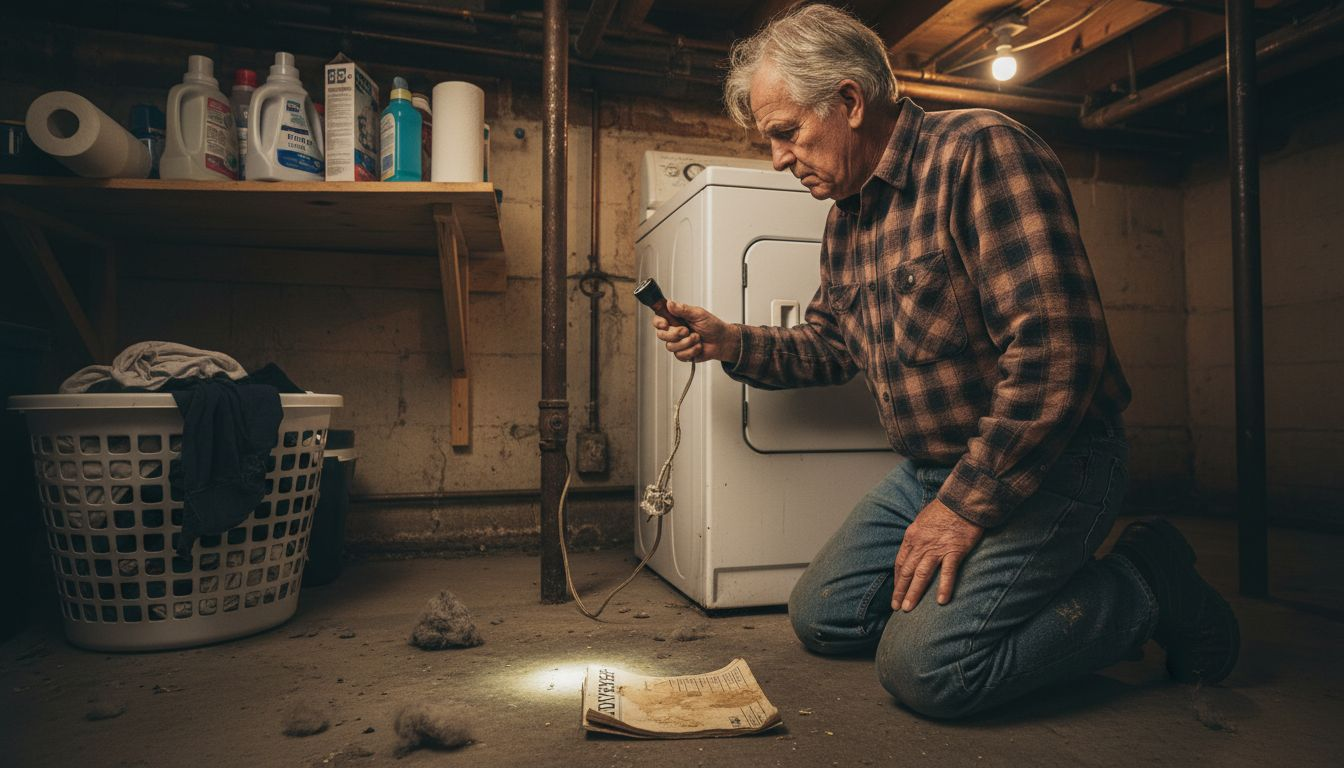
Pro tip: Document any unusual noises, leaks, or performance issues with your appliances in writing with dates, and address manufacturer recalls immediately, as this protects you from liability claims that could arise from ignoring known hazards.
Here is a comparison of the main types of appliance liability that homeowners might encounter:
| Liability Type | Who Is Responsible | Typical Causes | Potential Recourse |
|---|---|---|---|
| Manufacturer Liability | Appliance maker/seller | Defects, poor warnings | File product liability claim |
| Homeowner Liability | Homeowner | Poor maintenance, misuse | Personal responsibility, insurance |
| Third-Party Liability | Installer or technician | Faulty installation | Pursue service provider legally |
Legal Standards for Appliance Responsibility in NJ
New Jersey has specific legal standards that define who bears responsibility when appliances fail or cause harm. These standards protect homeowners in Marlboro and throughout Monmouth County by establishing clear rules about manufacturer accountability and consumer rights. The primary framework is the New Jersey Product Liability Act (NJPLA), which sets the stage for how courts evaluate appliance claims. Understanding these standards helps you know whether you have grounds to pursue compensation when something goes wrong with a major appliance.
The NJPLA imposes what’s called strict liability on manufacturers and sellers, meaning you don’t have to prove negligence to hold them accountable. A manufacturer or seller is liable if the product is not fit, safe, or suitable for its intended use due to design defects, manufacturing defects, or inadequate warnings. For example, if your oven has a design flaw that causes it to overheat uncontrollably, the manufacturer bears responsibility regardless of whether they were careless. The defect must have existed when the appliance left the manufacturer’s control, and you must have used the appliance in a reasonably foreseeable manner. This distinction matters because it shifts the burden from you proving the company was negligent to the company proving the product was safe.
New Jersey courts also recognize that claims can be based on design defects, manufacturing defects, or inadequate warnings. Design defects mean the appliance’s blueprint itself is dangerous. Manufacturing defects mean a specific unit was made incorrectly compared to the intended design. Inadequate warnings mean the manufacturer failed to communicate known risks or proper usage instructions. If your refrigerator causes a fire because the manufacturer didn’t warn about a specific electrical hazard, that’s a valid claim. When facing appliance failures that result in injury or property damage, homeowners should document everything carefully and consult with a product liability attorney. Many Marlboro residents don’t realize that New Jersey law gives them strong protections that may entitle them to recover damages from the responsible party.
Pro tip: Keep all receipts, warranty documents, and product manuals in one folder, and photograph any visible defects or damage before any repairs are attempted, as this documentation strengthens your case if you need to pursue a liability claim.
Homeowner Rights and Manufacturer Obligations
As a homeowner in Marlboro, NJ, you have significant legal rights when appliances fail or cause injury due to defects. These rights exist because manufacturers have clear obligations to produce safe products and warn consumers about potential hazards. New Jersey law strongly favors homeowners in these situations, placing the burden on manufacturers rather than on you to prove negligence. Knowing what you are entitled to empowers you to take action when something goes wrong and holds manufacturers accountable for substandard products.
Your primary right as a homeowner is to seek compensation without proving the manufacturer was careless. New Jersey consumers have legal rights to seek compensation when harmed by defective household appliances, and the Product Liability Act allows claims for design defects, manufacturing defects, and failure to warn. If a dishwasher explodes due to a manufacturing flaw, or a washing machine causes electrical shock because of inadequate warnings, you can hold the manufacturer liable directly. This is called strict liability, and it fundamentally shifts the advantage toward consumers. You are also entitled to compensation that covers medical bills, property damage, pain and suffering, and sometimes punitive damages if the manufacturer’s conduct was particularly reckless. For Monmouth County homeowners dealing with serious appliance injuries or extensive property damage, these rights can translate into substantial financial recovery.
Manufacturers, in turn, are legally obligated to meet specific standards. Manufacturers in New Jersey are legally obligated to ensure their products are safe for intended use and provide clear warnings. This means designing appliances that cannot reasonably cause harm during normal use, manufacturing each unit consistently according to that safe design, and providing clear instructions and warnings about any remaining risks. If a refrigerator’s compressor is prone to overheating, the manufacturer must fix the design or clearly warn consumers before selling it. These obligations extend to distributors and retailers as well, giving you multiple parties to potentially pursue if something goes wrong. The law balances protecting consumers while holding manufacturers accountable for the products they place into Marlboro homes.
Pro tip: If you suffer injury or property damage from a defective appliance, photograph everything, collect all product documentation and receipts, and consult with a product liability attorney within two years, as New Jersey has a statute of limitations that could affect your ability to recover damages.
Handling Appliance Faults: Steps and Mistakes to Avoid
When an appliance breaks down in your Marlboro home, your first instinct might be to call a technician immediately or attempt a quick fix yourself. Resist both urges until you understand what you are dealing with. Taking a methodical approach to diagnosing the problem protects you legally, prevents you from accidentally voiding warranties, and helps you determine whether the fault is manufacturer related or something you caused through improper use or maintenance. A few careful steps upfront can save you thousands of dollars and strengthen your position if you need to pursue a liability claim later.
Start by identifying the exact symptoms your appliance is exhibiting. Is your washing machine leaking from the bottom, or is water backing up? Is your oven heating unevenly, or not heating at all? Write down when the problem started, what you were doing when it happened, and any unusual sounds or smells. Next, check installation and external conditions, inspect for damage, and review control settings against the user manual. Many faults trace back to simple issues like a tripped breaker, a clogged filter, or a thermostat set incorrectly. Before doing anything else, unplug the appliance for safety and consult the manual for troubleshooting steps specific to your model. This documentation becomes invaluable later if you need to prove the fault was not caused by negligence on your part.
Common mistakes homeowners make include attempting repairs without unplugging the appliance, ignoring error codes displayed on the unit, disassembling components without understanding how to reassemble them, and continuing to use a visibly damaged appliance. Each of these mistakes can void your manufacturer warranty, expose you to injury, cause additional damage that becomes your financial responsibility, or create liability for you if someone else is harmed. If you discover obvious physical damage like a frayed cord, a cracked interior component, or rust accumulation, stop immediately and call a professional. For Monmouth County homeowners, contacting a certified technician early protects both your safety and your legal position if the fault traces back to a manufacturer defect rather than your actions.
The following table summarizes key steps to safely handle appliance faults while protecting your legal and financial interests:
| Step | Rationale | Mistake to Avoid |
|---|---|---|
| Document symptoms | Creates evidence for claims | Relying only on memory |
| Consult user manual | Helps with quick troubleshooting | Skipping manual and guessing |
| Unplug before inspection | Ensures personal safety | Attempting repairs energized |
| Photograph visible damage | Supports liability cases | Ignoring visible safety hazards |
Pro tip: Take clear photographs of any error codes, visible damage, leaks, or unusual conditions before touching anything, and email these photos to yourself with timestamps, creating a dated record that proves the condition existed at a specific moment and protecting you if liability questions arise later.
Protect Your Home with Expert Appliance Repairs You Can Trust
Navigating appliance liability can feel overwhelming when your major household appliances break down or cause damage. Whether dealing with manufacturer defects or homeowner maintenance issues, understanding your responsibility is crucial to avoid unexpected costs and liability. At Expert Appliance Repair, we specialize in fast, reliable service for refrigerators, washers, dryers, ovens, and more in Marlboro, NJ. Our family-owned team has provided professional appliance repairs since 1988, helping homeowners protect their investments and maintain safe, functional homes.
Don’t let appliance faults escalate into costly problems. Visit our Appliance Archives – Expert Appliance to learn more about common appliance issues, then contact us at Expert Appliance Repair for same-day scheduling and 24/7 emergency support. Act now to ensure your appliances are expertly maintained or repaired before minor issues lead to major legal and financial troubles.
Frequently Asked Questions
What is appliance liability for homeowners?
Appliance liability refers to the financial and legal responsibility homeowners have if an appliance breaks down, fails, or causes damage. This includes understanding whether repairs are covered by homeowners insurance or if the homeowner must pay out of pocket.
What does homeowners insurance cover regarding appliances?
Homeowners insurance typically covers appliances for damages caused by sudden and accidental perils, such as fire or lightning. It does not cover mechanical failures or normal wear and tear, so homeowners must understand the boundaries of their policy.
How can I determine if my appliance issue is covered by the manufacturer or my negligence?
If the appliance has a defect causing injury or damage, it falls under manufacturer liability. If the problem arises from poor maintenance or improper use, then homeowner liability applies. Documenting symptoms and inspecting for damage can help clarify responsibility.
What should I do if my appliance causes injury or property damage?
If an appliance causes harm, it’s crucial to document everything, including taking photographs of the damage and keeping all receipts and warranty documents. Consult a product liability attorney to explore your rights under New Jersey’s product liability laws.
Recommended
- Appliance Emergencies: Fast Action for New Jersey Homes – Expert Appliance
- What Is Appliance Maintenance? Complete Guide for NJ Homes – Expert Appliance
- Appliance Service Contracts: What Monmouth County Needs – Expert Appliance
- Certified Appliance Repair: Why Credentials Matter in NJ – Expert Appliance