
Most homeowners believe their appliances will last 15 years or more, but reality tells a different story. Appliance lifespan varies by type, with typical ranges from 9 to 15 years depending on usage and model. Understanding these timelines helps Monmouth County residents budget smarter and avoid costly surprises. This guide breaks down real lifespan data, local environmental factors, and practical advice for repair versus replacement decisions.
Table of Contents
- Introduction To Appliance Lifespan
- Appliance Type-Specific Lifespan Ranges
- Factors Influencing Appliance Wear And Longevity
- Common Misconceptions About Appliance Lifespan
- Repair Or Replace? A Data-Driven Decision Framework
- Maintenance Practices That Extend Appliance Life
- Local Environment Influence On Appliance Durability
- Conclusion And Practical Takeaways For Monmouth County Owners
- Need Professional Appliance Repair In Monmouth County?
Key Takeaways
| Point | Details |
|---|---|
| Average lifespans are shorter than expected | Most appliances fail between 9 and 15 years, not the commonly assumed 15+ years. |
| Maintenance extends durability significantly | Regular cleaning, inspections, and part replacement add years to appliance life. |
| Coastal climate accelerates wear | Monmouth County’s salt air and humidity increase corrosion and electrical damage risks. |
| Use the 50% repair cost rule | Replace rather than repair when costs exceed half the replacement price near lifespan end. |
| Track repair history for smart decisions | Annual cost logs reveal when replacement becomes more economical than continued repairs. |
Introduction to Appliance Lifespan
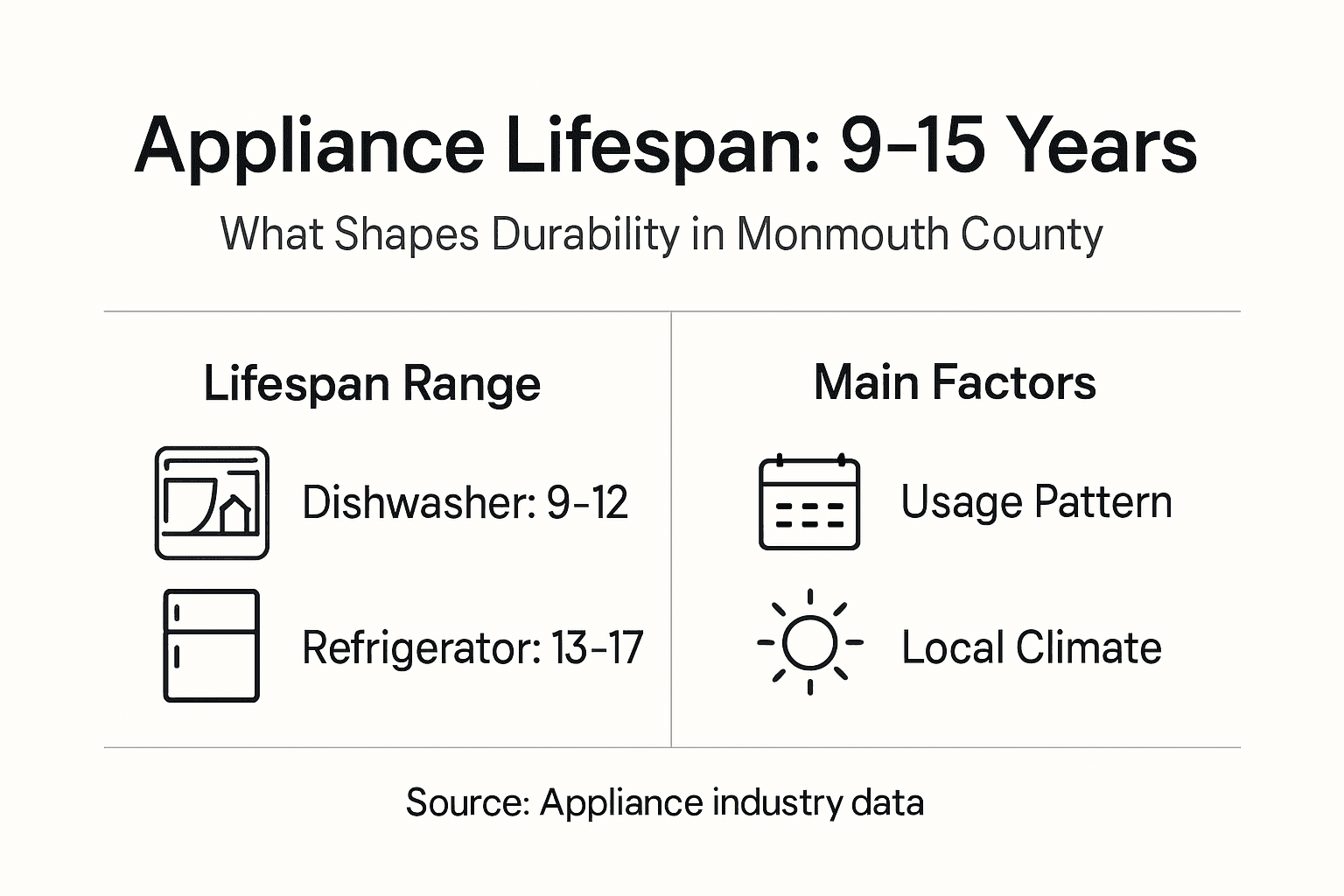
Life expectancy refers to the estimated functional period before an appliance fails or requires replacement. This timeline varies dramatically across appliance categories. Refrigerators might serve you for 13 to 17 years, while dishwashers typically last 9-10 years, less than the commonly believed 15 years. Understanding these differences helps you plan budgets and schedule repairs proactively.
Usage intensity plays a massive role in actual lifespan. A washer running daily in a busy household wears faster than one used weekly. Maintenance practices matter just as much. Clean filters, replaced belts, and regular inspections prevent premature failures. Local conditions in Monmouth County add another layer. Coastal salt air and humidity affect metal components and electrical systems differently than inland environments.
Knowing your appliances’ expected lifespans lets you set aside replacement funds gradually instead of scrambling when something breaks. Small business owners benefit even more. Heavy usage in commercial settings shortens lifespans, making accurate predictions essential for operational planning. Learn more about DIY maintenance tips to maximize your investment.
Key factors influencing lifespan include:
- Brand quality and manufacturing standards
- Daily usage frequency and load intensity
- Maintenance consistency and thoroughness
- Environmental conditions like humidity and salt exposure
- Installation quality and proper ventilation
Appliance Type-Specific Lifespan Ranges
Each appliance category comes with distinct durability expectations. Refrigerators generally last 13 to 17 years with proper care. Washers and dryers fall into the 10 to 13 year range. Dishwashers typically last 9-10 years, making them among the shortest-lived major appliances. Ovens and ranges can reach 15 years, while microwaves often need replacement after 9 years.
Commercial-grade appliances present an interesting paradox. They feature more robust construction but face heavier usage. A commercial washer might handle more cycles per usage hour than residential models, yet the intense daily workload shortens overall lifespan. Business owners should expect replacement sooner but gain better performance during the appliance’s service life.
Brand and model variations significantly impact these estimates. Premium manufacturers often deliver longer service through better materials and engineering. Budget models may fail earlier despite similar initial performance. Check appliance replacement signs to catch problems before complete failure.

| Appliance Type | Average Lifespan | Usage Notes |
|---|---|---|
| Refrigerator | 13-17 years | Longer with coil cleaning and seal maintenance |
| Washer | 10-13 years | Front-loaders average slightly longer than top-loaders |
| Dryer | 10-13 years | Gas models often outlast electric versions |
| Dishwasher | 9-10 years | Shorter lifespan due to water and heat exposure |
| Oven/Range | 13-15 years | Gas ranges typically last longer than electric |
| Microwave | 9-10 years | Heavy use reduces lifespan significantly |
Factors affecting these ranges include:
- Manufacturing quality and materials used
- Installation correctness and environment
- Frequency of use and load sizes
- Maintenance schedule adherence
- Repair history and component replacements
Factors Influencing Appliance Wear and Longevity
Usage intensity determines how quickly appliances approach their lifespan limits. Families running multiple wash loads daily stress components more than occasional users. Small businesses face even greater demands. A cafe dishwasher cycling continuously throughout service hours accumulates wear exponentially faster than home models. Heavy usage and poor maintenance accelerate appliance wear, significantly shortening lifespan below manufacturer estimates.
Maintenance practices directly impact durability. Regular filter cleaning prevents motor strain. Replacing worn belts and hoses before failure avoids cascading damage to other components. Scheduled inspections catch minor issues before they become major breakdowns. Neglected appliances fail years earlier than well-maintained units, regardless of brand quality.
Monmouth County’s coastal location creates unique challenges. Salt-laden air corrodes metal parts faster than inland conditions. High humidity damages electrical components and circuit boards. Moisture infiltration causes rust and premature failure in areas typically protected. These environmental factors require extra vigilance from local homeowners and businesses. Discover appliance care best practices tailored for coastal conditions.
Protective measures mitigate environmental damage effectively:
- Use dehumidifiers in laundry rooms and kitchens
- Apply protective coatings to exposed metal surfaces
- Schedule more frequent inspections in coastal areas
- Replace gaskets and seals proactively
- Ensure proper ventilation to reduce moisture buildup
Pro Tip: Schedule seasonal inspections before summer humidity peaks and after winter to catch salt damage early. Catching wear before complete failure saves hundreds in emergency repairs and prevents inconvenient breakdowns.
Common Misconceptions About Appliance Lifespan
Many homeowners believe all appliances last 15 years or longer. This assumption causes budget surprises when dishwashers fail at 9 years or washers break down at 11. Reality shows significant variation across appliance types. Some categories consistently underperform these expectations, leaving owners unprepared for replacement costs.
Another widespread belief suggests repairs always extend appliance life considerably. While early repairs on young appliances make sense, fixes near lifespan end often provide minimal benefit. Repairing appliances near or past typical lifespan often leads to frequent breakdowns, making replacement more cost-efficient. One repair might buy six months, but recurring failures drain budgets faster than planned replacement.
Some owners assume lifespan remains fixed regardless of environment or usage patterns. This ignores how local conditions and daily demands dramatically affect durability. A dishwasher in a coastal home faces different stresses than one inland. Commercial usage shortens timelines compared to residential patterns. Understanding these variables helps set realistic expectations.
When repair costs approach 50% of replacement value and the appliance nears its expected lifespan, replacement typically offers better long-term value than continued repairs.
Key myths corrected:
- Myth: All major appliances last 15+ years. Reality: Many fail at 9 to 13 years depending on type.
- Myth: Repairs always significantly extend useful life. Reality: Gains diminish sharply near lifespan end.
- Myth: Environment and usage don’t affect durability much. Reality: Coastal conditions and heavy use dramatically shorten lifespans.
- Myth: Expensive repairs guarantee years of additional service. Reality: Old appliances often develop multiple issues simultaneously.
Get expert repair vs replacement advice to make financially sound decisions.
Repair or Replace? A Data-Driven Decision Framework
The 50% rule provides clear guidance for repair decisions. When repair costs exceed 50% of replacement cost near the appliance’s expected lifespan, replacement becomes the smarter financial choice. This threshold accounts for the likelihood of additional failures in aging appliances. Spending $400 to repair a 12-year-old dishwasher worth $800 new makes little sense when another component will likely fail soon.
Homeowners and small businesses need different approaches. Residential users can sometimes stretch repair decisions when convenient. Business owners cannot afford prolonged downtime. A broken commercial refrigerator costs money every hour through spoiled inventory and lost sales. Quick replacement often beats cheaper repairs when operational continuity matters.
Follow this decision sequence:
- Determine the appliance’s current age and compare to expected lifespan for its category.
- Get repair estimates from qualified technicians for the current issue.
- Research replacement costs for comparable new models with similar features.
- Calculate if repair cost exceeds 50% of replacement price.
- Review repair history for recurring issues indicating systemic problems.
- Consider remaining expected service life after repair completion.
- Factor in energy efficiency gains from newer models.
Pro Tip: Maintain an annual repair log for each appliance. Track dates, issues, and costs. When annual repair expenses approach 25% of replacement cost, start planning for replacement regardless of individual repair percentages.
| Scenario | Repair Recommended | Replace Recommended |
|---|---|---|
| Young appliance, minor issue | Cost under 25% replacement, years of life remaining | N/A |
| Mid-life appliance, moderate issue | Cost under 40% replacement, good maintenance history | Recurring failures, poor reliability record |
| Near lifespan end, major failure | Only if cost under 20% and temporary fix acceptable | Cost exceeds 50% replacement or multiple issues present |
| Past expected lifespan | Rarely economical except very minor fixes | Almost always better long-term value |
Learn when to replace appliances based on age, efficiency, and reliability factors.
Maintenance Practices That Extend Appliance Life
Routine cleaning prevents most premature appliance failures. Refrigerator coils clogged with dust force compressors to work harder, shortening lifespan by years. Dryer lint buildup creates fire hazards and reduces efficiency. Dishwasher filters filled with food particles strain pumps and spray arms. Regular cleaning, part replacement, and inspections can extend appliance life by years and reduce breakdown frequency significantly.
Scheduled part replacement prevents cascade failures. Water filters protect appliances from sediment damage. Worn washer hoses leak and cause water damage. Frayed dryer belts snap unexpectedly. Replacing these components on schedule costs far less than emergency repairs after failure damages other systems.
Seasonal inspections catch problems early. Spring checks prepare appliances for summer humidity stress. Fall inspections identify salt corrosion before winter use intensifies. Professional technicians spot warning signs homeowners miss. Early detection transforms major repairs into minor adjustments.
Watch for these maintenance triggers:
- Unusual noises indicating worn bearings or loose components
- Performance changes like longer cycle times or inadequate cooling
- Visible wear on seals, gaskets, or hoses
- Increased energy consumption compared to normal baselines
- Error codes or warning lights appearing intermittently
Pro Tip: Keep a maintenance log noting cleaning dates, part replacements, and inspection findings. This record helps identify patterns and proves valuable when deciding between repair and replacement. Digital photos of component conditions track deterioration over time.
Explore appliance maintenance schedule tips to build an effective routine.
Local Environment Influence on Appliance Durability
Monmouth County’s coastal climate accelerates appliance aging through multiple pathways. Salt particles in ocean breezes settle on exposed metal surfaces. This salt attracts moisture and creates corrosive conditions even when appliances seem dry. Exterior vent screens, metal frames, and exposed screws deteriorate faster than inland equivalents. Coastal salt air accelerates corrosion; high humidity can damage electrical systems, necessitating tailored maintenance approaches.
Humidity affects electrical components and control boards. Moisture infiltrates sealed compartments through temperature cycling. Condensation forms on circuit boards, causing shorts and corrosion. Wiring insulation degrades faster in consistently humid environments. These issues appear less frequently inland where air stays drier year-round.
Protective measures reduce environmental damage effectively. Dehumidifiers in laundry rooms and kitchens lower ambient moisture. Protective sprays on metal components create barriers against salt. Frequent inspections catch corrosion before structural damage occurs. Sealing gaps around appliance exteriors prevents salt-laden air infiltration.
Coastal homeowners should implement these protections:
- Install whole-house or room dehumidifiers maintaining 30-50% relative humidity
- Apply marine-grade protective coatings to exposed metal annually
- Increase inspection frequency to quarterly rather than annually
- Replace rubber gaskets and seals more frequently due to humidity degradation
- Ensure proper ventilation preventing moisture accumulation
- Clean exterior vents monthly to remove salt buildup
Find local appliance care best practices specific to Monmouth County conditions.
Conclusion and Practical Takeaways for Monmouth County Owners
Appliance lifespans range from 9 to 15 years depending on type, usage, and environment. Dishwashers and microwaves typically fail earliest, while refrigerators and ranges last longer with proper care. These timelines fall shorter than many homeowners expect, making accurate knowledge essential for budget planning.
Monmouth County’s coastal environment demands extra attention. Salt air and humidity accelerate wear beyond typical patterns. Regular maintenance, protective coatings, and frequent inspections mitigate these factors effectively. Applying the 50% repair cost rule near lifespan end prevents wasting money on appliances approaching inevitable failure.
Track repair costs annually and maintain detailed logs. When expenses approach replacement percentages or failures recur frequently, plan for replacement rather than continuous repairs. Small business owners should prioritize operational continuity over repair savings given downtime costs.
Consult expert appliance repair services for professional assessment when deciding between repair and replacement. Experienced technicians identify issues homeowners miss and provide realistic lifespan estimates.
Need Professional Appliance Repair in Monmouth County?
When appliances fail or show concerning symptoms, Expert Appliance delivers fast, reliable repair services throughout Monmouth County. Our technicians handle all major brands with same-day service availability.
We repair appliances from top brands including refrigerators, washers, dryers, dishwashers, and ovens. Emergency repairs minimize disruption to your home or business operations. Our family-owned company brings nearly 40 years of experience serving Marlboro and surrounding communities. We understand how coastal conditions affect appliance performance and tailor repairs accordingly. Get upfront pricing and guaranteed satisfaction. Contact us for estimates or schedule appliance and vacuum repair service today. Explore our complete appliance repair services to keep your home running smoothly.
Frequently Asked Questions
How long do refrigerators typically last in Monmouth County?
Refrigerators generally last 13 to 17 years in Monmouth County with proper maintenance. Coastal humidity and salt air can reduce this timeline if coils and seals aren’t cleaned regularly. Schedule coil cleaning every six months and replace worn door gaskets promptly to maximize lifespan.
What maintenance can extend my dishwasher’s life?
Clean the filter monthly, inspect spray arms for clogs, and run vinegar cycles quarterly to remove mineral buildup. Replace worn door seals when you notice leaks. These simple steps can add 2 to 3 years beyond the typical 9 to 10 year lifespan.
When is it more cost-effective to replace rather than repair an appliance?
Replace when repair costs exceed 50% of replacement price and the appliance nears its expected lifespan. Also replace if you’ve made multiple repairs within the past year, indicating systemic problems. Older appliances use more energy, so replacement often saves on utility bills too.
Does coastal humidity really affect all appliances?
Yes, coastal humidity accelerates corrosion on metal components and damages electrical systems across all appliance types. Salt particles in ocean air increase corrosion rates even on stainless steel. Use dehumidifiers, increase inspection frequency, and apply protective coatings to mitigate these effects.
Can commercial appliances last longer than residential ones under heavy use?
Commercial appliances feature more durable construction but face much heavier usage that typically shortens overall lifespan. They deliver better performance per usage hour but need replacement sooner due to constant operation. Expect commercial units to last 60 to 70% as long as residential models would under light use.