
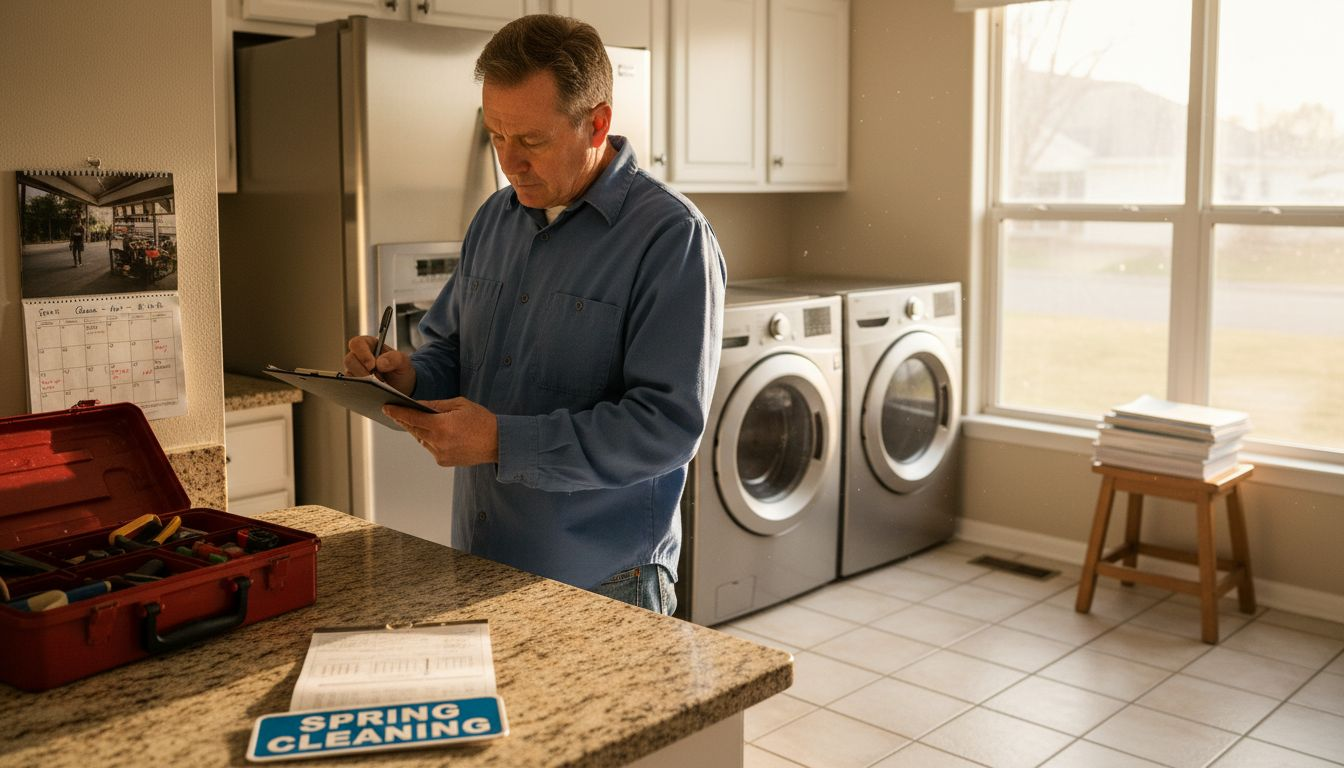
Most American households lose more than $500 each year to avoidable appliance repairs. If you own a home in Marlboro, NJ, waiting for a major breakdown means risking unexpected expenses and inconvenient disruptions. Following a clear appliance maintenance schedule can help you catch small problems before they become expensive emergencies, maximize your appliances efficiency, and keep daily life running smoothly.
Table of Contents
- Create a Monthly Appliance Checkup Routine
- Schedule Seasonal Refrigerator Coil Cleaning
- Inspect and Clean Washer Hoses Regularly
- Maintain Dryer Vents to Prevent Clogs
- Test Oven and Stove Safety Features Annually
- Dishwashers: Descale and Clear Filters Quarterly
- Mark Annual Vacuum Maintenance on Your Calendar
Quick Summary
| Takeaway | Explanation |
|---|---|
| 1. Implement Monthly Appliance Checkups | Conduct monthly checkups on major appliances to catch issues early, saving on costly repairs. |
| 2. Clean Refrigerator Coils Biannually | Clean refrigerator coils at least twice a year to maintain efficiency and extend appliance life. |
| 3. Inspect Washer Hoses Regularly | Check washer hoses every few months to prevent leaks and potential water damage in your home. |
| 4. Maintain Dryer Vents to Reduce Fire Risk | Clean dryer vents frequently to improve efficiency and significantly reduce fire hazards. |
| 5. Schedule Annual Vacuum Maintenance | Perform yearly vacuum maintenance to enhance performance and improve your home’s air quality. |
1. Create a Monthly Appliance Checkup Routine
Maintaining your household appliances requires a proactive approach that goes beyond waiting for something to break. Regular monthly checkups can help you catch potential issues before they become expensive repairs. Routine screenings are a foundational part of preventive care, allowing homeowners to identify and address minor problems early.
A comprehensive monthly appliance checkup involves systematically examining each major household device for signs of wear, performance degradation, or potential malfunction. This process helps extend the lifespan of your appliances, prevent unexpected breakdowns, and maintain their efficiency. During these monthly reviews, you should inspect refrigerators, dishwashers, washing machines, dryers, ovens, and other critical household equipment.
Start by creating a simple checklist that covers key inspection points for each appliance. Typical monthly checklist items should include:
- Checking electrical cords for fraying or damage
- Examining seals and gaskets for wear
- Cleaning lint filters and ventilation areas
- Testing temperature settings and calibration
- Listening for unusual sounds during operation
- Verifying smooth motor and mechanical movements
Consistent monthly reviews help you track your appliances performance over time, making it easier to spot gradual changes that might indicate emerging problems. By dedicating just 30 minutes each month to these systematic checks, you can potentially save hundreds of dollars in future repair costs.
Pro tip: Create a digital or physical maintenance log to track your monthly inspections, recording the date, condition, and any observations for each appliance to help you detect patterns and potential issues more effectively.
2. Schedule Seasonal Refrigerator Coil Cleaning
Keeping your refrigerator running efficiently requires more than just internal cleaning. Seasonal refrigerator coil maintenance is a critical yet often overlooked aspect of appliance care that directly impacts energy consumption and performance. Consumer Reports highlights the importance of periodic cleaning to prevent dust and debris buildup that can significantly reduce your appliances cooling efficiency.
Why Refrigerator Coil Cleaning Matters
Refrigerator coils play a crucial role in heat transfer and cooling. Located either behind or underneath your appliance, these coils can accumulate dust, pet hair, and debris over time, forcing your refrigerator to work harder and consume more energy. Regular cleaning helps maintain optimal performance, reduces electricity costs, and extends the appliance’s lifespan.
Recommended Seasonal Cleaning Process
- Unplug the refrigerator before beginning cleaning
- Locate the coils (typically at the back or bottom of the unit)
- Use a specialized coil cleaning brush or vacuum attachment
- Gently remove dust and debris without bending or damaging the coils
- Clean the surrounding area to prevent immediate reaccumulation
- Plug the refrigerator back in and restore power
Most manufacturers recommend cleaning refrigerator coils at least twice a year spring and fall are ideal times to perform this maintenance task. By incorporating this simple routine, you can improve your refrigerators energy efficiency by up to 30 percent and potentially prevent costly repairs.
Pro tip: Set a digital calendar reminder for coil cleaning to ensure you dont forget this important seasonal maintenance task.
3. Inspect and Clean Washer Hoses Regularly
Washer hoses are the unsung heroes of your laundry room, quietly managing water flow while being vulnerable to wear and potential failure. Routine inspection and maintenance of hoses is crucial to avoid unexpected leaks and water damage, making regular hose checks an essential part of home appliance care.
Why Washer Hose Maintenance Matters
Over time, washing machine hoses can develop cracks, bulges, or signs of deterioration that might lead to catastrophic water damage. Most homeowners do not realize that a small hose leak can release hundreds of gallons of water in just an hour, potentially causing significant and expensive property damage.
Key Inspection and Maintenance Steps
- Check hoses visually every three to six months
- Look for signs of fraying, cracking, or bulging
- Ensure connections are tight and secure
- Check for any water residue or moisture around connections
- Inspect both hot and cold water hoses thoroughly
- Consider replacing rubber hoses with braided stainless steel versions
Professional maintenance experts recommend replacing standard rubber hoses every three to five years, even if they appear intact. Braided stainless steel hoses offer superior durability and can significantly reduce the risk of unexpected water damage.
Pro tip: Mark your calendar with a recurring reminder to inspect washer hoses and keep a log of each inspection to track their condition over time.
4. Maintain Dryer Vents to Prevent Clogs
Dryer vent maintenance is more than a simple cleaning task it is a critical home safety practice that protects your family and property. The National Fire Protection Association warns that lint buildup is a leading cause of dryer related fires, making regular vent maintenance an essential home care routine.
Understanding Dryer Vent Risks
Lint accumulation occurs gradually with every load of laundry. As lint builds up in your dryer vent, it restricts airflow, reduces appliance efficiency, and increases the potential for dangerous heat buildup. A clogged dryer vent can significantly raise fire risk, decrease drying performance, and lead to costly appliance repairs.
Comprehensive Dryer Vent Maintenance Checklist
- Clean the lint trap after every single load
- Inspect the vent hose for visible lint accumulation
- Disconnect and thoroughly clean the entire vent pathway
- Check exterior vent opening for obstructions
- Verify that the vent cover opens and closes properly
- Look for signs of wear or damage in the vent system
- Consider professional cleaning annually
Effective vent maintenance can improve your dryers energy efficiency by up to 30 percent and substantially reduce the risk of unexpected appliance failures. Homeowners should treat dryer vent cleaning as a critical part of their regular home maintenance schedule.
Pro tip: Invest in a long handled lint brush and vacuum attachment specifically designed for dryer vent cleaning to make the maintenance process more thorough and efficient.
5. Test Oven and Stove Safety Features Annually
Your kitchen appliances are more than cooking tools they are complex machines with critical safety mechanisms designed to protect your home. The National Fire Protection Association emphasizes the vital importance of testing stove and oven safety features annually to prevent cooking related fires.
Why Annual Safety Testing Matters
Modern ovens and stoves come equipped with sophisticated safety features like automatic shutoff mechanisms, temperature limiters, and control interlocks. These systems are engineered to prevent overheating, gas leaks, and potential fire hazards. However, like any mechanical system, they can degrade or malfunction over time without regular testing.
Comprehensive Safety Feature Inspection Checklist
- Test automatic shutoff mechanisms
- Check temperature control accuracy
- Verify gas valve and ignition safety systems
- Inspect electrical connections for wear
- Examine control panel responsiveness
- Test heating element safety cutoff functions
- Ensure all digital safety displays work correctly
Homeowners should consider a professional inspection every 12 months to thoroughly evaluate all safety systems. While some tests can be performed independently, complex electronic and gas safety mechanisms often require expert assessment.
Pro tip: Create a dedicated annual maintenance calendar entry for your oven and stove safety inspection to ensure you never miss this critical home safety check.
6. Dishwashers: Descale and Clear Filters Quarterly
Your dishwasher works hard cleaning dishes daily, but without proper maintenance, its performance can quickly deteriorate. Consumer Reports recommends quarterly deep cleaning to prevent blockages and maintain optimal appliance function.
Why Quarterly Maintenance Matters
Dishwasher filters trap food particles and mineral deposits that can accumulate over time. These buildups not only reduce cleaning efficiency but can also create unpleasant odors and potentially damage internal components. Regular descaling prevents hard water mineral accumulation that can clog spray arms and reduce water flow.
Comprehensive Quarterly Maintenance Checklist
- Remove and thoroughly clean interior filter system
- Run an empty cycle with specialized dishwasher cleaner
- Check and clean spray arm holes for blockages
- Inspect door seals for debris and potential damage
- Wipe down interior walls and bottom compartment
- Verify drainage system is clear of obstructions
- Test water temperature and cycle performance
Professional maintenance experts suggest that quarterly cleaning can extend your dishwashers life by up to 50 percent and maintain its original cleaning performance. Homeowners who implement this routine can avoid costly repairs and enjoy consistently sparkling dishes.
Pro tip: Set a digital calendar reminder for your quarterly dishwasher maintenance and keep a small maintenance log to track your cleaning sessions and any observed changes in performance.
7. Mark Annual Vacuum Maintenance on Your Calendar
Your vacuum cleaner is a hardworking household appliance that requires consistent care to maintain peak performance. The National Center for Healthy Housing recommends incorporating vacuum maintenance into yearly household upkeep routines to ensure optimal function and indoor air quality.
Understanding Vacuum Maintenance Importance
Annual vacuum maintenance goes beyond simple cleaning. It involves a comprehensive review of critical components that directly impact the machines efficiency, longevity, and your homes overall cleanliness. Neglecting this annual checkup can lead to reduced suction power, decreased air quality, and potentially expensive repairs.
Comprehensive Annual Vacuum Maintenance Checklist
- Thoroughly inspect and clean or replace filters
- Check and clean brush roll mechanisms
- Examine and clear hose attachments
- Lubricate moving parts as recommended by manufacturer
- Test suction power and motor performance
- Inspect electrical cord for wear or damage
- Clean and sanitize exterior surfaces
- Review and tighten all mechanical connections
Professional maintenance can extend your vacuums life by up to 50 percent and maintain its original cleaning performance. Homeowners who implement this annual routine can save significant money on replacements and enjoy consistently effective cleaning results.
Pro tip: Create a dedicated digital or physical maintenance log to track your annual vacuum care sessions, recording dates, actions taken, and any observations about performance changes.
Below is a comprehensive table summarizing the tasks, processes, and maintenance tips for household appliances discussed in the article.
| Task | Steps | Benefits |
|---|---|---|
| Monthly Appliance Checkup | Examine cords for wear, clean filters, test operational components, maintain a log | Extend lifespan, enhance performance, prevent costly repairs |
| Refrigerator Coil Cleaning | Unplug, clean coils using a vacuum or brush, clean surrounding areas, perform seasonally | Increase energy efficiency, prolong appliance life |
| Washer Hose Inspection | Check for wear, secure fittings, replace with stainless steel hoses, schedule checks every 3-5 years | Prevent leaks, avoid water damage |
| Dryer Vent Maintenance | Clear lint after each load, inspect and clean vents annually | Reduce fire risk, enhance energy efficiency |
| Oven and Stove Feature Testing | Test safety systems like shutoff mechanisms yearly | Maintain functionality, prevent fire hazards |
| Dishwasher Quarterly Maintenance | Clean filters, descale, inspect seals and drainage systems | Ensure cleaning efficiency, prevent blockages |
| Annual Vacuum Maintenance | Check and clean components, replace filters, inspect hoses and cords | Maintain performance, improve air quality, extend lifecycle |
Protect Your Home with Expert Appliance Care and Fast Repairs
Maintaining your appliances with a clear schedule is essential yet challenging. From monitoring washer hoses to scheduling seasonal coil cleanings, experts agree on the value of proactive care to prevent costly damage and breakdowns. If you face unexpected appliance problems or want to stay ahead with routine maintenance, you need reliable, local support that understands your urgency and safety concerns.
Trust the family-owned team at Expert Appliance Inc serving Marlboro, NJ and Monmouth County. With same-day service and 24/7 emergency support, our professional technicians are ready to help keep your household machines running smoothly. Explore our Appliance Archives for helpful tips and connect directly to expert repair and maintenance services that deliver peace of mind.
Don’t wait until a minor issue escalates into an expensive repair or safety risk. Contact us now at Expert Appliance Inc to schedule your prompt appliance service. Protect your home and enjoy confidence in every appliance today.
Frequently Asked Questions
How can I create an effective monthly appliance maintenance checklist?
To create an effective monthly appliance maintenance checklist, list each major appliance and key inspection points, such as checking seals, cleaning filters, and testing performance. Dedicate 30 minutes each month to perform these checks, helping you catch issues early and avoid costly repairs.
How often should I clean my refrigerator coils for optimal performance?
You should clean your refrigerator coils at least twice a year, ideally in the spring and fall. Unplug the refrigerator, locate the coils, and use a specialized brush or vacuum attachment to remove dust and debris to improve energy efficiency by up to 30%.
What should I look for when inspecting washing machine hoses?
When inspecting washing machine hoses, visually check for signs of fraying, cracking, or bulging about every three to six months. Ensure all connections are tight and replace rubber hoses with braided stainless steel versions to reduce the risk of unexpected leaks.
How can I prevent dryer vent clogs and ensure safety?
To prevent dryer vent clogs, clean the lint trap after each load and thoroughly inspect the vent hose for lint buildup regularly. Consider making this maintenance a priority to reduce fire hazards and improve your dryer’s energy efficiency by up to 30%.
What annual safety tests should I conduct on my oven and stove?
Annually test safety features on your oven and stove, including automatic shutoff mechanisms and temperature control accuracy. Inspect all components and consider scheduling a professional check to ensure your appliances are safe and functioning properly.
How can I maintain my dishwasher for optimal cleaning performance?
To maintain your dishwasher, perform a deep cleaning quarterly by removing and cleaning the interior filter, checking spray arm holes for blockages, and running an empty cycle with a dishwasher cleaner. This routine helps prevent clogs and ensures your dishes are consistently clean.
Recommended
- What Is Appliance Maintenance? Complete Guide for NJ Homes – Expert Appliance
- 7 Essential Types of Home Appliances Every NJ Household Needs – Expert Appliance
- 7 Essential Types of Appliance Repairs for Every Homeowner – Expert Appliance
- 7 Essential Emergency Appliance Repair Tips for Homeowners – Expert Appliance
- Haushaltsbatterien wechseln: Schritt-für-Schritt Anleitung – accu.blog
- Security System Maintenance: Essential UK Guide – 247 CCTV Security Ltd
- 7 Essential Steps for Your Purifier Maintenance Checklist – Coway Water Purifier