
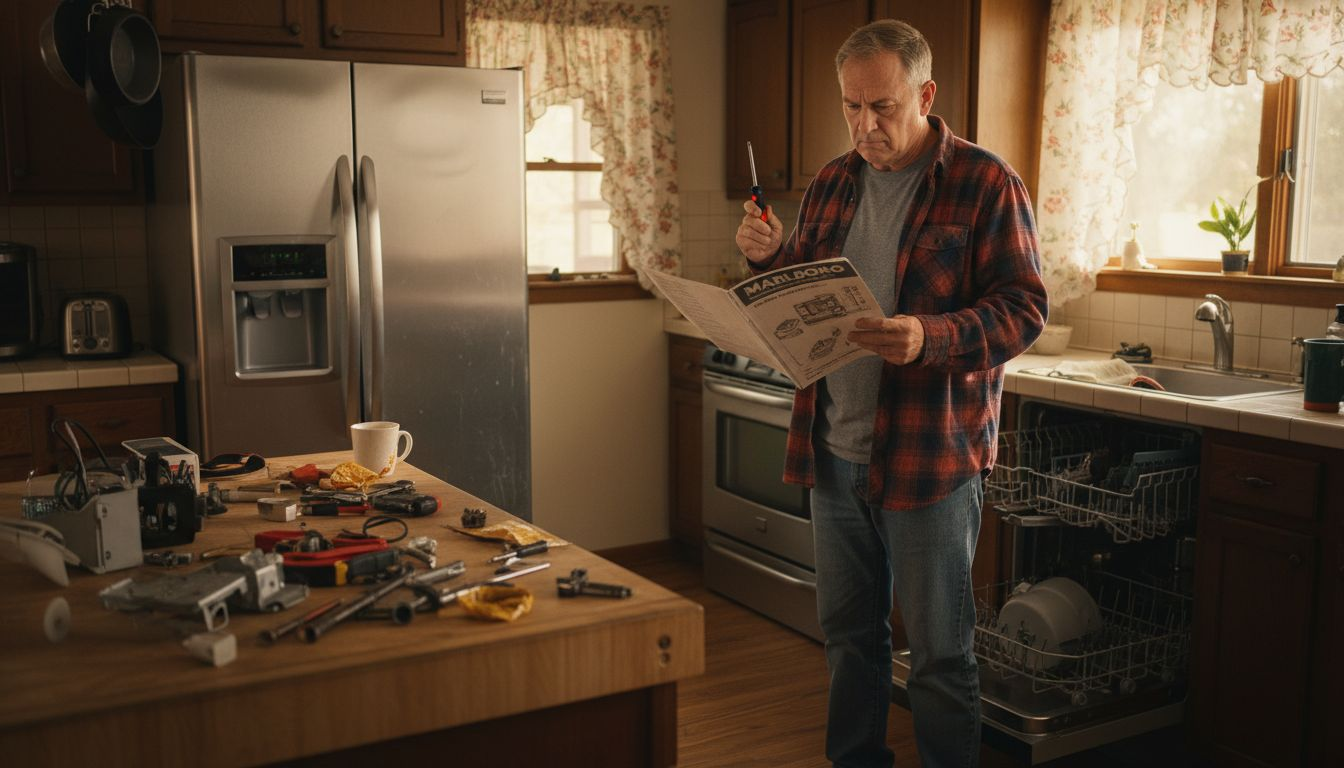
You rely on your appliances every day, but sorting fact from fiction about repairs can be tricky. Misconceptions about cost, maintenance, brand reliability, and repair strategies often lead to wasted money or frustration. The good news? You can avoid common pitfalls and make smarter decisions with the right information. This list breaks down the most persistent appliance repair myths and gives you actionable advice, backed by real data from Consumer Reports and other trusted sources. Get ready to discover clear solutions that help you protect your appliances, save money, and take control of your home maintenance strategy.
Table of Contents
- Myth 1: DIY Fixes Always Save Money
- Myth 2: New Appliances Never Need Repairs
- Myth 3: All Appliance Brands Are the Same
- Myth 4: Any Part Can Fit Any Appliance
- Myth 5: Regular Maintenance Isn’t Necessary
- Myth 6: Appliance Repair Is Always Expensive
Quick Summary
| Takeaway | Explanation |
|---|---|
| 1. DIY repairs can be costly. | Complex repairs might damage appliances, leading to higher costs than hiring a professional from the start. |
| 2. New appliances still need maintenance. | Major issues can arise early due to normal use, so don’t ignore warning signs after purchase. |
| 3. Appliance brands differ in reliability. | Choosing a dependable brand can save on repairs and parts availability in the long run. |
| 4. Always use compatible parts. | Incompatible parts can damage appliances and void warranties; ensure the exact match for replacements. |
| 5. Regular maintenance is crucial. | Routine upkeep prevents costly breakdowns and extends the lifespan of your appliances significantly. |
1. Myth 1: DIY Fixes Always Save Money
Many homeowners believe that tackling appliance repairs yourself automatically saves money. The reality is far more complicated, and this myth can actually end up costing you significantly more than professional service.
While simple replacements like refrigerator gaskets or dishwasher racks might be DIY-friendly, most modern appliances contain complex electronic components that require specialized knowledge. Attempting repairs beyond your skill level often leads to bigger problems down the line.
Why DIY Fixes Can Backfire
When something goes wrong during a DIY repair, you might inadvertently damage internal parts, void the warranty, or create safety hazards. Consumer Reports research on appliance repairs shows that unsuccessful DIY attempts frequently require professional intervention to fix both the original issue and the new damage you’ve created. This compounds your costs significantly.
Consider a simple example: you attempt to replace a refrigerator compressor yourself without proper tools or training. One mistake could damage the refrigerant lines, requiring a complete system replacement instead of a component swap. Your “savings” of $300 in labor just became a $1,200 problem.
The Hidden Costs of DIY
Beyond the repair itself, you need to factor in several expenses that quickly add up:
- Specialized tools you may need to purchase and never use again
- Diagnostic time spent figuring out what’s actually wrong
- Trial-and-error costs if your first attempt doesn’t work
- Potential safety risks that could affect your home or family
- Warranty voidance that eliminates manufacturer protection
When you hire a professional like Expert Appliance Inc., you get expertise, proper tools, and a warranty on the work performed. Professional repairs through regular appliance maintenance strategies often prevent cascading failures that would cost far more to fix later.
Unsuccessful DIY repairs frequently cost more to fix than professional service would have cost from the start.
When DIY Makes Sense
Not all appliance issues require professional help. These are generally safe for homeowners to handle:
- Cleaning refrigerator coils or dryer vents
- Replacing water filter cartridges
- Unclogging drain hoses
- Adjusting door hinges or seals
These tasks use standard tools you likely already own and carry minimal risk of causing additional damage.
Pro tip: Before attempting any DIY repair, call a professional for a diagnostic. Many Marlboro service providers offer free estimates, giving you clarity on whether the fix is truly DIY-appropriate or worth leaving to the experts.
2. Myth 2: New Appliances Never Need Repairs
Just because an appliance is brand new doesn’t mean it won’t break down. This myth leads many Marlboro homeowners to skip maintenance and ignore early warning signs, often resulting in costly repairs that could have been prevented.
Manufacturers design appliances with expected lifespans, and even cutting-edge models experience wear, defects, and failures. Modern appliances contain more electronic components than ever before, creating additional points of potential breakdown.
Why New Appliances Still Need Repairs
New appliances can fail for several reasons. Factory defects occasionally slip through quality control, electronics malfunction due to power surges, and normal usage creates wear on mechanical parts. Research on appliance durability trends reveals that while overall durability hasn’t declined significantly, certain categories like washing machines and ovens have shorter lifespans than previous generations.
Your new refrigerator might develop a compressor issue within the first year. Your new dishwasher could experience a pump failure after six months of regular use. These aren’t manufacturing failures or design flaws, just the reality of mechanical systems.
The European Right to Repair Perspective
The European Union’s Right to Repair Directive acknowledges that new appliances absolutely need repairs. The directive mandates that manufacturers provide spare parts throughout an appliance’s average lifespan, recognizing repair as a necessary reality rather than an exception.
This governmental acknowledgment reflects what repair professionals already know: new appliances break down regularly, and consumers need access to repairs to keep them functioning.
Common Repairs on New Appliances
Despite their newness, these issues frequently affect brand-new units:
- Refrigerator ice makers that malfunction
- Washing machine door seals that leak
- Dishwasher spray arms that clog or fail
- Electric oven heating elements that burn out
- Dryer thermal fuses that blow
Even with proper care and maintenance, new appliances can develop problems. Understanding when to seek professional guidance on appliance repairs versus replacements helps you make smart decisions about your investment.
New appliances break down just like older ones—manufacturer age is not a shield against repair needs.
Protect Your Investment
Don’t assume warranty coverage extends to all repairs or that your new appliance is immune to problems. Read your warranty carefully and document any issues immediately.
Pro tip: Register your new appliance with the manufacturer within the first week and keep all documentation organized, including receipts and warranty details, so you can quickly access repair coverage if issues arise.
3. Myth 3: All Appliance Brands Are the Same
If you think one refrigerator is as good as another, you’re setting yourself up for expensive repairs and frustration. Brand differences matter significantly when it comes to reliability, parts availability, and service quality.
Appliance manufacturers invest differently in design, components, and quality control. These choices directly impact how often your appliance breaks down and how much repairs cost over its lifetime.
What the Data Shows
Consumer Reports appliance reliability rankings reveal stark differences in performance across brands. Some manufacturers consistently produce dependable products while others struggle with repeated failures in the same appliance category.
The difference isn’t subtle. A top-tier brand might have a 5% failure rate while a budget alternative has 25% failures within the first five years. Over time, choosing the wrong brand means paying for repairs that a better brand wouldn’t need.
Brand Impact on Your Wallet
Brand choice affects your finances in multiple ways beyond the initial purchase price. Premium brands often use higher-quality components that last longer, reducing repair frequency. They also maintain better parts availability, keeping repair costs reasonable even years after purchase.
Budget brands might save you money upfront, but repair costs accumulate quickly. A washing machine that requires $400 in repairs within three years erases any initial savings you gained from buying the cheaper model.
Customer Satisfaction Varies Widely
The American Customer Satisfaction Index benchmarks appliance brands annually, revealing consistency in which companies deliver superior reliability and customer service. Top-scoring brands maintain strong track records year after year.
These aren’t minor differences. They reflect real gaps in product quality, warranty support, and manufacturer responsiveness when problems occur.
Why This Matters for Marlboro Homeowners
Your appliance choices impact repair frequency and costs for years to come. When selecting new appliances, consider:
- Historical reliability scores from consumer research organizations
- Parts availability in your area for long-term repairs
- Warranty coverage and manufacturer responsiveness
- Local repair technician familiarity with the brand
- Long-term cost of ownership, not just purchase price
When you eventually need repairs, working with a technician who services multiple appliance brands helps you navigate whatever equipment you own.
Your brand choice determines not if repairs happen, but how often and how much they cost.
Pro tip: Before buying any appliance, check current Consumer Reports ratings and ask potential repair companies which brands they service most frequently—brands with strong local repair support often have lower long-term costs.
4. Myth 4: Any Part Can Fit Any Appliance
Thinking you can swap parts between appliances or use generic replacements is a dangerous misconception. Using the wrong part doesn’t just fail to fix your appliance—it can cause serious damage and void your warranty.
Appliance manufacturers design specific components for specific models. A motor from one refrigerator won’t work in another, even if they look similar on the outside. Compatibility matters more than you might realize.
Why Part Compatibility is Critical
While some appliance components benefit from industry standardization, most parts are designed specifically for individual models. A dishwasher pump that fits model XYZ won’t fit model ABC, even from the same manufacturer.
Using an incompatible part creates multiple problems. The part may not align properly, causing mechanical damage. Electrical components might have different voltage requirements, creating safety hazards. You could damage surrounding components when forcing an incorrect part into place.
Safety and Warranty Concerns
Improper parts can create electrical or mechanical failures that damage your appliance beyond repair. The U.S. Department of Energy standards emphasize that manufacturers produce model-specific components, and using non-approved parts compromises safety and efficiency.
Your warranty typically requires using manufacturer-approved or exact-match replacement parts. Installing the wrong part voids coverage, leaving you responsible for all repair costs going forward.
Common Part Mix-Up Examples
People frequently assume these parts are interchangeable when they absolutely are not:
- Refrigerator compressors from different models
- Washing machine drum seals and gaskets
- Dishwasher spray arms and nozzles
- Oven heating elements with different voltage specifications
- Dryer venting components with incompatible fittings
Even parts that appear identical may have different electrical specifications, mounting brackets, or internal connections. Appearances deceive when it comes to appliance components.
How to Ensure You Have the Right Part
Always verify exact compatibility before purchasing any replacement part. Check your appliance’s model number and consult manufacturer documentation or your service manual.
When working with professionals who understand appliance brand-specific requirements, you avoid these compatibility disasters entirely. Professional technicians maintain databases of correct parts for thousands of appliance models.
Using the wrong part costs more than using the correct one because the damage multiplies quickly.
Pro tip: Write down your appliance’s complete model number (usually found on a sticker inside the unit) and keep it in a safe place—you’ll need it whenever ordering parts or scheduling repairs to ensure perfect compatibility.
5. Myth 5: Regular Maintenance Isn’t Necessary
Skipping maintenance on your appliances is like ignoring your car’s oil changes. Small problems snowball into major failures, and suddenly you’re facing expensive repairs or premature replacement instead of routine upkeep.
Regular maintenance extends appliance life, reduces repair costs, and prevents unexpected breakdowns that leave you without critical equipment. The investment in maintenance pays for itself many times over.
The Cost of Neglect
When you skip maintenance, minor issues accumulate into serious damage. A clogged refrigerator coil forces the compressor to work harder, wearing it out faster. A lint-filled dryer vent becomes a fire hazard and reduces efficiency dramatically. A neglected washing machine’s drain line becomes blocked, causing water damage inside your home.
Preventive maintenance fundamentally extends equipment life while reducing repair costs, according to the National Institute of Standards and Technology. Neglecting routine upkeep leads to unexpected failures and significantly higher total expenses over time.
What Maintenance Actually Means
Maintenance doesn’t require hiring professionals for everything. Many tasks are simple enough for homeowners to handle themselves. These straightforward maintenance steps prevent major problems:
- Cleaning refrigerator coils quarterly
- Emptying and rinsing dryer lint traps after each load
- Running hot water through dishwasher drains monthly
- Checking washing machine hoses for cracks or leaks
- Wiping down oven interiors to prevent buildup
- Vacuuming around air vents on all appliances
These small actions take minutes but protect your appliances significantly.
Energy Efficiency Depends on Maintenance
Maintenance also directly impacts your energy bills. The International Energy Agency emphasizes that maintenance and operational efficiency are essential for prolonging appliance life and improving energy consumption. A refrigerator with dirty coils works twice as hard, using considerably more electricity.
You might spend $50 yearly on basic maintenance while saving $200 plus on energy costs. That’s a financial win before even calculating repair prevention.
When to Call Professionals
Some maintenance tasks require professional expertise. Annual inspections catch problems early before they become expensive. Professional cleanings of refrigerator coils and dryer vents ensure thorough results. Seasonal checks before heavy usage periods prevent failures when you need your appliances most.
Regular maintenance prevents emergencies and keeps your appliances running efficiently for years longer.
Pro tip: Create a simple maintenance calendar for each appliance—note quarterly cleaning tasks, annual professional inspections, and seasonal checks—then set phone reminders so routine upkeep becomes automatic rather than something you put off.
6. Myth 6: Appliance Repair Is Always Expensive
Many homeowners assume appliance repairs will drain their bank accounts, so they postpone necessary fixes or replace working appliances unnecessarily. The truth is repair costs vary widely, and delaying repairs often makes them more expensive.
Small problems fixed promptly cost far less than waiting until they become catastrophic failures. Understanding repair expenses helps you make smarter financial decisions about your appliances.
How Repair Costs Actually Work
Repair expenses depend on several factors. A simple part replacement might cost $150 to $300 total, while complex repairs could run higher. However, repair costs vary based on failure type and repair timing, and catching problems early typically means lower expenses.
Consider two scenarios. You notice your refrigerator running constantly and call a technician immediately, discovering a $200 coil cleaning needed. Or you ignore it for six months until the compressor fails completely, requiring a $1,200 replacement. The same initial problem costs dramatically different amounts based on timing.
Small Fixes Prevent Big Costs
Repair myths create a false economy where people avoid calling professionals. A leaking dishwasher seal might cost $80 to fix today, but ignoring it could mean $3,000 in water damage to your kitchen floor tomorrow.
These small repairs save money long-term:
- Replacing a refrigerator gasket prevents compressor strain
- Fixing a washer drain hose leak prevents mold and structural damage
- Repairing an oven ignitor prevents safety hazards
- Sealing a dryer vent connection prevents fire risk
- Replacing a dishwasher spray arm prevents pump damage
Each costs $50 to $300 to fix immediately but thousands to ignore.
The Replacement vs Repair Equation
Repair isn’t always the cheaper option, but it often is. A refrigerator costing $1,500 new might need a $400 repair after five years. That repair extends its life another five years or more, making replacement financially wasteful.
Comparison shopping helps too. Research on repair accessibility improvements shows that increased competition drives down repair costs significantly. Getting multiple quotes from different professionals in Marlboro ensures you’re not overpaying.
When Repair Makes Financial Sense
Repair makes sense when the cost is less than 40 to 50 percent of replacement price. A $1,000 appliance needing a $400 repair is worth fixing. A $1,000 appliance needing an $800 repair might be worth replacing instead.
Repairing an appliance at the first sign of trouble costs far less than ignoring problems until they become emergencies.
Pro tip: Request written estimates before authorizing repairs, compare costs from at least two technicians, and ask about warranties on repairs—many professionals offer guarantees protecting your investment and ensuring transparency on final costs.
Below is a comprehensive table summarizing the main myths, clarifications, and guidelines addressed in the article regarding appliance maintenance, repairs, and purchases.
| Myth | Clarification | Guidelines |
|---|---|---|
| DIY Fixes Always Save Money | DIY repairs can lead to higher costs and voided warranties if improperly executed. | Attempt DIY only for minor repairs requiring standard tools; consult professionals otherwise. |
| New Appliances Never Need Repairs | New products can still experience wear and factory defects necessitating fixes. | Regular maintenance and early issue reporting maximize appliance performance. |
| All Appliance Brands Are the Same | Brands differ in quality, reliability, and repair affordability. | Research brand reliability and choose ones with better parts availability and service records. |
| Any Part Can Fit Any Appliance | Components are often model-specific, and incorrect parts can cause damage. | Confirm part compatibility using model-specific guidelines before replacement. |
| Regular Maintenance Isn’t Necessary | Neglect increases operating costs and decreases appliance lifespan. | Perform routine maintenance and schedule professional inspections for longevity. |
| Appliance Repair Is Always Expensive | Prompt small repairs prevent significant costs; timing matters significantly. | Assess repair vs. replacement costs, and seek competitive quotes for informed decisions. |
This table encapsulates key information derived from the article to support informed decisions on handling appliance-related matters effectively.
Don’t Let Appliance Repair Myths Cost You More than Necessary
Navigating appliance repairs in Marlboro can feel overwhelming when myths blur the facts. Whether you’re worried about expensive repairs, unsure if your new appliance really needs service, or hesitant about hiring professionals because of DIY temptation, Expert Appliance Inc. understands your concerns. We specialize in fast, reliable appliance repair and maintenance services that protect your investment and keep your home running smoothly.
Act now to avoid costly mistakes from myths like DIY fixes costing less or skipping maintenance. With over three decades of trusted service in Monmouth County, we provide upfront pricing, same-day appointments, and 24/7 emergency support. Discover how our expert technicians handle everything from refrigerator repairs to washer maintenance with care and precision. Visit Expert Appliance Repair today and schedule your service to experience worry-free appliance care that saves you money and stress.
Frequently Asked Questions
Do DIY appliance repairs really save money?
No, attempting DIY repairs often ends up costing more in the long run. If you’re unsure, consider calling a professional for a diagnostic first to avoid unnecessary expenses and possible damage.
How can I tell if my new appliance needs repairs?
Even brand-new appliances can develop issues. Regularly check for unusual noises or malfunctions, and list any problems you notice to address them before they escalate.
Why does the brand of my appliance matter for repairs?
Different appliance brands vary in reliability and repair frequencies. Research their reliability ratings to make informed choices that can save you money on repairs in the long term.
What are common maintenance tasks I can do myself?
You can clean refrigerator coils, empty dryer lint traps, and inspect washing machine hoses. Perform these basic maintenance tasks regularly to extend your appliance’s lifespan and improve efficiency.
When is it more cost-effective to repair rather than replace an appliance?
Typically, if the repair cost is less than 40% of the appliance’s value, it makes sense to repair it. Evaluate repair costs promptly to avoid expensive replacements later on.
How can I ensure I buy compatible parts for repairs?
Always verify the model number of your appliance before purchasing parts. This helps you buy the correct replacements and prevents potential damage from using incompatible components.