

Nearly half of American homeowners have faced unexpected appliance breakdowns in the past year, leading to costly and stressful repairs. This reality makes understanding appliance service contracts vital for families and businesses in Monmouth County. Knowing how these agreements work can mean the difference between manageable costs and financial strain, especially as more American households look for predictable ways to protect their investments. Discover clear guidance on evaluating coverage, avoiding pitfalls, and choosing the right protection for your appliances.
Table of Contents
- Defining Appliance Service Contracts Clearly
- Types of Appliance Service Contracts Available
- What Is Covered And Excluded
- New Jersey Rules And Local Protections
- Comparing Service Contracts And Warranties
- Costs, Common Pitfalls, And Choosing Wisely
Key Takeaways
| Point | Details |
|---|---|
| Service Contracts Offer Protection | Appliance service contracts provide financial protection against unexpected repair costs for homeowners, ensuring appliance functionality. |
| Evaluating Terms Is Essential | Homeowners should carefully review contract terms, including coverage limits, deductibles, and service provider reputation. |
| Understanding Coverage and Exclusions | It’s crucial to know what is covered under the contract and what exclusions may apply to avoid costly surprises. |
| Compare Costs and Value | Weigh the annual costs of service contracts against potential repair expenses and the likelihood of appliance failures to make informed decisions. |
Defining Appliance Service Contracts Clearly
Appliance service contracts represent a critical financial protection mechanism for homeowners and businesses in Monmouth County, offering a safeguard against unexpected repair expenses. These agreements, sometimes called extended warranties, provide comprehensive coverage beyond standard manufacturer warranties, ensuring that critical household appliances remain functional without incurring substantial out-of-pocket repair costs.
At their core, service contracts function like insurance policies specifically designed for household equipment. These policies ensure repair or replacement services when operational failures occur, protecting consumers’ investments in expensive appliances. Typically, service contracts cover major home appliances such as refrigerators, washers, dryers, dishwashers, and ovens, offering peace of mind through predictable repair and maintenance support.
Key components of a robust appliance service contract include:
- Comprehensive repair coverage for mechanical and electrical failures
- Transparent pricing structures
- Guaranteed response times for service requests
- Professional technician dispatches
- Potential replacement options for irreparable appliances
Monmouth County residents should carefully evaluate service contract terms, considering factors like coverage limits, deductibles, service fees, and the reputation of the service provider. A well-chosen service contract can transform potentially expensive appliance repairs into manageable, predictable expenses, ultimately protecting both residential and commercial investments.
Types of Appliance Service Contracts Available
Appliance service contracts in Monmouth County come in various configurations, designed to meet the diverse needs of homeowners and businesses. Full-service contracts provide comprehensive coverage, encompassing preventive maintenance, corrective repairs, parts replacement, and sometimes even technology upgrades. These robust agreements offer the most extensive protection, ensuring that critical household equipment remains operational with minimal additional expense.
Understanding the spectrum of available service contract types helps consumers make informed decisions. Typically, service contracts can be categorized into three primary models:
- Full-Service Contracts: Complete coverage including parts, labor, and maintenance
- Parts-Only Contracts: Limited coverage focusing solely on replacement components
- Shared-Service Contracts: Collaborative agreements where maintenance responsibilities are split between the service provider and the customer
Consumers in Monmouth County should carefully evaluate their specific appliance needs when selecting a service contract. Local appliance service professionals can help determine the most appropriate coverage level based on the age, condition, and expected lifespan of household equipment. Key considerations include the contract’s duration, specific coverage limitations, response times, and potential out-of-pocket expenses. A well-chosen service contract transforms unpredictable repair costs into manageable, budgetable maintenance expenses.
What Is Covered And Excluded
Understanding the nuanced landscape of appliance service contract coverage is crucial for Monmouth County homeowners. Service contracts typically cover specific appliances and systems, but coverage varies significantly across providers. Generally, these contracts protect against unexpected mechanical and electrical failures that occur during normal household use, offering financial relief from potentially expensive repair costs.
To qualify for coverage, appliances must meet specific conditions. Devices must be in working order at the time the service contract is issued, which means pre-existing issues are typically excluded. Common covered items include:
- Refrigerators
- Washing machines
- Dryers
- Dishwashers
- Ovens and ranges
- Built-in microwaves
- Water heaters
However, service contracts often exclude several critical scenarios. Typical exclusions encompass:
- Damage from floods or natural disasters
- Manufacturer recalls
- Owner-inflicted damage or abuse
- Cosmetic issues without functional impairment
- Problems arising from improper installation
Certified appliance repair professionals recommend carefully reviewing contract details to understand exact coverage limitations. Monmouth County residents should pay close attention to contract language, asking providers to clarify specific exclusions and coverage boundaries before making a commitment. A thorough understanding prevents unexpected out-of-pocket expenses and ensures comprehensive protection for household appliances.
New Jersey Rules And Local Protections
Monmouth County residents navigating appliance service contracts benefit from specific state-level consumer protections designed to ensure fair and transparent service agreements. New Jersey’s consumer protection laws mandate clear disclosure of contract terms, requiring service providers to outline exact coverage, exclusions, and repair processes before consumers make financial commitments. Certified appliance repair professionals understand these local regulations and can help homeowners interpret complex contract language.
Key Legal Protections for New Jersey consumers include:
- Right to detailed written contract specifications
- Mandatory disclosure of all service limitations
- Requirement for transparent pricing structures
- Protection against deceptive marketing practices
- Guaranteed minimum service standards
Local regulations in Monmouth County emphasize consumer education and fair business practices. Service contract providers must clearly communicate:
- Exact scope of repair and replacement services
- Total contract duration
- Specific cost of coverage
- Procedures for filing service requests
- Timeframes for repair completion
Homeowners should carefully review contracts, asking providers to explain any complex terms or potential gray areas. While New Jersey provides robust consumer protections, individual responsibility remains critical in selecting appropriate appliance service coverage that meets specific household needs.
Comparing Service Contracts And Warranties
Service contracts differ fundamentally from traditional manufacturer warranties, representing a distinct approach to protecting consumers’ appliance investments. While manufacturer warranties typically cover defects in materials and workmanship for a limited initial period, service contracts offer extended protection that goes beyond original manufacturing guarantees.
Key Differences Between Warranties and Service Contracts:
-
Manufacturer Warranties:
- Provided free with original product purchase
- Limited to manufacturing defects
- Typically covers first 1-2 years
- Focuses on product quality
-
Service Contracts:
- Purchased separately
- Covers mechanical failures and normal wear
- Can extend protection for multiple years
- Includes repair and potential replacement services
In contract law, warranties represent a specific type of contractual assurance, primarily confirming product ownership and basic performance standards. Service contracts, by contrast, are more comprehensive agreements that proactively address potential repair and maintenance needs. Certified appliance repair professionals recommend carefully comparing these options to determine the most appropriate protection for specific household appliances.
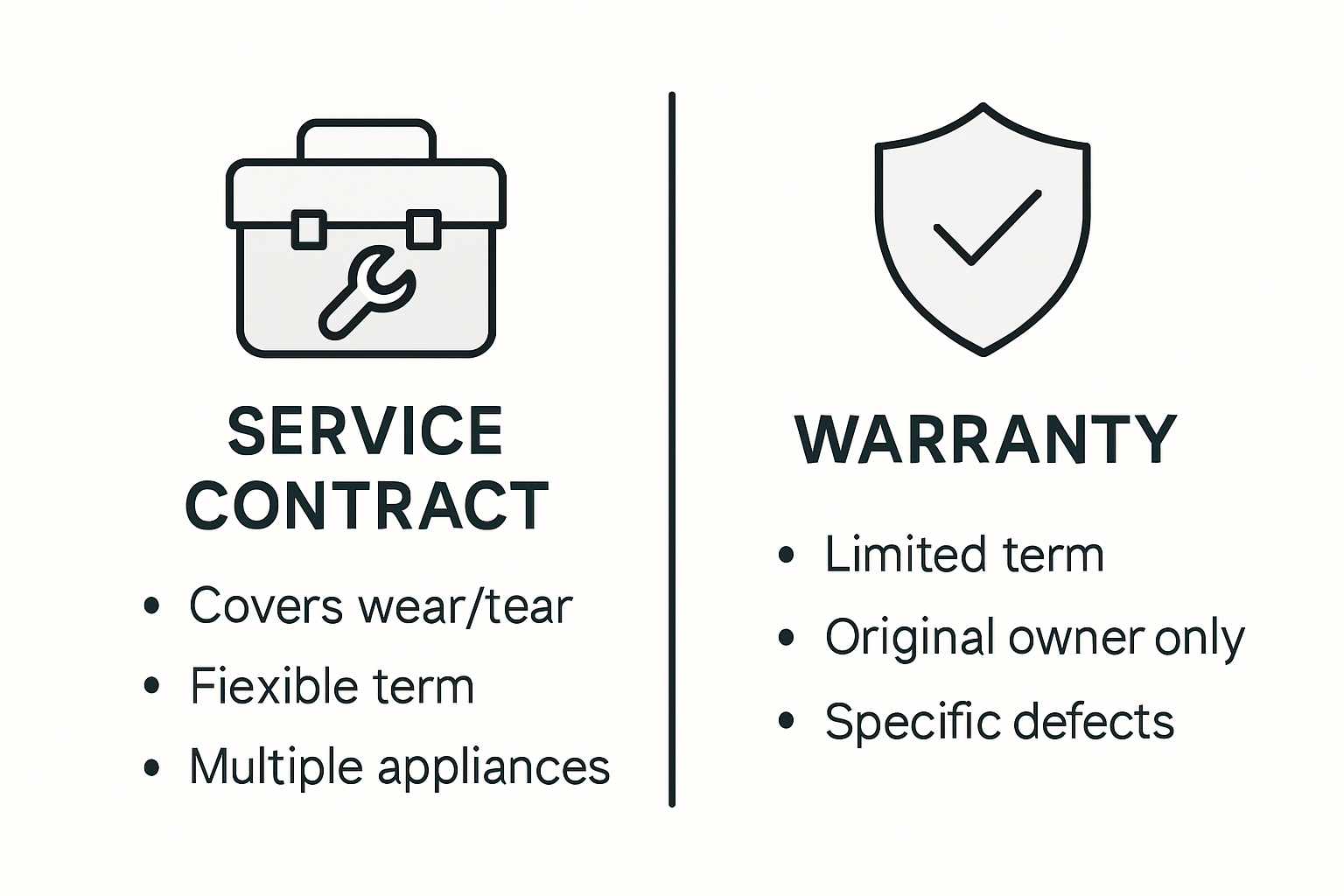
Monmouth County homeowners should understand that service contracts offer more flexible and extensive coverage compared to standard warranties. These agreements provide peace of mind by addressing unexpected repair costs, offering predictable maintenance support beyond the limitations of original manufacturer guarantees.
Costs, Common Pitfalls, And Choosing Wisely
Service contracts offer peace of mind but come with relatively high costs, requiring Monmouth County homeowners to carefully evaluate their potential value. Understanding the financial implications and potential limitations is crucial for making an informed decision about appliance protection.
Key Cost Considerations:
- Typical annual contract prices range from $300-$900
- Per-incident service fees often range $50-$125
- Contracts covering multiple appliances cost more
- Price varies based on appliance age and condition
Common Pitfalls to Avoid:
- Extended warranties often have restrictive terms and conditions
- Contracts may exclude:
- Commercial use
- ‘Acts of God’
- Owner-caused damage
- Certain mechanical failures
Certified appliance repair professionals recommend carefully reading contract details before purchasing. Homeowners should assess:
- Appliance age and current condition
- Frequency of potential repairs
- Total contract cost versus potential repair expenses
- Reputation of the service contract provider
Ultimately, the wisest approach involves comparing the contract’s cost against the likelihood of significant repairs. Monmouth County residents should view service contracts as a strategic financial tool, not an automatic solution, and make decisions based on their specific household needs and budget constraints.
Protect Your Home with Expert Appliance Support in Monmouth County
Facing unexpected appliance breakdowns despite service contracts can be stressful and costly. This article highlights how unclear coverage and costly repairs create challenges for homeowners and businesses trying to safeguard essential appliances. If you want fast and reliable repairs backed by professional expertise without the hassle of navigating complex contracts, Expert Appliance is your local solution.
Explore our Appliance Archives – Expert Appliance to learn how our same-day service and 24/7 emergency repair support can help you maintain refrigerators, washers, dryers, ovens, and more. Our family-owned team in Marlboro, New Jersey, understands the importance of clarity in coverage and upfront pricing—giving you peace of mind beyond what typical service contracts offer. Don’t wait for an appliance failure today visit Expert Appliance Repair now and schedule your trusted local service.
Discover how our certified technicians deliver clear cost expectations and professional repairs so you can skip frustrating coverage loopholes. For additional maintenance tips and honest advice check out our Uncategorized Archives – Expert Appliance and stay informed about protecting your home investments.
Frequently Asked Questions
What is an appliance service contract?
An appliance service contract is an agreement that provides financial protection against unexpected repair costs for household appliances beyond the standard manufacturer warranty.
What types of coverage are included in an appliance service contract?
Coverage typically includes repairs for mechanical and electrical failures, parts replacement, and sometimes preventive maintenance for major appliances like refrigerators, washing machines, and ovens.
Are there specific exclusions in appliance service contracts?
Yes, common exclusions usually include damage from natural disasters, owner-inflicted damage, and issues arising from improper installation or manufacturer recalls.
How do service contracts differ from manufacturer warranties?
Service contracts offer more extensive coverage for mechanical failures and can last for multiple years, while manufacturer warranties typically cover defects in materials and workmanship for a limited period, usually 1-2 years.