
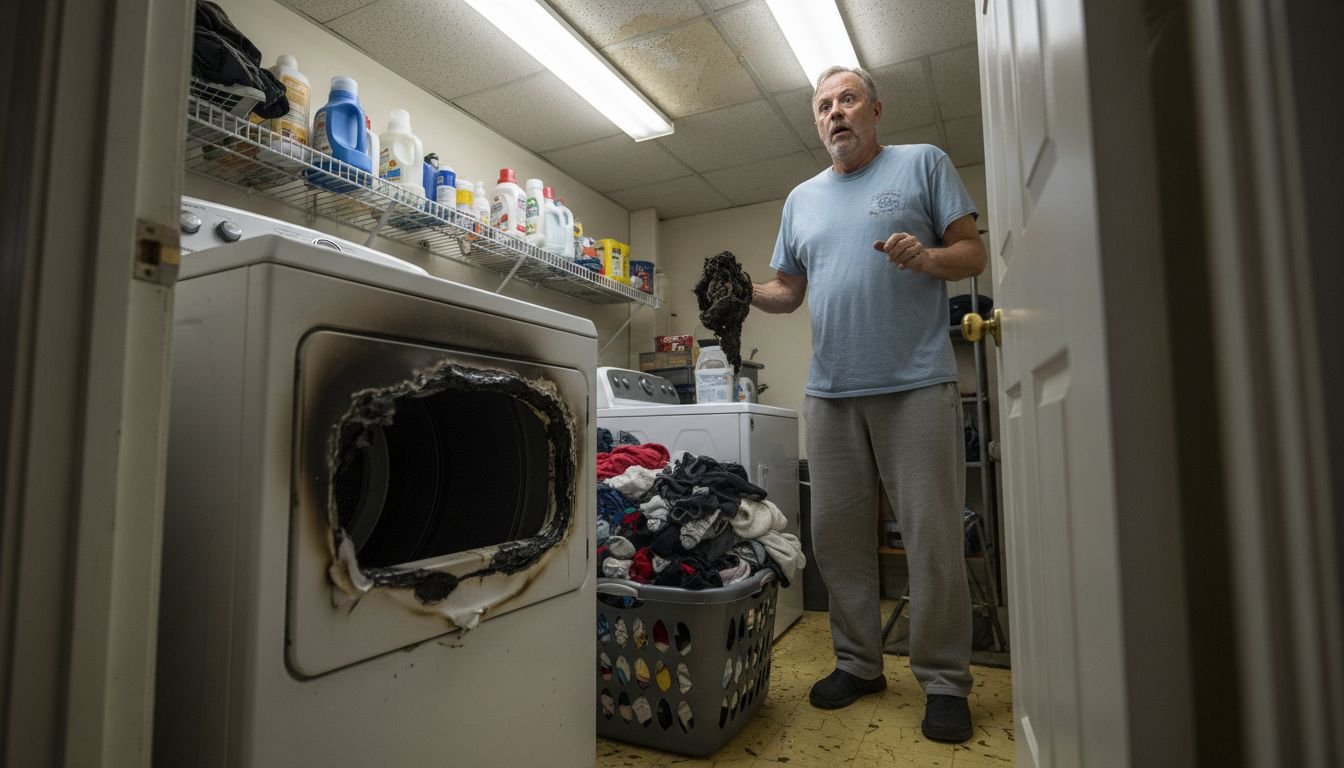
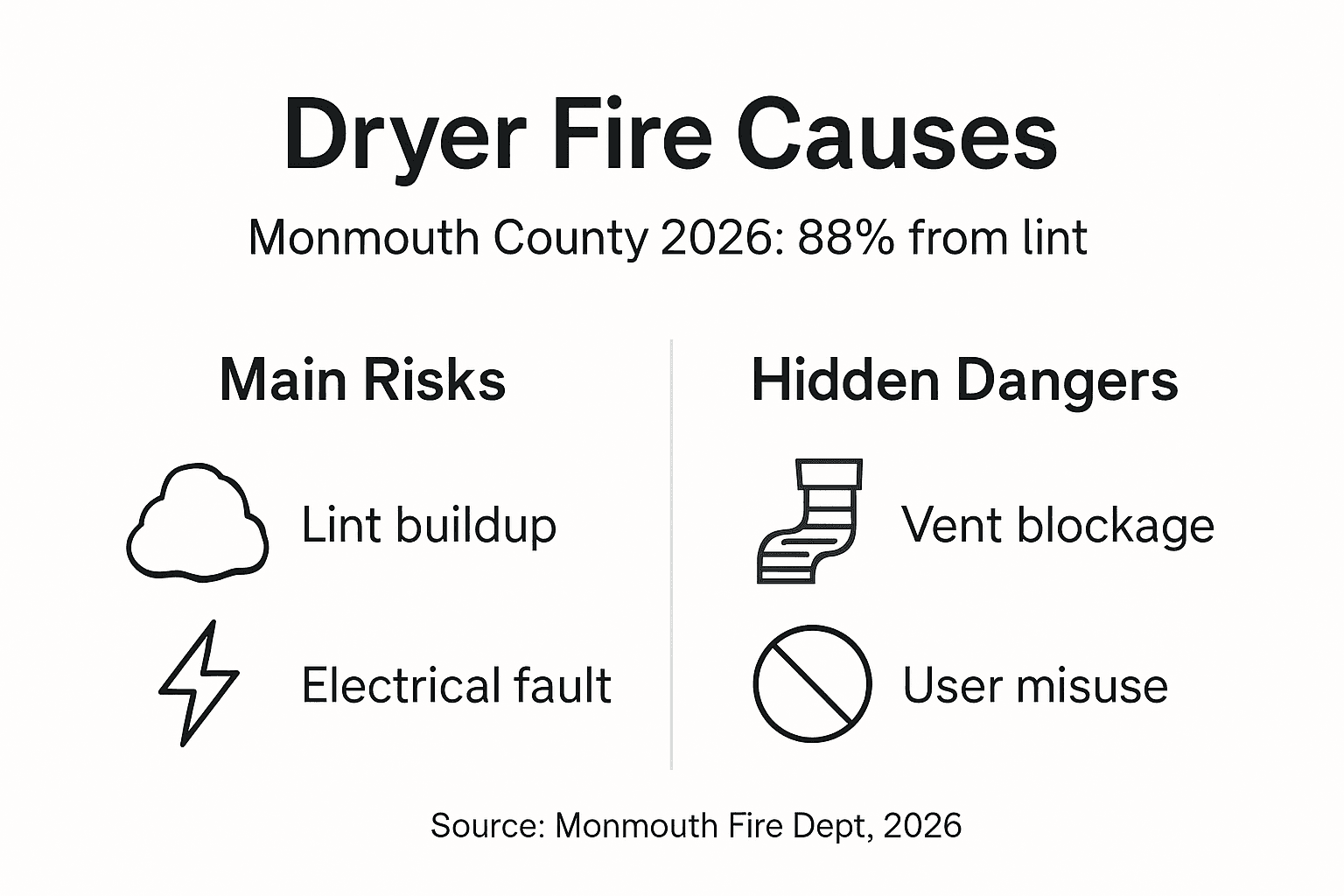
Most homeowners don’t realize their dryer poses a serious fire risk until it’s too late. 88% of dryer fires involve failure to clean the lint filter after use, making lint accumulation the leading cause of dryer fires in Monmouth County homes. This article explores the primary causes of dryer fires and provides practical prevention strategies to protect your home and family from this dangerous but preventable hazard. Understanding why dryers overheat in NJ is the first step toward safer appliance operation.
Table of Contents
- Introduction To Dryer Fire Risks
- How Lint Accumulation Leads To Fires
- Electrical Issues And Fire Hazards In Dryers
- Vent Blockages: A Critical Fire Risk Factor
- User Behavior And Misuse That Increase Dryer Fire Risk
- Common Misconceptions About Dryer Fires
- Practical Safety And Maintenance Tips
- Summary And Local Resources
- Protect Your Home With Expert Dryer Repair And Maintenance
- Frequently Asked Questions
Key takeaways
| Point | Details |
|---|---|
| Lint buildup causes most fires | Accumulated lint blocks airflow, causes overheating, and creates ignition conditions in dryers. |
| Electrical faults ignite fires | Frayed wiring, loose connections, and damaged components produce sparks that can ignite lint. |
| Vent blockages trap heat | Clogged vents restrict airflow and cause dangerous temperature increases inside dryers. |
| User habits increase risk | Skipping lint cleaning, overloading dryers, and drying flammable items elevate fire hazards. |
| Regular maintenance prevents fires | Professional inspections and cleaning every 18-24 months dramatically reduce fire risk. |
Introduction to dryer fire risks
Dryer fires represent a significant household hazard across the United States, causing millions of dollars in property damage and endangering families annually. Over one-third of residential dryer fires involve lint buildup, making it the most preventable yet most common cause. Monmouth County homeowners face identical risks, with local fire departments responding to dryer-related incidents that could have been avoided through proper maintenance.
Recognizing the warning signs of potential dryer hazards empowers you to take action before a fire starts. Common indicators include overheating during normal cycles, burning smells emanating from the appliance, clothes taking longer to dry than usual, and the dryer shutting off unexpectedly. Understanding dryer overheating causes in NJ helps you identify problems early.
Key risk factors for dryer fires include:
- Neglecting regular lint trap cleaning after each load
- Failing to schedule professional vent inspections and cleaning
- Ignoring warning signs like unusual noises or burning smells
- Using the dryer for items not recommended by the manufacturer
- Operating dryers with damaged or worn electrical components
Addressing these factors through consistent maintenance and safe usage practices dramatically reduces your fire risk. If you notice any warning signs, contact dryers repair in Marlboro NJ professionals immediately for inspection.
How lint accumulation leads to fires
Lint is extremely flammable and accumulates rapidly inside your dryer with every load. This fine fiber material collects in the lint trap, vent ducts, and internal dryer components, creating multiple ignition points. When lint blocks the airflow system, your dryer cannot properly ventilate hot air, causing internal temperatures to rise dangerously high.
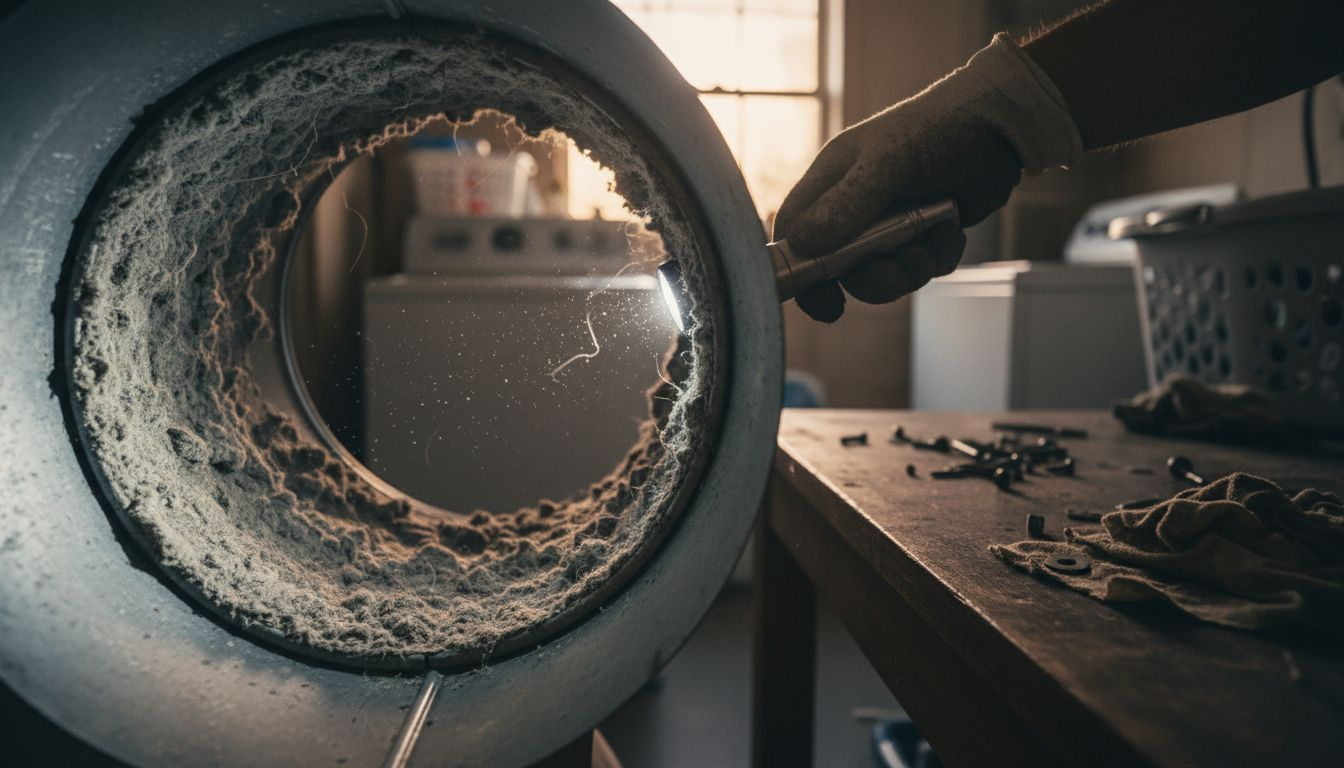
The combustion process begins when restricted airflow forces your dryer’s heating element to work harder and reach higher temperatures. As heat builds without adequate ventilation, the accumulated lint eventually reaches its ignition point. 34% of home dryer fires involve failure to clean the dryer lint filter, demonstrating how this simple maintenance task prevents the majority of incidents.
Pro Tip: Check your lint trap before every single load, even if someone else just used the dryer. A full lint trap from the previous cycle creates immediate fire risk.
Lint accumulation occurs in several critical areas:
- The lint trap screen where visible lint collects after each cycle
- Behind and underneath the lint trap housing where fibers escape
- Inside the dryer drum and around heating elements
- Throughout the entire length of the exhaust vent ductwork
- At the exterior vent opening where lint can build up outdoors
Cleaning only the lint trap addresses just one accumulation point. Professional vent cleaning removes hidden lint deposits throughout the entire ventilation system, areas you cannot reach during routine maintenance. Following washer and dryer care tips ensures comprehensive fire prevention.
Important statistic: Homes that skip professional vent cleaning for over three years face exponentially higher fire risk compared to those maintaining regular cleaning schedules.
Electrical issues and fire hazards in dryers
Electrical faults create dangerous conditions that can instantly ignite accumulated lint or other flammable materials inside your dryer. Common electrical problems include frayed or damaged power cords, loose wire connections, worn terminal blocks, and failing heating elements. These issues develop gradually through normal wear or can result from improper installation.
When electrical components malfunction, they produce sparks or excessive heat in areas where lint has accumulated. A single spark in a lint-filled environment can trigger a fire within seconds. Electrical wiring failure is a significant contributor to dryer fires, particularly in older homes with outdated electrical systems.
Recognize these electrical warning signs:
- Burning smell during dryer operation or immediately after
- Dryer heating inconsistently or not reaching proper temperature
- Circuit breaker tripping repeatedly when running the dryer
- Visible scorch marks on the power cord or outlet
- Unusual buzzing, humming, or clicking sounds from the appliance
Never ignore electrical symptoms in your dryer. What seems like a minor inconvenience today can become a major fire hazard tomorrow. Annual professional electrical inspections identify worn components before they fail catastrophically.
Pro Tip: If your dryer trips the circuit breaker more than once, stop using it immediately and call a professional. Repeated tripping indicates a serious electrical fault that requires expert diagnosis.
Homeowners should never attempt DIY electrical repairs on dryers due to the high voltage involved and fire risk. Professional technicians have the training and tools to safely diagnose and repair electrical issues. Review electric dryer repair tips to understand when professional service is essential.
Vent blockages: a critical fire risk factor
Dryer vent blockages trap hot air and lint inside the ventilation system, forcing your dryer to operate at dangerously elevated temperatures. Unlike visible lint trap accumulation, vent blockages occur deep within ductwork where homeowners cannot easily detect them. These hidden obstructions develop gradually over months or years of use.
When exhaust air cannot properly vent outside, heat builds up throughout the entire system. This trapped heat raises the temperature of accumulated lint to combustible levels. Blocked dryer vents lead to dangerous overheating and fire risk, making regular vent maintenance critical for home safety.
Several factors contribute to vent blockages:
- Lint accumulation throughout the duct length from normal use
- Crushed or kinked flexible vent ducting reducing airflow
- Bird nests or pest debris blocking the exterior vent opening
- Improper vent materials like vinyl or foil that trap more lint
- Excessive vent length or too many turns in the duct path
Case studies from fire investigators consistently identify clogged vents as a primary ignition factor in residential dryer fires. In many incidents, homeowners reported cleaning their lint trap regularly but had never scheduled professional vent cleaning. The hidden lint accumulation in vents eventually reached critical mass and ignited.
| Vent Cleaning Frequency | Fire Risk Level | Recommended Action |
|---|---|---|
| Every 12-18 months | Low | Maintain schedule for safety |
| Every 24-36 months | Moderate | Increase cleaning frequency |
| Over 3 years or never | High | Schedule immediate inspection |
Professional dryer vent cleaning service uses specialized equipment to remove all lint and debris from your entire ventilation system. Technicians inspect vent condition, identify installation problems, and ensure proper airflow. Schedule professional vent cleaning every 18-24 months minimum, or more frequently for large families doing multiple loads daily.
User behavior and misuse that increase dryer fire risk
Even well-maintained dryers become fire hazards when operated improperly. Your daily habits and usage patterns significantly impact fire risk, often more than equipment age or condition. Simple behavioral changes eliminate many fire hazards without requiring repairs or replacements.
The most dangerous habit is skipping lint trap cleaning between loads. 88% of dryer fires involved failure to clean the lint filter after use, yet many homeowners clean the trap only occasionally or when visibly full. Each uncleaned cycle compounds the restriction and fire risk.
Follow these essential safety practices:
- Clean the lint trap thoroughly before every single drying cycle without exception.
- Never overload the dryer drum beyond manufacturer capacity recommendations.
- Avoid drying items contaminated with flammable substances like cooking oil, gasoline, or cleaning solvents.
- Do not dry rubber-backed rugs, foam pillows, or plastic items that can melt and ignite.
- Use only manufacturer-recommended heat settings for each fabric type.
- Never leave the dryer running when you leave home or go to sleep.
- Remove clothes promptly when the cycle completes to prevent overheating.
Overloading forces your dryer to work harder and run longer, generating excess heat while restricting airflow around clothes. This combination creates ideal conditions for ignition. Items like kitchen towels or work clothes exposed to cooking oils retain flammable residues even after washing. These materials can spontaneously combust under dryer heat.
Understanding appliance safety behaviors helps you recognize how your daily choices impact household fire risk. Small adjustments in how you use your dryer provide significant safety improvements.
Common misconceptions about dryer fires
Several persistent myths about dryer fires lead homeowners to neglect critical safety practices. Correcting these misconceptions helps you make informed decisions about maintenance and usage. Understanding the facts empowers better fire prevention.
Many people believe older dryers pose greater fire risks than newer models. Dryer age is not strongly correlated with fire risk; lint buildup is primary. A 20-year-old dryer with regular maintenance and cleaning operates more safely than a brand new dryer with neglected vents and full lint traps.
Common false beliefs about dryer fires:
- Myth: Only old dryers catch fire. Truth: New and old dryers have equal fire risk without proper maintenance.
- Myth: Certain fabrics cause fires. Truth: Lint from any fabric is flammable; cleaning frequency matters most.
- Myth: Cleaning the lint trap is sufficient. Truth: Vent cleaning is equally important for comprehensive safety.
- Myth: Gas dryers are more dangerous than electric. Truth: Both types face identical lint and vent fire risks.
- Myth: Professional maintenance is unnecessary. Truth: DIY cleaning cannot reach critical vent system areas.
The fabric type misconception causes particular concern. Some homeowners believe synthetic materials create more fire risk than natural fibers. While different fabrics produce varying lint amounts, all lint is highly flammable regardless of source. Your cleaning habits determine safety, not your clothing choices.
Another dangerous myth suggests that modern dryers have safety features preventing fires. While newer models include better thermal monitoring, no dryer is fireproof. Safety features provide backup protection but cannot overcome neglected maintenance. Learn about dryer fire myths to avoid complacency.
Practical safety and maintenance tips
Implementing a consistent maintenance routine dramatically reduces your dryer fire risk. These actionable steps address all major fire causes and require minimal time investment. Following manufacturer guidelines and professional recommendations ensures comprehensive protection.
Prioritize these essential maintenance tasks:
- Clean your lint trap completely before starting every drying cycle.
- Schedule professional vent inspection and cleaning every 18-24 months minimum.
- Inspect visible portions of your dryer vent system monthly for damage or disconnection.
- Have a qualified technician examine electrical components and wiring annually.
- Replace plastic or foil vent ducting with rigid metal materials for better safety.
- Ensure adequate clearance behind your dryer for proper ventilation and heat dissipation.
- Test your exterior vent flap monthly to confirm it opens freely when the dryer runs.
Create a maintenance calendar with reminders for each task. Digital calendar alerts or smartphone apps help you remember scheduled professional services. Consistency matters more than perfection; regular attention prevents dangerous accumulation.
Pro Tip: Keep a small notebook near your dryer to log maintenance dates, unusual symptoms, and service calls. This record helps identify patterns and ensures you never miss scheduled cleanings.
Beyond scheduled maintenance, daily operational practices enhance safety. Never run your dryer when you leave home or overnight while sleeping. This ensures you can respond immediately if problems develop. Implement comprehensive dryer maintenance tips to establish safe habits.
Summary and local resources
Dryer fires in Monmouth County result primarily from three preventable causes: lint accumulation throughout the ventilation system, electrical component failures, and blocked exhaust vents restricting airflow. Understanding these hazards empowers you to take protective action through regular maintenance and safe operating practices.
Your habits directly influence fire risk more than any other factor. Cleaning the lint trap after every load, scheduling professional vent services, and using your dryer properly eliminate most fire dangers. Small investments in maintenance provide enormous returns in safety and peace of mind.
Key prevention principles:
- Lint buildup from neglected cleaning causes the majority of residential dryer fires
- Electrical faults require professional diagnosis and repair to prevent sparking and ignition
- Professional vent cleaning reaches hidden accumulation areas inaccessible during routine maintenance
- User behaviors like overloading and drying flammable items create unnecessary hazards
- Consistent maintenance schedules dramatically reduce fire risk for all dryer types
Monmouth County residents have access to experienced professionals who provide comprehensive dryer safety services. Expert technicians inspect electrical systems, clean vent ducts thoroughly, and identify potential problems before they become emergencies. Professional local dryer repair services ensure your appliance operates safely year-round.
Don’t wait until you notice warning signs to schedule maintenance. Proactive service prevents fires more effectively than reactive repairs after problems develop. Protecting your home and family requires ongoing attention to this essential household appliance.
Protect your home with expert dryer repair and maintenance
Expert Appliance provides comprehensive dryer repair services throughout Monmouth County, helping homeowners maintain safe and efficient appliances. Our certified technicians identify electrical faults, clean hidden lint accumulation, and repair ventilation problems before they create fire hazards. We understand local building codes and installation requirements specific to New Jersey homes.

Regular professional maintenance costs far less than fire damage repairs or appliance replacement. Our team uses specialized equipment to remove all lint from your ventilation system, inspect electrical components, and verify safe operation. Follow our appliance maintenance checklist to stay on top of essential safety tasks between professional visits.
We provide same-day service for urgent repairs and flexible scheduling for routine maintenance. Our technicians educate homeowners about safe dryer operation and offer personalized recommendations based on your specific appliance and usage patterns. Implement our washer and dryer care tips to extend appliance life while maximizing safety. Contact Expert Appliance today to schedule your dryer safety inspection and prevent fire hazards in your Monmouth County home.
Frequently asked questions
What are the main causes of dryer fires?
Lint accumulation throughout the dryer and vent system causes the majority of residential dryer fires. Electrical faults like damaged wiring or failing heating elements create sparks that ignite accumulated lint. Blocked exhaust vents trap heat and lint, raising temperatures to combustible levels.
How often should I clean my dryer vent?
Schedule professional dryer vent cleaning every 18-24 months for typical household use. Large families doing multiple daily loads should clean vents annually. Never wait longer than three years, as excessive lint buildup dramatically increases fire risk.
Can a dryer catch fire when it’s off?
Dryers rarely catch fire when completely off and unplugged. However, electrical short circuits can occur in plugged-in appliances even when not running. Always ensure your dryer has proper clearance and ventilation regardless of whether you’re actively using it.
What should I do if my dryer smells like burning?
Stop using the dryer immediately and unplug it from the electrical outlet. A burning smell indicates lint buildup near heating elements or electrical component failure. Contact a professional repair service for inspection before operating the appliance again.
Are gas dryers more dangerous than electric dryers?
Both gas and electric dryers face identical fire risks from lint accumulation and blocked vents. Gas dryers include additional safety concerns regarding gas line connections and combustion air, but proper installation and maintenance make both types equally safe.
How can I tell if my dryer vent is blocked?
Clothes taking longer than normal to dry, excessive heat in the laundry room, and a hot exterior dryer surface indicate vent blockages. Check your exterior vent opening while the dryer runs; the flap should open fully with strong airflow. Weak airflow suggests blockages requiring professional cleaning.
Recommended
- Why Dryers Overheat – Protecting Your NJ Home – Expert Appliance
- Dryer Troubleshooting Guide: Fix Common Dryer Problems Fast – Expert Appliance
- Step by Step Dryer Repair for Marlboro NJ Homeowners – Expert Appliance
- Appliance Cleaning Checklist 2026: 30% Energy Savings NJ – Expert Appliance
- Dryer Vent Cleaning Service | Clean Vents | Quebec