
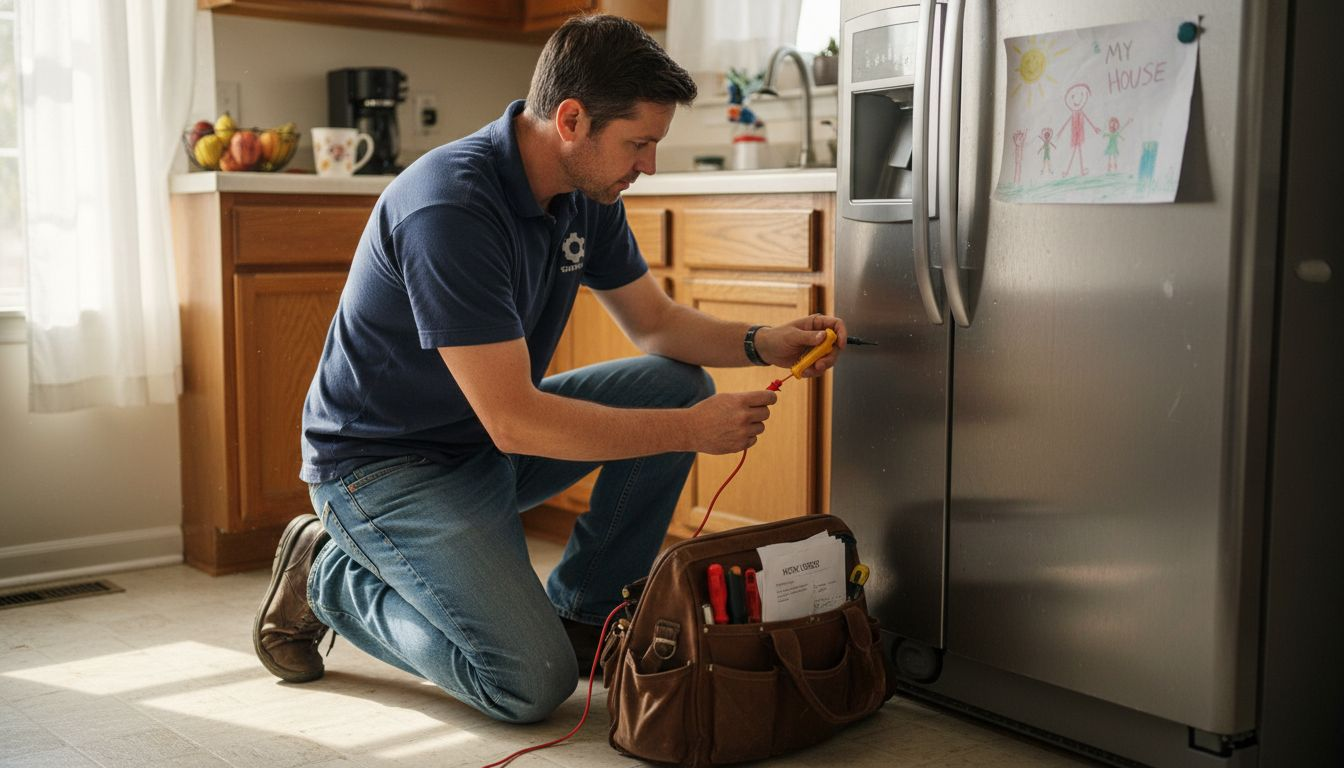
When your refrigerator stops cooling or your washer refuses to start, waiting for days is not an option. For homeowners in Marlboro, a certified appliance repair technician offers more than just fast fixes—they bring verified expertise and peace of mind. With the rigorous requirements of the EPA Section 608 Technician Certification, you can trust that your repair professional understands proper refrigerant handling and follows strict safety standards, reducing risk and ensuring your home stays up and running.
Table of Contents
- What Appliance Repair Certification Means
- Types of Appliance Repair Certifications
- State and Federal Regulations for Technicians
- How Certification Impacts Service Quality
- Costs, Risks, and Common Pitfalls
Key Takeaways
| Point | Details |
|---|---|
| Importance of Certification | Appliance repair certification confirms a technician’s expertise and competence, ensuring safe and effective repairs. |
| Types of Certifications | Major certifications like EPA Section 608 and NATE validate technical skills across various appliance repair domains. |
| Regulatory Compliance | Technicians must adhere to federal and state regulations to ensure legal operation and professional standards in appliance repair. |
| Impact on Service Quality | Certification enhances service quality by establishing rigorous benchmarks, leading to increased customer confidence and satisfaction. |
What Appliance Repair Certification Means
Appliance repair certification represents a critical professional standard that validates a technician’s expertise and competence in servicing complex household equipment. Unlike basic training programs, certification demonstrates a technician’s ability to meet rigorous industry requirements and perform repairs safely and effectively.
The EPA Section 608 Technician Certification is a prime example of professional credentialing in the appliance repair field. Technician certification requirements confirm that professionals have passed specialized exams proving their knowledge of environmental regulations, particularly when handling refrigerant-based equipment. This certification ensures technicians understand:
- Proper refrigerant handling techniques
- Environmental protection protocols
- Safety standards for equipment maintenance
- Compliance with federal environmental regulations
Certification differs significantly from basic training certificates. Professional skill mastery requires passing comprehensive assessments that test real-world knowledge, not just completing coursework. For homeowners in Marlboro and surrounding Monmouth County, this means hiring a certified technician provides multiple advantages:
- Verified technical competence
- Proven understanding of complex repair techniques
- Assurance of professional standards
- Compliance with industry best practices
Professional certification ultimately serves as a quality guarantee, helping consumers distinguish between amateur repair attempts and genuine professional expertise. By choosing a certified technician, homeowners protect their investment and ensure their appliances receive expert-level service.
Pro tip: Always request to see a technician’s current certification before scheduling any major appliance repair to guarantee professional-grade service.
Types of Appliance Repair Certifications
Appliance repair certifications represent a comprehensive system of professional credentials designed to validate technicians’ expertise across different equipment and service domains. These certifications go beyond simple training, offering specialized recognition of technical skills and knowledge in the complex world of home appliance maintenance.
HVAC and appliance technician certifications encompass multiple levels and specialized areas, with the EPA Section 608 Technician Certification being a cornerstone of professional credentialing. This certification includes four distinct types:
- Type I: Small appliances with limited refrigerant charges
- Type II: High-pressure appliances like residential air conditioners
- Type III: Low-pressure appliances
- Universal: Covers all refrigerant handling scenarios
Beyond EPA certification, technicians can pursue additional professional credentials. Certification pathways from organizations like North American Technician Excellence (NATE) offer comprehensive validation of skills through:
- Entry-level certificates
- Specialty examination tracks
- Core competency assessments
- Senior-level professional certifications
These certifications validate a technician’s ability to handle complex repair scenarios, understand sophisticated equipment diagnostics, and maintain industry-standard safety protocols. For homeowners in Marlboro and Monmouth County, choosing a certified technician means accessing proven expertise that goes far beyond basic repair knowledge.
Here’s how common appliance repair certifications differ in scope and purpose:
| Certification Type | Main Focus | Coverage Area | Typical Benefits for Technicians |
|---|---|---|---|
| EPA Section 608 | Environmental safety, refrigerants | Refrigerant-based appliances | Legal compliance, industry entry |
| NATE Certification | HVAC technology and diagnostics | Heating, cooling, ventilation | Enhanced expertise, broader roles |
| State-Level License | Local regulatory, safety standards | Specific state requirements | Legal operation, credibility |
| Manufacturer Certification | Brand-specific repair techniques | Company-branded appliances | Direct service access, brand trust |
Pro tip: When hiring an appliance repair technician, request documentation of their current professional certifications to ensure you’re receiving top-tier, professionally validated service.
State and Federal Regulations for Technicians
Appliance repair technicians operate within a complex regulatory landscape that balances environmental protection, public safety, and professional standards. Federal and state regulations create a comprehensive framework that ensures technicians possess the necessary skills and knowledge to perform their work responsibly and safely.
Technician certification requirements under the Clean Air Act establish critical guidelines for professionals working with refrigerant-based equipment. The EPA Section 608 Certification represents the primary federal mandate, requiring technicians to demonstrate specific competencies:
- Comprehensive knowledge of refrigerant handling
- Understanding of environmental protection protocols
- Ability to prevent harmful refrigerant releases
- Compliance with national environmental standards
Beyond federal requirements, state licensing provisions introduce additional layers of regulation. These regional requirements can vary significantly, with some states implementing more stringent certification processes:
- Mandatory state-level professional licenses
- Local examination requirements
- Continuing education credits
- Specific training for regional environmental conditions
For appliance repair professionals in Marlboro and Monmouth County, navigating these regulations is crucial. Compliance not only ensures legal operation but also demonstrates a commitment to professional excellence and environmental responsibility. Technicians must stay informed about both federal mandates and local regulatory changes to maintain their professional standing.
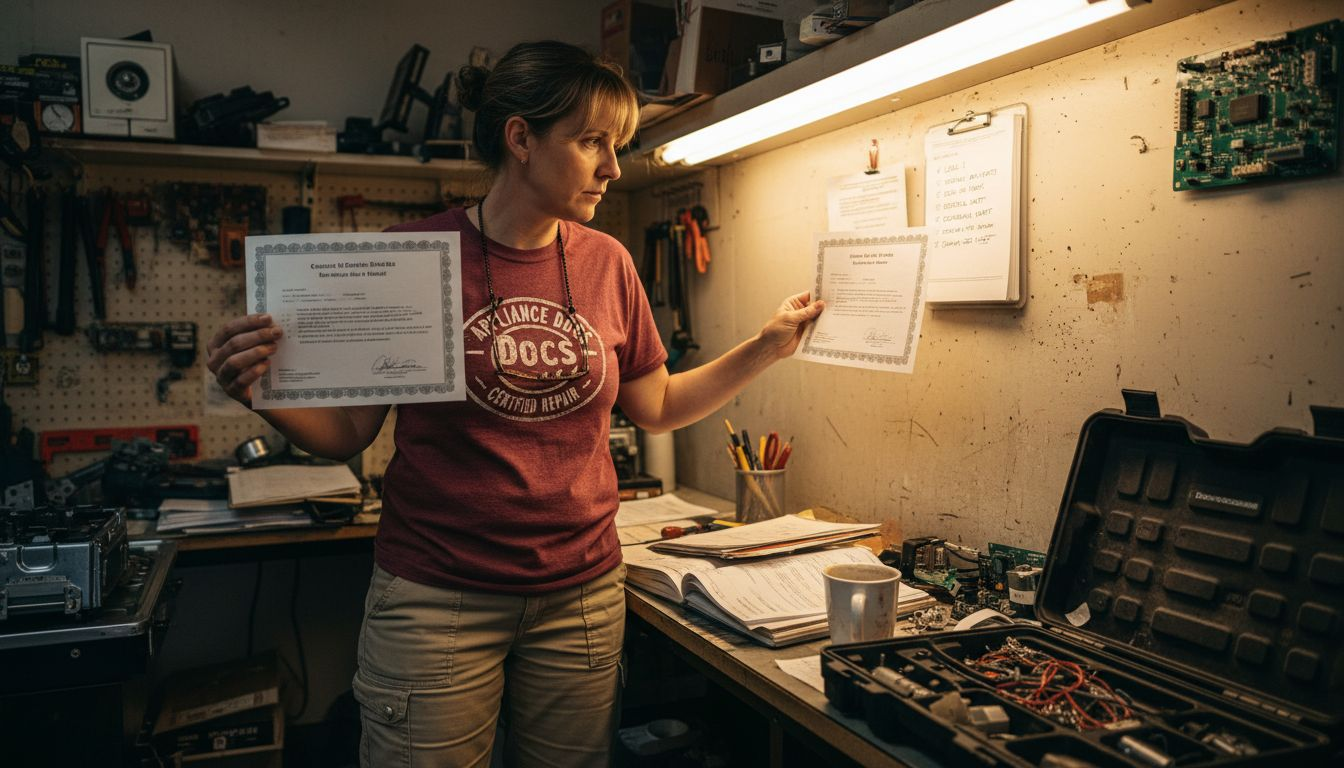
Pro tip: Regularly check with state and local licensing boards to stay current on certification requirements and maintain your professional credentials.
How Certification Impacts Service Quality
Certification transforms appliance repair from a basic technical service into a sophisticated, professionally validated expertise. Homeowners seeking reliable repair services increasingly recognize certification as a critical indicator of a technician’s skills, reliability, and commitment to excellence.
Certification standards directly improve service quality by establishing rigorous professional benchmarks that technicians must meet. This process ensures that certified professionals demonstrate superior performance through:
- Precise diagnostic capabilities
- Advanced technical knowledge
- Comprehensive understanding of equipment systems
- Consistent repair quality
- Adherence to safety protocols
Professional accreditation provides multiple tangible benefits that enhance overall service delivery. Customer confidence increases dramatically when technicians can prove their expertise through formal credentials, which typically cover specialized skills in:
- Cooling system repairs
- Cooking equipment maintenance
- Laundry appliance troubleshooting
- Complex diagnostic procedures
- Environmental regulation compliance
For residents in Marlboro and Monmouth County, choosing a certified technician means accessing a higher standard of appliance repair. Certified professionals bring validated expertise, reducing the risk of incomplete repairs, potential equipment damage, and unnecessary service calls. Their training goes beyond basic mechanical skills, encompassing comprehensive understanding of modern appliance technologies and intricate repair methodologies.
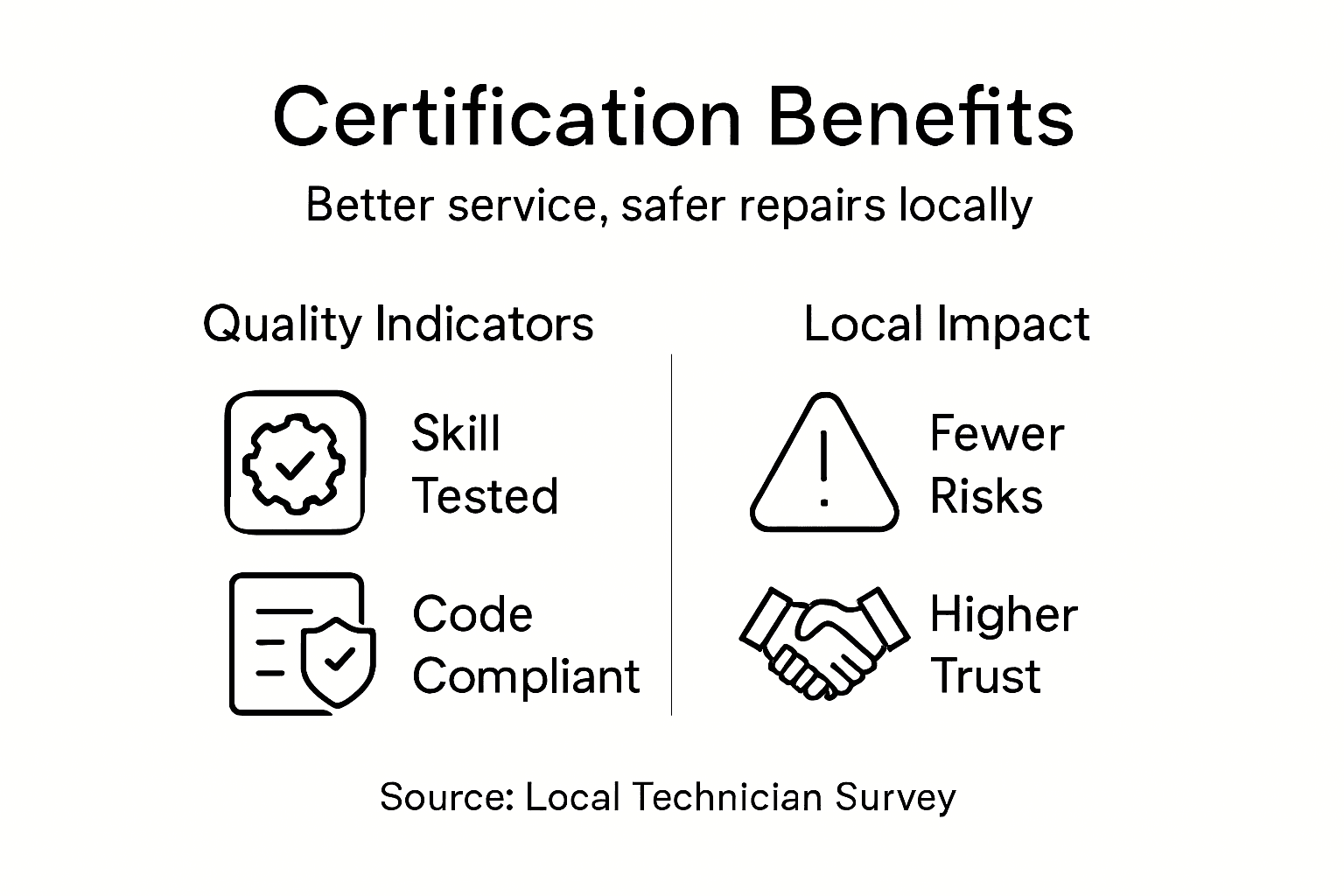
Pro tip: Always verify a technician’s current certifications before scheduling service to ensure you’re getting top-tier, professionally validated repair expertise.
Costs, Risks, and Common Pitfalls
Pursuing appliance repair certification involves navigating a complex landscape of financial investments, professional risks, and potential challenges that can significantly impact a technician’s career trajectory. Understanding these factors is crucial for making informed decisions about professional development and certification pathways.
Certification program costs can vary widely, presenting both opportunities and financial considerations for aspiring technicians. The investment typically encompasses several key expense categories:
- Training program fees
- Study materials and resources
- Examination registration costs
- Potential recertification expenses
- Supplemental skills development
Certification risks extend beyond mere financial implications, potentially affecting a technician’s professional standing and legal compliance. Critical risks include:
- Working without proper credentials
- Potential legal penalties
- Limited employment opportunities
- Professional liability concerns
- Restricted service authorization
Common pitfalls often emerge from inadequate preparation and limited understanding of certification requirements. Technicians in Marlboro and Monmouth County must remain vigilant about staying current with local regulations, maintaining their credentials, and continuously updating their professional knowledge. Failing to do so can result in significant professional setbacks and reduced marketability.
The following summarizes major risks and costs associated with obtaining appliance repair certification:
| Issue | Financial Impact | Professional Consequence |
|---|---|---|
| Training Fees | $500-$2,000 per program | Skill development opportunity |
| Exam Registration | $50-$300 per attempt | Credentials validation |
| Recertification | Annual/biannual fees | Maintains active status |
| Inadequate Preparation | Retake fees, lost income | Limited job prospects |
| Lapsed Certification | Legal fines, lost license | Restricted practice |
Pro tip: Research multiple certification programs, compare their total costs and requirements, and create a comprehensive budget that includes ongoing maintenance of your professional credentials.
Trust Certified Experts for Reliable Appliance Repair in Marlboro and Monmouth County
Certified appliance repair means technicians have proven knowledge of complex systems and environmental safety regulations. This certification ensures your household appliances receive expert care that meets professional standards—eliminating worries about incomplete fixes or equipment damage. If you value service backed by environmental compliance and safety protocols, choosing certified technicians is essential.
Experience the difference with Expert Appliance, a family-owned New Jersey company serving Marlboro and Monmouth County since 1988. We emphasize fast, same-day service and 24/7 emergency support for major appliances like refrigerators, washers, dryers, ovens, and vacuums. Our team holds up-to-date certifications, so you get trustworthy repairs with upfront pricing and guaranteed satisfaction.
Secure expert-level appliance repair today by visiting Appliance Archives – Expert Appliance for detailed service options.
Don’t let uncertified repairs risk your appliances or safety. Contact us now at expertapplianceinc.com to schedule service with certified professionals who understand the importance of quality and local regulations. Your appliances deserve trusted, fast, and certified care from your neighborhood experts. Learn more and book your service anytime.
Frequently Asked Questions
What is appliance repair certification?
Appliance repair certification is a professional credential that validates a technician’s expertise and competence in servicing household appliances, ensuring they meet industry standards and safety regulations.
Why is certification important for appliance repair technicians?
Certification is important because it demonstrates a technician’s verified technical competence and understanding of complex repair techniques, which leads to higher-quality service and compliance with industry best practices.
How does the EPA Section 608 Technician Certification impact appliance repair?
The EPA Section 608 Technician Certification ensures technicians have the necessary knowledge to handle refrigerants safely and comply with environmental regulations, providing assurance to homeowners about the technician’s qualifications.
What types of appliance repair certifications are available?
Common types of appliance repair certifications include the EPA Section 608 Certification for refrigerant handling, NATE Certification for HVAC technology, state-level licenses, and manufacturer-specific certifications, each focusing on different aspects of appliance repair.