
Appliance breakdowns have a way of disrupting daily routines just when you need things running smoothly. For many Marlboro homeowners and small businesses, a sudden malfunction demands fast action from a reliable local expert. With over 60 percent of American homes relying on complex kitchen and laundry appliances, knowing what diagnostic appliance service really means can help you get accurate answers and save money when every moment counts.
Table of Contents
- What Diagnostic Appliance Service Means
- Diagnostic Modes and Error Codes Explained
- Steps in Professional Appliance Diagnosis
- Typical Misconceptions About Appliance Repairs
- Risks, Costs, and Value of Diagnostics
Key Takeaways
| Point | Details |
|---|---|
| Modern Diagnosis | Diagnostic appliance service utilizes advanced technology for faster and more accurate identification of appliance issues. |
| Cost Efficiency | This approach minimizes unnecessary part replacements, resulting in lower overall repair costs. |
| Professional Expertise | Homeowners should rely on trained technicians to handle complex appliance problems for safety and effective solutions. |
| Preventive Maintenance | Regular diagnostics can help predict issues, extending appliance lifespan and preventing costly failures. |
What Diagnostic Appliance Service Means
Diagnostic appliance service represents a comprehensive technical approach to identifying, analyzing, and resolving issues with household appliances through advanced technological assessment. This specialized service goes beyond traditional repair methods by utilizing electronic diagnostic tools and systematic evaluation techniques to pinpoint exact problems within complex appliance systems.
At its core, diagnostic appliance service involves using standardized communication protocols to interrogate an appliance’s electronic control units and error memory systems. Technicians use specialized equipment to decode electronic signals, interpret fault codes, and determine precise malfunctions without extensive manual disassembly. This approach allows for faster, more accurate repairs that minimize unnecessary part replacements and reduce overall service costs.
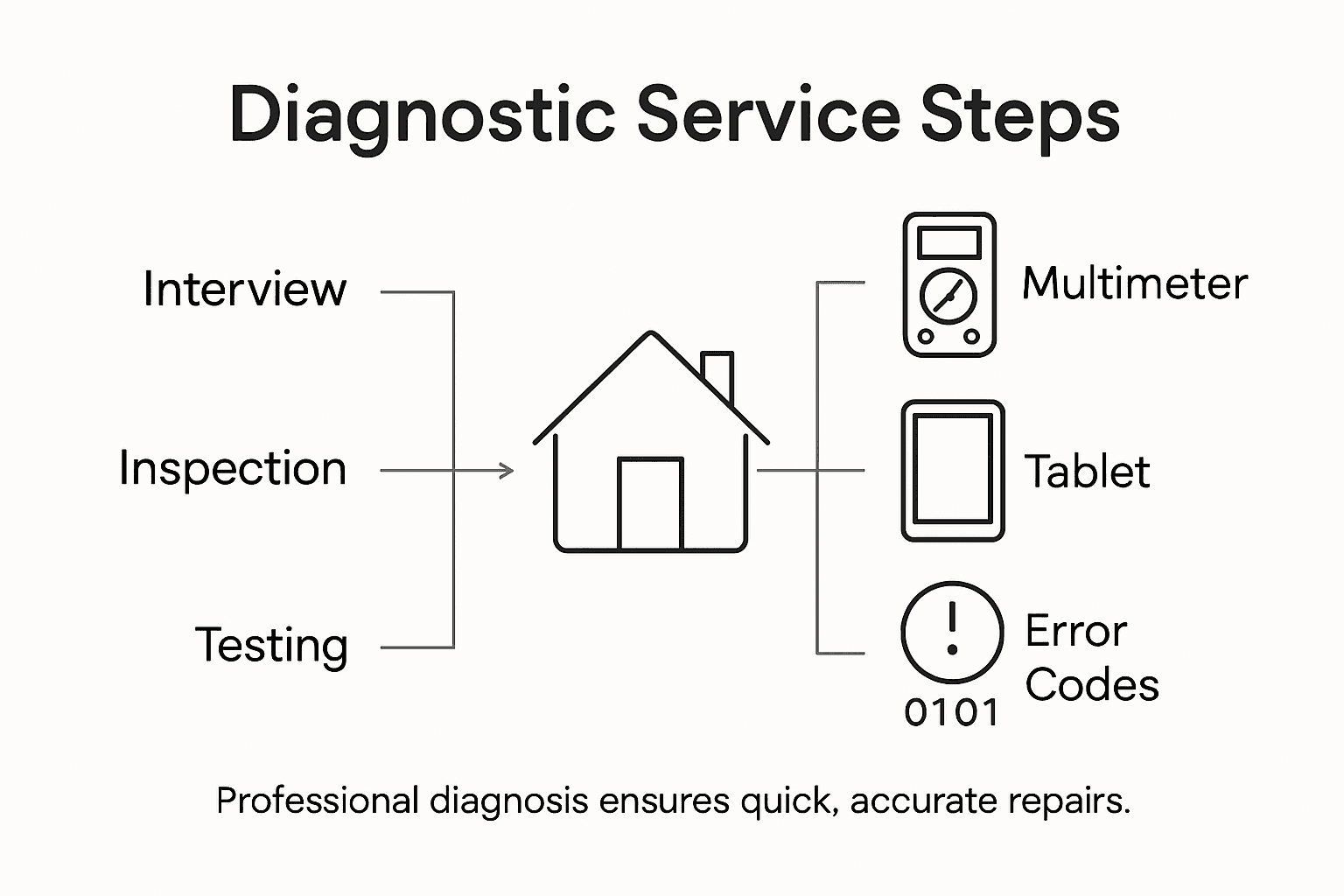
The process typically includes several critical steps:
- Comprehensive electronic system scanning
- Error code interpretation
- Performance baseline measurement
- Detailed component functionality assessment
- Predictive maintenance recommendations
Modern diagnostic appliance services integrate advanced digital technologies, enabling technicians to access real-time performance data and historical maintenance records. By leveraging diagnostic data technologies, service professionals can provide more precise, efficient solutions that address underlying issues rather than just surface-level symptoms.
Pro tip: Always request a detailed diagnostic report from your appliance service technician to understand the specific issues identified during the assessment.
Here’s a quick comparison of traditional appliance repair and modern diagnostic appliance service:
| Aspect | Traditional Repair | Diagnostic Appliance Service |
|---|---|---|
| Approach | Manual troubleshooting | Electronic system analysis |
| Accuracy | Often based on trial and error | Data-driven and precise |
| Repair Speed | Typically slower | Significantly faster |
| Parts Replaced | Frequently unnecessary parts replaced | Only faulty components replaced |
| Cost Efficiency | May be higher due to misdiagnosis | Lower due to accurate targeting |
| Required Tools | Basic hand tools | Advanced diagnostic equipment |
Diagnostic Modes and Error Codes Explained
Diagnostic modes and error codes represent the sophisticated language of modern appliance troubleshooting, providing technicians with precise insights into system malfunctions. These standardized communication protocols transform complex electronic problems into readable, actionable information that guides repair strategies with remarkable accuracy.
At the heart of diagnostic processes lies Failure Modes and Effects Analysis (FMEA), a methodical approach that categorizes potential system failures based on severity, frequency, and detectability. Error codes function as specific identifiers that quickly direct technicians to the root cause of appliance issues. These codes are typically alphanumeric and can indicate anything from minor sensor irregularities to critical system failures.
The diagnostic modes typically include several key operational levels:
- Basic system scanning mode
- Detailed component analysis mode
- Real-time performance monitoring mode
- Firmware and software diagnostic mode
- Historical error log retrieval mode
By leveraging standardized diagnostic protocols, technicians can access intricate details about an appliance’s electronic systems. These protocols enable precise fault identification without extensive manual disassembly, saving time and reducing potential additional damage during the repair process.
Pro tip: Keep a record of your appliance’s error codes and diagnostic reports to help technicians quickly understand your device’s maintenance history.
Steps in Professional Appliance Diagnosis
Professional appliance diagnosis is a sophisticated, methodical process that transforms complex mechanical issues into precise, actionable solutions. Technicians approach each service call with a structured strategy designed to efficiently identify and resolve appliance malfunctions while minimizing unnecessary interventions and potential additional damage.
Professional diagnostic workflows follow a systematic approach that encompasses several critical stages of investigation. The process begins with a comprehensive initial assessment that includes:
- Detailed customer interview about appliance symptoms
- Thorough visual inspection of the entire appliance
- Initial electrical system and component evaluation
- Preliminary diagnostic code interpretation
- Precise problem isolation techniques
The core of professional appliance diagnosis relies on systematic troubleshooting methodologies that transform complex problems into manageable repair strategies. Technicians employ a logical sequence of hypothesis formulation, cause elimination, and solution verification. This approach ensures that each diagnostic procedure is conducted with maximum efficiency, addressing the root cause rather than merely treating symptoms.
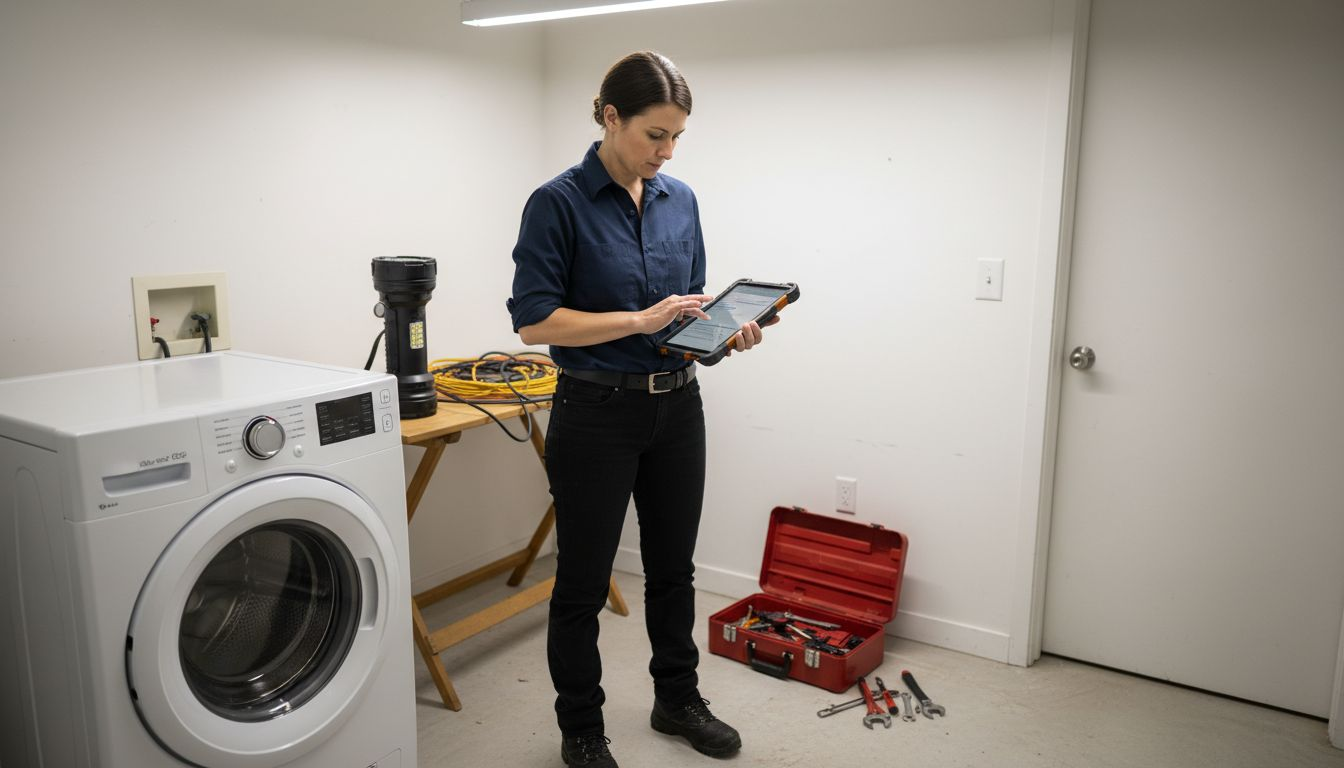
Modern diagnostic techniques integrate advanced technological tools with traditional mechanical expertise. Specialized diagnostic equipment, digital multimeters, electrical circuit testers, and computerized diagnostic systems enable technicians to perform intricate system analyses with unprecedented accuracy. These tools help map out complex electronic interactions, identify subtle performance irregularities, and provide precise recommendations for repair or replacement.
Pro tip: Always document the specific symptoms and any error codes you observe before the technician arrives to help expedite the diagnostic process.
Typical Misconceptions About Appliance Repairs
Homeowners often harbor numerous misconceptions about appliance repairs that can lead to costly mistakes and unnecessary frustration. These myths frequently prevent people from making informed decisions about their household equipment maintenance and can result in more extensive damage and higher repair costs.
Common repair misconceptions typically revolve around the belief that appliance issues are simple and can be resolved through basic troubleshooting or DIY solutions. In reality, modern appliances have intricate electronic systems that require specialized knowledge and diagnostic tools. Technicians undergo extensive training to understand complex electrical circuits, component interactions, and precise repair methodologies.
Some of the most prevalent myths about appliance repairs include:
- All repairs are equally straightforward
- DIY fixes are always cheaper than professional service
- Minor issues can be safely ignored
- Any replacement part will solve the problem
- Appliance repairs are unnecessary if the device still functions
Homeowners often underestimate the complexity and potential risks associated with amateur repair attempts. What might seem like a simple fix can quickly escalate into a more expensive problem. Professional technicians not only resolve the immediate issue but also identify potential future failures, saving homeowners significant time and money in the long run. They bring expertise in safety protocols, precise diagnostic techniques, and comprehensive system evaluation.
Pro tip: Always consult a professional technician when you are uncertain about an appliance malfunction, as early intervention can prevent more extensive and costly repairs.
Risks, Costs, and Value of Diagnostics
Appliance diagnostic services represent a critical intersection of technical expertise, financial investment, and risk management for homeowners. Understanding the nuanced landscape of diagnostic procedures helps individuals make informed decisions about maintaining their household equipment and preventing potentially costly failures.
Diagnostic services carry inherent risks that extend far beyond simple equipment assessment. These risks include potential misdiagnosis, overlooking critical system failures, and introducing unintended complications during the diagnostic process. Professional technicians must carefully navigate these challenges using specialized tools, extensive training, and systematic evaluation techniques to minimize potential negative outcomes.
The financial dimensions of appliance diagnostics involve multiple interconnected factors:
- Direct service fees for professional assessment
- Potential costs of specialized diagnostic equipment
- Time invested by skilled technicians
- Potential operational downtime during diagnosis
- Long-term savings from preventing major system failures
Comprehensive risk assessment in diagnostics goes beyond immediate problem identification. It encompasses understanding potential vulnerabilities, anticipating future system failures, and developing proactive maintenance strategies. Professional diagnostic services provide evidence-based insights that help homeowners make strategic decisions about repair, replacement, or continued maintenance of their appliances. The true value lies not just in solving current issues but in preventing future complex and expensive problems.
To help you understand the financial impact, here’s an overview of potential risks and values in appliance diagnostics:
| Factor | Risk if Ignored | Value of Diagnostics |
|---|---|---|
| System Failure | Major breakdown risk | Preventive issue detection |
| Cost | Unexpected high repair costs | Informed, optimized spending |
| Downtime | Longer appliance outage | Reduced downtime duration |
| Safety | Electrical hazards | Enhanced user safety |
| Appliance Lifespan | Shortened device life | Extended useful years |
Pro tip: Request a detailed diagnostic report from your technician that explains potential future risks and recommended preventative measures.
Get Fast, Accurate Appliance Diagnostics with Expert Appliance Repair
Are you struggling with slow or costly appliance repairs that leave you guessing what is wrong? Diagnostic appliance service delivers precise, data-driven solutions that save you time and money by identifying only the faulty components in your refrigerator, washer, dryer, oven, or dishwasher. At Expert Appliance Repair, serving Marlboro, NJ and Monmouth County, we specialize in advanced diagnostic techniques that help prevent larger failures and extend the life of your appliances.
Our experienced technicians combine cutting-edge tools with professional know-how to provide same-day service and 24/7 emergency support. We understand how disruptive appliance downtime can be, so we focus on fast, reliable diagnostics and repairs that let you get back to your daily routine quickly and safely. With upfront pricing and a commitment to quality, trust us to protect your investment while solving the root cause of your appliance troubles.
Ready to experience hassle-free appliance repair through expert diagnostics? Explore our full range of appliance services in the Appliance Archives – Expert Appliance and learn more about our local solutions at Expert Appliance Repair. Don’t wait until a small issue becomes a big problem. Contact us today to schedule your diagnostic appliance service and gain peace of mind with trusted New Jersey professionals.
Frequently Asked Questions
What is a diagnostic appliance service?
Diagnostic appliance service is a technical approach that uses advanced diagnostic tools to identify, analyze, and resolve issues in household appliances without extensive manual disassembly.
How do diagnostic modes and error codes help with appliance repairs?
Diagnostic modes and error codes offer precise insights into appliance malfunctions, allowing technicians to quickly identify root causes and guide repair strategies more effectively.
What are the steps involved in a professional appliance diagnosis?
A professional appliance diagnosis includes a customer interview, visual inspection, electrical system evaluation, diagnostic code interpretation, and problem isolation to provide accurate solutions.
What common misconceptions exist about appliance repairs?
Many people mistakenly believe that all appliance repairs are straightforward, DIY fixes are always cheaper, and minor issues can be ignored. In reality, appliances often have complex systems that require professional expertise to diagnose and repair correctly.