
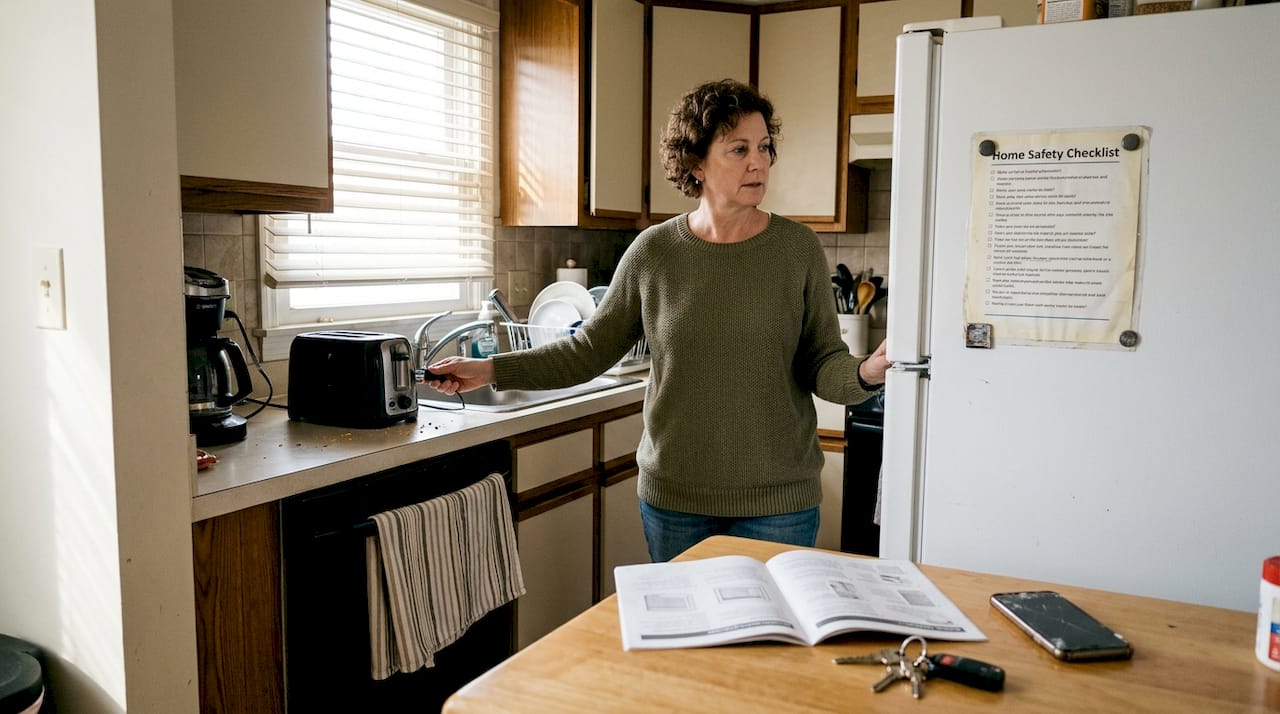
Most appliance fires, floods, and electrical failures don’t announce themselves. They build quietly behind dryer vents, under refrigerator coils, and inside washing machine drums until something goes wrong. For homeowners and small business owners in Monmouth County, NJ, the risks are real and often invisible. A structured safety checklist changes that. It catches problems before they become emergencies, keeps your property compliant with local codes, and extends the life of every appliance you depend on. This guide walks you through exactly what to check, room by room, appliance by appliance.
Table of Contents
- Why home appliance safety matters in Monmouth County
- Essential safety rules for every appliance
- The complete home appliance safety checklist
- Safety checks for common appliances: room-by-room guide
- Special safety considerations for Monmouth County homes and businesses
- DIY or professional? When to call a certified appliance technician
- Professional appliance safety services in Monmouth County
- Frequently asked questions
Key Takeaways
| Point | Details |
|---|---|
| Prioritize annual inspections | Regular professional checks keep appliances safe and extend their lifespan. |
| Adapt to local codes | Monmouth County buildings require GFCI or AFCI outlets in specific areas by law. |
| Watch out for regional risks | Humidity and hard water demand extra maintenance for safe, efficient appliances. |
| Small businesses need more frequent checks | Heavy-use appliances in commercial settings should be inspected quarterly. |
| Know when to call an expert | Leave major repairs and code compliance to certified technicians for maximum safety. |
Why home appliance safety matters in Monmouth County
Monmouth County presents a specific set of challenges that national safety guides don’t always address. Coastal humidity accelerates rust and mold growth inside appliances. Hard water leaves mineral deposits that clog dishwasher spray arms and reduce water heater efficiency. Electrical surges, especially during summer storm season, can damage sensitive appliance controls without any visible sign of failure.
Local building codes add another layer. New Jersey enforces appliance installation and inspection standards through the Uniform Construction Code (UCC), which aligns with national standards like the NEC and NFPA. As national standards apply locally, Monmouth County homeowners should follow CPSC, NFPA, and NEC guidelines alongside local UCC requirements for any inspection or installation. For more region-specific guidance, our Monmouth County appliance tips cover common local failure patterns.
Small businesses face even greater pressure. A restaurant, salon, or laundromat runs appliances far harder than a typical household. That means wear accumulates faster, and the consequences of a breakdown are financial, not just inconvenient.
Key takeaway: Regional factors like humidity, hard water, and heavy commercial use make Monmouth County properties more vulnerable to appliance-related hazards than the national average suggests.
With the stakes set, let’s identify the key safety criteria for any home appliance.
Essential safety rules for every appliance
Before you get into appliance-specific checks, these universal rules apply to everything in your home or business:
- Always unplug an appliance before cleaning or inspecting it. Even a “switched off” appliance can carry current.
- Never bypass thermal fuses or safety switches. These components exist to stop fires and floods. Disabling them voids warranties and creates serious hazards.
- Keep appliances dry and cords untangled. Kinked or pinched cords overheat and can ignite nearby materials.
- Use GFCI outlets near any water source. Proper grounding and GFCI outlets near water sources prevent electrocution and reduce circuit overload risk.
- Schedule professional inspections annually for gas and electrical appliances. DIY checks catch surface issues; a certified technician catches what you can’t see.
For a printable version of these steps, our appliance maintenance checklist is a practical starting point. If you’re dealing with an urgent situation, our emergency appliance tips cover what to do right now. And if you want to understand why regular upkeep matters financially, preventing appliance problems breaks down the cost savings clearly.
Pro Tip: Set a recurring calendar reminder every six months to do a quick visual check on all major appliances. You’ll catch cord damage, rust spots, and loose connections before they escalate.
Having laid out these overarching rules, let’s focus on a step-by-step checklist you can follow.
The complete home appliance safety checklist
This checklist covers the major appliances found in most Monmouth County homes and small businesses. Use it as a living document, not a one-time exercise.
Professional inspections annually are especially critical for gas ranges, dryers, and water heaters where hidden failures carry the highest risk.
Daily checks:
- Confirm no appliances are left running unattended (dryers, ovens, space heaters).
- Check that cords are not pinched under furniture or appliances.
- Verify no unusual smells (burning plastic, gas, mildew) are coming from any unit.
Weekly checks:
- Wipe down range burners and check for grease buildup.
- Inspect washing machine door seals for mold or residue.
- Empty and clean the dishwasher filter.
Monthly checks:
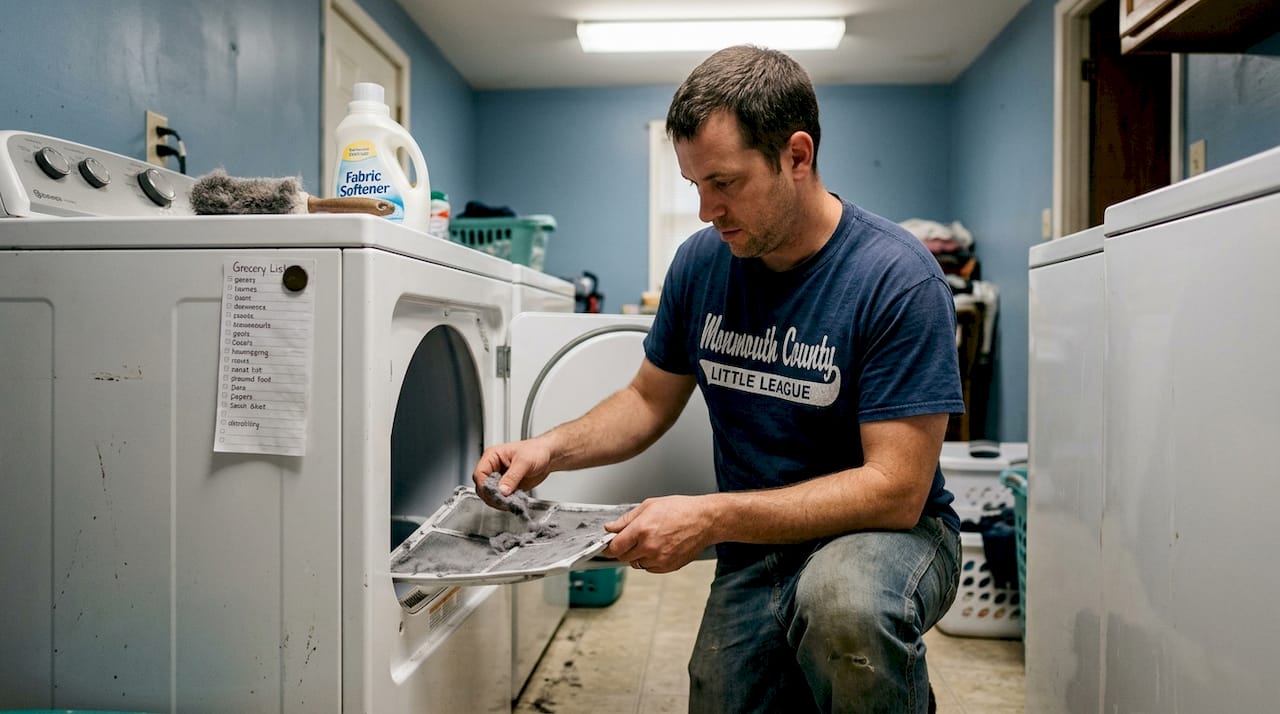
- Clean the dryer lint trap and inspect the vent hose for blockages.
- Check refrigerator door gaskets for cracks or gaps.
- Test GFCI outlets by pressing the test and reset buttons.
Annual checks:
- Have a certified technician inspect gas lines and connections.
- Flush the water heater to remove sediment.
- Check all appliance cords for fraying or heat damage.
| Appliance | Key risk | Check frequency |
|---|---|---|
| Dryer | Lint fire | Monthly (vent), weekly (trap) |
| Refrigerator | Gasket failure, coil dust | Monthly |
| Gas range | Gas leak, burner blockage | Weekly |
| Dishwasher | Filter clog, spray arm scale | Weekly |
| Water heater | Sediment, pressure valve | Annually |
| Microwave | Vent blockage, door seal | Monthly |
For help building a year-round schedule, our appliance maintenance scheduling guide maps out exactly when to do what.
To make these steps actionable, let’s break down safety requirements for each appliance.
Safety checks for common appliances: room-by-room guide
Different rooms carry different risks. Here’s what to focus on in each area of your home or business.
| Room | Primary hazard | Required outlet type |
|---|---|---|
| Kitchen | Grease fire, electrical surge | GFCI |
| Laundry room | Lint fire, moisture | AFCI + GFCI |
| Bathroom | Electrocution near water | GFCI |
| Garage/Basement | Moisture, circuit overload | GFCI |
In New Jersey, AFCI protection is required in bedrooms and laundry rooms, while GFCI protection is mandatory in kitchens, bathrooms, and garages under the Uniform Construction Code.
Kitchen: Check that your refrigerator sits level and has at least two inches of clearance behind it for airflow. Inspect the microwave vent monthly. Look at your range cord annually for heat discoloration near the plug.
Laundry room: Clean the lint trap before every load. Inspect the dryer vent hose every month for kinks or blockages. Confirm the washer is plugged into a GFCI outlet if it’s near a utility sink.
Bathroom: Never use a standard outlet for hair dryers or electric shavers. All bathroom outlets must be GFCI protected.
Garage and basement: These spaces carry the highest moisture risk. Check for rust on appliance exteriors, and never run extension cords as permanent wiring. Our breakdown prevention tips and smart maintenance tips go deeper on protecting appliances in these high-risk spaces.
While these checks establish safe habits, local factors in Monmouth County require extra attention.
Special safety considerations for Monmouth County homes and businesses
Monmouth County’s environment creates wear patterns that homeowners in drier, inland areas simply don’t face.
- High humidity promotes mold growth inside front-load washing machines and accelerates rust on water heater tanks. Run a monthly cleaning cycle with a washing machine cleaner and inspect the drum seal regularly.
- Hard water leaves calcium and magnesium deposits inside dishwashers, reducing spray arm pressure and heating efficiency. Descale your dishwasher every two to three months.
- Coastal salt air near the shore accelerates corrosion on exterior appliance components, especially HVAC units and outdoor refrigeration.
For small businesses, quarterly maintenance for heavy-use appliances is the standard in Monmouth County, where humidity and hard water accelerate wear far faster than annual checks can catch. A restaurant running a commercial dishwasher eight hours a day needs a different schedule than a homeowner running theirs twice a week.
Pro Tip: If you notice white or gray residue building up around your dishwasher door or inside your washing machine drum, that’s hard water scale. Address it now with a descaling product before it damages the heating element or pump.
For detailed guidance on business appliance care in Monmouth County, we’ve put together a full resource covering commercial-grade maintenance schedules.
To ensure lasting safety, it’s wise to know when DIY isn’t enough and a licensed expert is required.
DIY or professional? When to call a certified appliance technician
Not every appliance issue needs a service call. But some absolutely do, and knowing the difference protects your property and your family.
Tasks you can safely handle yourself:
- Cleaning lint traps, filters, and door seals
- Checking for visible leaks around hoses and connections
- Testing GFCI outlets and resetting tripped breakers
- Wiping down coils and exterior vents
Call a certified technician immediately if you notice:
- A burning smell or visible scorch marks near any appliance
- Exposed or frayed wiring
- A circuit breaker or AFCI that trips repeatedly
- A gas smell near your range or water heater
- Any appliance that sparks when plugged in
As unplugging before any inspection and never bypassing thermal fuses or safety switches are non-negotiable rules, any repair that requires opening an appliance’s electrical or gas components should go to a licensed professional.
Important: In New Jersey, certain repairs and inspections on gas appliances and electrical systems must be performed by licensed contractors under state law. Attempting these yourself can void your homeowner’s insurance and create liability.
Understanding why certified technicians matter goes beyond convenience. It’s about compliance and safety. If you’re unsure whether a repair requires credentials, our guide on appliance repair credentials in NJ explains what licenses to look for.
With clear understanding of what you can handle and what needs a pro, you’ll keep your appliances safe and compliant.
Professional appliance safety services in Monmouth County
This checklist gives you a strong foundation, but some inspections and repairs genuinely require trained eyes and certified hands. Expert Appliance Repair has served Monmouth County homeowners and businesses since 1988, and we know exactly what local conditions do to appliances over time.

Whether you need a full maintenance checklist service to stay on top of annual tasks, a repair for a specific appliance through our appliance and vacuum repair service, or urgent help through our emergency appliance repair team, we’re available same-day and around the clock. Homeowners get peace of mind. Small businesses get compliance and continuity. Call us and let’s make sure your appliances are working safely.
Frequently asked questions
How often should I inspect my home appliances for safety?
Annual professional inspections are the minimum for major appliances, especially gas and electrical units. High-use or business appliances benefit from quarterly checks to catch wear before it becomes a hazard.
What types of outlets are required in Monmouth County kitchens and bathrooms?
GFCI outlets are required by code near water sources in kitchens, bathrooms, and garages under New Jersey’s Uniform Construction Code. AFCI protection is also required in bedrooms and laundry rooms.
Can I perform all appliance maintenance myself, or do I need a professional?
Basic cleaning, filter checks, and visual inspections are safe DIY tasks. However, bypassing safety switches or handling wiring and gas connections requires a licensed technician to stay safe and code-compliant.
Does hard water or humidity impact appliance safety?
Yes. Monmouth County’s hard water and humidity accelerate scale buildup, mold growth, and corrosion inside appliances, which increases both safety risk and maintenance frequency compared to drier regions.
Are there Monmouth County-specific appliance safety checklists?
No county-specific checklists exist. Follow national standards from the CPSC, NFPA, and NEC alongside New Jersey’s Uniform Construction Code for all appliance inspections and installations.
Recommended
- Monmouth County appliance tips: Save money and extend life – Expert Appliance
- Small business appliance maintenance guide Monmouth County 2026 – Expert Appliance
- Preventing appliance breakdowns: 5 tips for NJ homeowners – Expert Appliance
- Appliance troubleshooting in 2026: expert Monmouth County guide – Expert Appliance