
Every year, over 16 million American households rely on dishwashers as their primary solution for kitchen clean-up. For homeowners in Marlboro, NJ, knowing how these machines function can make a real difference when problems arise. Whether you are troubleshooting strange noises, poor cleaning, or water leaks, this guide reveals the essentials of dishwasher operation so you can solve simple issues and know when it’s time to call for professional repair.
Table of Contents
- What Is A Dishwasher And How It Functions
- Dishwasher Types And Key Differences
- Essential Dishwasher Components And Cycles
- Troubleshooting Common Dishwasher Problems
- When To Call For Professional Dishwasher Repair
Key Takeaways
| Point | Details |
|---|---|
| Dishwasher Functionality | Dishwashers automate the cleaning of dishes and operate through multiple stages, including pre-rinse, main wash, rinse, and drying. Proper maintenance of components like spray arms and filters enhances performance. |
| Types of Dishwashers | Options include built-in, portable, countertop, and industrial models, each suited for different household needs and kitchen configurations. Measure your space accurately before purchasing. |
| Common Issues | Frequent dishwasher problems include poor cleaning, leaks, and unusual noises. Regular maintenance, such as cleaning filters and checking seals, can prevent these issues. |
| Professional Repairs | Not all problems can be fixed at home; signs like electrical failures or persistent leaks indicate the need for a professional technician. Document any issues to aid in diagnostics. |
What Is a Dishwasher and How It Functions
A dishwasher is an automated kitchen appliance designed to clean dishes, cookware, and cutlery without manual scrubbing. By mechanically distributing detergent solutions and rinse waters, these machines efficiently loosen and remove food soil from your kitchenware.
The basic functioning of a dishwasher involves a systematic cleaning process that includes multiple stages. When you start a cycle, hot water mixed with detergent is sprayed through rotating spray arms, targeting dishes from multiple angles. These spray arms ensure comprehensive coverage, dislodging food particles and grease from plates, glasses, and utensils. After the initial wash cycle, the dirty water is drained, and fresh water rinses the dishes to remove remaining soap and debris.
Modern dishwashers typically feature several distinct operational stages:
- Pre-rinse: Initial water spray to loosen stuck-on food
- Main wash: Hot water and detergent clean dishes thoroughly
- Rinse cycle: Clean water removes soap residue
- Drying cycle: Heated air or residual heat dries kitchenware
Pro tip: Always scrape large food particles off dishes before loading to prevent drain clogs and improve overall cleaning performance.
Dishwasher Types and Key Differences
Homeowners in New Jersey have multiple dishwasher types to choose from based on their specific household needs. The primary categories include built-in, portable, and countertop models, each with unique characteristics designed to accommodate different kitchen layouts and living situations.
Built-in dishwashers represent the most common type, permanently installed under kitchen counters and connected directly to water and electrical lines. These models come in standard 24-inch and compact 18-inch sizes, offering flexibility for various kitchen configurations. They typically feature:
- Multiple wash cycle options
- Energy-efficient designs
- Integrated controls
- Stainless steel or plastic interiors
Portable dishwashers provide excellent flexibility for renters or homes with limited space. These wheeled units can be connected to kitchen faucets temporarily and stored when not in use. Countertop models represent an even more compact solution, ideal for small apartments or households with minimal dishwashing needs.
Industrial and commercial dishwashers differ significantly from residential models. They utilize higher water temperatures, more powerful cleaning mechanisms, and specialized sanitization processes designed for restaurants, cafeterias, and other high-volume food service environments.
Pro tip: Measure your kitchen space precisely before purchasing a dishwasher to ensure a perfect fit and optimal performance.
Here is a comparison of the main dishwasher types to help homeowners choose the best fit:
| Dishwasher Type | Space Requirement | Installation Style | Ideal Household |
|---|---|---|---|
| Built-in | Requires fixed space | Permanent under counter | Most family kitchens |
| Portable | Minimal, mobile use | Temporary faucet hookup | Renters, small homes |
| Countertop | Very compact area | Sits on counters, portable | Single users, studios |
| Industrial/Commercial | Large, dedicated area | Specialized, complex install | Restaurants, cafeterias |
Essential Dishwasher Components and Cycles
Understanding the core components and operational cycles of dishwashers helps New Jersey homeowners maintain and troubleshoot their appliances more effectively. Modern dishwashers are complex machines with several critical parts working together to clean dishes efficiently.
Core Components of a typical dishwasher include:
- Spray Arms: Distribute water and detergent across dishes
- Filters: Trap food particles and prevent drainage clogs
- Heating Element: Warms water for cleaning and dries dishes
- Detergent Dispenser: Releases cleaning agents at precise moments
- Pump: Circulates water throughout the washing cycle
- Control Panel: Manages wash cycles and settings
Dishwasher cycles typically progress through four distinct stages:
- Pre-rinse: Initial water spray removes loose debris
- Main Wash: Hot water and detergent clean dishes intensively
- Rinse Cycle: Clean water removes soap and remaining particles
- Drying Cycle: Heated air or residual heat dries kitchenware
The complexity of these components means that even minor issues can disrupt the entire cleaning process. Proper maintenance and understanding of how these parts interact can significantly extend your dishwasher’s lifespan and performance.
Pro tip: Clean your dishwasher’s filter monthly to prevent buildup and maintain optimal cleaning efficiency.
Troubleshooting Common Dishwasher Problems
New Jersey homeowners frequently encounter dishwasher issues that can be frustrating and disruptive. Understanding the most common problems and their potential solutions helps prevent costly repairs and extend your appliance’s lifespan.
Common Dishwasher Problems Include:
- Poor Cleaning Performance: Dishes remain dirty or spotted
- Unusual Noises: Grinding, squealing, or loud operational sounds
- Water Leaks: Puddles around or underneath the dishwasher
- Odor Issues: Unpleasant smells during or after wash cycles
- Drainage Problems: Standing water or incomplete drainage
Most issues stem from specific component failures or maintenance neglect. Spray arm blockages can prevent proper water distribution, while dirty filters compromise cleaning effectiveness. Worn door seals often cause leaks, potentially leading to significant water damage if left unaddressed.
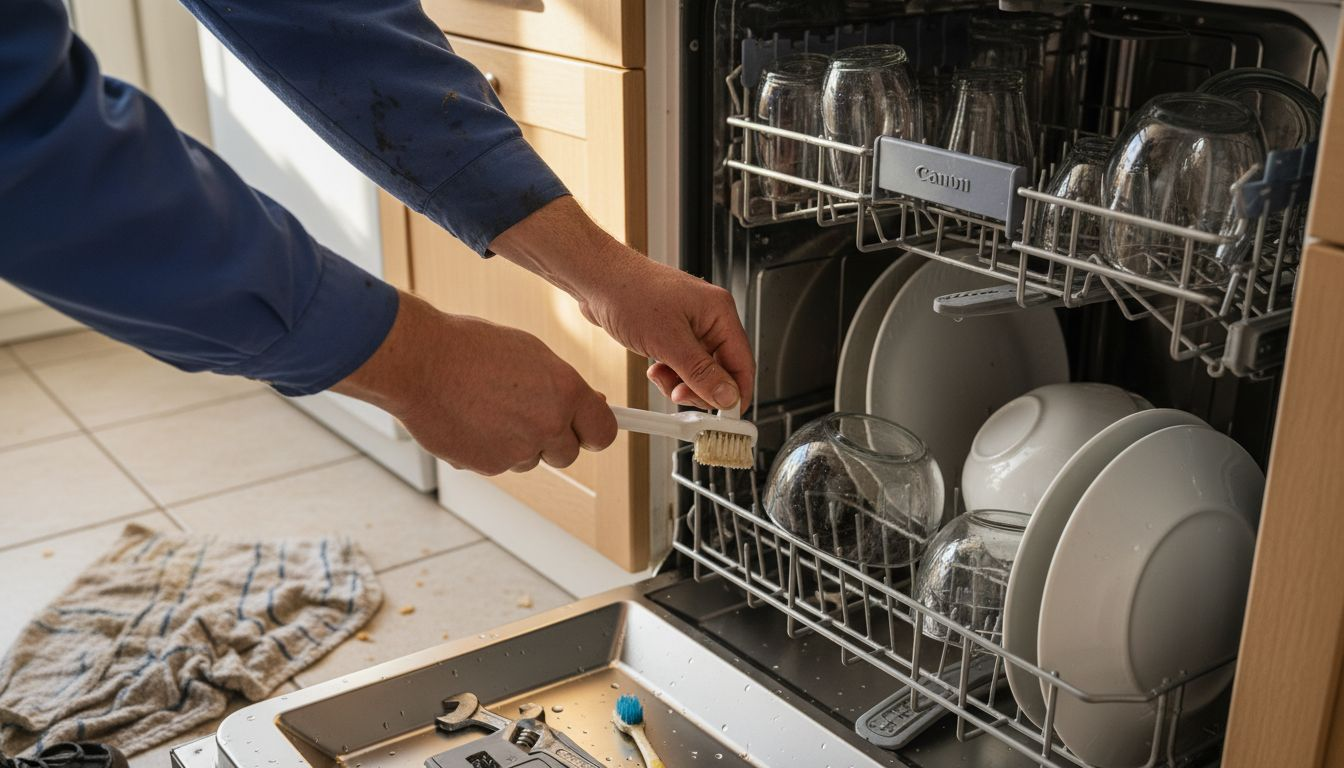
Some problems can be resolved through simple troubleshooting steps, such as checking spray arm positioning, cleaning filters, and ensuring proper loading techniques. However, complex electrical or mechanical issues may require professional intervention from experienced appliance repair technicians.
Pro tip: Run an empty hot water cycle with white vinegar monthly to eliminate buildup and prevent persistent dishwasher odors.
The following table summarizes common dishwasher problems, causes, and maintenance tips:
| Issue | Likely Cause | Preventive Maintenance |
|---|---|---|
| Dishes not clean | Clogged spray arms or filters | Clean filters monthly |
| Water leaking | Worn door seals or loose hoses | Check seals, tighten connections |
| Bad odors | Food debris buildup | Run vinegar cycle regularly |
| Unusual noises | Obstructed spray arms or pump | Inspect and reposition dishes |
| Drainage issues | Blocked filter or pump | Remove debris, clear filters |
When to Call for Professional Dishwasher Repair
New Jersey homeowners should understand that not all dishwasher problems can be resolved through DIY troubleshooting, and recognizing when to call a professional can save time, money, and prevent further damage to your appliance.
Critical Signs You Need Professional Repair:
- Electrical components malfunctioning
- Water leaking from multiple areas
- Persistent unusual noises during operation
- Control board or electronic display issues
- Complete system failure or no response when activated
Complex dishwasher repairs typically require specialized diagnostic tools and technical expertise that go beyond basic homeowner maintenance. Electrical and mechanical issues involving the motor, pump, or control systems demand professional intervention. Attempting to repair these components without proper training can potentially void warranties and cause additional damage.
Professional technicians bring several advantages to dishwasher repair. They can accurately diagnose underlying issues, source genuine replacement parts, and provide warranty-protected service. Additionally, certified repair specialists understand the specific challenges faced by New Jersey homeowners, including hard water conditions and unique home installation configurations that might complicate appliance performance.
Pro tip: Always document any observed symptoms or unusual behaviors before calling a repair technician to help them diagnose the problem more quickly.
Expert Help for Dishwasher Troubles in New Jersey Homes
Dishwasher problems like poor cleaning, leaks, or unusual noises can disrupt your daily routine and cause frustration. If you notice issues with spray arms, filters, or persistent odors, you deserve fast and reliable repair service that understands the unique challenges faced by New Jersey homeowners. Whether your dishwasher requires routine maintenance or complex electrical repair, trust the experts to restore your appliance quickly and efficiently.
Experience the difference with Expert Appliance Repair, a locally owned and operated company serving Marlboro and Monmouth County since 1988. Benefit from our same-day service, 24/7 emergency support, and upfront pricing that puts your mind at ease. Don’t let dishwasher troubles turn into costly damage or inconvenience. Visit our Appliance Archives – Expert Appliance to learn more about maintaining your kitchen appliances or contact us now to schedule your appointment. Act today and keep your home running smoothly with trusted professionals by your side.
Frequently Asked Questions
How does a dishwasher work?
A dishwasher operates by spraying hot water mixed with detergent through rotating spray arms to clean dishes, followed by rinsing with fresh water to remove soap residue. The process includes pre-rinse, main wash, rinse cycle, and drying cycle stages.
What are the common problems I might encounter with my dishwasher?
Common issues include poor cleaning performance, unusual noises, water leaks, odors, and drainage problems. These can often be traced back to clogged spray arms, dirty filters, or worn door seals.
When should I consider calling for professional dishwasher repair?
You should contact a professional if your dishwasher exhibits electrical malfunctions, persistent leaks, unusual noises, or a complete system failure. Complex repairs often require specialized knowledge and tools.
What maintenance tips can help keep my dishwasher running efficiently?
Regular maintenance tips include cleaning the dishwasher filter monthly, ensuring proper loading techniques, running a vinegar cycle to eliminate odors, and checking spray arms for blockages.
Recommended
- 7 Essential Dishwasher Troubleshooting Steps for Quick Fixes – Expert Appliance
- 7 Essential Steps for Your Dishwasher Repair Checklist – Expert Appliance
- Dishwasher Repair | Appliance Repair Near Me | Dishwasher Not Cleaning
- 7 Essential Types of Home Appliances Every NJ Household Needs – Expert Appliance