

TL;DR:
- Clear, detailed repair estimates are essential to prevent unexpected costs and operational delays.
- Trustworthy estimates include diagnosis, itemized parts, separate labor charges, and warranty info.
- Asking questions and comparing multiple written estimates ensures fair pricing and indicates provider reliability.
Getting a repair estimate that reads like a mystery novel is one of the most frustrating moments any homeowner or small business owner in Monmouth County faces. You call a technician, they poke around your refrigerator or washer for twenty minutes, then hand you a quote with vague line items, bundled charges, and zero explanation. This guide will change that experience completely. You will learn how to read estimates like a pro, spot dishonest tactics, and demand the clarity you deserve before spending a single dollar on appliance repair.
Table of Contents
- Why clear repair estimates matter for homes and businesses
- What a trustworthy appliance repair estimate should include
- Recognizing common repair estimate red flags
- Comparing repair estimates: practical tips for homeowners and businesses
- Our perspective: what most guides miss about appliance repair estimates
- Need transparent, emergency appliance repair in Monmouth County?
- Frequently asked questions
Key Takeaways
| Point | Details |
|---|---|
| Insist on itemization | Reliable estimates clearly separate parts, labor, and diagnostic fees. |
| Watch for red flags | Avoid contractors who use vague diagnoses, bundle charges, or pressure tactics. |
| Business repairs cost more | Commercial appliance service is typically 1.5–2 times higher than residential. |
| Compare before you commit | Get several quotes and ask questions to spot differences and potential issues. |
Why clear repair estimates matter for homes and businesses
When a repair estimate is unclear, the damage goes far beyond simple confusion. Homeowners end up approving work they do not fully understand, and then face shock when the final invoice does not match what they expected. For small business owners in Marlboro and across Monmouth County, the stakes are even higher. A broken commercial oven or walk-in cooler is not just an inconvenience. It is a direct hit to your daily revenue.
Unclear estimates create three specific problems that you need to understand:
- Unexpected costs: Vague line items like “miscellaneous parts” or “labor adjustment” are red flags for surprise charges that inflate your bill at pickup.
- Disputes and delays: Without a written, itemized quote, you have no paper trail. Disagreements about what was agreed upon become impossible to resolve fairly.
- Operational downtime: For small businesses especially, every hour an appliance is out of service costs money. A repair that drags on because of poor communication about parts and timelines is a business problem, not just a mechanical one.
Small businesses face a distinct cost reality. Commercial rates are 1.5 to 2x higher than residential rates because of greater equipment complexity and the productivity impact of downtime. That makes precise, upfront pricing even more critical for business owners. You need to know exactly what you are paying for before work begins, not after.
“The best repair companies do not just fix appliances. They fix the communication problem that makes repair feel risky in the first place.”
Pro Tip: If you own or operate a business in Monmouth County, look into appliance repair for businesses to understand how commercial service agreements differ from standard residential calls. Commercial agreements often include priority scheduling and faster response times, which directly reduce your downtime risk.
Upfront pricing is not just a feature. It is a signal of trustworthiness. When a provider gives you a clear, written quote before starting any work, they are telling you they respect your time and your money. That matters whether you are a homeowner in Holmdel or a restaurant owner in Red Bank.
What a trustworthy appliance repair estimate should include
Not every estimate you receive will be honest or complete. But you do not have to be an expert to tell the difference. You just need to know what to look for. A reputable, transparent appliance repair estimate should have these components every single time.
The five essential elements of a solid estimate:
- Clear diagnosis: The technician should explain exactly what is wrong with your appliance, using specific language. “Faulty door latch spring causing improper seal” is a proper diagnosis. “Malfunction detected” is not.
- Itemized parts list: Every part being replaced should appear on its own line with a cost. Brand name, part number if available, and price. No exceptions.
- Separate labor charges: Labor should never be buried inside a parts charge. You deserve to know how many hours of work are expected and what the hourly or flat rate is.
- Diagnostic or service call fee: Most honest providers charge a fee to diagnose the problem. That is normal and fair. What is not fair is when that fee mysteriously disappears or gets inflated on the final bill.
- Warranty or guarantee information: Any trustworthy repair comes with some kind of written guarantee on both the parts and labor. This should appear on your estimate, not just mentioned verbally.
Here is a quick comparison to help you tell a clean estimate from a problematic one:
| Feature | Trustworthy estimate | Suspicious estimate |
|---|---|---|
| Diagnosis | Specific and detailed | Vague or generic |
| Parts | Listed individually with prices | Bundled as “parts and supplies” |
| Labor | Separate line item | Mixed into total cost |
| Pressure to sign | None, take your time | Urgency to commit immediately |
| Warranty | Written, clear terms | Verbal only or absent |
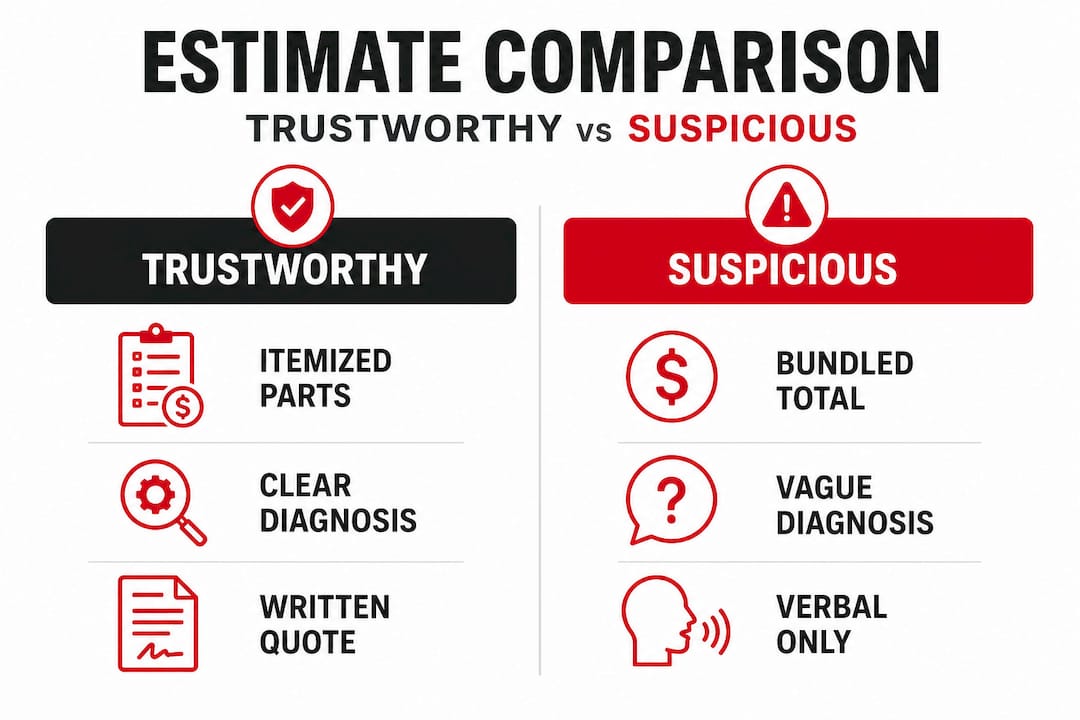
Red flags like vague diagnosis and no itemization are well-documented warning signs that you should never ignore. A technician who skips proper appliance diagnosis steps and jumps straight to recommending an expensive control board replacement without testing other components is a major warning sign.
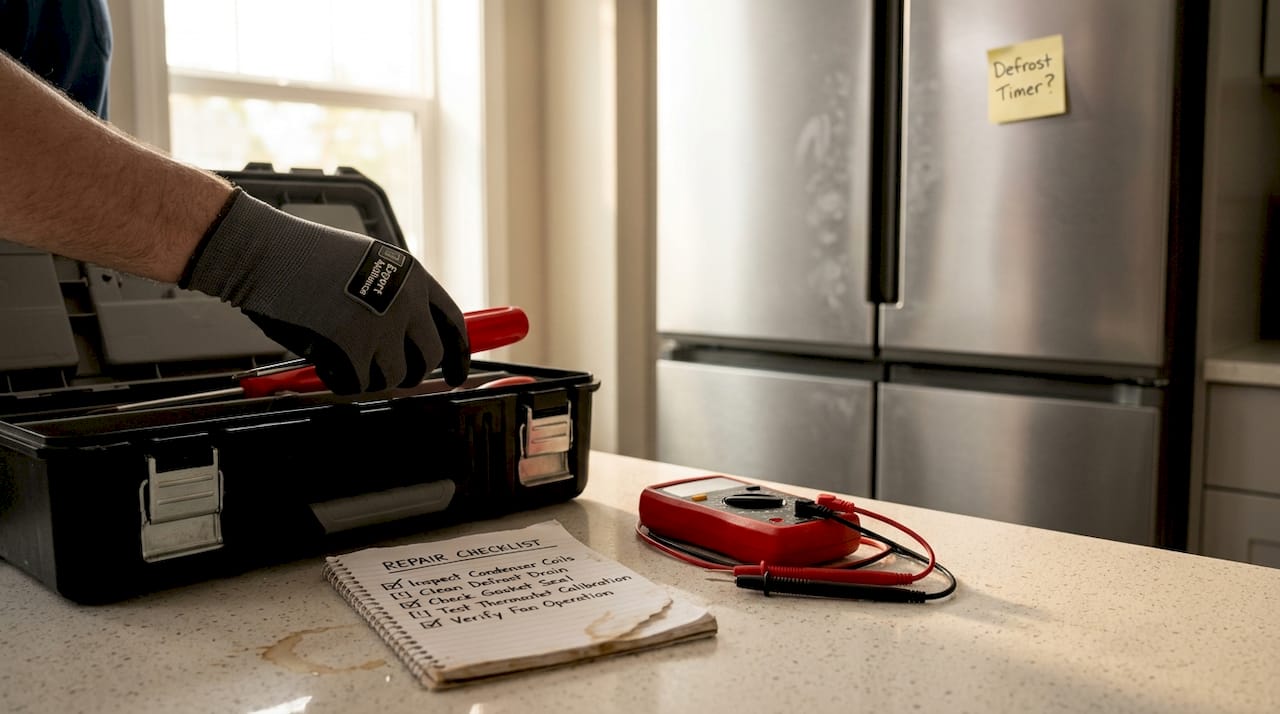
Pro Tip: Before the technician arrives, write down any symptoms your appliance is showing. Unusual noises, error codes, or performance changes. This helps ensure the diagnosis is thorough and lets you verify that the technician actually addressed each issue. You can also review appliance troubleshooting tips to prep for the conversation.
Recognizing common repair estimate red flags
Even with a solid checklist of what to expect, some red flags are subtle enough to slip past you if you are not looking carefully. Here is what to watch for when a technician hands you a quote.
Warning signs you should never ignore:
- A diagnosis that uses general terms like “electrical issue,” “system failure,” or “wear and tear” without any specifics
- Charges listed as one lump sum with no breakdown of what you are actually paying for
- A technician who pushes you to sign immediately, claiming the price will go up or the part will sell out
- Skipping a proper diagnostic process and jumping straight to the most expensive repair option
- Refusal to provide a written estimate, or insisting that a verbal agreement is enough
| Red flag | What it signals | What to do |
|---|---|---|
| Vague diagnosis | Possible incompetence or upselling | Ask for written specifics |
| Bundled charges | Hidden markups | Request line-by-line breakdown |
| Pressure tactics | Manipulation | Walk away, get second opinion |
| No diagnostic step | Shortcuts being taken | Insist on proper testing first |
| No written warranty | Low confidence in the repair | Demand warranty in writing |
Jumping to expensive parts like control boards without testing other components first is one of the clearest signs of a problematic repair service. A washing machine that is not spinning could have a broken lid switch, a worn drive belt, or a motor coupling issue. Each of those is far cheaper than a new control board. A good technician tests all options before recommending the costly one.
“A repair pro who cannot explain the diagnosis in plain language is either not sure what is wrong or hoping you will not ask questions. Either way, that is a problem.”
This applies equally whether you are getting troubleshooting appliance repairs done on a home dryer or a commercial dishwasher. The diagnostic standard should not change based on the type of appliance or who is paying the bill.
Another subtle red flag is when the technician quotes a suspiciously low price upfront, then adds fees for things like “shop supplies,” “environmental disposal,” or “trip charges” that were never mentioned. Always ask whether the quote is all-inclusive or whether additional fees may apply before approving anything.
Comparing repair estimates: practical tips for homeowners and businesses
Getting more than one estimate is smart. But simply collecting quotes and picking the cheapest one is not the whole picture. Here is how to actually compare estimates in a way that protects you.
Step-by-step process for comparing appliance repair estimates:
- Request at least two written estimates. Never rely on a verbal quote. A written estimate gives you something to reference if the final bill is different.
- Compare apples to apples. Make sure each estimate includes the same scope of work. If one provider includes a diagnostic fee and another does not, that does not mean the second one is cheaper.
- Verify credentials. Check for licensing, insurance, and online reviews specific to Monmouth County. A five-star rating from 200 local customers carries more weight than a clean website.
- Ask clarifying questions. If a line item says “labor,” ask how many hours that covers. If it says “part,” ask for the brand and part number. Reputable technicians will not hesitate to answer.
- Factor in speed for business situations. If you own a business and a broken appliance is costing you revenue, expedited service may be worth paying a premium for. Always ask whether same-day or next-day service is available.
Pro Tip: For business owners, factor in the real cost of downtime when comparing estimates. A quote that is $100 cheaper but adds two extra days without your equipment may actually cost you far more in lost sales or productivity.
Vague, bundled estimates with no itemization are almost always a sign that the lower price will not hold by the time the final bill arrives. Clarity is worth every penny.
Small businesses should also understand how commercial vs residential repair differences affect service expectations. Commercial repairs typically involve heavier-duty parts, faster wear rates, and more complex electrical configurations. An estimate that does not reflect that complexity is likely underestimating the job.
Finally, if you are deciding whether to repair or replace an older appliance, a well-structured estimate can help make that call. A detailed repair quote that approaches or exceeds 50% of the appliance’s replacement cost is a strong signal to upgrade. Check out our repair vs upgrade guide for a full breakdown of how to make that decision with confidence.
Key questions to ask every repair provider before approving work:
- What exactly is wrong, and how did you determine that?
- What parts will you use, and are they OEM (original equipment manufacturer) or aftermarket?
- How long will the repair take from approval to completion?
- What is your warranty on both parts and labor?
- Are there any circumstances where this estimate could increase?
Our perspective: what most guides miss about appliance repair estimates
Here is something most repair guides do not tell you. The estimate is not just a price tag. It is a test.
When you ask a technician to break down their quote line by line, you are not just trying to save money. You are watching how they respond. A technician who gets defensive, rushes the conversation, or cannot explain their own pricing in plain language is showing you exactly what working with them will feel like. That reaction tells you more about the company than any review you could read online.
We have been doing this since 1988, and the pattern is remarkably consistent. The most trusted providers are transparent even when their quote is not the lowest in the room. They explain why a specific part costs what it does, they tell you honestly if a repair might not be worth it, and they put everything in writing without being asked twice. That level of communication is not accidental. It is a culture.
For small business owners, this point is even more urgent. Your appliances support your livelihood, and you cannot afford to be managed. You need a provider who matches your pace, speaks plainly about timelines, and backs their work with a real guarantee. If a technician cannot demonstrate that before the job starts, do not expect it after.
We also believe that hesitation to give a written estimate before starting work is the single biggest red flag in this industry. If a provider says “we’ll figure it out as we go,” that is not flexibility. That is a blank check they are asking you to hand over. Insist on written estimates every time. It protects you, and it actually protects the repair company too, because good documentation prevents misunderstandings on both sides.
Choosing a repair provider based on reliable appliance repairs is about finding someone whose process earns your trust before the first wrench turns. Price matters. But transparency matters more.
Need transparent, emergency appliance repair in Monmouth County?
You now have the tools to read any estimate with confidence, ask the right questions, and avoid the providers who rely on confusion to pad their bills. The next step is finding a repair company that already operates the way you now know a good one should.
At Expert Appliance, we provide written, upfront estimates on every job before any work begins. Whether you need immediate help with a broken refrigerator at midnight or same-day service for a commercial kitchen appliance that cannot wait, our team is ready. We offer full appliance and vacuum repair services across Monmouth County, and our 24/7 availability means you are never stuck waiting until Monday morning. Read our guide on emergency appliance repair to know exactly what to do when something breaks at the worst possible time. When you are ready, get a repair estimate from a team that has served this community since 1988.
Frequently asked questions
How do I know if a repair estimate is accurate?
A reliable estimate includes a specific diagnosis, itemized parts and labor, and no pressure to sign on the spot. If any of those elements are missing, ask directly before approving the work.
Why are commercial appliance repair rates higher?
Commercial rates are 1.5 to 2x higher because commercial equipment is more complex and business downtime carries a direct financial cost that adds urgency and liability to every job.
What questions should I ask before approving a repair?
Ask for a written diagnosis, a line-by-line breakdown of parts and labor, the brand of replacement parts being used, and a written warranty on parts and labor before signing anything.
Is it worth getting multiple estimates for appliance repair?
Yes, comparing at least two written estimates helps you verify fair pricing and reveals red flags like vague diagnosis or bundled charges that one provider alone might hide behind a reasonable-sounding total.
Recommended
- Expert Appliance: Appliance Repair Tips & Troubleshooting
- Appliance Upgrades vs. Repairs: Expert Advice in 2025
- Appliance Maintenance: Expert Tips to Prevent Repairs
- Master the Appliance Service Workflow for Fast Repairs – Expert Appliance
- Why in-home moving estimates save costs and prevent surprises