
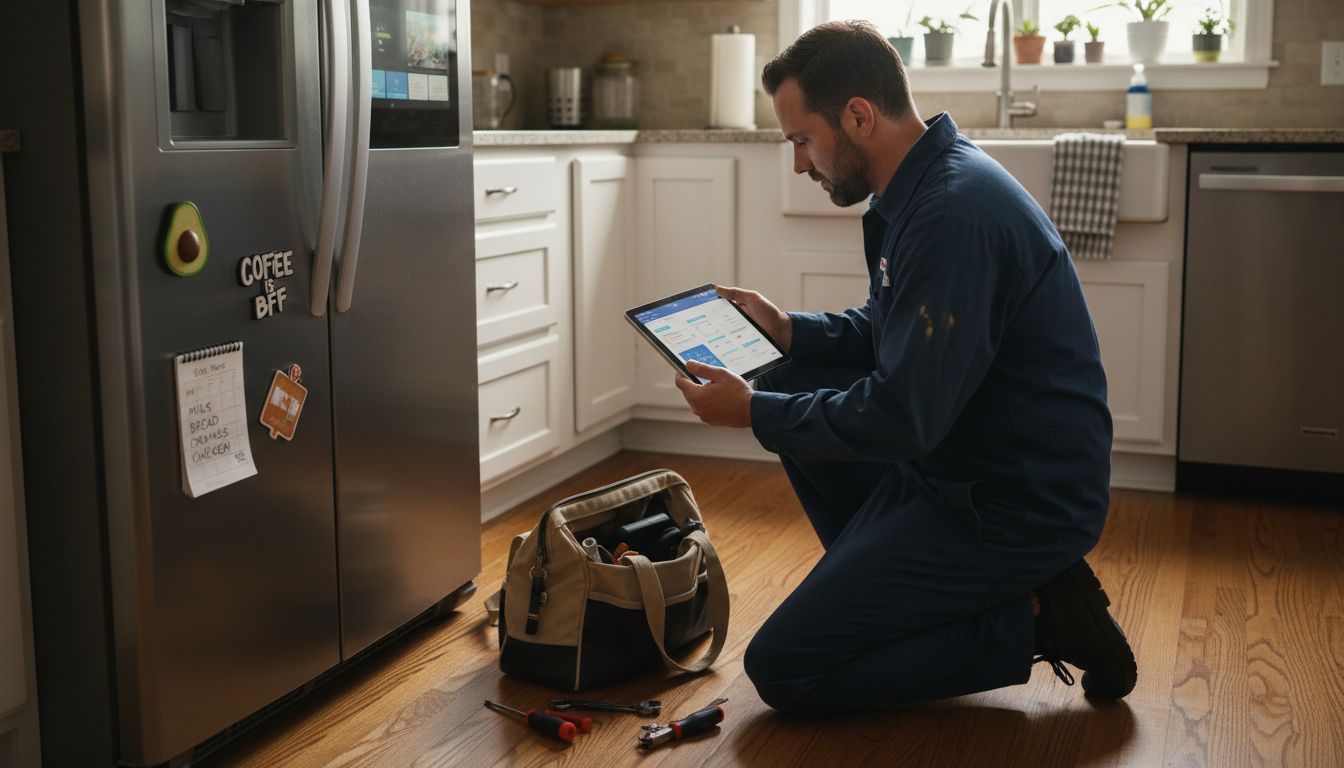
Appliance issues disrupt daily routines for many American families, and homeowners in Marlboro, NJ face these frustrations all too often. With over 85 percent of modern appliances now featuring advanced digital components, knowing where to turn for fast, precise repairs matters more than ever. As technology reshapes appliance maintenance, understanding how smart diagnostics and connected devices improve efficiency can make the difference between costly breakdowns and reliable home comfort.
Table of Contents
- Defining Modern Technology In Appliance Repair
- Smart Diagnostics And Remote Troubleshooting Tools
- The Rise Of IoT And Predictive Maintenance
- Impacts On Speed, Reliability, And Cost
- Challenges With New Technology Adoption
Key Takeaways
| Point | Details |
|---|---|
| Embrace Modern Training | Continuous training in advanced diagnostic technologies is essential to remain competitive in appliance repair. |
| Utilize Smart Diagnostics | Implementing smart diagnostic tools can enhance remote troubleshooting capabilities and improve repair efficiency. |
| Adopt IoT Practices | Developing expertise in IoT technologies enables predictive maintenance, allowing for proactive service models and reduced breakdown risks. |
| Manage Technology Challenges | Addressing training, cybersecurity, and organizational change is key to successfully adopting emerging technologies in appliance repair. |
Defining Modern Technology in Appliance Repair
Modern technology in appliance repair has dramatically transformed how technicians diagnose, troubleshoot, and resolve complex mechanical and electronic issues. Today’s repair professionals must understand sophisticated digital systems and advanced diagnostic technologies that go far beyond traditional mechanical repair techniques.
The evolution of appliance technology involves intricate electronic components and interconnected systems. Sophisticated software like computer-aided design (CAD) now enables precise simulation and testing of appliance systems, creating more complex devices that require specialized technical skills. Modern appliance repair demands expertise in areas such as:
- Digital logic systems
- Electrical engineering principles
- Internet of Things (IoT) integration
- Advanced motor technologies
- Computerized diagnostic tools
Technical professionals must now understand thermodynamics, fluid dynamics, and digital control systems to effectively diagnose and repair contemporary household appliances. The traditional model of simply replacing parts has been replaced by a comprehensive approach that requires deep technological understanding and sophisticated diagnostic skills.
Here’s a summary of the expertise required for modern appliance repair versus traditional approaches:
| Knowledge Area | Traditional Repair Focus | Modern Repair Focus |
|---|---|---|
| Mechanical Skills | Basic part replacement | Integration with electronics |
| Electronic Understanding | Limited | Microprocessors, digital systems |
| Diagnostic Methods | Manual, visual inspection | Advanced digital diagnostic tools |
| Training Needed | Occasional updates | Continuous technology training |
| System Complexity | Simple mechanisms | IoT and networked devices |
Pro tip: Invest in continuous technical training and stay updated with emerging digital diagnostic technologies to remain competitive in the modern appliance repair industry.
Smart Diagnostics and Remote Troubleshooting Tools
The advent of smart diagnostics has revolutionized appliance repair by enabling technicians to identify and resolve issues with unprecedented precision and efficiency. Remote diagnostic technologies allow professionals to monitor appliance performance, detect potential failures, and troubleshoot problems without physically being present at the location.
Modern appliance repair integrates sophisticated technical diagnostics and troubleshooting methodologies that leverage digital technologies to streamline repair processes. These advanced tools provide several critical advantages:
- Real-time performance monitoring
- Predictive maintenance capabilities
- Wireless data exchange
- Instant problem identification
- Reduced on-site service requirements
The Internet of Things (IoT) has further transformed remote troubleshooting by enabling smart appliances to self-diagnose and communicate technical issues directly to repair technicians. This technology allows for immediate analysis of system performance, electrical consumption, and potential mechanical failures, dramatically reducing downtime and repair costs for homeowners.
Pro tip: Invest in smart diagnostic tools and continuous training to stay ahead of evolving appliance technologies and enhance your remote troubleshooting capabilities.
Below is a comparison of remote versus on-site troubleshooting in appliance repair:
| Troubleshooting Type | Response Time | Technician Presence | Diagnostic Accuracy |
|---|---|---|---|
| Remote | Immediate access | Off-site | High with digital tools |
| On-site | Scheduling required | Technician at location | Varies; manual verification |
The Rise of IoT and Predictive Maintenance
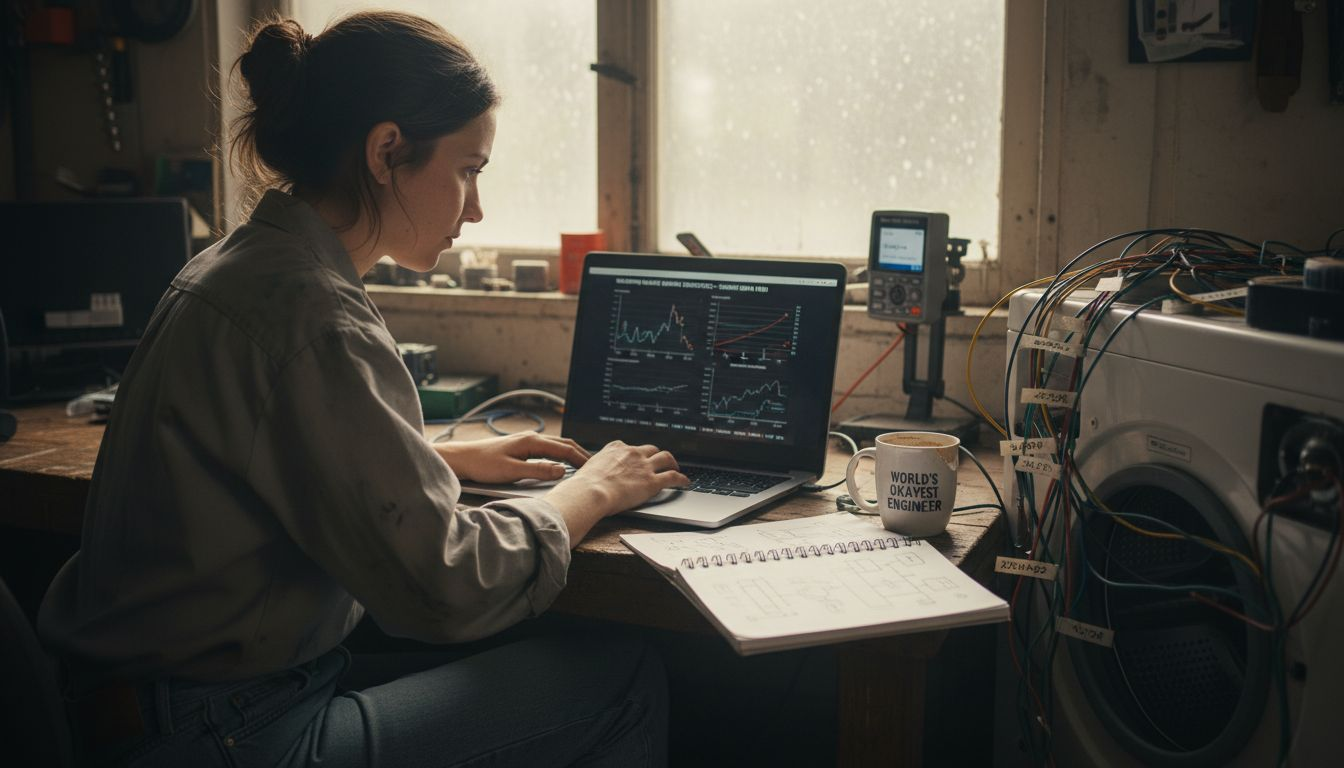
The integration of Internet of Things (IoT) technology has fundamentally transformed predictive maintenance in appliance repair, enabling unprecedented insights into equipment performance and potential failures. IoT technologies now allow for sophisticated sensor-driven maintenance strategies that can anticipate problems before they become critical system failures.
Advanced AI-powered predictive maintenance models leverage real-time sensor data to create comprehensive monitoring systems that dramatically improve appliance reliability. These intelligent systems provide several key benefits for homeowners and repair professionals:
- Continuous equipment performance tracking
- Early detection of potential mechanical issues
- Precise maintenance scheduling
- Reduced unexpected breakdown risks
- Extended appliance lifespan
Modern IoT-enabled appliances can now communicate diagnostic information in real-time, allowing technicians to develop proactive maintenance strategies. This technological evolution means repair professionals can transition from reactive fix-it approaches to predictive, data-driven service models that prevent problems before they disrupt household operations.
Pro tip: Develop expertise in IoT sensor technologies and data analytics to stay ahead of emerging predictive maintenance trends in appliance repair.
Impacts on Speed, Reliability, and Cost
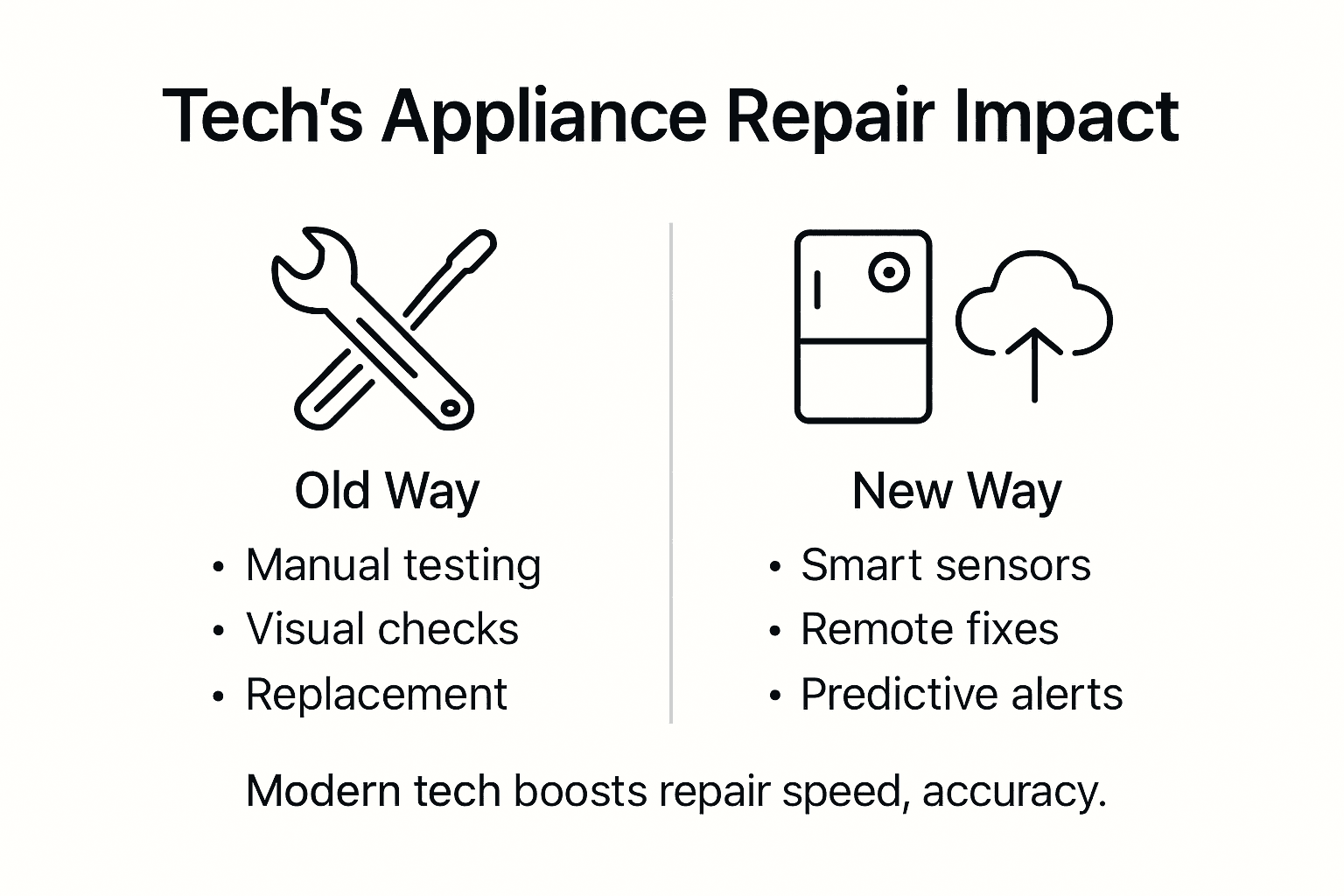
Modern technological advancements have fundamentally transformed appliance repair by significantly improving speed, reliability, and overall cost-effectiveness. Technological innovations now enable repair professionals to diagnose and resolve issues more quickly and efficiently than ever before, reducing downtime and minimizing customer inconvenience.
Reliability metrics in appliance maintenance have dramatically improved through sophisticated diagnostic tools and predictive maintenance strategies. These technological improvements provide several critical advantages:
- Faster problem identification
- Reduced service call frequencies
- More precise diagnostic capabilities
- Lower long-term maintenance expenses
- Enhanced equipment performance consistency
The economic impact of these technological advancements extends beyond immediate repair experiences. By implementing advanced diagnostic technologies, repair services can optimize resource allocation, reduce unnecessary interventions, and provide more transparent, cost-effective solutions for homeowners. This approach transforms appliance repair from a reactive service to a proactive, data-driven maintenance strategy that ultimately saves time and money.
Pro tip: Invest in continuous technology training to leverage emerging diagnostic tools and maximize repair efficiency and customer satisfaction.
Challenges With New Technology Adoption
The rapid evolution of appliance repair technology presents significant challenges for professionals and organizations adopting new technological systems. These challenges extend beyond mere technical implementation and encompass complex human, economic, and strategic considerations that can impact the entire repair ecosystem.
Technology adoption barriers in appliance repair create multifaceted challenges that repair professionals must navigate carefully. Key obstacles include:
- Substantial initial technology investment costs
- Workforce training and skill development requirements
- Cybersecurity and data protection concerns
- Infrastructure compatibility issues
- Resistance to organizational change
Successful technology integration demands a strategic approach that balances innovation with practical considerations. Repair professionals must develop comprehensive strategies that address technological complexity, manage financial investments, and create adaptive learning environments that can rapidly incorporate emerging diagnostic and repair technologies.
Pro tip: Develop a continuous learning mindset and allocate regular resources for technology training to effectively manage emerging technological challenges in appliance repair.
Stay Ahead with Expert Appliance Repair’s Modern Solutions
The article highlights how advancing technology presents challenges in diagnosing and repairing today’s complex appliances. You might be facing frustration with breakdowns that don’t respond to traditional fixes or worry about rising repair costs and long wait times. Key issues include mastering digital diagnostics, IoT integration, and rapid troubleshooting to restore your appliances quickly and reliably.
At Expert Appliance Repair, we understand the importance of blending technical expertise with fast, dependable service. Our team in Marlboro, NJ specializes in state-of-the-art repair techniques for refrigerators, washers, dryers, ovens, and more. We utilize modern diagnostic tools to pinpoint problems accurately and offer same-day service — ensuring your household runs smoothly with less downtime.
Don’t wait for a small problem to become a costly emergency. Explore our comprehensive Appliance Archives to learn more about how we tackle today’s sophisticated appliance issues. Whether you need urgent help repairing a vacuum or a major kitchen appliance, trust a family-owned company that has served Monmouth County since 1988. Contact Expert Appliance Repair now for reliable, knowledgeable service that keeps pace with modern technology.
Frequently Asked Questions
What is modern technology’s impact on appliance repair?
Modern technology has significantly improved the methods and tools used in appliance repair, enabling faster diagnostics, improved accuracy, and enhanced predictive maintenance capabilities.
How does smart diagnostics work in appliance repair?
Smart diagnostics utilize advanced digital technologies to monitor appliance performance in real time, allowing technicians to identify issues remotely and proactively before they become critical failures.
What are the benefits of IoT in appliance maintenance?
IoT technology enables continuous monitoring of appliance performance, early detection of potential issues, and the development of proactive maintenance strategies, ultimately extending the lifespan of appliances.
What challenges do repair professionals face when adopting new technologies?
Repair professionals may encounter challenges such as high initial costs, the need for workforce training, cybersecurity concerns, and infrastructure compatibility issues when integrating new technologies into their service models.
Recommended
- What Is Smart Appliance Repair and Why It Matters – Expert Appliance
- Role of Appliance Repair for Businesses: Protecting Productivity – Expert Appliance
- 7 Key Benefits of Appliance Repair for NJ Homeowners – Expert Appliance
- Boost Your Home’s Efficiency with Reliable Appliance Repairs – Expert Appliance
- Understanding What is a Dishwasher High Loop and Why You Need It | Chicago Home Inspect LLC