
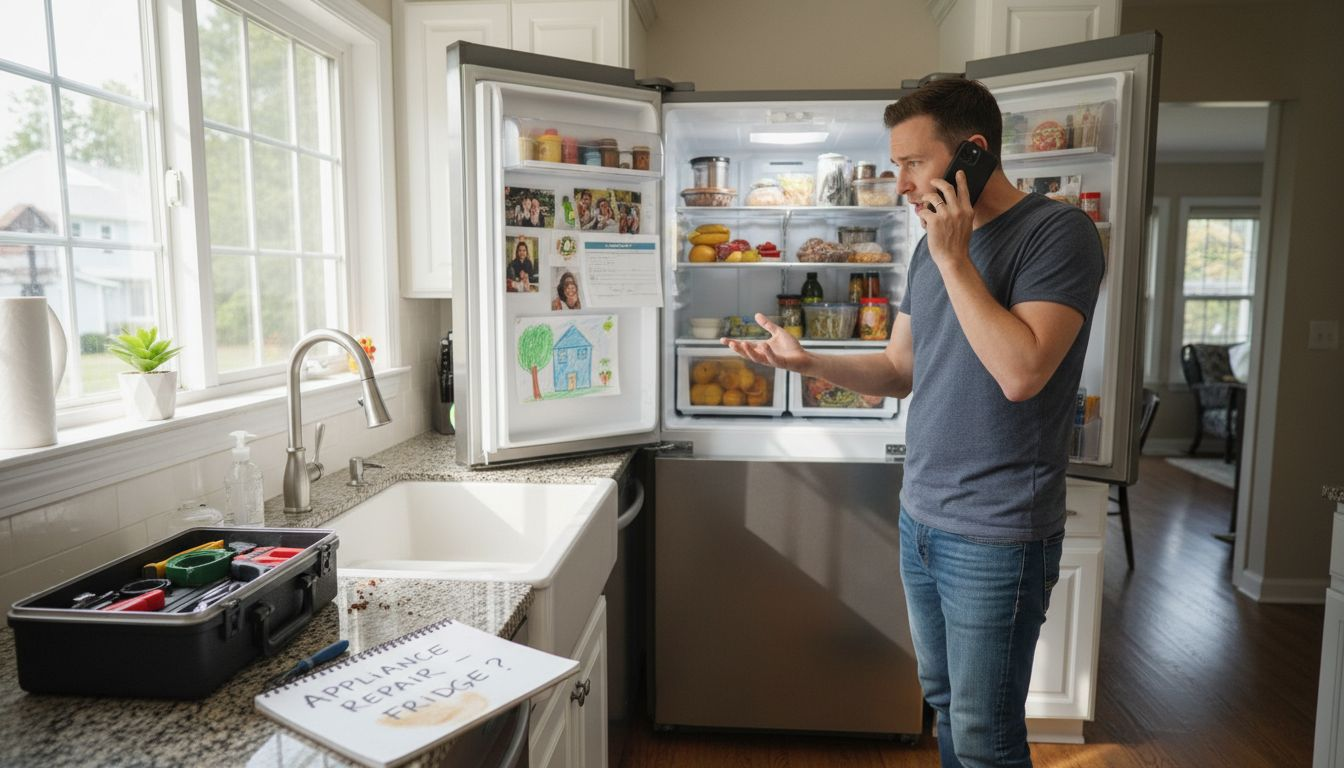
Appliance trouble always seems to strike when you least expect it. One moment, your refrigerator is quietly humming, and the next, you spot water on the floor or hear an odd rattle in the laundry room. Ignoring these signs can lead to expensive repairs, wasted food, or even safety risks in your MARLBORO home.
The good news is that the most urgent appliance warning signs are easy to spot once you know what to look for. By catching problems early, you can save money, protect your home from water damage, and keep your family safe. This practical guide breaks down the clearest signals your appliances need emergency repair, with actionable tips you can use right away.
Get ready to pinpoint the most common problems and learn what steps to take before a minor glitch turns into a major disaster. You will discover how to respond quickly—and what to avoid—so your appliances stay running and your home stays safe.
Table of Contents
- 1. Unusual Noises Or Loud Vibrations
- 2. Sudden Appliance Power Loss
- 3. Unexplained Leaks Or Water Damage
- 4. Burning Smells Or Electrical Odors
- 5. Temperature Issues With Fridges Or Ovens
- 6. Faulty Controls Or Error Messages
- 7. Visible Sparks Or Smoke From Appliances
Quick Summary
| Takeaway | Explanation |
|---|---|
| 1. Address Noises Immediately | Unusual sounds from appliances indicate potential issues and require professional diagnosis before escalating repairs. |
| 2. React Swiftly to Power Loss | If an appliance loses power, unplug it and contact a technician to prevent further damage or hazards. |
| 3. Monitor for Leaks Early | Catching leaks promptly prevents extensive water damage and costly repairs; stop using the appliance and call for help. |
| 4. Don’t Ignore Burning Smells | Burning odors from appliances signal serious problems that can lead to fires; cease use and seek emergency repairs without delay. |
| 5. Respond to Sparks or Smoke | Sparks or smoke indicate an immediate fire hazard; unplug the appliance and call emergency services to ensure safety. |
1. Unusual Noises or Loud Vibrations
When your washing machine sounds like it’s auditioning for a heavy metal band or your refrigerator hums louder than your neighbor’s lawn mower, something needs attention. Unusual noises and excessive vibrations are often the first warning signs that an appliance is struggling and may need professional repair soon.
These sounds rarely disappear on their own. A squeaking dryer, grinding garbage disposal, or rattling dishwasher typically indicates worn components like drum bearings, worn belts, or loose internal parts. Ignoring these warnings can lead to complete appliance failure, which costs far more to fix than addressing the issue early. Think of it like your car’s check engine light. The noise is your appliance’s way of signaling that something is wrong.
The source of appliance noise often comes from wear and tear, which happens naturally over time. Bearings deteriorate, rubber seals crack, and metal parts loosen as components expand and contract through countless heating and cooling cycles. Vibrations can worsen these problems by causing additional strain on already weakened parts. This cycle of degradation accelerates without intervention, similar to how repair initiatives that teach maintenance skills help extend appliance life and prevent premature failures.
What makes this challenging for homeowners in Marlboro is that many noise issues develop gradually. You might notice the dryer is slightly louder this month compared to last month. By the time the noise becomes impossible to ignore, internal damage has often progressed significantly. This is why catching these warning signs early matters so much.
The good news is that most unusual noises indicate repairable problems rather than irreversible damage. A worn belt can be replaced. A loose drum can be tightened. A failing bearing can be restored. The key is getting professional diagnosis before the problem cascades into multiple component failures. Same-day service helps you avoid prolonged disruption while preventing further damage.
Pro tip: Record a 10-second video of the noise and send it to your repair technician before the appointment so they arrive prepared with the right parts and tools, potentially completing the job faster.
2. Sudden Appliance Power Loss
Your refrigerator stops humming. The dishwasher goes silent mid-cycle. The oven’s display goes dark. Sudden power loss to appliances can happen due to electrical storms, tripped circuit breakers, faulty wiring, or actual power outages affecting your Marlboro home. Understanding what causes this issue and how to respond properly makes a real difference in protecting your appliances and your family.
Power loss isn’t always about the power company. Sometimes it’s an internal electrical problem within your home’s wiring or the appliance itself. A faulty outlet, overloaded circuit, or damaged power cord can cut electricity to your appliance while the rest of your house runs fine. Other times, a failing component inside the appliance creates an electrical fault that triggers automatic shutdown. Determining which scenario you’re facing requires professional expertise, especially since electrical issues can be genuinely dangerous.
When power suddenly returns after an outage, surge damage becomes a serious risk. Electrical surges during power restoration can fry sensitive electronics and circuit boards inside your appliances. This is why preparing for power outages by keeping appliances off helps protect them from damage when electricity returns. The shock of suddenly restored power hitting unprepared appliances can cause components to fail instantly.
For immediate household safety, keeping refrigerator doors closed during outages preserves your food while protecting your family from foodborne illness. This also prevents the appliance from straining when power returns. Beyond food safety, you’ll want to check that your appliances actually work before relying on them again.
If you notice an appliance loses power while others stay on, don’t keep plugging it back in repeatedly hoping it works. This can damage the appliance further or create fire hazards. Instead, unplug it completely and call a repair technician to diagnose the real problem. Your electrical system and appliance are trying to tell you something is wrong.
Power loss combined with other signs like burning smells, visible scorching, or tripped breakers demands immediate professional attention. These warning signals indicate serious electrical issues that require same-day repair to keep your home safe.
Pro tip: If an appliance loses power during a storm, leave it unplugged for 30 minutes after power returns to allow surge protectors to reset, then have a technician inspect it before using it again.
3. Unexplained Leaks or Water Damage
A puddle appears under your dishwasher. Your washing machine leaves water on the floor. Your refrigerator drips onto the kitchen tiles. Water leaks from appliances can start small and go unnoticed until serious damage develops in your Marlboro home. Catching leaks early prevents expensive water damage to your floors, cabinets, and subflooring while saving money on repair costs.
Appliance leaks happen for predictable reasons. Supply line connections crack or loosen over time. Seals deteriorate as rubber components age and lose flexibility. Drain hoses crack or disconnect. Interior components corrode or develop holes. The good news is that most leaks are fixable problems, not reasons to replace an appliance. A leaking dishwasher often just needs a new seal or a reattached hose. A dripping coffee maker might simply need descaling to remove mineral buildup that causes damage to internal seals.
Identifying leaks from dishwashers and washing machines early prevents the kind of water damage that spreads to surrounding areas and causes mold growth. Water damage compounds quickly, turning a small leak into a major problem within days. The longer you wait, the more structural damage occurs, making the eventual repair far more expensive than addressing it immediately.
Kitchen appliances like dishwashers and coffee makers are particularly prone to leaking. Descaling coffee makers and replacing worn seals are simple maintenance tasks that prevent leaks and extend appliance life significantly. Regular maintenance catches minor issues before they become water damage emergencies. Getting familiar with your appliance’s normal operation helps you spot changes quickly.
When you notice water where it shouldn’t be, stop using the appliance immediately. Continuing to run it spreads the leak and creates additional damage. Turn off the water supply if possible and call a repair technician right away. Water damage in appliances often requires same-day attention because it affects multiple systems and can spread to your home’s structure.
Pro tip: Place a shallow tray or towel under appliances prone to leaking like dishwashers and washing machines to catch small leaks early before they damage your flooring.
4. Burning Smells or Electrical Odors
You catch a whiff of something acrid near your oven. Your dryer smells like charred plastic. An electrical burning odor coming from any appliance is never normal and demands immediate attention. This is one of the few appliance problems where hesitation can lead to fire, injury, or property damage.
Burning smells from appliances indicate serious electrical or mechanical problems. Overheating wiring, damaged components, or friction from worn parts generate these odors as insulation breaks down and materials overheat. The smell itself is your appliance’s distress signal. Unlike a strange noise that might develop slowly, a burning smell means something is actively failing right now. Ignoring it puts your home and family at risk.
Home odors you should never ignore include electrical burning smells, which signal overheating wiring or malfunctioning internal parts. These odors can precede electrical fires, which spread rapidly through walls and hidden spaces where you cannot see them. The danger increases the longer you continue running the appliance, as heat builds and spreads to surrounding materials.
Not all odors from appliances are electrical in nature. Sometimes a burning smell comes from food debris or a forgotten plastic bag inside an oven. Mold or spoiled food creates musty odors rather than sharp electrical smells. The key difference is that true electrical burning has a distinct acrid quality that smells like melting plastic or charred components. If you cannot immediately identify the source as food related, treat it as an electrical issue.
Your response must be swift and decisive. Stop using the appliance immediately and unplug it from the wall outlet. Do not assume it will be fine if you wait. Do not try to troubleshoot or repair it yourself. Call a professional repair technician right away. In Marlboro, same-day emergency service ensures you get expert help before the problem escalates.
Never use an appliance that smells like burning electrical components. The fire risk is real and develops faster than you might expect.
Pro tip: If you smell burning while an appliance is running, unplug it first, then open windows to ventilate your home before calling for emergency repair service.
5. Temperature Issues with Fridges or Ovens
Your refrigerator isn’t keeping food cold. Your oven won’t reach the temperature you set. Temperature problems with these essential appliances create immediate stress because they affect food safety and your ability to cook meals. Unlike a noisy appliance you can live with, temperature failures demand urgent attention within hours, not days.
Refrigerators maintain food safety by keeping contents below 40 degrees Fahrenheit. When your fridge runs warmer than this, bacteria growth accelerates rapidly, making stored food unsafe to eat within hours. The problem could stem from a failing thermostat that no longer reads temperatures accurately, compressor issues that reduce cooling power, or dirty condenser coils blocking airflow. Each cause requires different solutions, which is why professional diagnosis matters. Simply adjusting the thermostat dial might help temporarily, but if the underlying component has failed, that fix won’t last.
Ovens with temperature problems create a different challenge. An oven that won’t heat to your desired temperature may have a broken heating element, faulty thermostat, or malfunctioning temperature sensor. Baking becomes impossible because you cannot trust the actual internal temperature matches what the display shows. Your cookies spread too thin. Your casserole cooks unevenly. Recipes fail because the temperature control has failed.
Checking refrigerator temperature with an external thermometer helps confirm whether the appliance is actually failing or just needs thermostat adjustment. Cleaning the compressor and condenser coils sometimes improves cooling if dirt buildup is the culprit. However, persistent temperature problems usually indicate internal component failure that requires replacement parts and professional repair.
Food safety becomes critical when temperature control fails. Maintaining proper refrigerator and freezer temperatures below 40 degrees Fahrenheit and 0 degrees Fahrenheit prevents dangerous bacteria growth. If your fridge stops cooling properly, you have a limited window to salvage food before it spoils. In Marlboro, same-day repair service means you can restore safe food storage quickly before you experience significant food loss.
Don’t wait with temperature issues. Call for emergency repair service as soon as you notice your fridge is warmer than normal or your oven won’t heat properly. Every hour of incorrect temperature increases the risk of food spoilage and safety problems.
Pro tip: Place a thermometer in your refrigerator and freezer to monitor actual temperatures daily, allowing you to catch cooling problems before food spoils and call for repair immediately.
6. Faulty Controls or Error Messages
Your refrigerator display shows a cryptic error code. The oven control panel stops responding to button presses. Your washing machine won’t start despite your repeated attempts. Faulty controls and mysterious error messages signal that your appliance’s brain is struggling. When these electronic systems fail, the entire appliance becomes unreliable and potentially unsafe.
Modern appliances rely on sophisticated control boards and electronic components to manage every function. These circuit boards regulate heating, cooling, water flow, and timing sequences. When a control board fails, it disrupts multiple functions simultaneously. An ice maker stops working. A dishwasher won’t dispense detergent at the right time. An oven heating element won’t activate. The appliance might still power on, but it cannot perform its intended job. Common appliance problems including faulty control panels often require professional diagnosis because the electronics are complex and interconnected.
Error messages are your appliance’s way of communicating distress. An error code is not random gibberish. It indicates a specific problem that the appliance has detected through its internal sensors. The code might mean a temperature sensor has failed, water supply is interrupted, or a component is overheating. Understanding what the error code means helps you communicate the problem accurately to a technician and avoid unnecessary troubleshooting steps.
The challenge with faulty controls is that they often indicate internal electronic failures beyond simple fixes. Replacing a control board requires technical expertise and specific replacement parts. You cannot simply restart the appliance and hope the problem resolves itself. Unlike a mechanical failure you might hear or see, electronic failures remain invisible until the appliance stops working.
When faulty controls or error messages appear, your warranty status matters significantly. Understanding warranty coverage and repair options when appliances malfunction helps you navigate whether repair, replacement, or refund is appropriate. If your appliance is under warranty, the manufacturer often covers control board replacement. If warranty has expired, you need professional repair to assess whether fixing the board makes financial sense compared to replacement.
Document the error code if one appears. Take a photo of it. Write down exactly what happens when you try to use the appliance. This information helps your repair technician arrive prepared with the right diagnostic tools and potential replacement parts, reducing your downtime significantly.
Pro tip: Before calling for service, try unplugging the appliance for 30 seconds to reset the control board, but document the error code first in case it reappears and helps the technician diagnose the real problem.
7. Visible Sparks or Smoke from Appliances
You see a flash of light inside your microwave. Smoke billows from your toaster. Your dryer emits a burning smell with visible smoke. These are not minor issues you can ignore. Visible sparks or smoke from any appliance signals an immediate fire hazard that demands instant action. This is the most dangerous warning sign on this list.
Appliance fires cause thousands of injuries and deaths annually in American homes. Sparks indicate electrical arcing, which occurs when electricity jumps across damaged components or faulty wiring. This extreme heat can ignite nearby materials instantly. Smoke shows that something inside the appliance is burning. Once smoke appears, fire may already be developing inside walls or hidden compartments where you cannot see it. The danger escalates exponentially from the moment you notice sparks or smoke.
Appliance fires linked to faulty wiring and overheating components develop rapidly and spread through homes faster than most people expect. The fire can travel through walls via electrical conduits and structural elements. By the time you smell smoke throughout your home, the fire may have already spread to areas you cannot see. Waiting to address sparks or smoke is gambling with your family’s safety and your home’s survival.
Electrical injuries from sparks present additional serious risks. Electrical burns from sparks can cause severe injuries even if external burns appear minor. The damage often extends deep into tissue beneath the skin. People who touch sparking appliances or attempt to extinguish electrical fires with water risk electrocution and severe burns.
Your response must be immediate and decisive. Stop using the appliance right now. Unplug it from the wall outlet immediately. Do not try to troubleshoot it. Do not attempt to repair it yourself. Do not throw water on it. Call 911 if smoke continues or if you smell burning in walls. Open windows to ventilate your home.
Once you have secured immediate safety, call a professional repair service. Do not plug the appliance back in until a technician has inspected and repaired it. In Marlboro, emergency appliance repair services respond quickly to prevent fires from spreading. Many appliances with sparks or smoke cannot be safely repaired and require immediate replacement.
Never attempt to use an appliance that has shown sparks or smoke. The fire risk is real and immediate.
Pro tip: If an appliance shows sparks or smoke, unplug it immediately, open windows for ventilation, and call both 911 and emergency repair services rather than waiting to see if the problem resolves.
Below is a comprehensive table summarizing warning signs, causes, and solutions for common household appliance issues discussed in the article.
| Warning Sign | Possible Causes | Recommended Action |
|---|---|---|
| Unusual Noises or Vibrations | Worn bearings, loose internal parts, or stretched belts | Consult a repair technician early to prevent cascading failures. |
| Sudden Power Loss | Electrical faults, tripped breakers, or power surges | Diagnose electrical connections and consult a professional for repair. |
| Unexplained Water Leaks | Worn seals, loose hoses, or cracked connections | Address leaks promptly to mitigate water damage and mold growth. |
| Burning Smells or Odors | Overheating components, electrical faults | Discontinue use immediately and call for emergency repair to address potential fire risks. |
| Temperature Issues | Malfunctioning thermostats, compressors, or heating elements | Seek professional service to restore operational and safe temperature controls. |
| Faulty Controls or Errors | Failed control boards or electronic component issues | Record error codes and replace malfunctioning parts with professional assistance. |
| Visible Sparks or Smoke | Electrical arcing or internal fire hazards | Unplug device, ventilate the area, and contact emergency services immediately. |
Expert Appliance Repair in Marlboro Is Here When Urgent Appliance Issues Strike
Facing unusual noises, sudden power loss, or dangerous burning smells in your appliances can feel overwhelming. These urgent signs demand fast and trustworthy repair to protect your home and peace of mind. At Expert Appliance Repair, we understand how critical immediate service is for appliances like refrigerators, washers, ovens, and dishwashers so you don’t have to endure disruption or risk costly damage.
Don’t let appliance problems worsen or jeopardize family safety. Trust our family-owned New Jersey team with decades of experience for same-day repairs and 24/7 emergency support. Explore our full range of services in the Appliance Archives – Expert Appliance to see how we keep Marlboro homes running smoothly. Visit Expert Appliance Inc today and schedule your fast, reliable repair before small issues turn into costly emergencies. Your home deserves expert care backed by proven professionalism and upfront pricing.
Frequently Asked Questions
What should I do if my washing machine is making unusual noises?
Unusual noises from your washing machine often indicate that it needs urgent repair. Record a 10-second video of the noise and contact a professional repair technician to get a thorough diagnosis and potentially avoid more significant issues.
How can I tell if a power loss in my fridge is serious?
If your refrigerator suddenly loses power, it could signal an internal electrical issue. Unplug the fridge and contact a repair technician for an assessment to prevent further damage or safety concerns.
What are the first steps to take if I notice a leak under my dishwasher?
If you see water pooling under your dishwasher, stop using the appliance immediately. Turn off the water supply and call a professional repair technician to troubleshoot and repair the leak before it leads to water damage.
How can I address a burning smell coming from my oven?
A burning smell from your oven indicates a serious problem that requires immediate attention. Unplug the oven, open windows for ventilation, and contact a professional repair service right away to ensure safety.
What signs should I look for to determine if my fridge’s temperature is unsafe?
Monitor your fridge’s temperature; if it’s above 40 degrees Fahrenheit, it can jeopardize food safety. Act quickly by calling for repair service to address the temperature issue and avoid significant food spoilage.
What should I do if my appliance displays an error message?
When an appliance shows an error message, document the code and try unplugging it for 30 seconds to reset the controls. If the error reappears, contact a technician who can interpret the code and perform necessary repairs.