

Struggling to get evenly cooked meals or finding cold spots in your cookware can turn dinner prep into a guessing game for many Marlboro homeowners. Efficient stove heat distribution matters not just for perfect recipes but also for safety and energy savings. By learning how conduction, convection, and radiation work together, you can unlock more consistent results and discover solutions that upgrade your appliances and transform your cooking experience.
Table of Contents
- How Stoves Distribute Heat
- Comparing Gas, Electric, And Induction Burners
- Factors Affecting Heat Balance In Cooking
- Common Heat Distribution Problems In Marlboro
- Improving Stove Performance And Preventing Inefficiency
Key Takeaways
| Point | Details |
|---|---|
| Heat Distribution Mechanisms | Stoves utilize conduction, convection, and radiation to distribute heat effectively for optimized cooking. |
| Stove Types and Efficiency | Gas, electric, and induction burners each have unique heat control and efficiency characteristics that affect cooking results. |
| Importance of Cookware | Choosing materials with good thermal conductivity, like cast iron or stainless steel, enhances even heat distribution and cooking precision. |
| Maintenance for Performance | Regular maintenance and cleaning of stoves and compatible cookware are essential to prevent inefficiencies and ensure consistent cooking outcomes. |
How Stoves Distribute Heat
Stoves distribute heat through three primary mechanisms: conduction, convection, and radiation. Understanding these processes helps home cooks optimize their cooking techniques and achieve more consistent meal preparation.
The first mechanism, conduction, occurs when heat transfers directly through physical contact between the cooking surface and the cookware. Cast iron skillets and stainless steel pans excel at conducting heat uniformly, allowing chefs to create precise temperature zones. Thermal transfer mechanisms play a critical role in determining cooking performance and efficiency.
Convection represents another key heat distribution method, where hot air circulates within the stove or oven cavity. This process ensures more even temperature distribution, particularly in modern ovens equipped with internal fans. These fans strategically move heated air around the cooking space, helping eliminate temperature variations that could compromise food quality.
Radiation represents the third primary heat transfer mechanism, where electromagnetic waves transfer thermal energy directly from the heat source to the cooking surface. Gas stoves and electric ranges both utilize radiant heat to warm cookware and ingredients.
- Conduction transfers heat through direct contact
- Convection circulates heated air
- Radiation uses electromagnetic waves to transfer thermal energy
Pro tip: Select cookware with thick, even bottoms to maximize heat conduction and achieve more consistent cooking results.
Comparing Gas, Electric, and Induction Burners
Cooking technology has evolved significantly, offering home chefs multiple burner types with distinct heat distribution characteristics. Gas, electric, and induction burners each present unique advantages and performance capabilities that impact cooking efficiency and results.

Gas burners have long been the traditional choice for professional and home kitchens. They provide immediate heat control and visual flame regulation, allowing chefs to make rapid temperature adjustments. Energy-efficient cooking technologies reveal that while gas stoves offer responsive cooking, they are less energy-efficient compared to newer alternatives.
Electric burners utilize resistance heating, where electrical current passes through a metal coil to generate heat. These burners provide more consistent surface temperatures but respond more slowly to temperature changes compared to gas models. They are typically less expensive to purchase and maintain, making them popular in many households.
Induction burners represent the most technologically advanced option, using electromagnetic fields to heat cookware directly. This method offers several significant advantages:
Here’s a side-by-side look at key stove burner types and their impact on cooking:
| Burner Type | Heat Control Response | Energy Efficiency | Surface Safety |
|---|---|---|---|
| Gas | Instant adjustments | Lower efficiency | Hot during operation |
| Electric | Slow to moderate | Moderate | Stays hot after use |
| Induction | Fast and precise | Highest | Remains cool to touch |
- Fastest heating speed of all burner types
- Most energy-efficient cooking method
- Precise temperature control
- Cooler cooking surface for improved safety
- Reduced indoor air pollution
Pro tip: Invest in magnetic-bottom cookware to maximize compatibility with induction cooking technology.
Factors Affecting Heat Balance in Cooking
Achieving optimal heat balance during cooking requires understanding multiple interconnected factors that influence temperature distribution and food preparation quality. Chefs and home cooks must consider several critical elements to ensure consistent and safe cooking results.
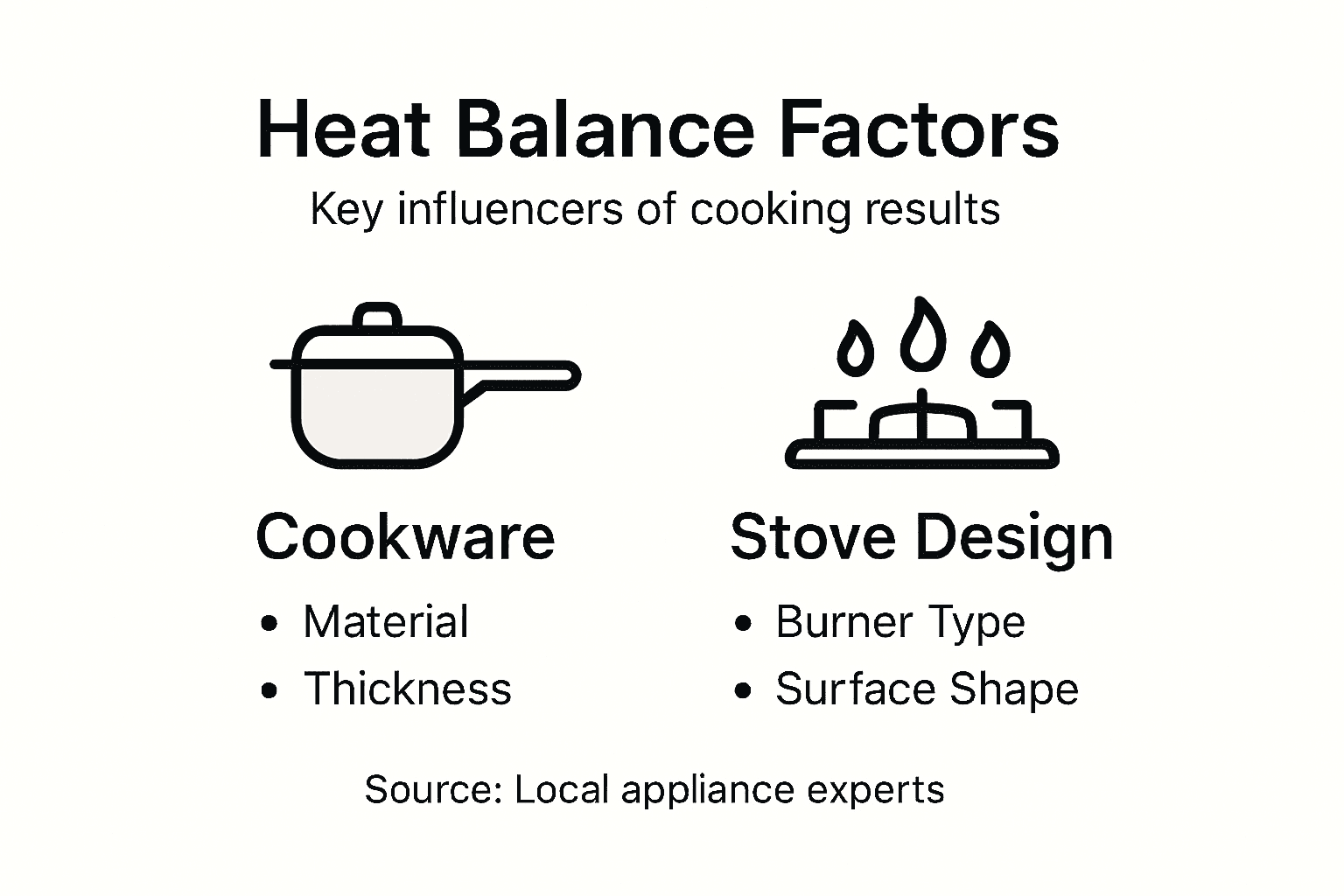
Food safety temperature principles demonstrate that heat distribution directly impacts microbial control and overall meal quality. Cookware material, burner type, cooking technique, and ingredient characteristics all play significant roles in managing heat balance effectively.
The primary factors influencing heat distribution include cookware composition, cooking surface design, and thermal conductivity. Cast iron and stainless steel pans conduct heat differently, with cast iron providing more uniform heat retention while stainless steel offers faster temperature responsiveness. Cookware thickness, surface texture, and bottom flatness dramatically affect how heat transfers from the burner to the food.
Multiple variables contribute to successful heat management:
Key factors influencing heat balance and their effects on cooking results:
| Factor | Impact on Cooking | Suggested Solution |
|---|---|---|
| Cookware thickness | Affects even heat spread | Use heavy-bottom pans |
| Burner energy source | Alters heat distribution | Choose type to match techniques |
| Surface flatness | Prevents hot and cold spots | Ensure pans sit flush on surface |
| Ventilation quality | Limits heat retention | Improve kitchen air circulation |
- Cookware material and thickness
- Burner type and energy source
- Cooking surface evenness
- Ingredient moisture content
- Altitude and ambient temperature
- Cooking technique and pan manipulation
Consistent heat distribution is the key to precise cooking and food safety.
Pro tip: Preheat your cookware gradually and use medium heat settings to achieve more consistent temperature distribution.
Common Heat Distribution Problems in Marlboro
Homeowners in Marlboro frequently encounter unique challenges with stove heat distribution that can significantly impact cooking performance and indoor air quality. Understanding these localized issues helps residents make informed decisions about their kitchen appliances and cooking techniques.
Indoor cooking pollution risks demonstrate that gas stoves in Marlboro homes can create uneven heat distribution and potential health concerns. Local environmental factors, including home construction and ventilation systems, play crucial roles in exacerbating these heat distribution challenges.
Marlboro residents often experience several common heat distribution problems that affect cooking efficiency and safety:
- Uneven burner performance
- Cold spots in cooking surfaces
- Inconsistent temperature control
- Poor ventilation leading to heat accumulation
- Rapid heat degradation in older appliances
- Reduced cooking precision due to equipment limitations
Local home design and cooking habits directly influence heat distribution effectiveness.
The age of kitchen appliances significantly impacts heat distribution quality. Older stoves in Marlboro’s historic homes often struggle with maintaining consistent temperatures, leading to challenges in preparing precision dishes. Newer models with advanced technology can help mitigate these issues by providing more uniform heat transfer.
Pro tip: Schedule annual stove maintenance to ensure optimal heat distribution and prevent performance degradation.
Improving Stove Performance and Preventing Inefficiency
Homeowners seeking optimal cooking results must proactively address stove performance challenges through strategic maintenance and thoughtful equipment selection. Understanding the nuanced factors that impact cooking efficiency can dramatically improve kitchen performance and energy consumption.
Household cookstove research reveals critical insights into enhancing stove performance and reducing energy waste. Technological advancements and careful maintenance play pivotal roles in preventing inefficiency and ensuring consistent cooking results.
Key strategies for improving stove performance include:
- Regular cleaning of burners and heating elements
- Calibrating temperature controls
- Using compatible cookware
- Implementing proper ventilation
- Scheduling professional maintenance
- Upgrading to energy-efficient models
Consistent maintenance prevents up to 70% of potential stove performance issues.
The selection of appropriate cookware significantly influences heat distribution and overall cooking efficiency. Pans with flat, thick bottoms and materials like cast iron or stainless steel conduct heat more evenly, reducing hot spots and improving cooking precision. Modern induction technologies offer even more advanced heat transfer capabilities, minimizing energy loss and providing more consistent cooking experiences.
Pro tip: Invest in a high-quality infrared thermometer to accurately monitor and manage your stove’s surface temperatures during cooking.
Enhance Your Stove’s Heat Distribution with Expert Appliance Repair in Marlboro
Uneven heat distribution and inconsistent stove performance can turn cooking from a joy into a frustration. If you are experiencing common challenges like cold spots on your burners, slow heat response, or poor temperature control that impact your meal quality and safety, you are not alone. These issues often stem from appliance age, improper maintenance, or compatibility problems with cookware. Expert Appliance Repair understands the unique needs of homeowners in Marlboro and Monmouth County, delivering fast, reliable stove repair and maintenance services designed to restore even heat distribution and improve your cooking results.
Don’t let inefficient stove heat ruin your favorite recipes. Take advantage of our same-day service and 24/7 emergency support to get your appliances running like new again. Visit Expert Appliance Repair now to schedule a service call, learn about how professional stove maintenance can solve your heat balance problems, and explore tips that help maximize your stove’s performance. Your kitchen deserves the precision and safety that only expert care can provide.
Frequently Asked Questions
How does heat distribution work in stoves?
Stoves distribute heat through conduction, convection, and radiation. Conduction transfers heat directly through contact, convection circulates heated air, and radiation uses electromagnetic waves to transfer thermal energy.
What are the benefits of using induction burners compared to gas and electric?
Induction burners offer fast and precise heating, the highest energy efficiency, and a cooler cooking surface, making them safer to use. They heat cookware directly, leading to improved cooking results and minimized energy loss.
How can I improve heat balance while cooking?
To enhance heat balance, consider using heavy-bottom cookware, ensuring a flat cooking surface, and selecting appropriate burner types according to your cooking techniques. Proper ventilation and preheating your cookware gradually also contribute to even temperature distribution.
What common heat distribution problems should I look out for?
Common heat distribution issues include uneven burner performance, cold spots on cooking surfaces, inconsistent temperature control, and poor ventilation. These problems can affect cooking efficiency and should be addressed through regular maintenance and equipment updates.