

TL;DR:
- A structured maintenance schedule with daily, monthly, and annual tasks extends appliance life and prevents costly repairs.
- DIY habits like lint trap cleaning and coil inspections are vital, but professional checkups are essential for complex systems.
- Tailoring schedules based on household size, appliance age, and seasonal factors ensures optimal appliance performance and safety.
Running a home or small business in Monmouth County means your appliances work hard every single day. When a refrigerator quits in July or a dryer stops mid-cycle before a busy week, the cost and stress hit fast. A reliable, evidence-based maintenance schedule keeps those moments rare, extends appliance life, and protects your budget. The problem is that conflicting advice online makes it hard to know what to actually do and when. This article cuts through the noise and gives you a practical, field-tested plan built for New Jersey homeowners and business owners in 2026.
Table of Contents
- Key criteria for building an effective appliance maintenance schedule
- Step-by-step schedule: The major appliances and their must-do tasks
- Comparing maintenance needs: Appliance-by-appliance frequency and effort
- How to adapt your schedule for your home or small business
- When (and why) to call a pro: Maintenance, repair, and peace of mind
- Our perspective: Most schedules fail without flexible habits
- Get expert help with your appliance schedule
- Frequently asked questions
Key Takeaways
| Point | Details |
|---|---|
| Blend routine and habits | The best maintenance schedules mix regular, easy-to-remember tasks with simple daily and weekly habits. |
| Not all appliances are equal | Some appliances, like dryers and HVAC, need more frequent attention to prevent major issues. |
| Customize for your needs | Adjust your schedule for factors like usage, household size, appliance age, and business settings. |
| Know when to call a pro | Annual expert inspections help you catch issues early and keep your appliances safe and reliable. |
Key criteria for building an effective appliance maintenance schedule
With the challenge defined, let’s break down what really matters when designing a schedule.
Not all appliances need the same attention. A dryer with a lint trap that fills after every load needs daily action. A refrigerator’s condenser coils only need cleaning twice a year. Understanding this difference is the foundation of any good plan. A practical 2025-style preventive maintenance schedule breaks tasks into monthly, quarterly, and annual categories, covering specifics like cleaning refrigerator coils and inspecting hoses.
The best schedules are built on three layers:
- Easy daily and weekly habits that take under five minutes (wiping down stovetops, clearing dryer lint)
- Preventive monthly and quarterly tasks that catch problems early (checking washing machine hoses, running dishwasher cleaning cycles)
- Annual professional checkups for complex systems where DIY has real limits
Manufacturer recommendations are your starting point, not a suggestion. Every appliance comes with a manual that specifies cleaning intervals, filter types, and inspection points. Following those specs also keeps warranties valid. You can pair that with energy efficiency guidance from the U.S. Department of Energy to reduce operating costs at the same time.
Pro Tip: Store all your appliance manuals in one folder, either physical or digital. When something looks off, you can check the manufacturer’s exact specs in seconds instead of searching the internet.
Developing consistent habits is what separates homeowners who rarely face breakdowns from those who call for emergency repairs every year. The best practices for appliance care aren’t complicated, but they do require consistency. Building the habit of preventing costly repairs starts with a written schedule you actually follow.
Step-by-step schedule: The major appliances and their must-do tasks
Now that we know what to consider, here’s exactly what to do for each appliance.
Consumer Reports recommends a twice-yearly approach to refrigerator condenser coil cleaning and cleaning dishwasher filters every couple of months. These aren’t arbitrary intervals. They reflect how quickly buildup affects performance and energy use.
Here is a task-frequency table covering the major appliances in most Monmouth County homes and small businesses:
| Appliance | Task | Frequency |
|---|---|---|
| Refrigerator | Clean condenser coils | Twice yearly |
| Refrigerator | Check door seals | Monthly |
| Washer | Inspect hoses for cracks | Monthly |
| Washer | Run drum cleaning cycle | Monthly |
| Dryer | Clean lint trap | After every use |
| Dryer | Clean vent duct | Annually |
| Dishwasher | Clean filter | Every 2 months |
| Dishwasher | Run cleaning cycle | Monthly |
| Oven/Stove | Wipe down surfaces | Weekly |
| Oven/Stove | Deep clean interior | Quarterly |
| HVAC | Replace air filter | Monthly |
| HVAC | Professional inspection | Annually |
Let’s break down the most critical tasks and why they matter:
Refrigerator coil cleaning removes dust and pet hair that forces the compressor to work harder. A stressed compressor is the most common cause of refrigerator failure. Coils are usually located at the back or underneath the unit.
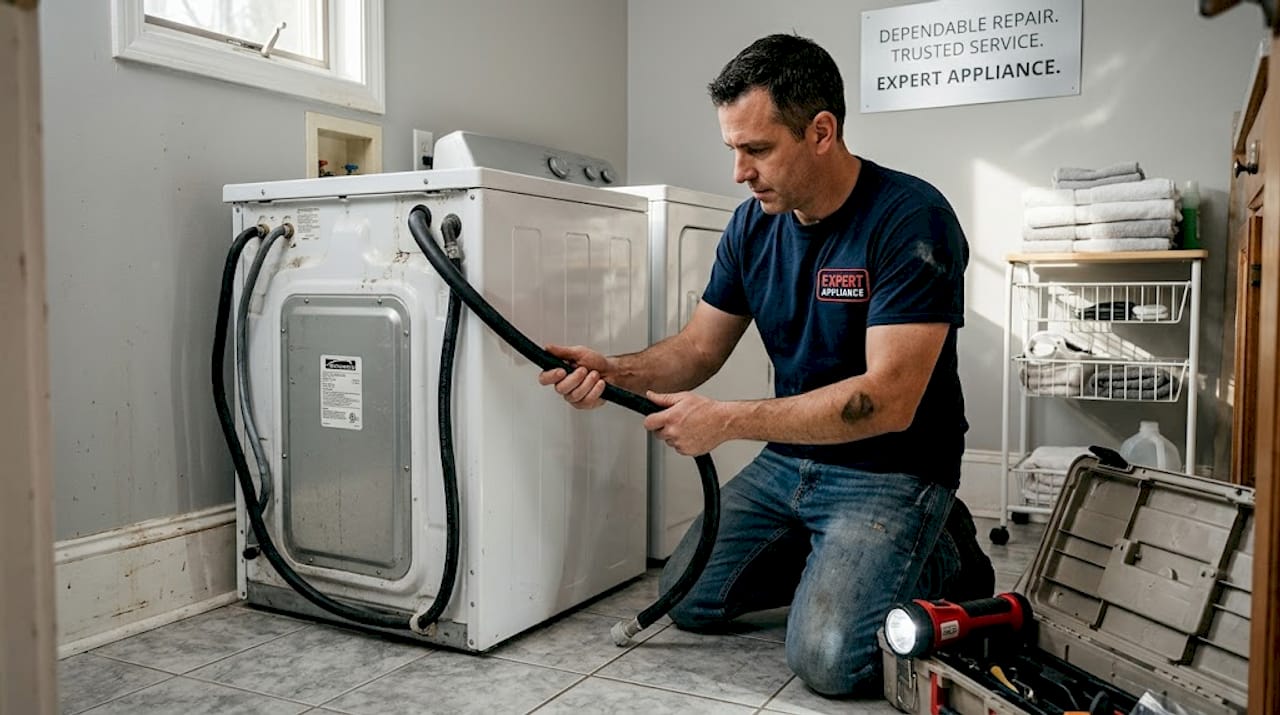
Washing machine hose inspection is one of the most overlooked tasks in any home. A cracked or bulging hose can burst and flood a laundry room in minutes. Replace rubber hoses every five years regardless of how they look.
Dryer vent cleaning is a safety issue, not just a performance issue. Clogged dryer vents are a leading cause of house fires. The lint trap catches most debris, but fine particles accumulate in the duct over time.
Dishwasher filter cleaning is something most homeowners skip entirely. A clogged filter recirculates dirty water, leaves residue on dishes, and strains the pump motor. It takes about three minutes to remove, rinse, and replace.
Pro Tip: Set phone reminders for quarterly tasks the same way you set reminders for bill payments. Appliance maintenance that lives only in your head rarely gets done.
For a more detailed breakdown, the maintenance schedule tips page covers specific product types and regional considerations. You can also download a complete checklist to print and post in your utility room. If you’re newer to this topic, the appliance maintenance basics page is a solid starting point. A sample preventive maintenance schedule is also available as a free downloadable template.
Comparing maintenance needs: Appliance-by-appliance frequency and effort
With the task-by-task list complete, compare your time investment across all appliances.
Some appliances demand daily attention. Others are nearly set-and-forget for months at a time. Knowing where to focus your energy prevents the common mistake of spending too much time on low-risk tasks while ignoring high-risk ones.
| Appliance | Maintenance frequency | Effort level | Skip risk |
|---|---|---|---|
| Dryer | Daily (lint trap) | Very low | Fire hazard |
| HVAC | Monthly (filter) | Low | High energy cost |
| Washer | Monthly | Low to medium | Water damage |
| Dishwasher | Every 2 months | Low | Motor damage |
| Refrigerator | Twice yearly | Medium | Compressor failure |
| Oven/Stove | Weekly to quarterly | Medium | Grease fire risk |
| Water heater | Annually | Medium | Premature failure |
Stat callout: Most refrigerators need condenser coil cleaning twice a year, but models with coils sealed inside the cabinet walls are self-maintaining and require no coil cleaning at all. Always check your manual before assuming.
Consumer Reports emphasizes that adapting your schedule to your specific appliance design and real-world use is more effective than following a generic calendar. A household with two large dogs will need to clean refrigerator coils more often than a household with no pets. A small restaurant running a commercial dishwasher needs filter checks weekly, not every two months.
Tasks you absolutely cannot skip without serious risk:
- Dryer lint trap cleaning (fire risk)
- Washing machine hose checks (flood risk)
- HVAC filter replacement (air quality and system strain)
- Refrigerator door seal checks (energy waste and food spoilage)
The NJ appliance maintenance checklist is tailored specifically for homes in Monmouth County, accounting for local climate factors like humidity in summer and dry indoor air in winter that affect how appliances perform.
How to adapt your schedule for your home or small business
Once you know what’s typical, here’s how to tailor the plan so it works for your specific home or business.
A family of five with young children runs appliances harder than a couple in a smaller home. A small business in Marlboro with a commercial washer and dryer operates in a completely different category than a residential setup. The schedule needs to match the reality of how you actually live and work.
Here’s how to customize your plan:
- Assess your usage level. Heavy use means shorter intervals between tasks. If your washer runs ten loads a week instead of four, inspect hoses monthly and run drum cleaning cycles every three weeks.
- Account for pets. Pet hair accelerates coil and filter clogging significantly. Add an extra refrigerator coil cleaning and HVAC filter check to your schedule if you have pets.
- Factor in appliance age. Appliances older than ten years need more frequent checks. Seals degrade, hoses stiffen, and motors run less efficiently. Older units also tend to lack the self-diagnostic features found in newer models.
- Adjust for business settings. High-turnover environments like rental properties or small food businesses need weekly checks on dishwasher filters, dryer vents, and refrigerator seals. Monthly professional walkthroughs are worth considering.
- Plan around seasons. In New Jersey, HVAC systems work hardest in July and January. Schedule professional HVAC inspections in spring and fall before peak demand hits.
“A blended approach, including regular easy-clean tasks, habit prevention, and periodic pro inspection, is the most defensible for 2025 homeowners.” Consumer Reports
This blended model is exactly what works in real Monmouth County homes. You can explore smart appliance maintenance tips for NJ-specific advice, and if you run a business, the small business guide covers commercial-grade scheduling in detail. The DOE energy tips page also offers useful guidance on reducing operating costs as you build your plan.
When (and why) to call a pro: Maintenance, repair, and peace of mind
Even the best schedule has its limits. Here’s when expert help is essential.
DIY maintenance handles the surface-level work well. But some problems need a trained technician with the right tools and parts. Knowing when to call is just as important as knowing how to clean a lint trap.
Red flags that mean it’s time to call a professional:
- Unusual noises from a refrigerator compressor or washer drum
- A dryer that takes two or more cycles to dry a normal load
- Water pooling under or around any appliance
- An oven that doesn’t reach set temperatures or heats unevenly
- A dishwasher that leaves standing water after a cycle
- Any burning smell from any appliance
Annual professional inspection is especially important for HVAC and other complex systems, and is strongly recommended whenever an appliance is out of warranty or showing performance changes. A technician catches worn belts, failing capacitors, and refrigerant issues that no homeowner checklist will ever catch.
Pro Tip: When hiring an appliance repair company in Monmouth County, ask whether they offer upfront pricing before any work begins. A reputable provider will give you a clear estimate without pressure, so you can make an informed decision.
When evaluating a service provider, look for:
- Years of experience in the local area
- Clear, upfront pricing with no hidden fees
- Same-day or next-day availability for urgent repairs
- Verifiable customer reviews from NJ residents
- Familiarity with all major appliance brands
For homeowners in Marlboro and surrounding towns, the routine appliance inspection tips page outlines exactly what a professional should check during a standard visit and how to prepare your home before the technician arrives.
Our perspective: Most schedules fail without flexible habits
Let’s step back and review what truly makes an appliance maintenance plan work in the real world.
After decades of appliance repair work across Monmouth County, we’ve seen a clear pattern. Homeowners who follow a rigid, calendar-only approach tend to fall off the schedule within two months. Life gets busy. A quarterly reminder comes and goes. The task gets pushed, then forgotten.
The schedules that actually work are built around small, automatic habits anchored to things you already do. Cleaning the lint trap every time you move laundry from the washer to the dryer takes ten seconds. Wiping down the stovetop after cooking dinner adds thirty seconds to cleanup. These micro-habits never feel like maintenance because they’re invisible. They just become part of the routine.
The problem with a one-size-fits-all calendar is that it ignores how different households actually operate. A retired couple in Marlboro uses their oven differently than a family of six in Freehold. Seasonal variation matters too. New Jersey summers put real strain on refrigerators and air conditioners. Winters stress heating systems and dryers. A smart schedule bends to these realities instead of fighting them.
Our honest recommendation: Build the daily and weekly habits first. Add the quarterly tasks to a calendar with real reminders. Then anchor one annual professional inspection to a fixed date, the same way you schedule a car oil change. That combination, small habits plus structured intervals plus one expert visit per year, is what keeps appliances running for fifteen or twenty years instead of eight or ten.
The top maintenance services available in Monmouth County can fill the gap when your schedule reaches its limits. The goal isn’t perfection. It’s consistency.
Get expert help with your appliance schedule
Ready to put your schedule into action with less effort? Here’s where professional expertise makes the difference.
Building a maintenance schedule is the first step. Sticking to it and knowing when to call for backup is what actually protects your appliances long-term. Expert Appliance Repair has served Monmouth County homeowners and small businesses since 1988, offering same-day service, upfront pricing, and 24/7 emergency support across Marlboro and surrounding NJ towns.
Whether you need help setting up a full appliance maintenance checklist or want a professional to handle the tasks that go beyond DIY, our team is ready to help. We understand the specific demands of NJ homes and businesses, and we bring that knowledge to every service call. Learn more about how regular maintenance tips can save you money and stress over the long run. Call us today to schedule your next inspection or repair.
Frequently asked questions
What is the most important appliance maintenance task for homeowners?
Cleaning the dryer lint trap after every use and inspecting refrigerator coils twice a year are among the highest-impact tasks for preventing breakdowns and safety hazards.
How often should professional appliance inspections be scheduled?
A yearly professional inspection for major systems like HVAC is recommended, or sooner if you notice unusual sounds, smells, or performance changes.
Are there appliances that require more frequent maintenance than others?
Yes. Dryers need lint trap cleaning after every single use, HVAC filters need monthly replacement, and oven surfaces need weekly wiping to prevent grease buildup.
Does appliance age affect how often maintenance should be performed?
Older appliances and those under heavy use need more frequent checks and cleanings because seals, hoses, and motors degrade over time and are more likely to show early warning signs of failure.
Recommended
- NJ Appliance Maintenance Checklist: Keep Your Home Running Smoothly – Expert Appliance
- What Is Appliance Maintenance? Complete Guide for NJ Homes – Expert Appliance
- 6 Smart Appliance Maintenance Tips for NJ Homeowners – Expert Appliance
- Importance of Appliance Cleaning – Key Benefits for NJ Homes – Expert Appliance