
TL;DR:
- Early detection of appliance warning signs can prevent costly breakdowns and property damage. Regular inspections and prompt repairs are vital to extending appliance lifespan and maintaining safety. Expert local repair services offer timely assistance, ensuring ongoing reliability and peace of mind.
A broken refrigerator on a hot July morning. A washing machine that floods your laundry room at midnight. A dryer that stops heating right before a family gathering. These situations happen every day to homeowners and small business owners across Monmouth County, NJ, and they almost always come with one thing in common: there were warning signs long before the full breakdown. Catching those signs early is the difference between a quick, affordable repair and a stressful, expensive replacement. This guide walks you through everything you need to know to protect your appliances and your wallet.
Table of Contents
- How to evaluate appliance health: Key criteria
- Top warning signs your appliance is failing
- Common appliance failure scenarios and consequences
- What to do when you spot failure warning signs
- Why fast action beats waiting: A technician’s hard-won advice
- Get local expert help for fast appliance repairs
- Frequently asked questions
Key Takeaways
| Point | Details |
|---|---|
| Early signs matter | Catching symptoms early can save hundreds on repairs or replacements. |
| Regular evaluation helps | Monitoring age, usage, and repairs prevents sudden appliance failures. |
| Act quickly | Prompt action on warning signs averts costly breakdowns and downtime. |
| Professional help is key | Certified technicians can quickly diagnose and fix appliance issues. |
How to evaluate appliance health: Key criteria
Before diving into specific warning signs, let’s set a baseline for how to judge if your appliance is truly at risk.
Not every strange noise or slight delay means disaster. Some issues are minor. Others signal that an appliance is on its last legs. The best way to make smart decisions is to evaluate your appliance against a clear set of criteria rather than guessing.
The four key criteria to evaluate:
- Age: Most major appliances have predictable lifespans. Once an appliance passes 75% of its expected life, the odds of failure increase significantly.
- Frequency of breakdowns: One repair in five years is normal. Three repairs in two years is a pattern that demands attention.
- Cost of repair versus replacement: As repeated repairs raise costs, replacement often becomes more practical than continuing to patch an aging unit.
- Impact of downtime: A broken dishwasher is an inconvenience. A broken walk-in refrigerator for a small restaurant is a business emergency. Factor in what each appliance means to your daily operations.
Typical appliance lifespan and repair thresholds
| Appliance | Average lifespan | Avg. repair cost | Consider replacement if… |
|---|---|---|---|
| Refrigerator | 13 to 17 years | $200 to $400 | Repair exceeds $500 or unit is 12+ years old |
| Washer | 10 to 14 years | $150 to $350 | Frequent repairs or drum failure |
| Dryer | 10 to 13 years | $100 to $300 | Heating element fails twice or more |
| Oven/Stove | 13 to 15 years | $100 to $250 | Control board failure in older units |
| Dishwasher | 9 to 12 years | $150 to $300 | Motor or pump failure after year 8 |
Questions to ask before deciding on repair:
- Is my appliance still under manufacturer warranty?
- Has this specific component failed before?
- Would repairing this unit extend its life by at least three to five years?
- Is this appliance energy-efficient, or is it costing me more on my utility bill each month?
Following proper appliance diagnosis steps can also help you and your technician determine the best path forward quickly.
You can also check out common HVAC warning signs for additional reference on how similar criteria apply to other home systems.
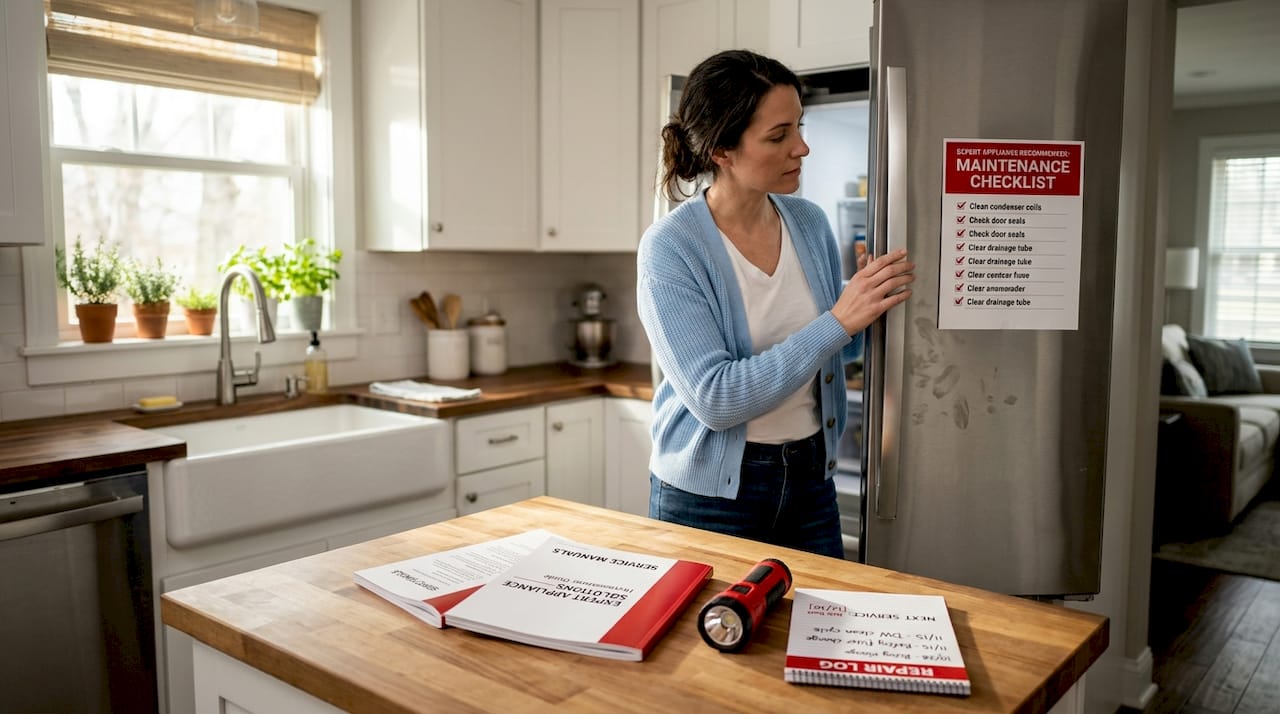
Pro Tip: Keep a simple notebook or use your phone to snap photos and log every repair, part replacement, and symptom. This history makes it much easier to spot patterns and gives your repair technician a clearer picture from the first call.
Top warning signs your appliance is failing
Now that you know how to evaluate the situation, here are the top warning signs to watch for in your home or business.
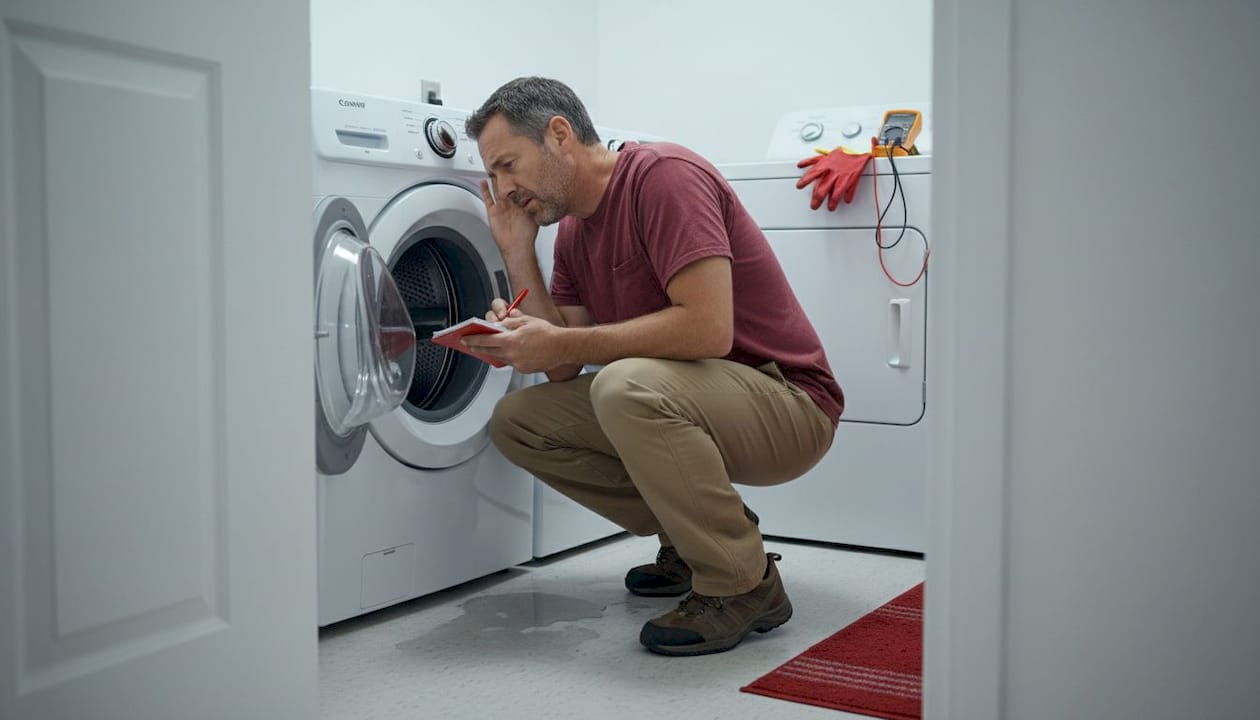
Warning signs rarely appear all at once. They tend to creep up slowly. A slightly longer cycle here, a faint burning smell there. Most homeowners shrug them off, which is exactly how a $200 fix becomes a $900 emergency. Knowing what to look for puts you ahead of the curve.
Top warning signs by appliance:
- Refrigerator: Warm spots inside the fridge, ice buildup in unexpected areas, loud clicking or buzzing sounds from the compressor, or water pooling beneath the unit.
- Oven or stove: Burners that don’t ignite consistently, uneven cooking temperatures, a persistent gas smell, or a control panel that’s unresponsive.
- Washer: Excessive vibration during the spin cycle, water leaking from the door or bottom, error codes flashing on the display, or clothes coming out still soaking wet.
- Dryer: Clothes taking two cycles to dry, a burning smell during operation, the drum stopping mid-cycle, or unusually high heat that scorches fabrics.
- Dishwasher: Standing water after a completed cycle, dishes still dirty or wet, unusual grinding noises during the wash cycle, or a musty odor that won’t go away.
“Catching a small problem today, before it turns into a system failure, is the single best thing a homeowner can do. Most of the calls we get could have been prevented if someone had just paid attention a week earlier.” This is something our technicians repeat after nearly every service call in the Marlboro and Monmouth County area.
Early action on small problems is proven to prevent more serious and costly breakdowns. The key is knowing what counts as a small problem.
When you spot appliance issues early, you dramatically reduce the chance of a complete appliance failure. Use your appliance troubleshooting tips to cross-reference symptoms before calling for service.
Pro Tip: Pull up your last three utility bills and compare. A spike of 10% or more in electricity usage without a clear seasonal reason often means one of your major appliances is working much harder than it should, a classic early sign of internal failure.
Common appliance failure scenarios and consequences
Knowing the signs is just the start. Understanding what’s at stake if you wait can help motivate timely action.
Every week in Monmouth County, we see appliances that were limping along for months before the owner finally called for help. By then, what started as a minor fix had turned into a full replacement or, worse, property damage. The real cost of waiting is almost always higher than the cost of acting early.
Prompt repair vs. ignored signs: A real-world comparison
| Factor | Prompt repair | Ignored warning signs |
|---|---|---|
| Repair cost | $150 to $350 | $500 to $1,500+ or full replacement |
| Time out of service | A few hours to one day | Several days to weeks |
| Risk of secondary damage | Very low | High (water damage, fire, food loss) |
| Warranty status | Usually preserved | Often voided |
| Peace of mind | Restored quickly | Ongoing stress and uncertainty |
Early repair can prevent cascading failure and higher costs, and the numbers above show exactly why.
The most expensive and disruptive consequences of waiting:
- Food spoilage: A failing refrigerator can spoil hundreds of dollars worth of food in a single day. For a small deli or restaurant in Monmouth County, that number climbs fast.
- Water damage: A leaking washer or dishwasher can saturate flooring, subfloor, and walls in hours, turning a $250 repair into a $4,000 remediation job.
- Fire risk: Faulty dryer heating elements and worn oven wiring are among the top residential fire causes in New Jersey. This isn’t a scare tactic. It’s a documented risk.
- Business interruption: If you run a laundromat, a catering business, or any operation that depends on appliances, downtime is lost revenue. Every hour counts.
- Voided warranties: Most manufacturers require timely repairs. Continuing to run a unit you know is failing can void coverage and leave you paying full price for a replacement.
Focusing on preventing appliance breakdowns before they fully develop is always the more affordable path.
What to do when you spot failure warning signs
If you’re seeing warning signs, quick action makes all the difference, so here’s exactly what to do next.
There’s a temptation to keep running an appliance and hope the symptom goes away on its own. In our experience serving Marlboro, Manalapan, Freehold, and the surrounding towns for decades, it almost never does. Here’s the exact process to follow the moment you notice something is off.
Step-by-step: From symptom to solution
- Identify the issue clearly. Note when the symptom occurs, how often, and under what conditions. Does the washer vibrate only on the spin cycle? Does the fridge only make noise at night? Specifics matter.
- Stop using the appliance if there’s any safety concern. A burning smell, visible sparks, or active water leaks are reasons to shut down immediately. Don’t wait for a technician’s confirmation.
- Unplug or disconnect the unit if safe to do so. For gas appliances, turn off the gas supply at the shut-off valve. For electrical units, pull the plug or trip the breaker.
- Document everything. Take photos or short videos of error codes, visible damage, or unusual behavior. Note any sounds using voice memos on your phone. This documentation speeds up the diagnostic process enormously.
- Call a qualified repair service promptly. The sooner a technician can assess the issue, the more options you have. Same-day service is often available in the Monmouth County area, and getting a professional on-site quickly almost always saves money.
Making quick repair decisions prevents further damage and higher expenses, especially for refrigerators and washing machines where secondary damage compounds fast.
Booking a diagnostic appliance service gives you a clear answer fast, and understanding the appliance service workflow helps you know exactly what to expect during a visit.
Pro Tip: Write down any error codes shown on your appliance’s display before you unplug it. Even snapping a quick photo works. Technicians can often diagnose the root cause and prepare the right parts before they even arrive, cutting your repair time in half.
Why fast action beats waiting: A technician’s hard-won advice
After nearly four decades serving Monmouth County, we’ve developed a strong opinion about appliance neglect. And it runs counter to what a lot of homeowners assume.
Many people believe that waiting to see if a symptom gets worse is a reasonable, cost-saving strategy. We understand the logic. Nobody wants to call a technician over something that might resolve itself. But here’s the uncomfortable truth: in appliance repair, problems almost never stay the same. They grow. A worn belt becomes a broken drum. A slow refrigerator drain becomes a flooded compressor. A heat element running hot becomes a fire hazard.
“The most heartbreaking calls we get are from homeowners who waited three months on a symptom that would have been a $180 fix in week one. By the time we arrive, they’re looking at a full replacement.”
Waiting too long consistently turns small, affordable repairs into complete replacements. We see it play out the same way nearly every time.
The other myth worth busting: that appliances will tell you clearly when they’re about to die. They rarely do. Most failures happen gradually, and the final breakdown feels sudden only because the early signs were ignored or misread. That’s why we push regular checkups even when things seem fine.
Knowing when to replace appliances is a valuable skill, but the goal is always to catch issues early enough that repair is still the smart call.
Pro Tip: Schedule a professional appliance inspection once a year, even if nothing seems wrong. Think of it the way you think about a dental cleaning or a car oil change. Catching a small issue during a routine visit costs far less than dealing with an emergency breakdown.
Get local expert help for fast appliance repairs
Armed with the warning signs and action steps, here’s how you can get trusted help right here in Monmouth County.
At Expert Appliance Repair, we’ve been serving homeowners and small businesses across Marlboro, Freehold, Manalapan, and all of Monmouth County since 1988. We know the area, the appliances local families rely on, and how important fast, reliable service is when something breaks down at the worst possible time.

Whether you’re dealing with a refrigerator that stopped cooling, a washer making alarming sounds, or a dryer that’s taking forever to finish a load, our team offers same-day service, upfront pricing, and 24/7 emergency support. Don’t wait for a small sign to become a costly disaster. Our Monmouth County appliance repair team is ready to respond fast. If you’re facing a sudden breakdown, our emergency appliance repairs service gets help to your door quickly. And if you want to stay ahead of future failures, explore our appliance maintenance tips to keep every appliance in your home running at its best.
Frequently asked questions
What are the top early warning signs an appliance is starting to fail?
Look for strange noises, unusual odors, inconsistent operation, or a sudden spike in your energy bill, since early action on appliance problems prevents more serious breakdowns down the line.
Should I repair or replace my old appliance?
If repair costs approach half the price of a new unit or breakdowns are frequent, replacement is usually the smarter choice, as high repair costs make replacement more practical than continued patching.
How quickly should I act if I notice a warning sign?
Contact a technician as soon as you spot something unusual, because early repair prevents cascading failure and the costs that come with it.
Are unexpected appliance failures preventable?
Most appliance emergencies can be avoided with regular maintenance and timely professional repairs, since early detection stops bigger failures before they develop into full breakdowns.
Does ignoring small appliance issues void warranties?
Yes, in many cases. Running an appliance you know is malfunctioning can void manufacturer coverage and leave you responsible for the full cost of repair or replacement, including damage caused by the neglected issue.