

Most Marlboro residents know the stress of a refrigerator breaking down at the worst moment. With over 37 percent of American households experiencing a fridge malfunction before the ten year mark, staying informed is vital. Faulty cooling puts your food at risk and your budget under pressure. This guide offers practical answers to common repair problems, reveals how modern refrigerators work, and compares configurations so you can make smart choices for your home.
Table of Contents
- Refrigerator Basics And Common Myths
- Key Refrigerator Types And Configurations
- Essential Features And Innovations Explained
- Energy Efficiency And Maintenance Factors
- Common Repair Issues And Cost Comparisons
Key Takeaways
| Point | Details |
|---|---|
| Refrigerators Prevent Spoilage | Keeping food at 4-5°C limits bacterial growth, with freezer compartments below −18°C for preservation. |
| Understanding Configurations is Key | Choose a refrigerator type based on household needs, such as space and access, to maximize efficiency. |
| Energy Efficiency Matters | Select Energy Star certified models to save on costs and minimize environmental impact. |
| Regular Maintenance is Crucial | Perform routine maintenance like cleaning condenser coils to improve performance and extend refrigerator life. |
Refrigerator Basics and Common Myths
Refrigerators are essential home appliances designed to keep food and beverages cold, preventing bacterial growth and spoilage. A typical household refrigerator maintains temperatures around 4-5°C, with freezer compartments dropping below freezing to approximately −18°C. Understanding how these appliances function can help New Jersey homeowners make informed decisions about maintenance and usage.
Many people hold misconceptions about refrigeration and food safety. Bacterial growth risks exist even at cold temperatures, with some bacteria like Listeria capable of surviving and multiplying inside refrigerators. Proper food storage and regular cleaning are critical to preventing potential health hazards.
The evolution of refrigeration technology has been remarkable. Early models emerged from simple iceboxes to modern, energy-efficient appliances that use sophisticated heat pump mechanisms. Modern refrigerators now incorporate advanced features like temperature zones, smart monitoring systems, and improved energy conservation technologies.
Pro tip: Clean refrigerator shelves and compartments weekly with a mild disinfectant to reduce bacterial growth and maintain optimal food storage conditions.
Key Refrigerator Types and Configurations
New Jersey homeowners have multiple refrigerator configurations to choose from, each offering unique benefits for different kitchen layouts and household needs. Domestic refrigerator designs have evolved significantly, providing consumers with increasingly sophisticated options that maximize storage and efficiency.
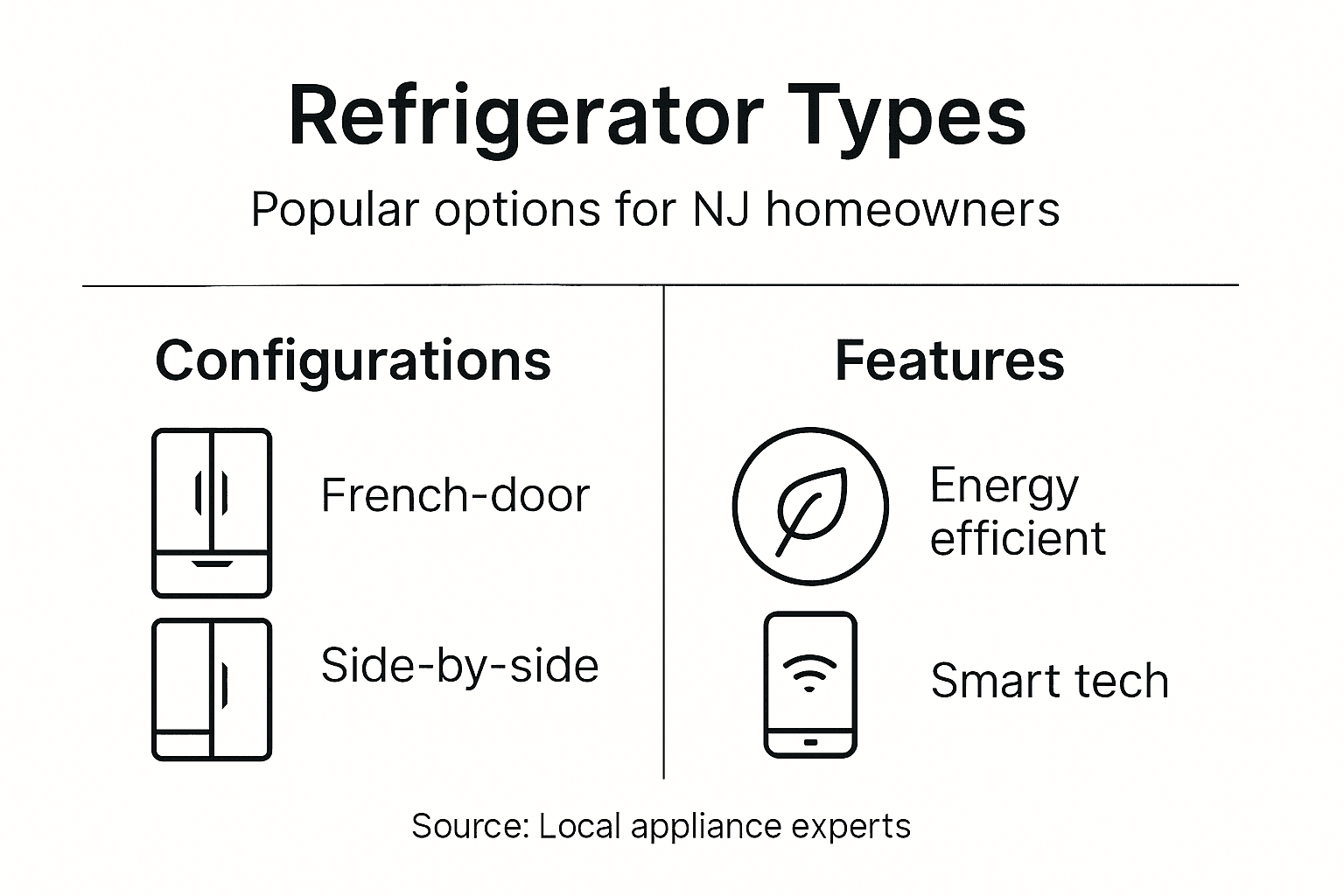
Five primary refrigerator configurations dominate the market, each with distinct advantages. French-door models feature bottom freezer compartments and wide refrigeration sections, perfect for families wanting flexible storage. Bottom-freezer designs place fresh food at eye level, making daily access convenient. Side-by-side refrigerators work well in narrow kitchens, offering equal vertical space for frozen and fresh compartments. Top-freezer models remain popular for their traditional design and affordability, while built-in refrigerators provide a seamless, luxury aesthetic for high-end kitchen renovations.
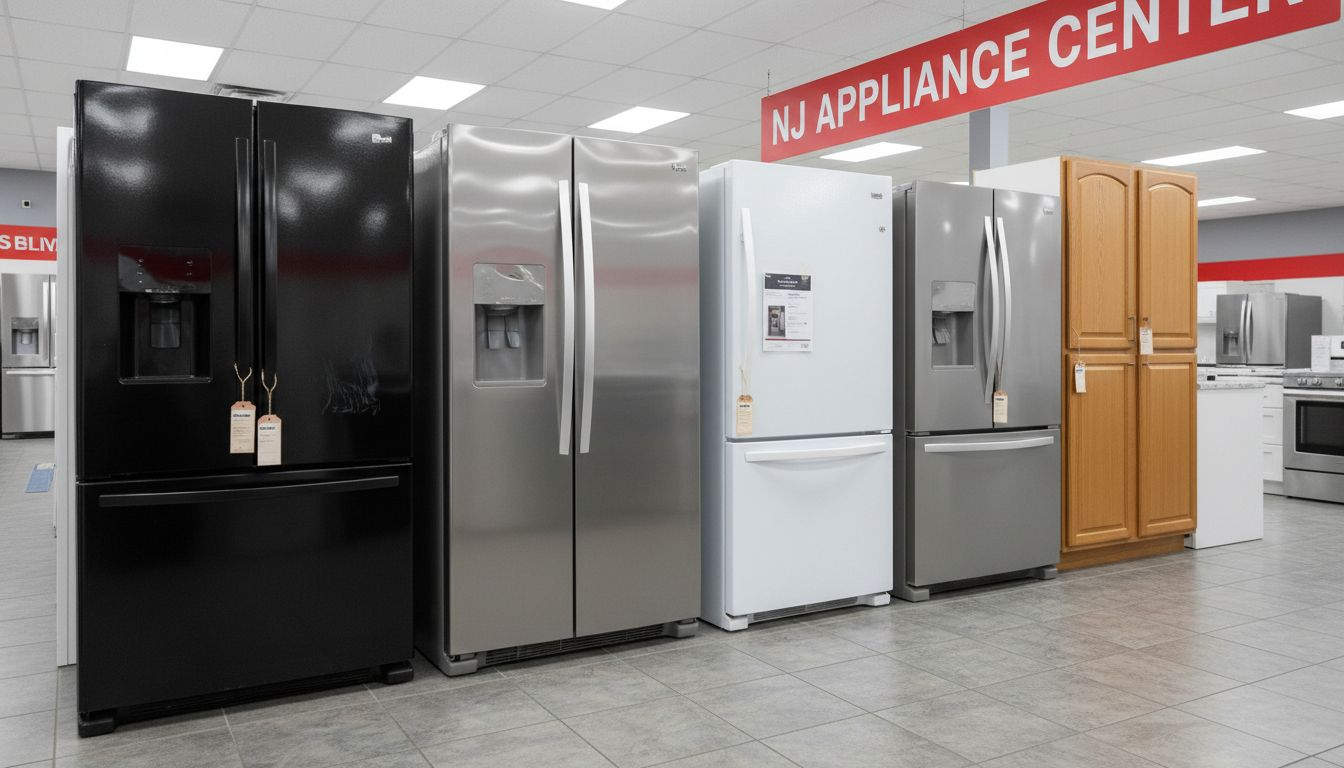
Here’s a quick comparison of popular refrigerator configurations and their ideal use cases:
| Configuration Type | Best For | Key Advantage |
|---|---|---|
| French-door | Large families | Flexible wide storage |
| Bottom-freezer | Daily fresh food access | Fresh items at eye level |
| Side-by-side | Narrow kitchens | Equal vertical space |
| Top-freezer | Budget-conscious users | Affordable and reliable |
| Built-in | Luxury kitchens | Seamless, integrated look |
When selecting a refrigerator, homeowners should consider factors beyond configuration. Energy efficiency, interior capacity, smart features like temperature zones, and overall dimensions play crucial roles in making the right choice. Consumer refrigerator configurations demonstrate that modern appliances offer unprecedented customization to match individual household requirements.
Pro tip: Measure your kitchen space precisely and allow at least two inches of clearance around your refrigerator for proper ventilation and installation.
Essential Features and Innovations Explained
Modern refrigerators have transformed from simple cooling appliances to sophisticated technological solutions for home food preservation. Energy-efficient refrigeration technologies now incorporate advanced features that go far beyond basic temperature control, offering New Jersey homeowners unprecedented convenience and performance.
Today’s refrigerators come equipped with an impressive array of innovations designed to enhance food storage and user experience. Key features include humidity-controlled drawers that maintain optimal produce freshness, smart inventory management systems that track food supplies, and integrated touchscreen displays for temperature monitoring. Advanced refrigerator features now include water and ice dispensers with filtration systems, adjustable shelving that adapts to changing storage needs, and specialized compartments for different food types.
Energy efficiency has become a critical consideration for modern refrigerators. High-performance models utilize advanced compressor technologies, improved insulation materials, and smart sensors that minimize energy consumption. These innovations not only reduce electricity costs but also contribute to environmental sustainability by lowering overall household carbon footprints. Many Energy Star certified refrigerators now use refrigerants with reduced global warming potential, demonstrating a commitment to both technological advancement and ecological responsibility.
Pro tip: Invest in a refrigerator with energy-efficient ratings and periodically clean condenser coils to maintain optimal performance and reduce electricity consumption.
Energy Efficiency and Maintenance Factors
New Jersey homeowners are increasingly focused on reducing energy consumption and maintaining their refrigeration appliances effectively. Energy efficiency standards continue to evolve, pushing manufacturers to develop more environmentally responsible and cost-effective cooling solutions.
Proper maintenance plays a crucial role in preserving refrigerator performance and energy efficiency. Regular tasks include vacuuming condenser coils, inspecting and cleaning door gaskets, and ensuring proper interior organization. Refrigerator maintenance techniques can significantly reduce energy consumption by preventing unnecessary strain on the compressor and maintaining optimal airflow throughout the appliance.
The U.S. Department of Energy has implemented stringent guidelines that will require new refrigerators to meet increasingly higher efficiency standards by 2029. These regulations aim to reduce overall household energy consumption, lower utility costs, and minimize environmental impact. Consumers can contribute to these efforts by selecting Energy Star certified models, maintaining their appliances properly, and being mindful of their refrigerator’s energy usage patterns.
Pro tip: Place a thermometer inside your refrigerator to ensure it maintains a consistent temperature between 37-40 degrees Fahrenheit, which optimizes both energy efficiency and food preservation.
Common Repair Issues and Cost Comparisons
New Jersey homeowners frequently encounter various refrigerator problems that can significantly impact appliance performance and household budgets. Most common refrigerator repair issues range from minor inconveniences to complex mechanical failures that require professional intervention.
Refrigerator repairs can be expensive and often depend on the specific problem and appliance model. Typical issues include malfunctioning icemakers, water leakage, inadequate cooling, ice buildup, and faulty control panels or compressors. Compressor replacements tend to be the most costly, sometimes approaching the price of a new appliance. Refrigerator repair cost considerations suggest that repairs exceeding 50% of a new unit’s cost might not be economically sensible.
This table summarizes common refrigerator repairs and when replacement might be preferred:
| Issue | Average Repair Cost | When to Replace |
|---|---|---|
| Compressor failure | $400–$650 | If near appliance cost |
| Icemaker breakdown | $150–$350 | Frequent recurring failures |
| Water leakage | $100–$300 | Persistent leaks or mold risk |
| Control panel malfunction | $200–$450 | Multiple electronic problems |
| Cooling problems | $125–$400 | Aging unit or poor cooling |
The average refrigerator lifespan is approximately 10 years, but research indicates that 37% of units experience breakdowns earlier than expected. Homeowners can mitigate potential repair costs through routine maintenance, including cleaning condenser coils, checking door gaskets, and replacing water filters regularly. Understanding these factors helps New Jersey residents make informed decisions about repair versus replacement strategies.
Pro tip: Keep maintenance records and compare repair quotes from multiple technicians to ensure you’re getting the most cost-effective solution for your refrigerator.
Choose the Right Refrigerator With Confidence and Keep It Running Smoothly in Your NJ Home
Choosing the perfect refrigerator type can feel overwhelming with so many options and features. This article highlights common challenges like understanding refrigerator configurations, energy efficiency, and maintenance needs that impact your everyday convenience and food safety. If you are facing any issues such as cooling problems, water leaks, or frequent repairs, Expert Appliance Repair is your trusted local partner in Marlboro, NJ ready to provide fast, reliable service.
Discover how our expert technicians combine years of experience with same-day and 24/7 emergency repair services to restore your refrigerator’s performance. Don’t let appliance troubles disrupt your daily routine or risk food spoilage. Visit our Appliance Archives to learn more about common refrigerator repairs and maintenance tips. When you need prompt professional help, trust Expert Appliance Repair to keep your NJ home running smoothly. Contact us today to schedule service and save yourself stress and costly replacements.
Frequently Asked Questions
What are the different types of refrigerators available?
There are five primary refrigerator configurations: French-door, bottom-freezer, side-by-side, top-freezer, and built-in. Each offers unique advantages catering to different storage needs and kitchen layouts.
How do I choose the right refrigerator size for my kitchen?
Measure your kitchen space accurately and consider the overall dimensions of the refrigerator. It’s important to allow at least two inches of clearance around the appliance for proper ventilation and installation.
What features should I look for in a modern refrigerator?
When selecting a refrigerator, consider features like energy efficiency ratings, humidity-controlled drawers, adjustable shelving, ice and water dispensers, and smart technology for inventory management.
How can I maintain my refrigerator for optimal performance?
Regular maintenance tasks include vacuuming the condenser coils, inspecting door gaskets, and organizing the interior for efficient airflow. Additionally, cleaning the coils and ensuring consistent temperatures can enhance energy efficiency and appliance longevity.
Recommended
- 7 Essential Types of Home Appliances Every NJ Household Needs – Expert Appliance
- What Is Appliance Repair Process for NJ Homes – Expert Appliance
- How to Repair Refrigerator: Step-by-Step Guide for Fast Results – Expert Appliance
- Certified Appliance Repair: Why Credentials Matter in NJ – Expert Appliance