

TL;DR:
- Dishwasher odors mainly come from bacterial buildup in filters, door gaskets, and drain hoses.
- Regular cleaning, proper loading, and maintenance prevent most odors and keep the machine fresh.
- Persistent smells may require professional repair due to drainage or gasket issues.
Your dishwasher looks spotless on the outside, runs a full cycle, and still smells like something died in there. You’re not imagining it, and you’re not alone. Dishwasher odors are one of the most common complaints from Monmouth County homeowners, yet most people have no idea where the smell is actually coming from. The exterior tells you nothing. The real culprits hide inside the filter, along the door gasket, and deep in the drain hose. This guide breaks down every major cause, explains what each smell means, and gives you clear steps to fix it and keep it fixed.
Table of Contents
- Understanding the top causes of dishwasher odors
- How dishwasher design and habits contribute to lingering smells
- Hidden culprits: Hard water, mold, and door issues
- How to eliminate dishwasher odors: Effective solutions
- What most dishwasher guides miss: Pro habits for an odor-free kitchen
- Odor still lingering? Call in the appliance experts
- Frequently asked questions
Key Takeaways
| Point | Details |
|---|---|
| Odors start with buildup | Trapped food, grease, and soap scum feed bacteria and cause foul smells in dishwashers. |
| Filters and drainage matter most | Regularly cleaning the filter and checking for standing water prevent most odor problems. |
| Monthly maintenance works | A monthly filter clean and empty hot cycle with vinegar keeps your machine fresh. |
| Tough cases need expertise | Persistent odors after cleaning suggest deeper issues and may need professional repair. |
Understanding the top causes of dishwasher odors
A dishwasher is a warm, wet, enclosed space that gets used daily and rarely fully dries out. That combination is a perfect breeding ground for anaerobic bacteria, which are microorganisms that thrive without oxygen. These bacteria feed on leftover food particles and grease, and they produce foul-smelling gases as a byproduct. That’s where the odor comes from, not the dishes, not the detergent, but the bacteria living inside your machine.
The dirty or clogged dishwasher filter is the number one cause of dishwasher odors. It traps food particles and becomes a bacterial feeding ground if left uncleaned. Right behind it, food remnants and soap scum coat the interior walls and spray arms, locking in particles that rot over time.
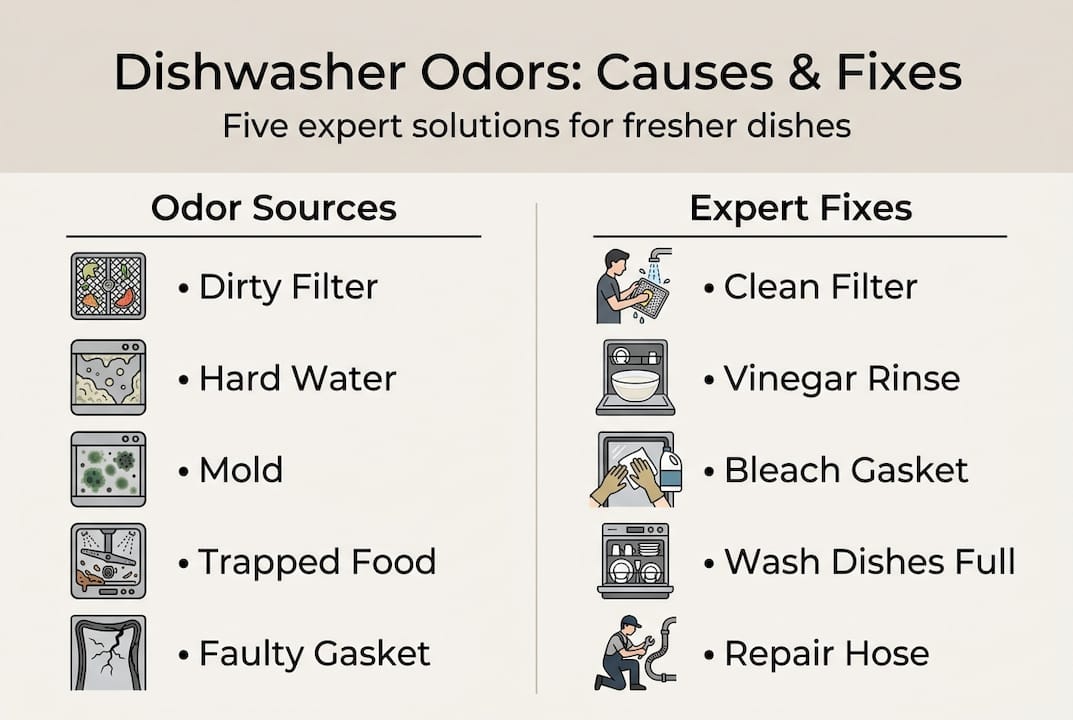
Here’s a breakdown of the most common odor sources and what they tell you:
| Odor source | Warning sign | Smell type |
|---|---|---|
| Dirty filter | Cloudy dishes, slow drainage | Musty, sour |
| Food/grease buildup | Visible residue on walls | Rotten, stale |
| Standing water | Water pooling at bottom | Sewage, sulfur |
| Soap scum | White film on interior | Stale, chemical |
| Door gasket | Visible dark spots or slime | Mold, musty |
| Poor ventilation | Persistent dampness | Stale, wet |
Some smells are more alarming than others. A general musty or sour odor usually points to bacterial buildup in the filter or walls. But a rotten egg smell is a different story. That sulfur-like odor typically comes from hydrogen sulfide gas produced by bacteria sitting in stagnant water, often in a kinked or improperly installed drain hose.
Following a solid dishwasher maintenance workflow and learning the right dishwasher cleaning steps can stop most of these issues before they start. The key is knowing which source matches your specific smell so you’re solving the right problem.
How dishwasher design and habits contribute to lingering smells
Not all dishwashers are built the same, and that matters when it comes to odors. Older and budget models often use manual filters, which require you to remove and rinse them by hand. Newer or higher-end machines may use self-cleaning filters with a grinder mechanism. The manual filter is often overlooked by homeowners, and a dirty filter doesn’t just cause odors. It also reduces cleaning performance across the board.
Beyond the machine itself, your daily habits play a huge role. Here are five habits that directly affect how your dishwasher smells:
- Scraping vs. rinsing. Scrape large food chunks off plates before loading, but don’t pre-rinse everything. Dishwashers need some food residue to activate the detergent enzymes properly. Over-rinsing actually wastes water and can throw off the cleaning cycle.
- Loading habits. Overloading blocks water from reaching all surfaces, leaving food and detergent residue behind. Load dishes so water can circulate freely.
- Filter cleaning frequency. If you’re not cleaning your filter at least once a month, you’re letting bacteria build up between every single wash.
- Cycle choices. Short or eco cycles use less heat, which means bacteria aren’t always killed off. Running a hot, heavy-duty cycle weekly helps keep bacterial levels down.
- Drying methods. Leaving dishes sitting inside a closed dishwasher for hours after the cycle ends traps moisture and creates the perfect environment for mold and mildew.
Pro Tip: Once a month, run an empty cycle with a cup of white vinegar placed upright on the top rack, followed by a sprinkle of baking soda on the bottom. Many appliance manufacturers endorse this as a simple, effective way to neutralize odor-causing residue. You can also use a citric acid packet made specifically for dishwashers.
For more guidance on keeping your machine running clean, check out these dishwasher maintenance tips that apply directly to homes in the Monmouth County area.
Hidden culprits: Hard water, mold, and door issues
You’ve cleaned the filter. You’ve wiped down the walls. The smell is still there. This is the point where most homeowners give up, but the real problem is usually hiding in places they haven’t thought to check.
Door gaskets are one of the most overlooked odor sources in any dishwasher. The rubber seal around the door edge collects water, food debris, and soap residue. Mold and mildew grow in the gasket because it stays damp and warm after every cycle. You’ll often see dark spots or a slimy film if mold has taken hold.
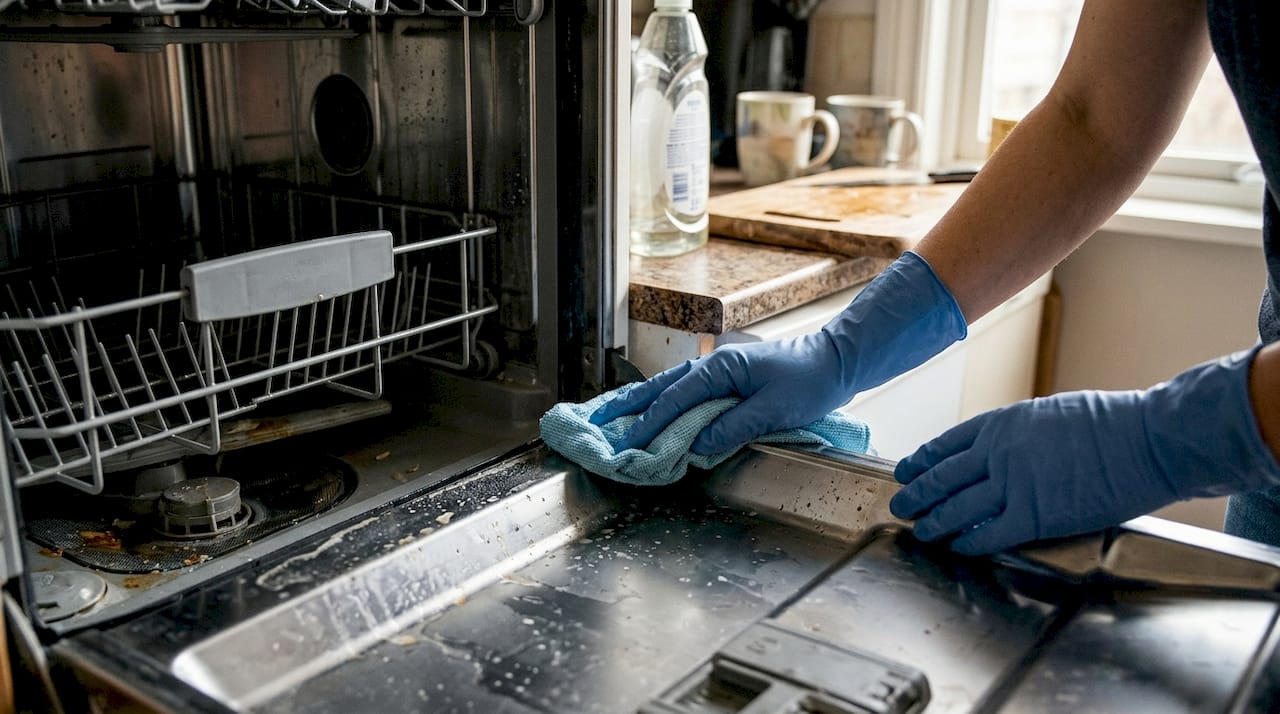
Hard water is another major factor, especially here in New Jersey. Hard water mineral deposits coat the interior surfaces with a sticky film that traps food particles and bacteria, making odors worse even after a cleaning cycle.
Here’s where to look when a basic cleaning doesn’t fix the smell:
| Hidden source | How to spot it | How to treat it |
|---|---|---|
| Door gasket | Dark spots, slimy texture | Wipe with diluted bleach solution |
| Drain hose | Rotten egg or sewer smell | Inspect for kinks, clean or replace |
| Mineral scale | White chalky film on interior | Use citric acid or dishwasher descaler |
Beyond these, there are surprising spots where food gets stuck that most homeowners never think to check:
- Door edges and the underside of the door panel
- Hinge areas where the door meets the tub
- Rack tines and the plastic coating on them
- Spray arm holes, which clog with mineral deposits and food
- The area around the detergent dispenser
Pro Tip: To clean the door gasket, mix one-eighth cup of bleach per gallon of water and wipe the gasket thoroughly with a cloth or old toothbrush. Never pour bleach directly into the dishwasher or run it through a cycle. Bleach can corrode internal components and damage the machine over time.
For deeper issues involving the gasket or drainage, the dishwasher repair solutions available from local dishwasher repair experts can help you avoid costly mistakes.
How to eliminate dishwasher odors: Effective solutions
Now that you know where odors come from and what hides them, here’s how to actually fix the problem. Work through these steps in order for the best results.
- Remove and clean the filter. Pull the filter out from the bottom of the dishwasher. Rinse it under warm running water and scrub gently with a soft brush and dish soap. Reinstall it securely. Monthly filter cleaning is one of the most effective habits you can build, according to appliance experts at GE and Maytag.
- Inspect the drain. Look at the bottom of the dishwasher tub for standing water or visible debris. A small amount of water is normal, but pooling water signals a drainage problem that needs attention.
- Wipe down the interior. Use a damp cloth with a small amount of dish soap to wipe the walls, spray arms, and the underside of the door. Pay special attention to the detergent dispenser area.
- Clean the door gasket. Use the diluted bleach method described above. Work the cloth into the folds of the gasket where mold hides.
- Run a hot empty cycle with vinegar or citric acid. Place a dishwasher-safe cup of white vinegar on the top rack and run the hottest cycle available. This loosens grease, kills bacteria, and neutralizes odors throughout the machine.
“Cleaning your dishwasher filter monthly and running a vinegar or citric acid cycle regularly are the two most effective steps for keeping odors away for good.” This is the consistent recommendation from major appliance brands and repair professionals alike.
For step-by-step guidance on more complex issues, the dishwasher troubleshooting steps on our site walk you through diagnosing problems beyond basic cleaning. If odors persist after completing all five steps above, the drain hose may be kinked, clogged, or improperly installed. That’s the point where professional help makes sense. Our efficient dishwasher repair guide explains what to expect when a technician gets involved.
What most dishwasher guides miss: Pro habits for an odor-free kitchen
Here’s what we’ve learned after decades of repairing dishwashers across Monmouth County: most odor problems aren’t caused by broken machines. They’re caused by neglect. Not laziness, just a lack of awareness about what these machines actually need to stay clean.
The homeowners who never deal with dishwasher odors aren’t doing anything complicated. They scrape their plates, run full hot cycles, crack the door open after the wash ends, and clean the filter once a month. That’s it. Those four habits eliminate 90% of the odor issues we see.
Water quality also matters more than most guides admit. Monmouth County has moderately hard water in many areas, which means mineral buildup happens faster here than in other parts of the state. Homeowners in this area should run a descaling cycle with citric acid every six to eight weeks, not just when they notice a smell.
Following a solid appliance maintenance checklist keeps your dishwasher and every other major appliance in your home running longer and smelling better. Prevention is always cheaper than repair.
Odor still lingering? Call in the appliance experts
Sometimes a thorough cleaning just isn’t enough. If you’ve worked through every step in this guide and the smell keeps coming back, the problem likely goes deeper than surface buildup.

Persistent odors after cleaning often point to a failing drain hose, a cracked gasket that needs replacement, or a drainage issue that requires professional diagnosis. At Expert Appliance Repair, we’ve been serving Monmouth County homeowners since 1988, and we know exactly where these hidden problems hide. We repair all major appliance brands and offer same-day service for urgent situations. If your dishwasher smell has crossed into emergency territory, our emergency appliance repair team is available around the clock. Get your free repair estimate today and stop guessing.
Frequently asked questions
Why does my dishwasher smell like rotten eggs?
A rotten egg odor usually points to hydrogen sulfide gas from sulfur bacteria living in stagnant water or a kinked drain hose that allows backflow. Inspecting and flushing the drain hose typically resolves it.
How often should I clean my dishwasher filter?
Clean your filter at least once a month to prevent odor and maintain cleaning performance. If you run your dishwasher daily, every two to three weeks is even better.
Can I use bleach to clean my dishwasher?
You can use diluted bleach to wipe the door gasket and remove mold, but never run bleach through a full dishwasher cycle because it can corrode internal parts and damage the finish.
What role does hard water play in dishwasher smells?
Hard water mineral deposits coat interior surfaces with a sticky film that traps food and bacteria, making odors worse even after a normal wash cycle. A monthly citric acid treatment helps control buildup.
When should I call a dishwasher repair professional?
If persistent odors remain after a thorough deep cleaning or you notice standing water at the bottom of the tub, it’s time to call a professional who can inspect the drain system and internal components.
Recommended
- Dishwasher Repair Solutions: Ensuring Longevity and Efficiency – Expert Appliance
- Dishwasher Cleaning Workflow for Easy, Lasting Results – Expert Appliance
- Essential Guide to Dishwasher Repair: Ensuring Efficient and Long-lasting Performance – Expert Appliance
- Dishwasher Maintenance Workflow for Reliable Performance – Expert Appliance