
TL;DR:
- Appliance calibration adjusts devices to match verified standards, ensuring accuracy and safety. Regular calibration prevents inefficiency, reduces safety risks, and extends appliance lifespan, saving money long-term. When issues persist after calibration, professional repair is essential to diagnose and fix underlying faults effectively.
Your oven says 350°F, but your cookies burn every time. Your refrigerator feels cold, but your milk spoils three days early. These aren’t random bad luck situations, they’re classic signs that something is off with your appliance’s calibration. Most homeowners in Monmouth County never connect these everyday frustrations to a calibration problem because modern appliances look like they’re working just fine from the outside. This guide breaks down what calibration actually is, why it matters more than most people realize, and what you should do when your appliances start letting you down.
Table of Contents
- What does appliance calibration mean?
- Why calibration matters for home and business appliances
- How to determine if your appliance needs calibration
- Calibration failure: What it means and what to do next
- The hidden value of regular calibration: What most people (and guides) overlook
- Get expert appliance calibration and repair in Monmouth County
- Frequently asked questions
Key Takeaways
| Point | Details |
|---|---|
| Proper calibration saves money | Maintaining appliance accuracy reduces repair costs, energy waste, and product loss. |
| DIY calibration isn’t always enough | Quick fixes help, but persistent issues require expert troubleshooting and repair. |
| Regular checks boost safety | Well-calibrated appliances minimize risks from faulty heating, cooling, and electrical hazards. |
| Calibration supports compliance | Especially in businesses, accurate appliances keep you in line with legal and safety standards. |
What does appliance calibration mean?
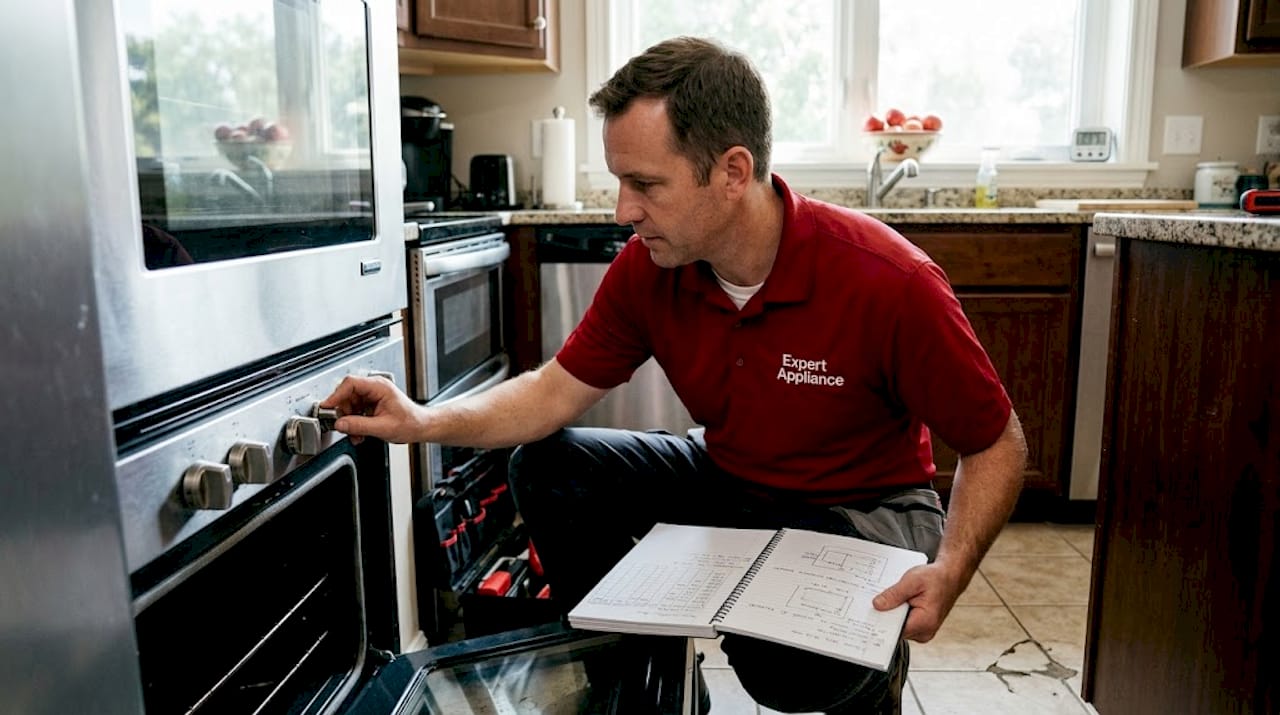
Calibration means adjusting an appliance so that its readings and output match a known, verified standard. Think of it like setting your watch to the correct time. The watch runs on its own, but without checking it against an accurate source, it slowly drifts. Your oven, refrigerator, and washer work the same way.
“Calibration is fundamentally about comparing a device’s output to a known standard, not just verifying the device works.”
Equipment calibration is built on traceable standards, such as those recognized by NIST (National Institute of Standards and Technology), meaning every reading has a verified reference point. In the home, that might mean checking your oven’s temperature sensor against a certified thermometer. For your refrigerator, it means confirming that the thermostat reading matches the actual internal air temperature.
A lot of people assume that factory settings last forever. They don’t. Even a brand-new appliance can ship slightly out of calibration due to differences in manufacturing tolerances, transportation vibration, or voltage variations in your specific home. More on appliance calibration explained can help you understand how this process applies specifically to household equipment.
Here are some common myths worth correcting:
- “New appliances don’t need calibration.” Even fresh out of the box, some appliances benefit from a calibration check.
- “If it’s working, it’s calibrated.” An appliance can function and still be off by enough to cause real problems.
- “Calibration is a one-time fix.” Appliances drift over time, especially with heavy use or power fluctuations.
- “Only commercial equipment needs calibration.” Home appliances absolutely need it too, particularly cooking and cooling equipment.
Understanding these basics sets up everything else. Calibration isn’t a luxury or an upsell. It’s part of keeping your appliances honest.
Why calibration matters for home and business appliances
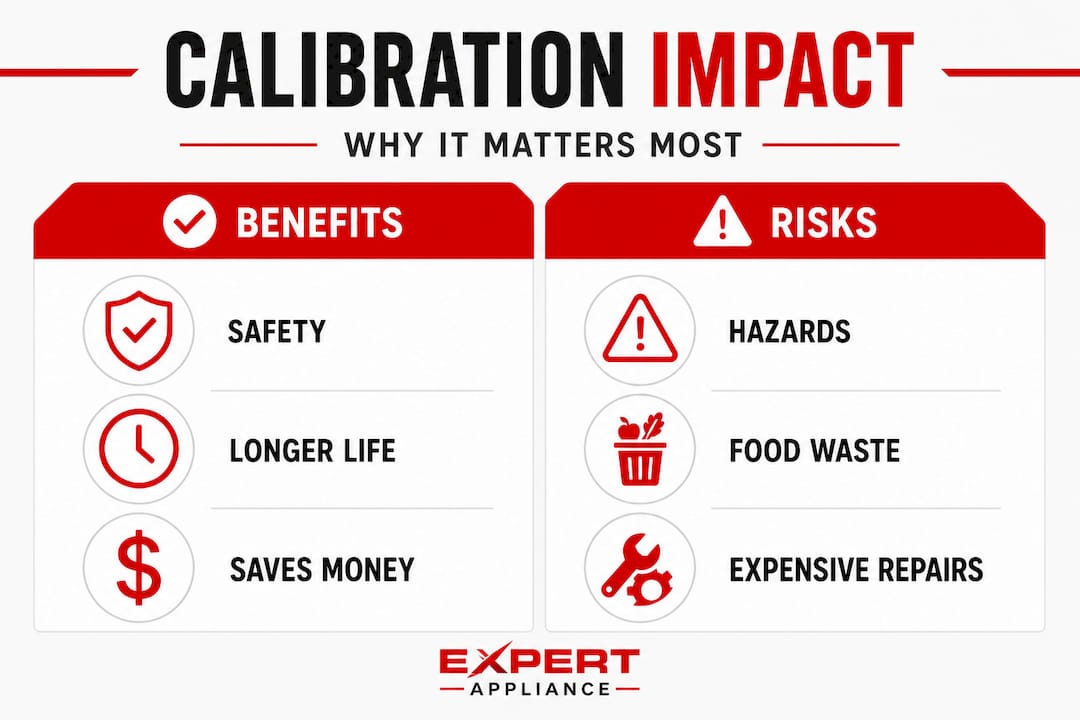
Calibration has a direct impact on four areas that every homeowner and small business owner cares about: safety, food quality, energy costs, and long-term appliance lifespan.
Safety first
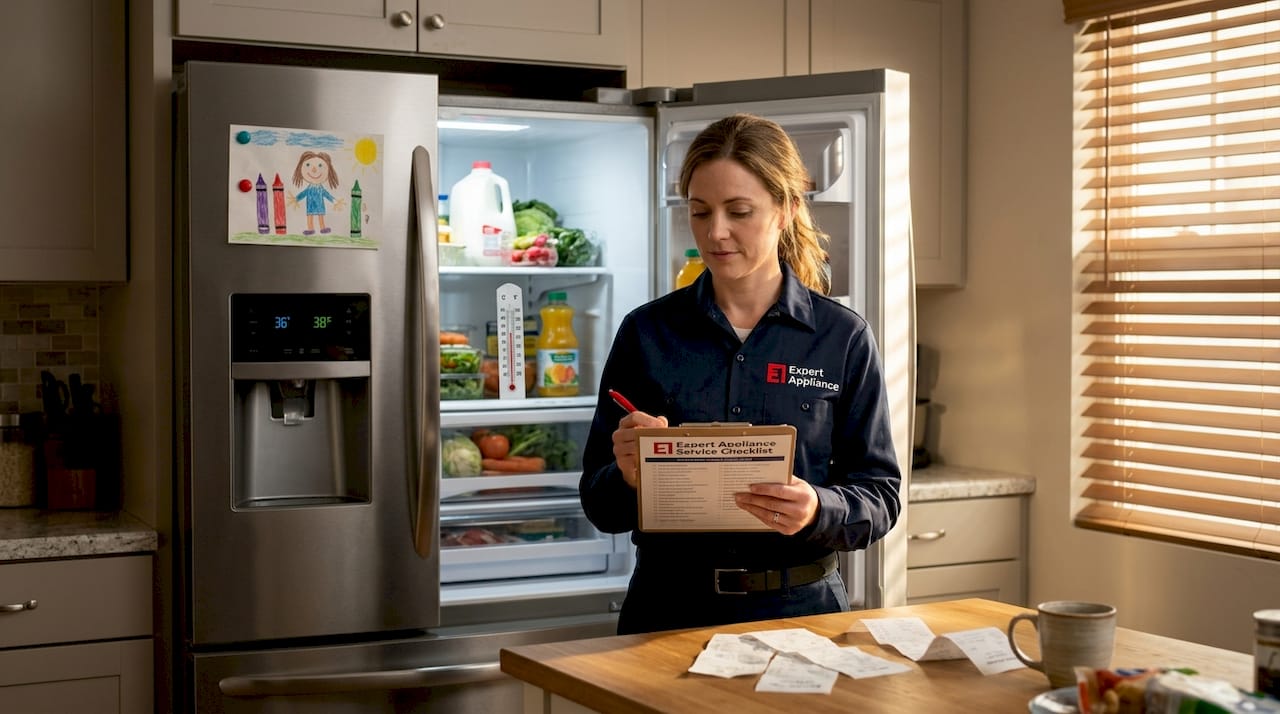
An oven running 50°F hotter than it shows is a fire risk. A refrigerator that displays 38°F but actually sits at 46°F puts your family at risk for foodborne illness. These aren’t edge cases. They’re the kinds of problems that Whirlpool’s product guidance directly addresses, noting that if oven temperatures feel inaccurate, calibration through the built-in settings may be needed.
Appliance impact by category
| Appliance | Effect of poor calibration | Risk level |
|---|---|---|
| Oven / range | Burned or undercooked food | High |
| Refrigerator | Food spoilage, bacterial growth | High |
| Washer | Incorrect water temps, poor cleaning | Medium |
| Dryer | Over-drying, fabric damage, higher bills | Medium |
| Dishwasher | Incomplete cleaning, residue left on dishes | Medium |
| HVAC / thermostat | Rooms too hot or too cold, wasted energy | High |
The money side of the equation
Here’s something many homeowners miss: a poorly calibrated appliance works harder than it needs to. An oven that runs cold forces you to leave food in longer, driving up your electric or gas bill. A refrigerator compressor that cycles too often wears out faster than normal.
- Higher monthly bills from appliances running inefficiently
- Increased part wear on compressors, heating elements, and sensors
- Premature failure that leads to full replacement costs
- Food waste when temperatures aren’t accurate enough to preserve groceries properly
- Damaged goods in business settings where precise temperatures or cycles are legally required
Pro Tip: Place an inexpensive oven thermometer on the center rack and run your oven at 350°F for 20 minutes. If the thermometer reads more than 25°F off, your oven may need calibration.
Preventing costly repairs is a direct result of staying ahead of these issues. And for business owners running a food service or small restaurant in Monmouth County, an uncalibrated appliance isn’t just expensive. It could mean a failed health inspection. The homeowner calibration guide covers how calibration connects to energy savings in more detail.
How to determine if your appliance needs calibration
Spotting calibration issues early saves you money and headaches. The signs aren’t always dramatic. Sometimes it’s subtle, like bread that never quite rises right, or ice cream that’s slightly softer than it should be.
Common warning signs
- Uneven baking results: One side of the pan browns, the other stays pale
- Longer cooking times: Dishes consistently need more time than the recipe calls for
- Food spoiling faster than expected: Especially meats and dairy products in the fridge
- Washer clothes coming out still dirty: Water temperature may be off
- Dryer taking two cycles: Could be a thermostat or airflow calibration issue
- Dishes not drying in the dishwasher: The heating element or thermostat may be out of spec
DIY vs. professional calibration
| Situation | DIY appropriate? | Professional needed? |
|---|---|---|
| Oven off by 10 to 25°F | Yes, use built-in calibration mode | Not necessarily |
| Oven off by more than 50°F | No | Yes |
| Fridge temp inconsistent | Partial, check door seals and thermostat first | If issue persists |
| Error codes displayed | No | Yes |
| Repeated recalibration needed | No | Yes |
| Washer or dryer inconsistencies | No | Yes |
Whirlpool confirms that many of their ranges and wall ovens include a built-in calibration mode that lets you adjust the temperature in small increments. This is a reasonable DIY step for minor oven drift. However, this only works when the underlying components like the temperature sensor, control board, and heating element are all in good shape.
Pro Tip: When checking your oven’s calibration, let it preheat fully before reading the thermometer. Most ovens cycle heat on and off to maintain temperature, so an early reading can be misleading. Wait the full preheat time plus 10 extra minutes.
For anything beyond minor adjustments, especially repeated drift or appliances showing error codes, the right move is to call a technician. Our oven and stove calibration tips walk through what a professional checks during a service visit. And if you’re dealing with multiple appliance issues at once, our appliance troubleshooting steps can help you sort out what’s happening before you call.
Calibration failure: What it means and what to do next
Sometimes calibration just doesn’t fix the problem. You adjust the oven, recheck with a thermometer, and it’s still off. Or the fridge keeps running warm no matter what you do with the thermostat. This is actually important information. It means calibration wasn’t the real issue. Something else is broken.
“When calibration fails to restore performance, the problem may instead be a sensor, controller, or heating component that requires repair, not just adjustment.”
This is exactly what Whirlpool’s support documentation points to: calibration modes adjust the perceived temperature reading, but if the heating element or temperature sensor is faulty, no amount of calibration will create accurate, consistent results.
Here’s how to proceed when calibration isn’t enough:
- Document the symptoms. Write down the specific problem, how long it’s been happening, and any error codes you’ve seen. This helps a technician diagnose faster.
- Stop attempting repeated adjustments. Over-calibrating can mask the real fault and make diagnosis harder.
- Check for error codes. Most modern appliances display codes when something is mechanically or electrically wrong.
- Listen for unusual sounds. Clicking, humming, or grinding often points to a failing motor, compressor, or relay.
- Call a certified technician. At this point, the appliance needs diagnosis beyond calibration.
Pro Tip: Before calling for service, take a short video of the appliance showing the problem. A technician can often narrow down the likely cause before even arriving, which saves you time and sometimes money.
When you’re ready to get a repair estimate, it helps to know what to expect. Learn how to understand repair estimates so you’re not caught off guard by the cost. And if you want to know whether your appliance is showing more serious warning signs, our guide on how to spot appliance problems gives you a solid checklist to work through.
The key takeaway here is that calibration and repair are two different things. Calibration is an adjustment. Repair is fixing what’s broken. Knowing the difference saves you from spinning your wheels and spending money in the wrong direction.
The hidden value of regular calibration: What most people (and guides) overlook
Here’s an honest take from decades of working with Monmouth County homeowners: calibration is the most undervalued maintenance task in the home. People budget for oil changes, dental cleanings, and HVAC filters, but they almost never think about calibrating the appliances they use every single day.
The conventional advice is to “call a repair tech when something breaks.” But that framing misses the bigger picture entirely. The point of calibration is that it catches drift before it becomes failure. It’s the difference between a five-minute adjustment visit and a $600 emergency repair on a Saturday night when your fridge dies before a holiday gathering.
We’ve seen it happen dozens of times in homes across Marlboro, Holmdel, and Freehold. A homeowner notices their oven is cooking unevenly, puts up with it for a year, and eventually the temperature sensor fails completely. Had they caught the drift six months earlier, a calibration or a simple sensor swap would have cost a fraction of what a full control board replacement runs.
What makes calibration genuinely powerful is that it treats your appliances the same way certified labs treat their instruments. Equipment calibration standards exist for a reason: measurement drift leads to real-world errors. In your home, those errors show up as spoiled food, wasted energy, and appliances that age faster than they should.
There’s also a practical side that most guides skip over. Regular calibration builds a maintenance history for your appliances. When a technician arrives and knows the oven was last calibrated 14 months ago and has drifted 30°F, they can immediately suspect the temperature sensor is starting to fail. That context speeds up diagnosis and lowers your labor bill.
The bottom line is this: calibration isn’t an “extra” task. It’s the most efficient way to protect your investment in appliances that often cost $500 to $2,000 or more to replace. Twenty minutes and a thermometer, or a short maintenance visit, beats an emergency service call every single time.
Get expert appliance calibration and repair in Monmouth County
Staying on top of calibration is one of the smartest things you can do to keep your appliances running efficiently and your home or business operating without interruptions. But when the problem goes beyond a simple adjustment, or when you’d rather have a trained technician handle it right the first time, that’s exactly where we come in.
Expert Appliance Inc. has been serving Monmouth County homeowners and small businesses since 1988. We offer fast local appliance repair with same-day availability and 24/7 emergency support, so you’re never stuck waiting when something critical stops working. Whether it’s an oven running hot, a refrigerator failing to hold temperature, or a washer that’s off-cycle, our technicians diagnose and fix the problem with upfront pricing and no surprises. We service all major appliance brands we repair and handle everything from routine maintenance to full appliance and vacuum repair across Marlboro and surrounding towns.
Frequently asked questions
How often should appliances be calibrated?
Most household appliances benefit from a calibration check every one to two years, or sooner if you notice accuracy issues like uneven cooking or inconsistent temperatures.
Is calibration a DIY job or should I call a pro?
Many ovens include user-accessible calibration settings for minor temperature adjustments, as Whirlpool’s guidance confirms, but persistent or recurring problems mean it’s time to bring in a certified technician.
What is the main risk of skipping calibration?
Skipping calibration allows small drifts to grow into real safety risks, wasted energy, and expensive repairs. As equipment calibration standards show, unchecked measurement errors compound over time and affect everything the appliance does.
Are business appliances calibrated differently than home appliances?
Business appliances, especially in food service, must meet stricter calibration standards tied to local health codes and food safety regulations, often requiring documented verification records that go beyond what homeowners need.
Recommended
- What is appliance calibration? A 2026 homeowner’s guide – Expert Appliance
- Maximize home appliance lifespan with regular checks – Expert Appliance
- Appliance Maintenance: Expert Tips to Prevent Repairs
- Why Fast Appliance Response Times Matter: Monmouth Guide – Expert Appliance
- How to Maintain Industrial HVAC for Peak Performance – Lucas Air Conditioning and Heating