
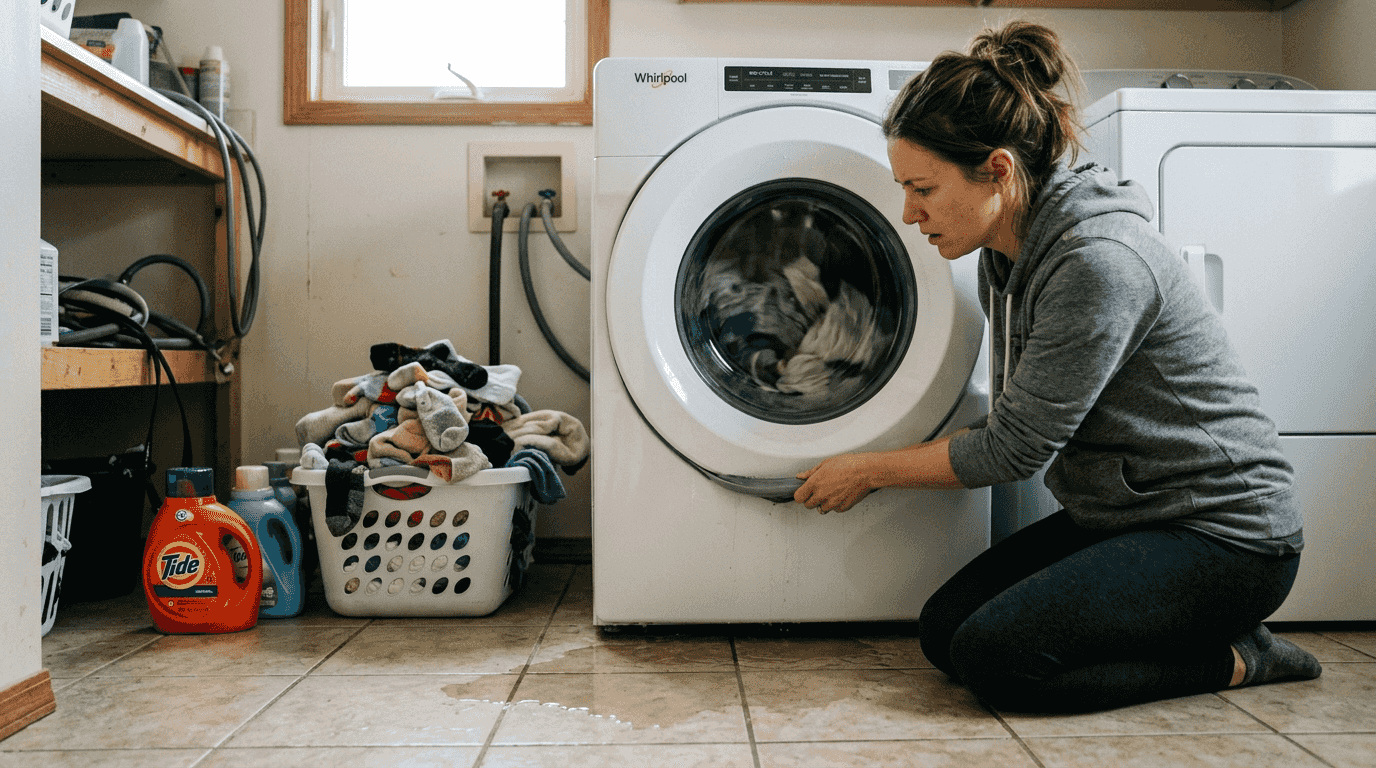
Many homeowners assume their washer is broken when they spot water on the floor, but over 25% of leaks stem from installation errors or maintenance issues rather than mechanical failure. Understanding the real causes behind washer leaks helps you respond quickly and avoid costly home damage. This guide covers the most common sources of leaks, dispels widespread myths, and shows you how to protect your Monmouth County home with smart prevention and local repair solutions.
Table of Contents
- Introduction To Washer Leaks
- Key Causes Of Washer Leaks
- Common Misconceptions About Washer Leaks
- Conceptual Framework For Diagnosing Washer Leaks
- Impact Of Ignoring Washer Leaks
- Preventive Measures To Avoid Washer Leaks
- Local Repair Solutions For Monmouth County Homeowners
- Expert Appliance Repair Services In Monmouth County
Key takeaways
| Point | Details |
|---|---|
| Most leaks have identifiable causes | Worn seals, loose hoses, clogged pumps, and poor installation account for the majority of washer leaks. |
| Installation errors are common culprits | Improper connections and leveling issues frequently cause leaks without any part failure. |
| Early detection prevents damage | Quick identification stops water from damaging floors, walls, and creating mold hazards. |
| DIY fixes can backfire | Home repairs often miss root causes and may worsen the problem or void warranties. |
| Professional repair saves money | Local experts diagnose accurately and fix leaks permanently, preventing repeat issues. |
Introduction to washer leaks
A washer leak occurs when water escapes from the appliance during operation or while idle. You might notice puddles forming under or around your machine, dampness on nearby walls, or water dripping during wash, rinse, or spin cycles. These leaks don’t always signal a major breakdown. Sometimes a simple loose connection or worn rubber part is the entire problem.
Ignoring even small leaks invites serious trouble. Water seeping into flooring damages wood, warps laminate, and saturates subflooring. Persistent moisture creates perfect conditions for mold growth, which threatens both your health and your home’s value. Over time, moisture can weaken structural elements and require expensive remediation far exceeding the cost of a washer repair.
Recognizing leak symptoms early gives you control. Watch for these warning signs:
- Water pooling around the washer base after cycles
- Damp spots on walls or cabinets adjacent to the machine
- Unusual sounds like dripping or hissing during operation
- Visible water trails leading from hose connections
- Musty odors indicating hidden moisture buildup
Addressing leaks immediately protects your home and saves money. A small seal replacement costs far less than repairing water damaged flooring or treating mold infestations. Understanding where leaks originate helps you take swift, effective action.
Key causes of washer leaks
Door seal degradation, leaking hoses, and pump blockages are common causes of washer leaks. Each source has distinct characteristics that help you identify the problem quickly. Front load washers use rubber door gaskets that flex thousands of times, gradually cracking and losing elasticity. When these seals fail, water escapes during the wash cycle, often pooling at the front of the machine.
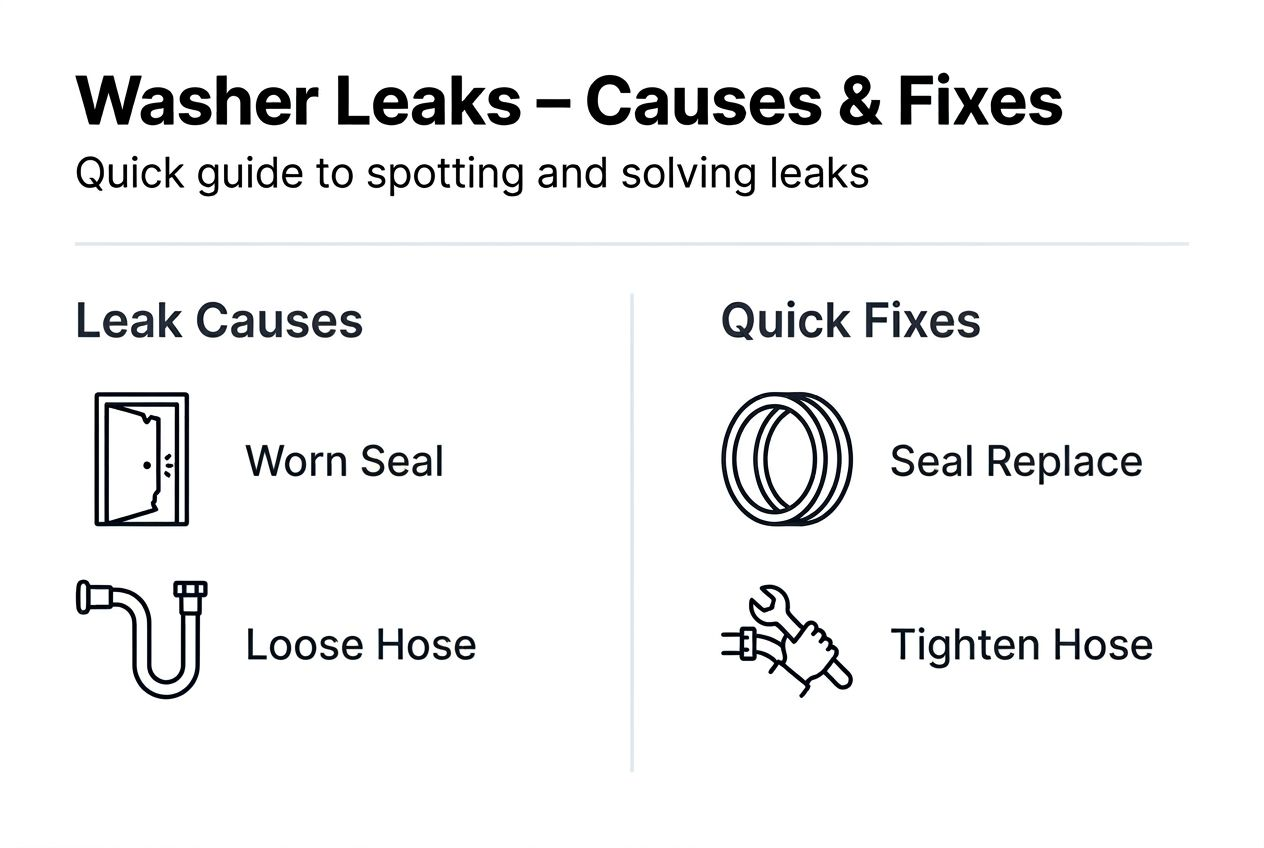
Hose problems rank among the most frequent leak sources. Supply hoses connecting your washer to household plumbing can crack from age, temperature changes, or pressure fluctuations. Drain hoses develop leaks at connection points when clamps loosen or fittings corrode. Even small cracks release significant water over time, especially under the pressure of active cycles.
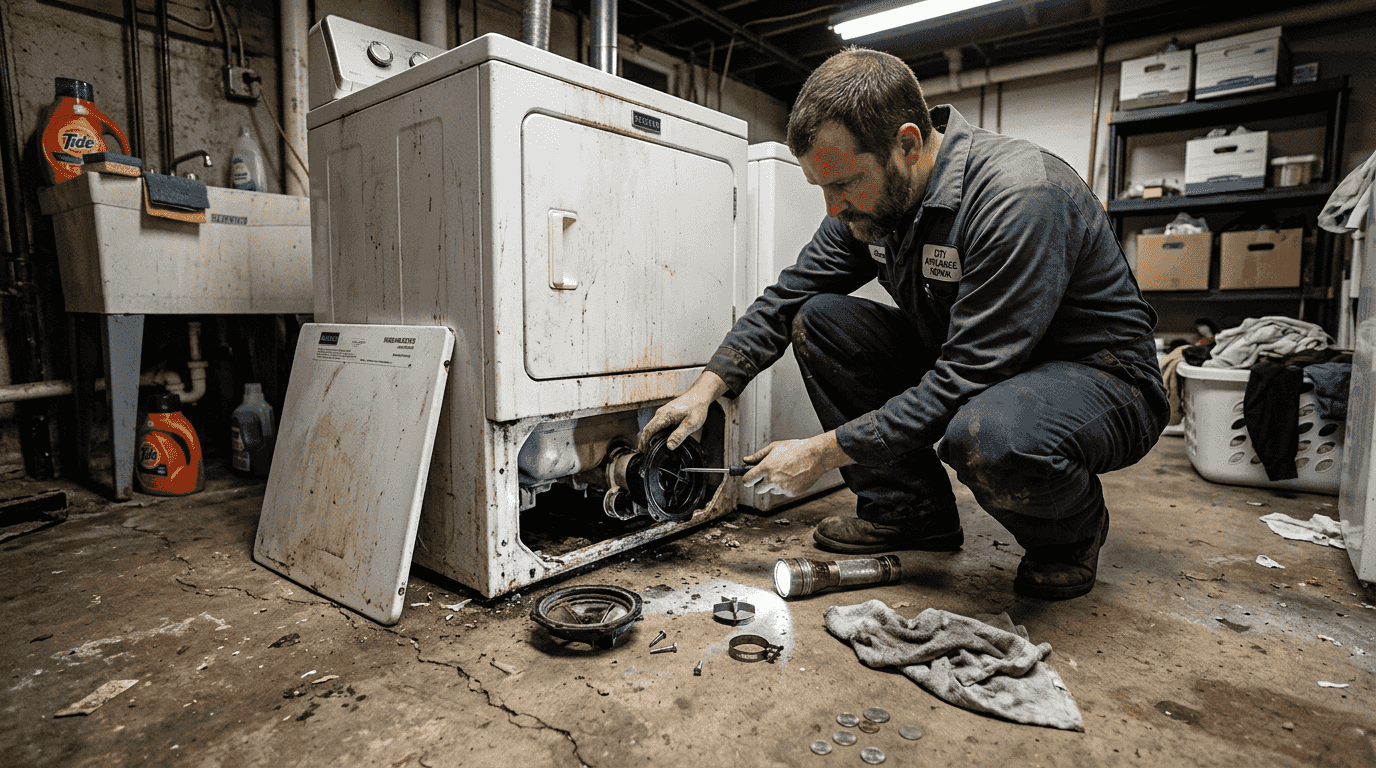
Drain pump failures create leaks when blockages prevent proper water evacuation. Lint, coins, and debris accumulate inside pumps, forcing water to back up and escape through seals. Worn pump seals allow water to leak even when the pump functions correctly. These leaks often appear underneath the washer and may only occur during drain cycles.
Installation errors cause leaks that homeowners mistake for mechanical failures. Improperly tightened hose connections drip continuously. Washers not level on the floor experience uneven water distribution, causing overflow from detergent dispensers or door seals. Incorrect drain hose positioning allows water to siphon back, creating mysterious leaks.
Maintenance neglect compounds these issues. Excessive detergent creates suds that overflow, while detergent residue clogs dispensers and hoses. Failing to clean filters allows debris to block drainage paths. These problems develop gradually, making them easy to overlook until a major leak occurs.
| Cause | Typical Location | Common Triggers |
|---|---|---|
| Door seal wear | Front of machine | Age, mildew, detergent buildup |
| Hose cracks | Behind/beneath washer | Age, pressure, temperature stress |
| Pump blockage | Under machine | Debris, lint, small objects |
| Installation errors | Connections | Loose fittings, poor leveling |
| Detergent buildup | Dispenser area | Overuse, infrequent cleaning |
Common misconceptions about washer leaks
Many homeowners believe any leak means their washer is dying and needs replacement. This misconception leads to unnecessary expenses. Most leaks result from worn consumable parts like hoses or seals that cost little to replace. A $15 hose or $30 seal replacement extends your washer’s life for years, while premature replacement wastes thousands of dollars.
Another widespread myth suggests leaks always indicate obvious mechanical failure. In reality, subtle installation problems cause persistent leaks without any broken parts. A washer sitting slightly unlevel may leak intermittently for months. Homeowners search for damaged components that don’t exist, while the real fix requires simple releveling.
DIY repairs seem appealing but often create larger problems. Online videos show hose replacements that look straightforward, yet improper installation techniques damage fittings or create new leak points. Homeowners frequently overtighten connections, cracking plastic components. Others use incorrect replacement parts that fit poorly and fail quickly. These attempts at savings typically increase final repair costs when professionals must fix both the original problem and DIY damage.
The belief that routine maintenance is optional ranks among the costliest misconceptions. Regular inspections catch small issues before they become major leaks. A cracked hose discovered during inspection costs $20 to replace. The same hose left unchecked floods your laundry room, damaging flooring and requiring emergency repairs costing hundreds or thousands. Prevention always costs less than crisis management.
Pro Tip: Check hose connections and visible seals every three months. This five minute inspection catches most problems before they cause water damage.
Many people assume all repair services offer equal quality and speed. Local professionals familiar with common washing machine issues in your area respond faster and stock appropriate parts. Following a proper washing machine repair workflow guide ensures thorough diagnosis rather than quick patch jobs that fail within weeks.
Conceptual framework for diagnosing washer leaks
Systematic diagnosis saves time and prevents misguided repairs. Think of washer leaks in three distinct categories: mechanical failures, connection issues, and maintenance problems. This framework helps you organize symptoms and identify likely causes efficiently.
Mechanical failures involve broken or worn internal components. Door seals crack, pumps fail, and internal hoses deteriorate. These problems typically worsen over time and show consistent symptoms. A failing door seal leaks during every wash cycle in predictable patterns.
Connection issues stem from external plumbing and installation. Supply hoses leak at wall connections, drain hoses slip from standpipes, and loose clamps drip. These leaks often vary with water pressure and may stop between cycles. They’re usually the easiest and least expensive to fix.
Maintenance problems arise from neglect or improper use. Detergent buildup clogs dispensers, causing overflow. Debris blocks filters and pumps. Excessive suds escape from door seals. These issues develop gradually and respond well to cleaning and habit changes.
Follow this diagnostic sequence:
- Inspect all visible hose connections for dampness or drips
- Check the door seal for cracks, tears, or mildew buildup
- Run a cycle and observe when leaking occurs
- Verify the washer sits level using a bubble level
- Examine the drain hose position and secure attachment
- Clean the detergent dispenser and check for clogs
This appliance diagnosis approach identifies most leak sources within minutes. Observable symptoms guide you toward specific causes without guesswork.
| Category | Key Characteristics | Typical Fix Complexity |
|---|---|---|
| Mechanical | Consistent leaks during cycles, worn visible parts | Medium to high, often requires professional |
| Connection | Variable leaks, visible at joints, pressure dependent | Low, usually simple tightening or replacement |
| Maintenance | Gradual onset, accompanied by residue or odors | Low, cleaning and habit adjustment |
Pro Tip: Document when leaks occur during the cycle. Leaks during fill suggest supply line issues, while leaks during spin point to seal or pump problems.
Impact of ignoring washer leaks
Water damage escalates quickly in ways homeowners underestimate. A slow leak releasing just two cups daily puts 45 gallons onto your floor monthly. That volume saturates wooden subflooring, weakens adhesives holding tiles or laminate, and seeps into wall cavities. Within weeks, visible damage appears as warped floors, bubbling paint, or separated baseboards.
Mold growth follows moisture like a shadow. Spores present in every home remain dormant until water provides the conditions they need. Damp areas behind or beneath your washer create ideal mold habitats within 24 to 48 hours. Once established, mold spreads through air circulation, affecting indoor air quality and potentially triggering respiratory issues, allergies, and other health problems.
Financial consequences of ignored leaks dwarf repair costs. Consider these comparisons:
- Hose replacement: $20 to $50
- Seal replacement: $100 to $200
- Floor replacement after water damage: $1,500 to $4,000
- Mold remediation: $500 to $6,000
- Structural repairs: $2,000 to $10,000
Electrical hazards compound these risks. Washers contain motors, control boards, and wiring that pose shock and fire risks when exposed to water. Leaks near outlets or electrical panels create dangerous conditions requiring immediate attention.
“Water damage from appliance leaks ranks among the top five homeowner insurance claims, with average claims exceeding $5,000 in repair costs. Prevention through timely maintenance costs a fraction of this amount.”
Quick professional intervention minimizes every aspect of leak damage. Experts identify and fix the source before water compromises your home’s structure or safety. Same day service prevents overnight damage that multiplies costs exponentially.
Preventive measures to avoid washer leaks
Proactive maintenance dramatically reduces leak risks and extends washer lifespan. Start with regular hose inspections every three months. Look for cracks, bulges, or stiff sections indicating deterioration. Replace any hose showing wear, even if not actively leaking. Reinforced stainless steel braided hoses resist damage better than standard rubber versions and cost only slightly more.
Detergent discipline prevents multiple problems. Use only the amount specified for your load size and water hardness. High efficiency washers require HE detergent, which produces fewer suds. Excess suds stress seals and escape through small gaps, creating mystery leaks. They also leave residue that clogs dispensers and hoses over time.
Cleaning tasks take minutes but prevent major issues:
- Wipe door seals monthly to remove soap scum and prevent mildew
- Run an empty hot cycle with vinegar quarterly to dissolve buildup
- Clean the detergent dispenser drawer every month
- Check and clear the drain filter every three months
- Inspect drain hose positioning to prevent kinks or siphoning
Pro Tip: Leave the washer door slightly open between uses. This simple habit prevents mildew growth on door seals, extending their lifespan significantly.
Professional maintenance checkups catch problems you might miss. Technicians inspect internal components, test pump function, and verify proper installation. Annual service visits cost less than emergency repairs and often include performance optimization that improves efficiency. Following washer and dryer care tips and maintaining a regular care checklist keeps your appliances running reliably.
Always use manufacturer recommended parts for replacements. Generic components may fit but often lack proper specifications, failing prematurely. Original equipment parts match your washer’s design exactly, ensuring reliable performance and maintaining warranty coverage.
Local repair solutions for Monmouth County homeowners
Monmouth County residents facing washer leaks benefit from specialized local repair expertise. Professional repair services understand the specific challenges New Jersey homes face, from hard water issues to the appliance brands popular in the region. This local knowledge translates to faster, more accurate diagnosis and repairs using readily available parts.
Same day and emergency service availability matters when water threatens your home. Waiting days for repair allows damage to compound hourly. Local Marlboro technicians respond within hours, stopping leaks before they destroy flooring or create mold conditions. This rapid response distinguishes local appliance service from distant corporate repair chains with multi day wait times.
Expertise with common regional washer models means technicians arrive prepared. They stock parts for the brands and models prevalent in Monmouth County homes, eliminating delays for ordering. Their experience with local installation practices helps them quickly identify region specific issues like particular plumbing configurations or hard water related problems.
Warranty backed repairs provide peace of mind that DIY attempts cannot match. Professional service includes guarantees on both parts and labor. If a repaired leak returns, the company fixes it at no additional cost. This protection removes the financial risk of repair attempts.
Quick local response directly reduces home damage severity. Every hour a leak continues deposits more water into vulnerable areas. Professional assessment within hours stops this damage clock. Technicians also identify secondary issues that might cause future problems, preventing repeat service calls.
Contacting local professionals for urgent leaks involves simple steps:
- Call immediately when you discover a leak, especially near electrical components
- Describe symptoms and when leaking occurs during cycles
- Schedule same day service to minimize damage
- Follow guidance on safely operating the washer until repair
- Discuss preventive maintenance to avoid future issues
Expert appliance repair services in Monmouth County
When washer leaks threaten your Monmouth County home, fast professional help makes all the difference. Expert Appliance offers same day service that stops leaks before they cause serious damage, protecting your floors, walls, and peace of mind. Our technicians bring decades of experience diagnosing and repairing all major appliance brands, ensuring your specific washer model gets expert attention.
Don’t wait for a small leak to become a costly disaster. Regular professional maintenance catches problems early and extends your washer’s lifespan, saving you money on both repairs and premature replacement. Contact our Marlboro team today for immediate service or to schedule preventive maintenance that keeps your appliances running reliably for years.
FAQ
What causes most washer leaks?
Most leaks stem from worn door seals, cracked or loose hoses, clogged drain pumps, or improper installation. Regular inspection helps you spot these issues early before they cause significant water damage to your home.
Can I fix a washer leak myself safely?
Simple tasks like tightening loose hose connections or cleaning clogged dispensers are generally safe for homeowners. However, mechanical repairs involving internal seals, pumps, or electrical components require professional expertise to avoid creating bigger problems or safety hazards.
How quickly should I call a professional for a washer leak?
Call immediately if water pools near electrical outlets or structural areas like walls and subflooring. Prompt professional service prevents damage from escalating and typically costs far less than repairing water damaged floors or treating mold growth.
What maintenance helps prevent washer leaks?
Inspect hoses and seals every three months, clean detergent dispensers monthly, avoid using excessive detergent, and schedule annual professional tune ups. These simple practices catch small issues before they become major leaks requiring emergency repairs.