
TL;DR:
- Routine appliance inspections can prevent 60% of breakdowns and costly repairs.
- Essential safety checks include disconnecting power, inspecting seals, hoses, and cleaning coils frequently.
- Local expertise tailored to Monmouth County’s humidity and water conditions enhances inspection accuracy.
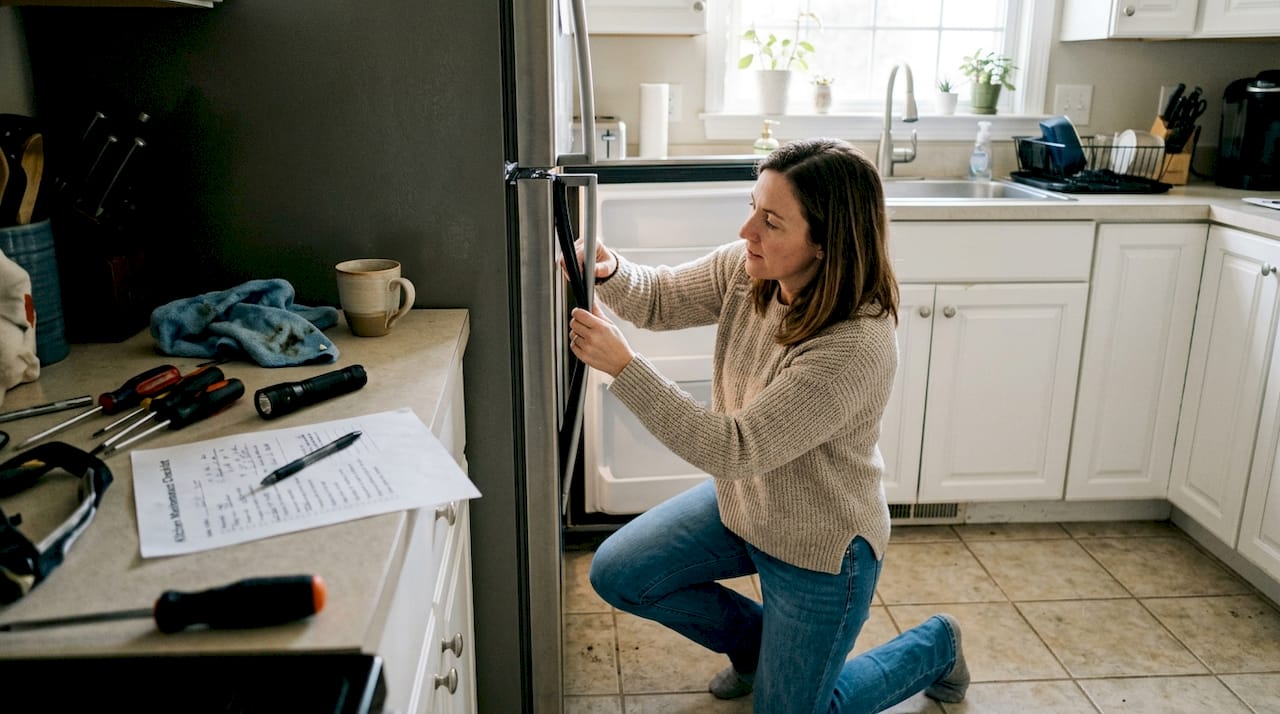
Hidden appliance faults have a way of showing up at the worst possible time. A refrigerator seal that’s been quietly failing for months finally gives out the night before a dinner party. A dryer vent clogged with lint becomes a fire risk you never saw coming. For homeowners and small businesses in Monmouth County, NJ, these disruptions aren’t just inconvenient — they’re expensive. Routine inspections prevent 60% breakdowns, which means most emergency repair calls are completely avoidable. This guide walks you through the exact tools, steps, and expert tips you need to run a thorough appliance inspection in your Monmouth County home or business.
Table of Contents
- Essential tools and preparation for appliance inspection
- Step-by-step appliance inspection process
- Troubleshooting and edge cases: When DIY falls short
- Preventive maintenance and post-inspection actions
- Our take: Why local expertise and documentation matter most
- Get expert appliance inspection and urgent repair in Monmouth County
- Frequently asked questions
Key Takeaways
| Point | Details |
|---|---|
| Safety is critical | Always disconnect power and follow safety checks before starting an appliance inspection. |
| Routine prevents breakdowns | Quarterly and annual inspections help avoid urgent repairs and extend appliance life. |
| DIY fixes solve most issues | Basic cleaning and visual checks resolve 60% of appliance problems for Monmouth County homes. |
| Document findings | Keeping logs and photos supports warranty claims and makes repair-vs-replace decision easier. |
| Know your limits | Call professionals for sealed systems, gas appliances, or complex electrical repairs for safety and assurance. |
Essential tools and preparation for appliance inspection
Having previewed the overall impact of preventive inspection, let’s start by covering everything you need to inspect your appliances safely and thoroughly.
Before you touch a single appliance, safety is non-negotiable. The appliance inspection process for homeowners and small businesses typically begins with safety checks: disconnect power, inspect cords for fraying, and verify no leaks or unusual odors before proceeding. Skipping this step is how minor inspections turn into emergencies.
Here’s what you’ll want on hand before you start:
- Flashlight for inspecting dark corners, coil backs, and under units
- Work gloves to protect your hands from sharp edges and residue
- Flathead and Phillips screwdrivers for accessing panels and vents
- Multimeter (for experienced DIYers) to test basic electrical connections
- Camera or smartphone to document findings with photos
- Coil brush and descaling agents — especially important in Monmouth County, where hard water and humidity accelerate buildup
- Extra towels for any moisture or minor leaks you discover
NJ homes face specific conditions that affect appliances more than the national average. High humidity means coils and hoses are at higher risk of corrosion and mold, so your toolkit should reflect that.
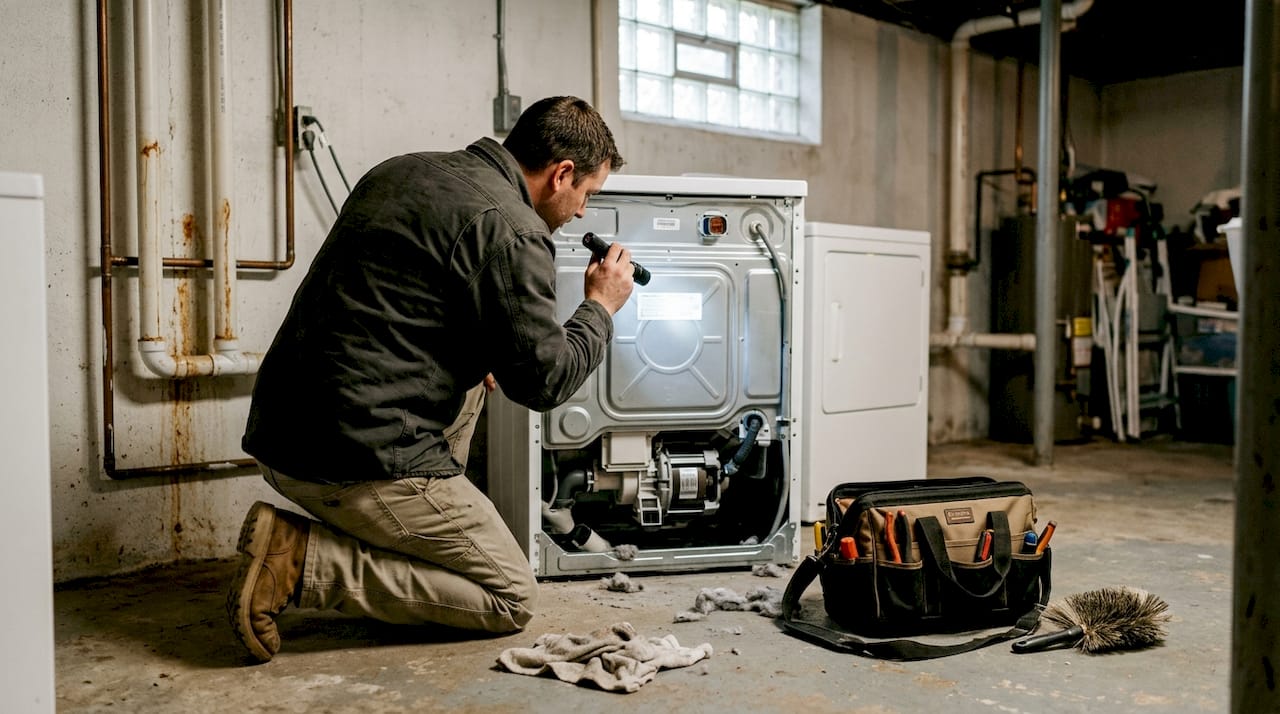
Creating a written log before you begin is one of the smartest moves you can make. Record the date, appliance model and serial numbers, and any known issues. Photos help substantially when you need to file a warranty claim or explain a problem to a technician. For more on diagnosing appliances and what to look for, it’s worth reviewing a checklist before you start.
Pro Tip: Always wear gloves when handling electrical appliances during inspection, even when the power is off. Residual charge and sharp internal edges are real hazards.
Safety warning: Never inspect any appliance while it is still plugged in. Disconnect power at the outlet and, for hardwired appliances, switch off the breaker before you begin.
Here’s a quick comparison of tools by user type:
| Tool | DIY homeowner | Small business owner | Professional tech |
|---|---|---|---|
| Flashlight | Required | Required | Required |
| Gloves | Required | Required | Required |
| Screwdrivers | Required | Required | Required |
| Multimeter | Optional | Optional | Required |
| Coil brush | Recommended | Recommended | Required |
| Descaling agents | Recommended | Required | Required |
For more guidance on preventing appliance breakdowns before they happen, starting with the right prep goes a long way.
Step-by-step appliance inspection process
Once you’re equipped and prepared, it’s time to move through each step of the inspection process to spot potential issues early.
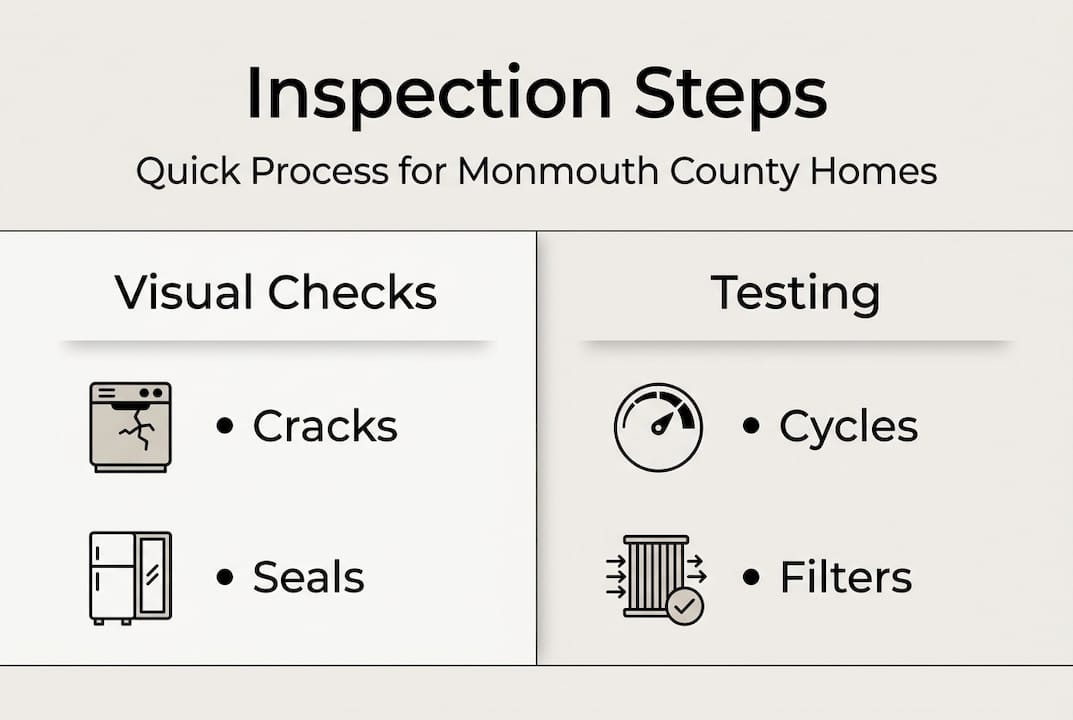
Step 1: Visual inspection. Start on the outside. Check for cracks, corrosion, worn seals, and physical damage on exteriors, hoses, and connections. This is especially relevant for kitchen appliances in NJ home inspections. Look at door gaskets, supply hoses on washers, and any exposed wiring. Run your hand along rubber seals to feel for brittleness or gaps.
Step 2: Operational testing. Run each appliance through a full cycle or test mode. Check leaks, drainage, and error codes on dishwashers, test every burner and oven element, verify cooling in your refrigerator, and monitor for unusual sounds. A rattling dryer drum or a buzzing refrigerator compressor are both worth investigating.
Step 3: The dollar bill test. Slide a dollar bill into the refrigerator or oven door seal and close it. If the bill pulls out easily without resistance, the seal is failing and needs replacement. This simple check can reveal energy losses that quietly add up on your utility bill.
Step 4: Maintenance checks. Inspect and clean filters, vents, and coils. NJ humidity makes this step more urgent than in most states. Dryer lint traps should be cleared after every load, while the full vent run needs an annual check.
Pro Tip: Use a printed appliance maintenance checklist during every inspection. Consistency is the difference between catching a problem early and replacing an appliance prematurely.
Here’s a quick reference table for common appliances:
| Appliance | Visual check | Operational test | Maintenance check |
|---|---|---|---|
| Refrigerator | Seals, coils, hoses | Cooling, ice maker | Clean coils, check drain |
| Dishwasher | Door gasket, spray arms | Full cycle, drainage | Descale, clean filter |
| Dryer | Vent, drum seal | Full cycle, heat output | Clear lint trap and vent |
| Oven/Stove | Burner connections | All elements/burners | Clean grates, check igniter |
| Washer | Hoses, door seal | Full cycle, spin | Clean drum, check hoses |
For Monmouth County specific patterns and timing, reviewing Monmouth County appliance tips helps you schedule checks around seasonal humidity peaks.
Troubleshooting and edge cases: When DIY falls short
After following the step-by-step process, you may encounter edge cases or issues that require a different approach.
Some problems show up during inspection that go beyond what any homeowner should handle alone. Knowing where the line is protects your safety and your appliances.
Common issues you can often address yourself:
- Faulty door seals and gaskets (replacement kits are widely available)
- Clogged dryer vents or dishwasher filters
- Error codes that reset after cleaning or basic maintenance
- Loose supply hose connections on washers
Issues that require a certified technician:
- Sealed refrigeration systems (refrigerant handling is regulated)
- Any gas appliance with suspected leaks or ignition failures
- Complex electrical faults or tripped internal components
- Improper venting, missing anti-tip devices on ranges, or no air gap on dishwashers (found in 30 to 40% of homes)
Monmouth County homes have some specific quirks worth noting. Older homes in towns like Red Bank and Freehold often have range hoods venting to recirculate rather than to the outside, which is a fire and air quality hazard. Dishwashers without a proper high loop or air gap allow drain water to backflow. These are the details that a local inspector knows to look for.
Pro Tip: Document every finding during your inspection with photos and a written log. This record is invaluable when making appliance lifespan guide decisions or filing warranty claims.
More than 80% of home inspections uncover at least one appliance defect. Most of those defects are preventable with regular attention. Don’t wait for a breakdown to discover what a routine check would have caught months earlier.
If you’re unsure whether a finding is DIY territory, consult a routine appliance inspection guide or call in a local professional before attempting a repair. Guessing on gas or electrical systems is never worth the risk.
Preventive maintenance and post-inspection actions
Once you’ve identified existing issues and limits, turn your findings into a practical maintenance routine and plan next steps.
Your inspection findings are only useful if they drive action. Here’s how to build a maintenance routine around what you found.
Routine maintenance tasks by frequency:
- Monthly: Clear dryer lint trap and check vent for blockages; wipe refrigerator door seals
- Quarterly: Inspect coils, filters, and hoses on all major appliances; descale dishwashers; check washer hoses for bulging or cracks
- Annually: Full dryer vent cleaning; refrigerator coil brushing; oven calibration check
NJ humidity accelerates wear compared to the national average. Most appliance guides suggest biannual coil checks, but Monmouth County homes benefit from quarterly attention. Hard water here also means descaling your dishwasher and water-connected appliances more often.
How to prioritize your post-inspection to-do list:
- Fix any safety issues immediately (gas, electrical, anti-tip devices)
- Address worn seals and hoses within 30 days
- Schedule professional service for sealed systems or complex faults
- Log all maintenance completed and set reminders for the next cycle
- Review each appliance’s age and recent repair history
For the repair vs. replace decision, the math is straightforward. If repair costs exceed 50% of a new unit’s price, or the appliance is past two-thirds of its expected lifespan, replacement usually wins financially. A certified technician can give you a post-inspection estimate to make that call easier.
Pro Tip: Preventive care through regular appliance maintenance can cut your repair costs by up to 50%, and most minor issues found during inspection are fixable without a service call.
When you’re ready to make a final call on an older unit, reviewing your appliance upgrades vs repairs options gives you a clear framework for that decision.
Our take: Why local expertise and documentation matter most
Here’s something most general appliance guides won’t tell you: the biggest variable in inspection quality isn’t the tools or the checklist. It’s whether the person doing the work understands your environment.
Monmouth County’s humidity, hard water, and older housing stock create conditions that a checklist built for Phoenix or Denver simply doesn’t account for. Quarterly coil and hose checks are the standard here, not every six months. Local technicians know this without being told.
Documentation is where most homeowners leave serious value on the table. A photo log of your appliance conditions over two or three inspection cycles tells a story. It shows trends, supports warranty negotiations, and gives a technician the context to diagnose faster. We’ve seen documentation alone save customers hundreds of dollars by proving a defect developed under warranty.
For small businesses in particular, a structured maintenance guide isn’t overhead — it’s insurance. A single unexpected appliance failure during business hours costs far more than a year of preventive checks.
Local pros who offer same-day and 24/7 response aren’t just faster. They bring context that generic services don’t have. That combination of speed and local knowledge is what actually protects your appliances long term.
Get expert appliance inspection and urgent repair in Monmouth County
If your inspection reveals urgent issues or you want to schedule regular maintenance, here’s how to connect with local experts in Monmouth County.
Running through this guide is a great first step, but some findings need a trained eye and the right equipment to resolve properly. At Expert Appliance, we’ve been serving Monmouth County homeowners and businesses since 1988 with same-day service and 24/7 emergency support.

Whether you’ve found a fault during your inspection or just want a professional baseline check, our certified technicians are ready to help. Explore our emergency appliance repair guide if you need immediate support, download a full appliance maintenance checklist to stay on schedule, or browse the appliance brands we repair to confirm we service your unit. We’re local, fast, and here when it matters.
Frequently asked questions
How often should appliances be inspected in Monmouth County, NJ?
Plan for quarterly coil and hose checks due to local humidity and hard water, while most other appliance components need a full inspection every 6 to 12 months.
What are the most common issues found during appliance inspections?
Leaks, worn door seals, improper venting, missing safety devices, and active error codes top the list, and over 80% of inspections turn up at least one of these defects.
When should I call a certified technician instead of doing repairs myself?
Call a professional any time the issue involves sealed refrigeration systems, gas appliances, or complex electrical components, since sealed systems and gas repairs require licensed certification and specialized tools.
How do I decide whether to repair or replace an appliance?
If the repair estimate is more than 50% of a new unit’s cost, or the appliance has passed two-thirds of its expected lifespan, replacing it is usually the smarter financial move.
Does regular inspection really reduce repair costs?
Absolutely. Preventive maintenance cuts repair costs by 50 to 70%, and routine inspections catch roughly 60% of developing issues before they require an emergency service call.
Recommended
- Routine Appliance Inspection: Protect Your Monmouth County Home – Expert Appliance
- Home appliance safety checklist: secure your Monmouth County – Expert Appliance
- Small business appliance maintenance guide Monmouth County 2026 – Expert Appliance
- Business appliance repair guide for Monmouth County 2026 – Expert Appliance